
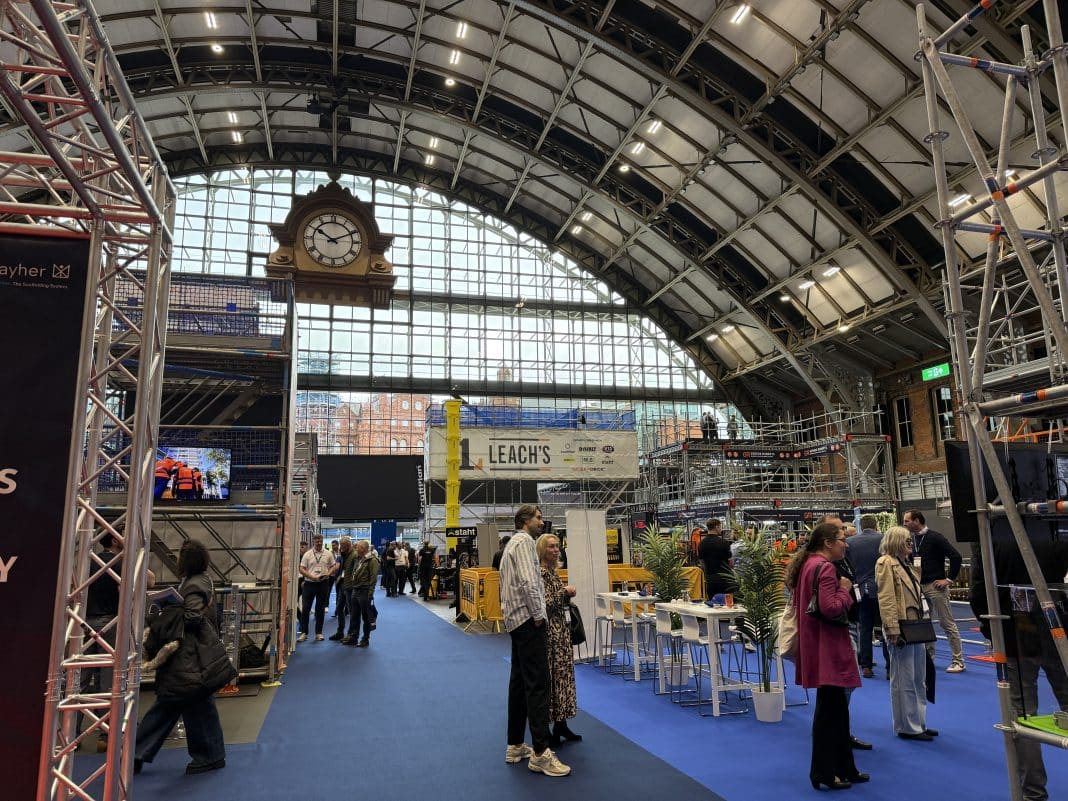
ScaffEx26 opened at Manchester Central on Thursday with large scaffold displays, viewing platforms and a conference programme focused on the practical pressures facing the trade.
Across the exhibition floor, visitors caught up with suppliers and colleagues, while the opening speakers addressed recruitment, recognition and the realities of running a scaffolding business.
Scaffolding on national radio
Earlier that morning, Clive Dickin had been taking the industry’s message to a wider audience on Virgin Radio.
His appearance before the exhibition opened covered the work behind the structures people pass every day, including scaffolding’s role in heritage restoration, energy and the film industry.
“Scaffolding is all about giving safe and efficient access to the work areas,” he said.
Dickin spoke about the range of careers available and the need to introduce the trade to young people in schools. It gave scaffolding national exposure as exhibitors and visitors prepared for the day in Manchester.
CISRS plans spark discussion
One subject came up repeatedly in Scaffmag’s conversations during the day: CISRS’s announcement that it plans to leave CSCS.
Several people who spoke to Scaffmag were initially unconvinced by the move. Questions centred on card recognition, site access and the possibility of competing requirements for scaffolders and their employers.
As Scaffmag reported on 8 September, CISRS plans to end its CSCS licence agreement on 1 June 2027, with new and renewed cards issued without the CSCS logo.
CISRS says the change will preserve a single competence card across construction and other industries, avoiding duplication. It says existing cards will remain valid until expiry, with qualifications and training routes unchanged.
Scaffmag understands CISRS was holding meetings with union representatives during the event. The outcome of those discussions was not known at the time of writing.
A bigger exhibition
The exhibition gave visitors plenty to explore, with large scaffold structures and viewing platforms drawing attention across the hall.
The NASC village included the Black Hat Arms, a pub-style space serving coffee and giving visitors somewhere to meet between stand visits. Skills and safety activities ran alongside the conference and exhibition, with a face-fit testing demonstration among the sessions announced on the floor.

Opening the conference, NASC president Sarah Klieve said the event had grown since its first edition in Belfast, with more suppliers and a wider range of products and services.
Klieve, who is also business director at High Peak Scaffolding, described a technical and creative industry that remains underestimated by the wider public.
Recruiting the next generation
Klieve put recruitment and retention firmly on the conference agenda.
She said High Peak had put at least 45 apprentices through the programme during her time in the business, with many still working for the company. Apprenticeships would remain important, she said, alongside other routes into the trade.
“We need the good people coming through. We need to give them the right skills and support,” she told delegates.
Her message also reflected the pressures facing contractors now. Businesses were dealing with changing conditions, she said, and ScaffEx gave them an opportunity to compare experiences and find practical ideas to take back to work.
Sean Pike, managing director of principal sponsor Layher UK, acknowledged the difficult market while pointing to the ambition evident across the exhibition.
He stressed the people behind scaffold designs and successful projects, encouraging visitors to use the two days to meet suppliers and develop business relationships.
Payment and risk under scrutiny
The first panel brought those business pressures into sharper focus.
PHD Access managing director Danny Dwyer described the risks contractors carry through extended payment terms and demanding project programmes, alongside the safety responsibilities inherent in working at height.
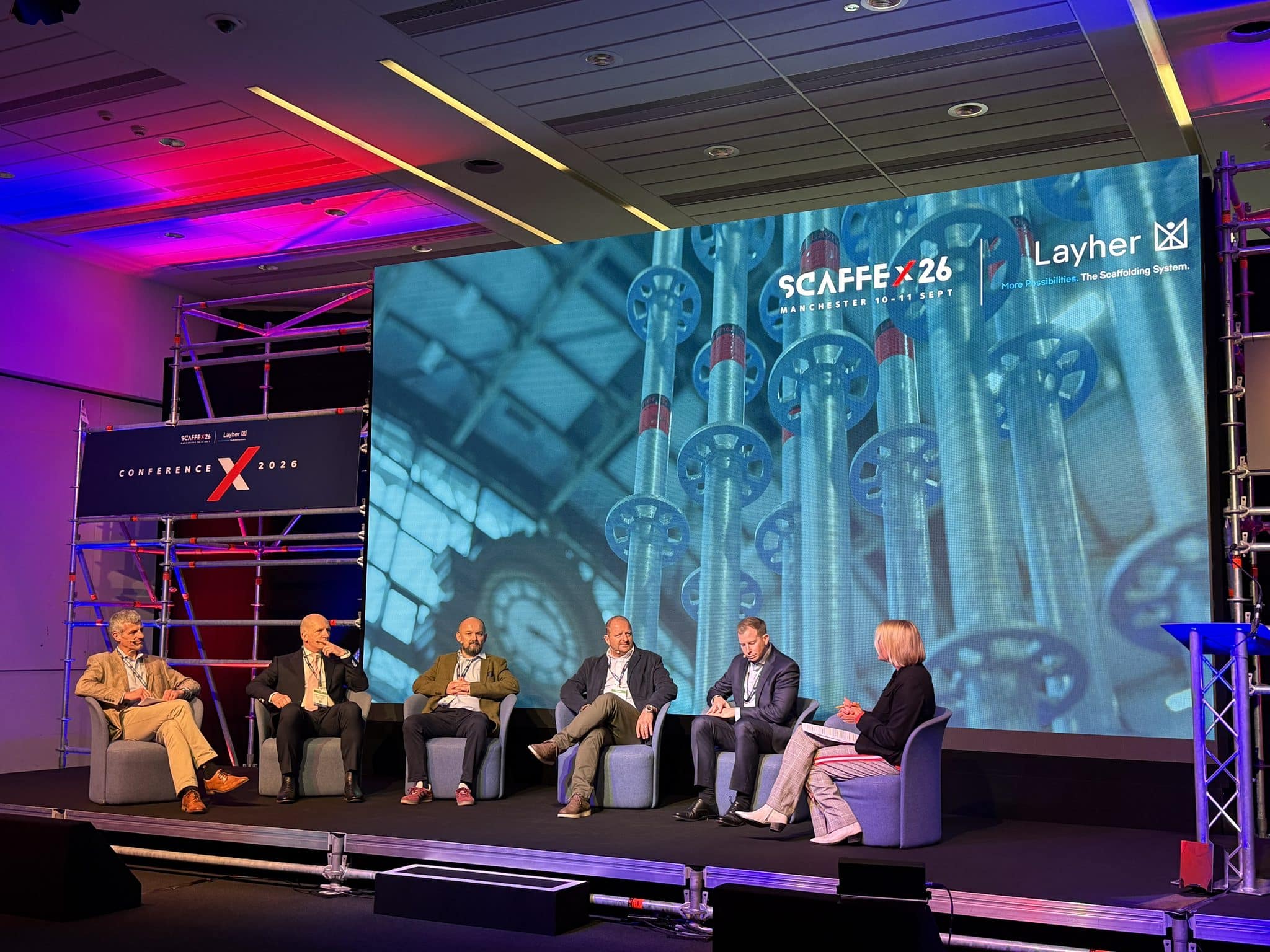
He warned that firms could face substantial exposure if they did not understand the contract terms they were accepting. A fairer approach to project delivery, he argued, would distribute risk differently across the supply chain.
Rob Wright of Lindum Group pointed to earlier involvement of scaffolding specialists as a practical way to reduce project risk. Bringing subcontractors into planning sooner helped ensure access arrangements met the needs of the trades using them.
The discussion gave contractors a direct connection between the event’s broader ambitions and the daily realities of delivering work and getting paid.
Remembering Wayne Connolly
A recorded message from Rebecca Long-Bailey, who introduced herself as the MP for Salford, paid tribute to former NASC president Wayne Connolly.
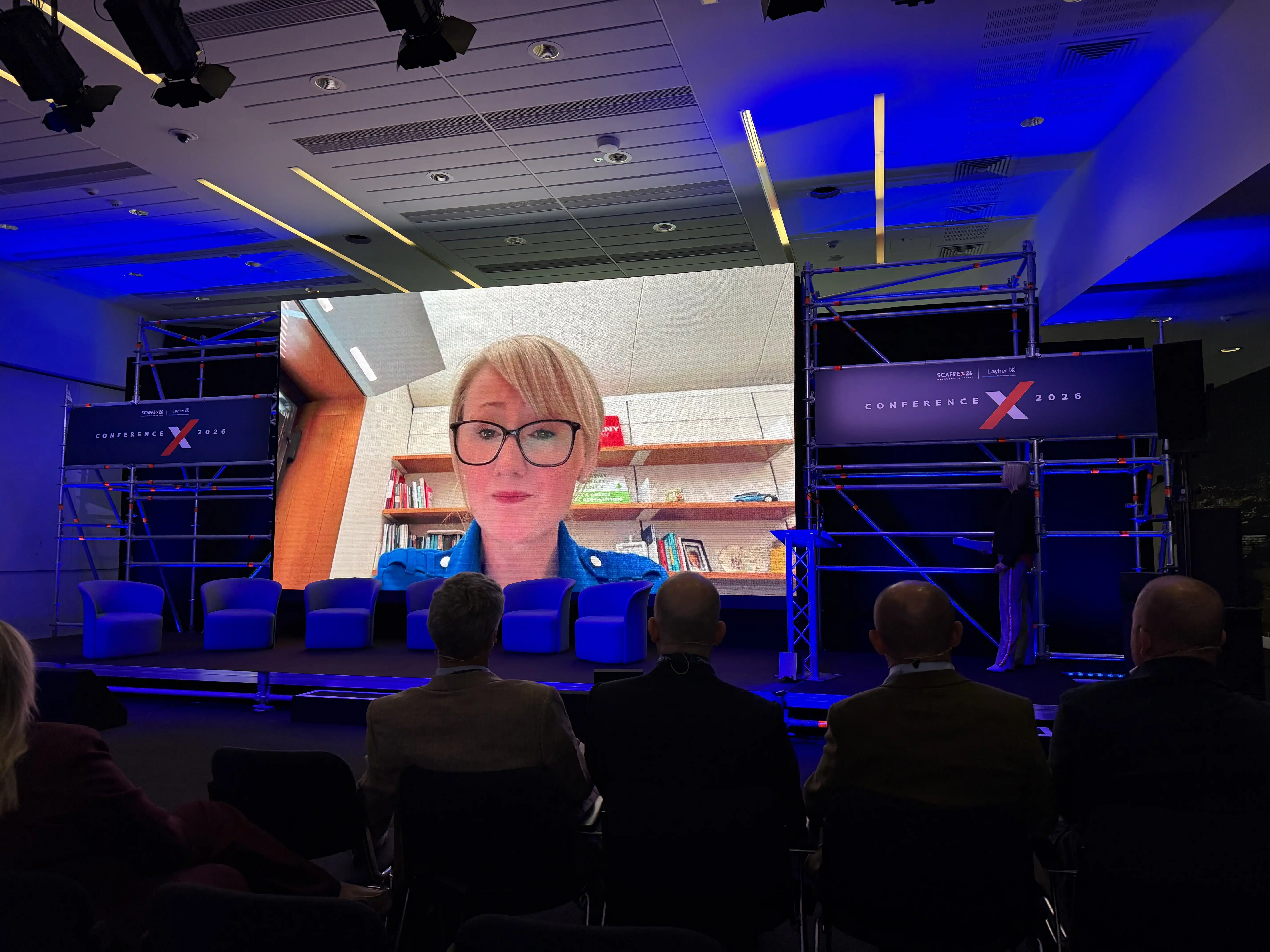
She recalled his pride in the industry and his commitment to improving recognition and conditions for those working in it.
“You’re often the first to arrive on the site and the last to leave,” she told delegates.
Long-Bailey also urged businesses to engage with their MPs, explain the work they do and use NASC’s manifesto to press for support on issues including late payment and skills shortages.
ScaffEx26 continues on Friday 11 September, with conference sessions scheduled on less visible site risks, computer-based training and temporary roofing. The Scaffolding Excellence Awards follow on Friday evening.