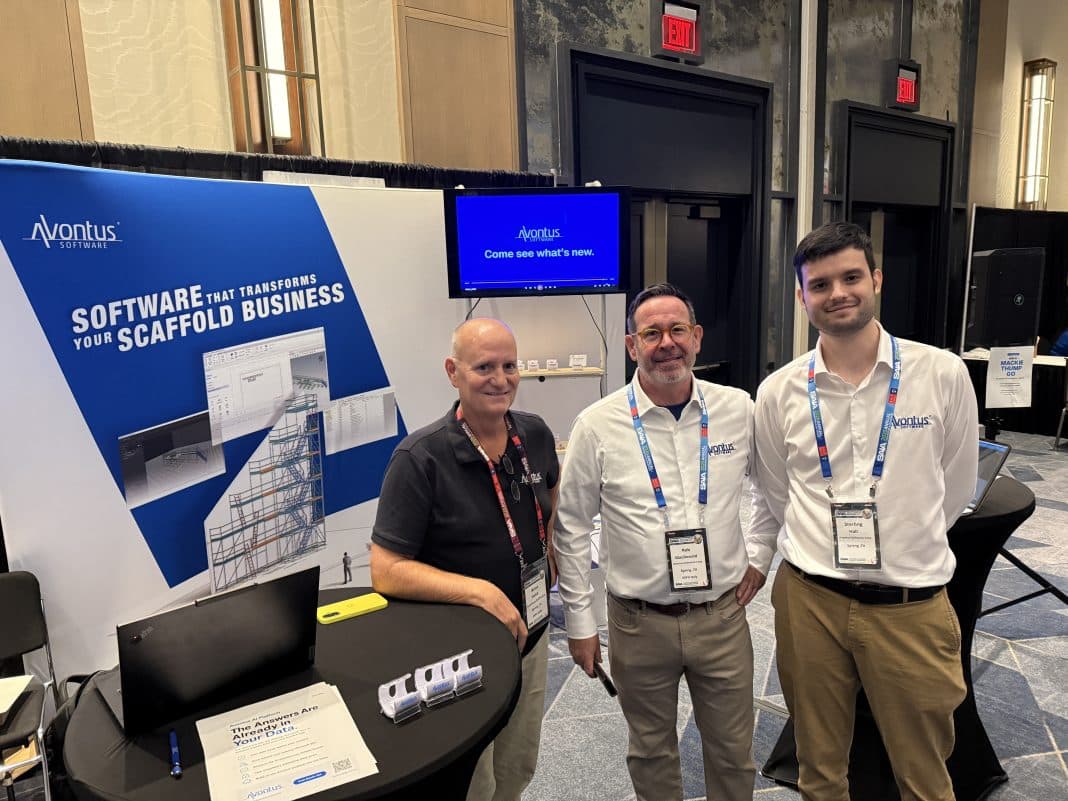
Avontus has unveiled a new artificial intelligence platform designed to connect scaffold design, inventory, project management and wider business systems through a single AI assistant.
Demonstrated during the SAIA Annual Convention and Exposition in Nashville, the Avontus AI Platform is intended to allow users to ask questions across several systems without repeatedly switching between separate applications.
The platform is being developed to connect Avontus products including Quantify, Designer, Viewer and ScaffoldIQ with customers’ existing CRM, accounting, SharePoint and company knowledge systems.
Rather than creating its own closed chatbot, Avontus is using technology known as Model Context Protocol, or MCP, which allows an AI assistant to securely access approved information held within different software platforms.
The approach is designed to work with established enterprise AI tools, while allowing customers to retain control over their data, permissions and existing business systems.
One question across the business
A worked example presented by Avontus showed how a company owner could ask which scaffold project generated the highest gross profit during the previous quarter.
The assistant would then review information from the company’s CRM, scaffold drawings, inventory records, accounting system and ScaffoldIQ before preparing a management summary.
In the example, the AI compared what had been estimated, shipped and invoiced, while also checking drawing scope, project modifications and scaffold inspection records.
The final response was held for approval rather than being sent automatically.
This approval-based approach is central to the platform. Avontus says the assistant will eventually be able to prepare documents, reservations, emails and other actions, but a person must review and approve them before anything is completed.
From scaffold model to truck-loading plan
During a demonstration seen by Scaffmag, Avontus showed how the technology could analyse a scaffold model, calculate areas and quantities, produce a bill of materials and group components according to their position within the structure.
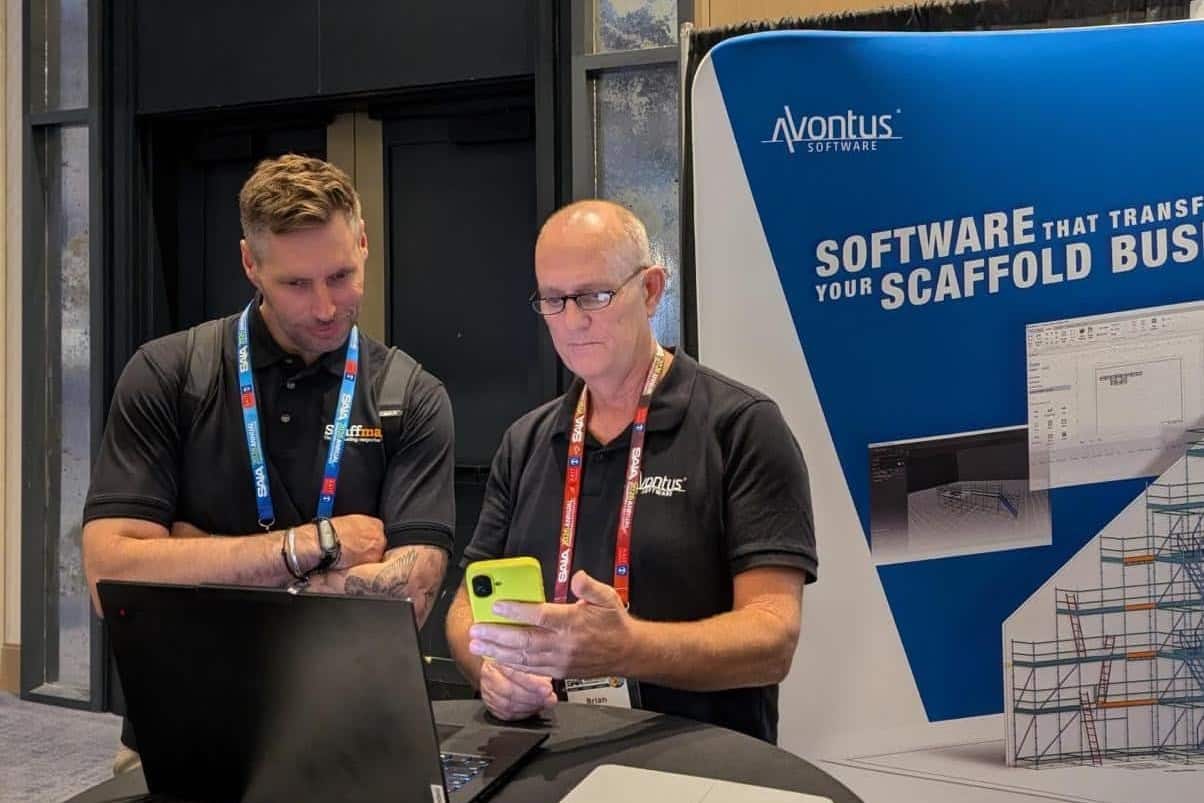
The AI was then used to create a truck-loading plan based on vehicle weight limits and the order in which materials would be needed on site.
In one example involving a power station boiler scaffold, components required for the lower sections were placed on the first trucks, allowing erection teams to begin work in the correct sequence when the equipment arrived.
The loading plan could also be adjusted where trucks had different carrying capacities.
The demonstration showed how information already contained within a scaffold drawing could be used to support transport, logistics and erection planning, rather than remaining confined to the design department.
Avontus also demonstrated how its data could be combined with customers’ existing estimating spreadsheets, allowing companies to retain their own labour rates, productivity assumptions and commercial processes.
Built around existing systems
Avontus said its approach is intended to complement the systems scaffolding businesses already use, rather than forcing them to move all their information into a new standalone platform.
Quantify would continue to manage areas such as inventory, rentals, shipping and billing, while Designer and Viewer would provide access to drawings, models and material quantities.
ScaffoldIQ could supply information relating to requests, handovers, inspections and field operations, with external accounting and CRM platforms providing financial and customer data.
The AI assistant could then bring information from these approved sources together when asked a question or given a task.
Avontus believes this open approach will reduce the disruption normally associated with introducing a completely new business platform.
It would also allow customers to continue using established accounting systems, estimating spreadsheets and internal company processes rather than being forced into a standardised workflow.
Potential users include estimators, engineers, yard teams, project managers, safety staff, finance departments and senior management.
Example tasks could include checking loading assumptions before a drawing is approved, comparing drawing revisions, identifying equipment available for upcoming reservations and matching invoices against the materials shipped to site.
Security and human control
Security is being positioned as a key part of the platform. Avontus says customer files would remain within the customer’s existing systems, with each employee only able to access information they already have permission to view.
The platform is intended to work with established company login and single sign-on controls, meaning access could be removed immediately when an employee leaves or changes role.
Every read and proposed action would also be recorded, providing an audit trail showing what information had been accessed and what the assistant had attempted to do.
Unauthorised requests would be refused, while IT departments would retain the ability to remove access for an individual, a group or the entire organisation.
Avontus has also emphasised that nothing would be sent, posted, reserved or invoiced without approval from a person.
Working technology, wider platform in development
The underlying AI connectors demonstrated to Scaffmag are operational and can currently be installed through a controlled process. Avontus said it was preparing to include the functionality within its wider software installers, making it easier for customers to deploy.
However, the complete platform presented by the company remains under development. Some functions can currently read and analyse information and prepare outputs, but certain direct actions are not yet available.
During the demonstration, for example, the AI could prepare the information needed for a Quantify reservation, but it could not yet create the reservation automatically.
Pricing, detailed data-handling terms and the full commercial rollout have also yet to be confirmed.
Avontus describes the wider platform as a roadmap vision being developed with selected design partners.
Nashville becomes launchpad for scaffold AI
Avontus was not the only software company using the Nashville convention to showcase new artificial intelligence capabilities.
ScaffPlan also unveiled an AI-driven workflow designed to connect scaffold design, estimating and wider project processes.
While the two approaches differ, both developments point to a growing move towards AI tools that can draw information from across a scaffolding business rather than operating solely as standalone design software.
The launches suggest software developers increasingly see AI not simply as a way to answer questions, but as a tool capable of connecting drawings, equipment, project records and commercial data.
Although the technology remains at an early stage, the Avontus demonstration offered a practical view of how scaffold-specific business data could be brought together to support planning, logistics and management decisions across an organisation.