Hong Kong to Phase Out Bamboo Scaffolding Over Safety Concerns

ADVERTISEMENT

Hong Kong is set to scale back its iconic use of bamboo scaffolding as officials take steps to improve safety standards on building sites.

In a policy shift announced this week, the Development Bureau said steel scaffolding would replace bamboo on at least half of all new public construction contracts.

The move follows a string of fatal incidents – with 23 workers killed in bamboo scaffold-related accidents since 2018.

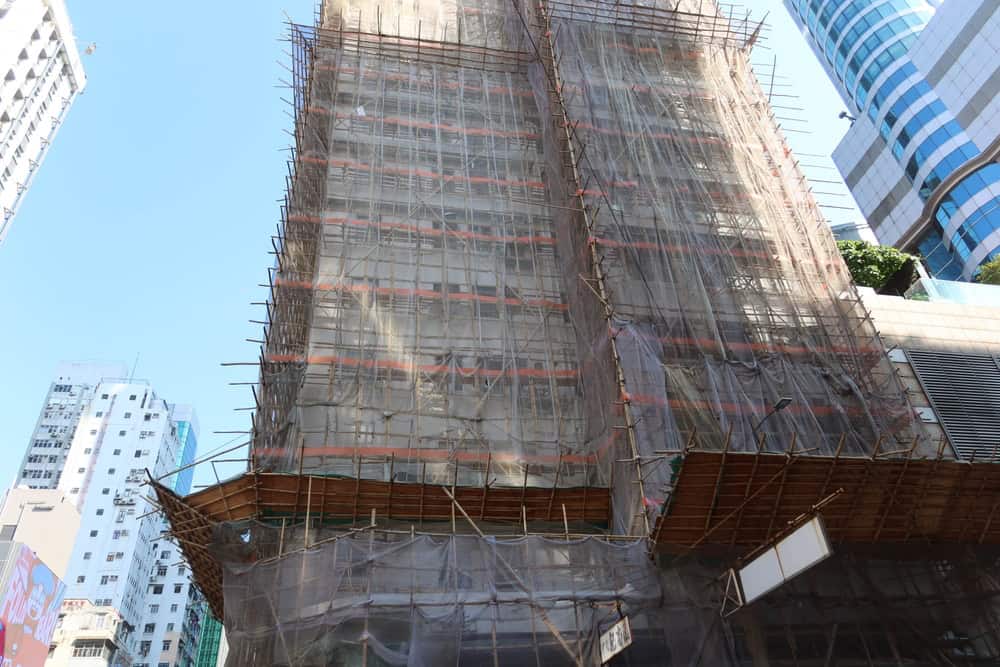
Bamboo scaffolding has long been a hallmark of Hong Kong’s urban landscape, wrapped around skyscrapers and neon shopfronts alike. Lightweight, flexible, and relatively inexpensive, it has been used for everything from small-scale renovations to the construction of major high-rises.

The practice, with roots stretching back centuries across Asia, is unique for its speed and efficiency. Bamboo poles – fastened with nylon straps instead of nuts and bolts – can be quickly erected even in the city’s narrowest streets. Generations of skilled scaffolders have passed down the technique, which is as much a craft as a trade.
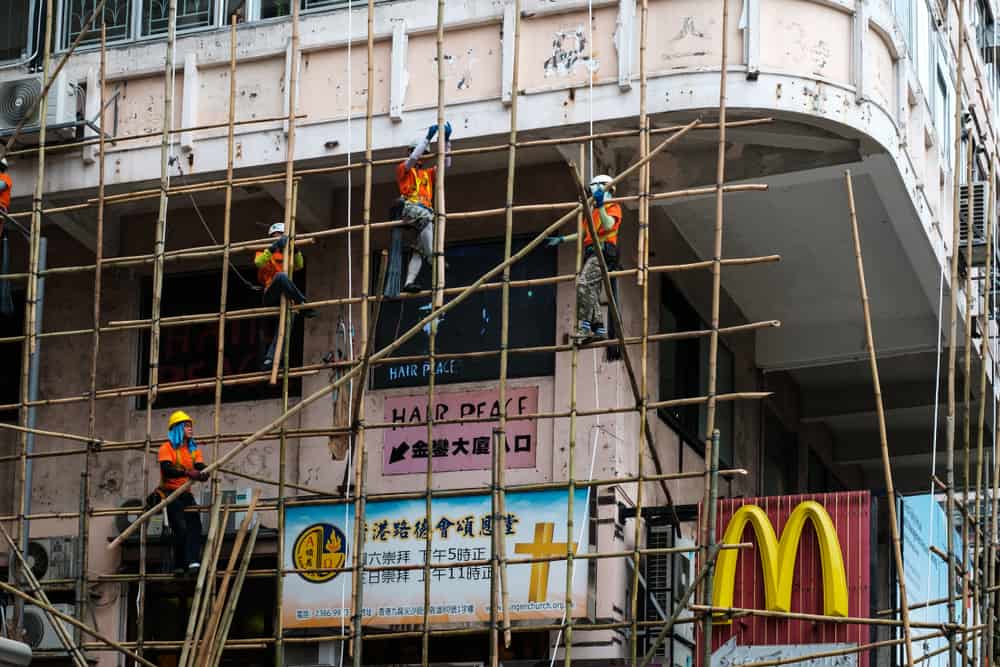
scaffolders erecting bamboo scaffolding in Hong Kong
Scaffolders erecting bamboo scaffolding in Hong Kong / Stock photo

But authorities say the material’s limitations are now too risky to ignore. Bamboo is highly flammable, can deteriorate over time, and varies in strength – making it increasingly unsuitable for modern, high-risk worksites.

“Bamboo has intrinsic flaws that raise serious concerns,” said Terence Lam, a spokesperson for the Development Bureau. “We need to prioritise worker safety.”

Currently, around 80% of scaffolds across the city are still made from bamboo, according to industry estimates. While steel scaffolding is more expensive – often two to three times the cost – it is widely seen as more robust, reliable, and better aligned with international safety standards.

The Association for the Rights of Industrial Accident Victims welcomed the change, calling on private developers to follow the government’s lead.

“Lives are being lost. Even if metal costs more, it pays off in long-term safety,” the group said. “This shift has been a long time coming.”

Some, however, see the move as the end of a cultural era. For many residents, bamboo scaffolds are a visual signature of the city – a striking contrast of tradition against modern glass and steel.

“It’s part of Hong Kong’s identity,” said one veteran scaffolder in Sham Shui Po. “But we can’t keep holding on if it puts people in danger. The world is changing.”

Most popular ↑

Australia steps up push for scaffolding to gain skilled-trade status

Scaffolding Association Australia has taken its campaign for formal trade recognition and a structured apprenticeship pathway to federal decision-makers in Canberra.

£4.5m scaffolding framework opens for contractors in North East and Yorkshire

Beyond Housing has opened bidding for a £4.5m scaffolding framework covering planned and reactive works across Redcar and Cleveland and parts of North Yorkshire.

London developer fined after required roof scaffold was never provided

A London developer and its director have been fined after unsafe roof work continued despite a subcontractor’s risk assessment identifying scaffolding as a required control.

Bamboo scaffolder recounts dismantling fire-damaged Wang Fuk Court

Hong Kong scaffolder Yip Hon-ying has described how a 30-strong team spent 3 months removing fire-damaged bamboo scaffold from 7 blocks at Wang Fuk Court.

URTIM supplies scaffolding and formwork for $2bn Ceyhan petrochemical project

Turkish formwork and scaffolding manufacturer URTIM is supplying engineered temporary works systems for the major Ceyhan PDH/PP petrochemical development in southern Türkiye.

Latest news

Acrow set to complete AGIS acquisition as industrial access expansion accelerates

Australian scaffolding and construction services group Acrow is preparing to complete its acquisition of AusGroup Industrial Services as it pushes deeper into industrial access across Queensland’s resources and infrastructure markets.
- Advertisement -
More from

Acrow set to complete AGIS acquisition as industrial access expansion accelerates

Australian scaffolding and construction services group Acrow is preparing to complete its acquisition of AusGroup Industrial Services as it pushes deeper into industrial access across Queensland’s resources and infrastructure markets.

Australia steps up push for scaffolding to gain skilled-trade status

Scaffolding Association Australia has taken its campaign for formal trade recognition and a structured apprenticeship pathway to federal decision-makers in Canberra.

Bamboo scaffolder recounts dismantling fire-damaged Wang Fuk Court

Hong Kong scaffolder Yip Hon-ying has described how a 30-strong team spent 3 months removing fire-damaged bamboo scaffold from 7 blocks at Wang Fuk Court.

SAIA names 2026 Project Award winners at Nashville convention

The Scaffold & Access Industry Association has named the winners of its 2026 Project Awards at the President’s Gala...
Latest articles