A news site in New Zealand (stuff.co.nz) have today reported that new height safety guidelines are expected to add thousands of dollars to the cost of construction.
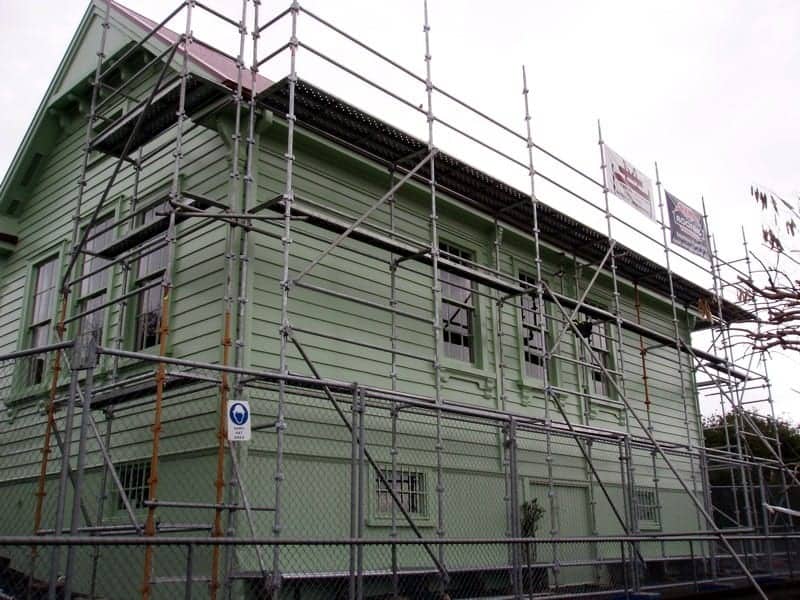
 Any work over 2.4 meters will now require scaffolding under the new Best Practice Guidelines for Working at Heights. This means that all single-story buildings will require scaffolding – something that was not required before which will now add thousands to the cost of each build.
Prepared by the Department of Labour with the Roofing Association of New Zealand, the guidelines will bring changes to the way tradesmen work at any height deemed dangerous.
Failure to meet the guidelines can lead to enforcement by health and safety inspectors such as a written warning, a prohibition notice, an infringement fine or in the most serious cases, prosecution.
While there was confusion within the building industry over what the guideline specifications and expectations were, Department of Labour inspector Marcus Nalter said no minimum height restrictions existed.
“It’s not the height that we focus on, it’s the fall because even at low falls people are getting seriously injured or even killed,” he said.
The employer therefore had a responsibility to take all practical steps to ensure work places were safe. That required them to eliminate, isolate and minimise risks.
About 50 inspectors would be visiting work sites nationwide ensuring guidelines were being met.
Hassall Homes Ltd managing director Rodger Hassall said the costs for extra scaffolding would fall directly onto the consumer.
Mr Hassall, who has been in the building industry for 40 years, said the regulations were going too far. “I think it’s going a little bit over board with a single-storey dwelling.”
For an average home the extra scaffolding would cost a couple of thousand dollars, he said.
G.J. Gardner Homes Taranaki managing director Kevin Jarvis said his company would comply with any regulations.
“If the statistics prove it will benefit staff and workers on site then we’re all for it,” he said.
Installing the additional scaffolding would add costs and time and create logistical difficulties.
“They need to understand the impact it’s going to have on the construction industry. It will cause some challenges as to how we do a job yet still comply,” he said.
Master Builders president and Taranaki builder Dave Fabish said, though it would increase costs to the customer, he supported anything aimed at improving safety standards.
Adopting the regulations would require a significant culture shift.
“It does come at a cost and it does make housing work a bit less affordable but it’s for a good cause,” Mr Fabish said.
He didn’t think the regulations went too far.
Roofing Association president Graham Moor said to see scaffolding and edge protection being used on single level dwellings was a quantum leap for the industry.
“But there’s still work to do.”
Department of Labour harm reduction programme manager Francois Barton said the new regulations were aimed at reducing the human and financial toll caused by falls from height.
“More than half the falls from height reported to the Department are happening from under three metres and most of these falls are from roofs and ladders,” Mr Barton said.
The Department of Labour has set a target of a 25 per cent reduction in serious injuries and deaths by 2020.
Via: Stuff.co.nz