
Should you use an Impact Wrench for Scaffolding?

ADVERTISEMENT

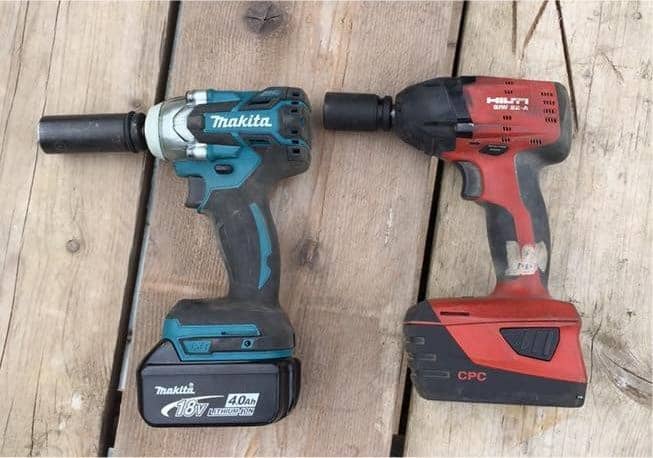
Many scaffolders across the country are ditching the traditional scaffold spanner in favour for a never tiring Impact Wrench (battery depending) for the erection and dismantle of scaffolding.

Could this be the future for our industry? Will we all end up having one of these hanging from our belts? But seriously.. should we be using Impact Wrenches ?

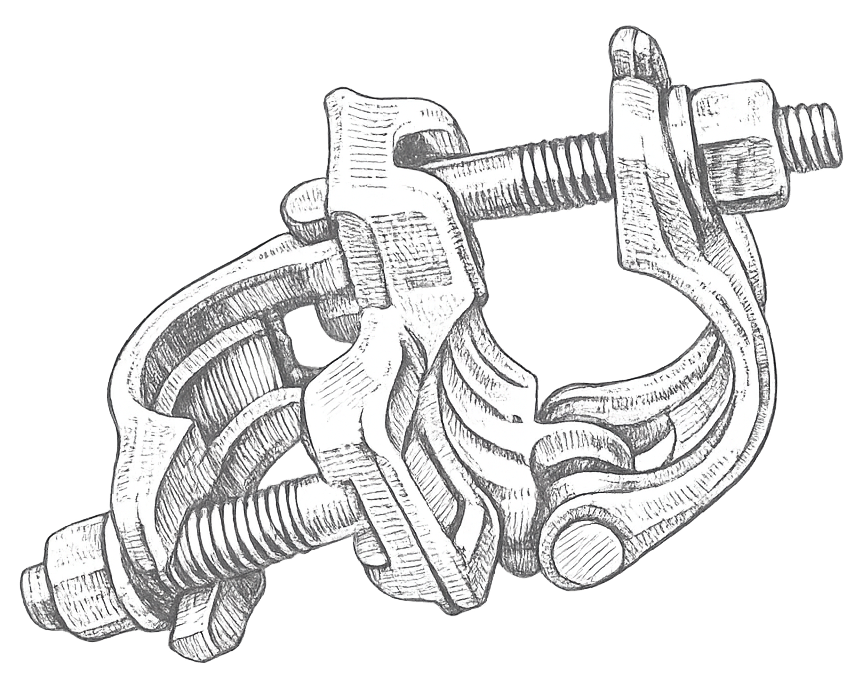
The National Access and Scaffolding Confederation (NASC) has been busy behind the scenes performing vigorous tests tightening couplers with two popular types of impact wrenches and a wide range of drop forged couplers. The couplers were from different suppliers in various conditions, new, used, lubricated and unlubricated. Over 60 tests were completed.

No Concerns

Industry experts at the NASC analyzed the data and found no concerns or adverse effects to the couplers from the tests carried out with both impact wrenches and the traditional scaffold spanner. Subsequently the NASC has deemed the use of impact wrenches for scaffolding purposes acceptable.

However the confederation has released a statement highlighting several important recommendations to be considered by the employer before the use of impact wrenches by operatives:

  1.  The recommended force required to tighten a fitting is 50 N/mtr as stated in EN 74. Most wrenches have stated torque settings (N/mtr) in excess of this recommended figure. However during testing it was noted that settings published by the manufacturer can differ greatly from what is actually achieved. It is therefore recommended that any employer considering authorising the use of impact wrenches carries out testing to establish that the impact wrench which they intend to authorise for use by their employees is capable of applying the correct torque to scaffold fittings on a consistent and recurring basis. Further to completion of an adequate risk assessment by the employer the impact wrench may then be deemed fit for purpose for erection/dismantling and alterations to scaffolding by their employees.
  2. It is recommended that prior to use of an impact wrench on site the employee should first undergo a suitable period of training, familiarisation and monitoring, to ensure that the impact wrench is being used in the correct manner at all times.
  3. The NASC recognises that impact wrenches can offer certain benefits. However members and users of such equipment should be aware that there is potential for concern regarding use and operation. Employers should adequately assess the risk for their own particular situation and ensure that they put in place protocols to cover safe use. It is recommended that any assessment should also address noise and hand/arm vibration.
  4. In addition to the initial training and familiarisation phases, it is recommended that employers should carry out regular toolbox talks refreshing operatives with company policy and rules for the safe use of impact wrenches.
  5. In the event that a nut is stripped off the ‘T’ bolt it is recommended that the fitting should be returned to the employer’s yard where a new replacement ensemble (‘T’ bolt, nut & washer) can be fitted by the company’s maintenance team.
  6. Impact wrenches are normally supplied with rechargeable lithium batteries that provide a more stable power pack. However the confederation recommends that all users follow manufacturer’s instructions and that battery life should be monitored.
  7. This statement only applies to drop forged scaffold fittings. The NASC does not recommend the use of impact wrenches with ‘pressed’ type scaffold fittings.

The NASC has also developed a basic Form which users of impact wrenches may find useful.

Let us know your thoughts in the comments below.
Most popular ↑

Wayne Connolly honoured as NASC opens 2026 awards entries

NASC has opened entries for the 2026 Scaffolding Excellence...

GKR scaffolders help save woman’s life at London project

A GKR Scaffolding site team has been praised after...

Mock the Week star to host ScaffEx26 awards night

Comedian and television presenter Dara Ó Briain has been...

Australian scaffolding body warns Kwikform collapse exposes subcontractor risks

Australia’s scaffolding trade body has said the voluntary administration...

HAKI CEO Sverker Lindberg to step down by 2027

HAKI Safety has confirmed that its President and CEO,...

Latest news

Should you use an Impact Wrench for Scaffolding?

ADVERTISEMENT

Many scaffolders across the country are ditching the traditional scaffold spanner in favour for a never tiring Impact Wrench (battery depending) for the erection and dismantle of scaffolding.

Could this be the future for our industry? Will we all end up having one of these hanging from our belts? But seriously.. should we be using Impact Wrenches ?

The National Access and Scaffolding Confederation (NASC) has been busy behind the scenes performing vigorous tests tightening couplers with two popular types of impact wrenches and a wide range of drop forged couplers. The couplers were from different suppliers in various conditions, new, used, lubricated and unlubricated. Over 60 tests were completed.

No Concerns

Industry experts at the NASC analyzed the data and found no concerns or adverse effects to the couplers from the tests carried out with both impact wrenches and the traditional scaffold spanner. Subsequently the NASC has deemed the use of impact wrenches for scaffolding purposes acceptable.

However the confederation has released a statement highlighting several important recommendations to be considered by the employer before the use of impact wrenches by operatives:

  1.  The recommended force required to tighten a fitting is 50 N/mtr as stated in EN 74. Most wrenches have stated torque settings (N/mtr) in excess of this recommended figure. However during testing it was noted that settings published by the manufacturer can differ greatly from what is actually achieved. It is therefore recommended that any employer considering authorising the use of impact wrenches carries out testing to establish that the impact wrench which they intend to authorise for use by their employees is capable of applying the correct torque to scaffold fittings on a consistent and recurring basis. Further to completion of an adequate risk assessment by the employer the impact wrench may then be deemed fit for purpose for erection/dismantling and alterations to scaffolding by their employees.
  2. It is recommended that prior to use of an impact wrench on site the employee should first undergo a suitable period of training, familiarisation and monitoring, to ensure that the impact wrench is being used in the correct manner at all times.
  3. The NASC recognises that impact wrenches can offer certain benefits. However members and users of such equipment should be aware that there is potential for concern regarding use and operation. Employers should adequately assess the risk for their own particular situation and ensure that they put in place protocols to cover safe use. It is recommended that any assessment should also address noise and hand/arm vibration.
  4. In addition to the initial training and familiarisation phases, it is recommended that employers should carry out regular toolbox talks refreshing operatives with company policy and rules for the safe use of impact wrenches.
  5. In the event that a nut is stripped off the ‘T’ bolt it is recommended that the fitting should be returned to the employer’s yard where a new replacement ensemble (‘T’ bolt, nut & washer) can be fitted by the company’s maintenance team.
  6. Impact wrenches are normally supplied with rechargeable lithium batteries that provide a more stable power pack. However the confederation recommends that all users follow manufacturer’s instructions and that battery life should be monitored.
  7. This statement only applies to drop forged scaffold fittings. The NASC does not recommend the use of impact wrenches with ‘pressed’ type scaffold fittings.

The NASC has also developed a basic Form which users of impact wrenches may find useful.

Let us know your thoughts in the comments below.

Popular Categories

Latest posts

ScaffChamp 2026 confirms global live stream details

ScaffChamp powered by Layher 2026 will once again be broadcast live to the global scaffolding community. The official live stream will begin on 6 June...

Australian scaffolding body warns Kwikform collapse exposes subcontractor risks

Australia’s scaffolding trade body has said the voluntary administration of the Kwikform group highlights wider concerns over subcontractor exposure and payment risk across the...

HAKI CEO Sverker Lindberg to step down by 2027

HAKI Safety has confirmed that its President and CEO, Sverker Lindberg, will leave his position no later than April 2027. The company said Lindberg has...

Staht signs US distribution deal for digital pull testing range

UK digital pull testing manufacturer Staht has appointed Diversified Fall Protection as its exclusive distributor in the United States. The agreement will see Diversified market,...

GKR scaffolders help save woman’s life at London project

A GKR Scaffolding site team has been praised after helping to save the life of a woman who collapsed outside a live London project. The...

King’s Award recognises Lee Marley Group’s training work

Lee Marley Group has received a King’s Award for Enterprise in recognition of its work to widen access to careers in construction. The large-scale construction...

Mock the Week star to host ScaffEx26 awards night

Comedian and television presenter Dara Ó Briain has been confirmed as the host of this year’s Scaffolding Excellence Awards. The awards evening will take place...

Wayne Connolly honoured as NASC opens 2026 awards entries

NASC has opened entries for the 2026 Scaffolding Excellence Awards, with this year’s apprentice category renamed in memory of former NASC president and CISRS...

TRAD UK launches charity campaign supporting Epilepsy Action

TRAD UK has launched a new fundraising campaign in support of Epilepsy Action, the national charity helping people and families affected by epilepsy. The 2026-27...

Scaffolding firms urged to review RIDDOR procedures as HSE consults on changes

The Health and Safety Executive has launched a consultation on proposed changes to the Reporting of Injuries, Diseases and Dangerous Occurrences Regulations 2013, known...

Spring Issue #29 | Past issues >>

Latest topics

Most popular ⚡︎

Wayne Connolly honoured as NASC opens 2026 awards entries

NASC has opened entries for the 2026 Scaffolding Excellence...

GKR scaffolders help save woman’s life at London project

A GKR Scaffolding site team has been praised after...

Mock the Week star to host ScaffEx26 awards night

Comedian and television presenter Dara Ó Briain has been...

Australian scaffolding body warns Kwikform collapse exposes subcontractor risks

Australia’s scaffolding trade body has said the voluntary administration...

HAKI CEO Sverker Lindberg to step down by 2027

HAKI Safety has confirmed that its President and CEO,...

Related articles

ADVERTISEMENTS
More from
Latest articles

ScaffCycle relaunches used scaffolding marketplace

ScaffCycle has relaunched its online marketplace for used scaffolding after rebuilding the platform to...

ScaffChamp 2026 confirms global live stream details

ScaffChamp powered by Layher 2026 will once again be broadcast live to the global...

Australian scaffolding body warns Kwikform collapse exposes subcontractor risks

Australia’s scaffolding trade body has said the voluntary administration of the Kwikform group highlights...

HAKI CEO Sverker Lindberg to step down by 2027

HAKI Safety has confirmed that its President and CEO, Sverker Lindberg, will leave his...

Staht signs US distribution deal for digital pull testing range

UK digital pull testing manufacturer Staht has appointed Diversified Fall Protection as its exclusive...

GKR scaffolders help save woman’s life at London project

A GKR Scaffolding site team has been praised after helping to save the life...