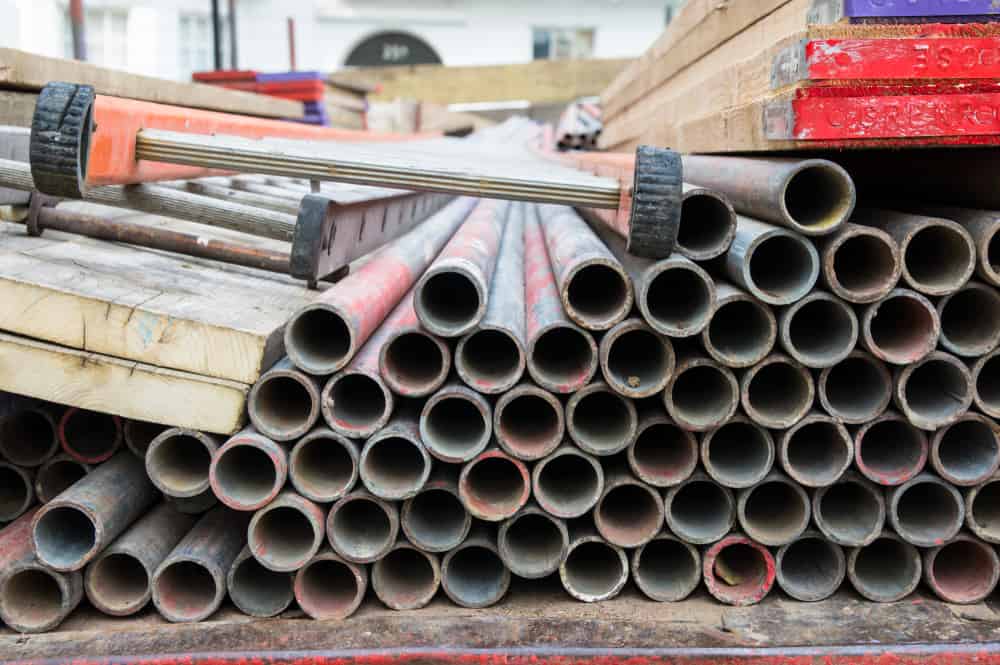
Unsecured scaffolding equipment was among the problems identified during September’s Operation Rule checks, Sussex Police has revealed.
Of 136 commercial vehicles stopped nationally, 46.3% required enforcement action or advice. Other issues included loose pallets and building materials, overloading and excessive driver hours.
The results, published on 8 October, compare with intervention rates of 59.2% in 2025 and 73.6% in 2024. Those operations involved 120 and 131 vehicles respectively.
PC Barry Freeman, of Sussex Police’s Commercial Vehicle Unit, acknowledged the small sample while welcoming the improvement. The figures cover vehicles stopped during the operation, rather than a representative survey of scaffolding transport.
Sussex officers stopped 26 vehicles on the A23 at Handcross on 8 September, the highest total among participating forces. Police did not provide a separate figure for scaffolding vehicles.
Securing scaffolding for the journey
The Driver and Vehicle Standards Agency’s scaffolding transport guidance explains that tubes and boards can shift because friction is low both between components and against the load bed.
Where tubes and boards are carried at an angle over the headboard, the guidance requires at least two loop, or choke, lashings unless each component is individually clamped to the headboard. Tie-down lashings alone are insufficient for that arrangement.
Horizontally stacked equipment must also be secured to the vehicle. DVSA recommends sheeting as much of the load bed as possible before applying frictional lashings.
A physical barrier is required where there is no tailboard or the load projects beyond the rear of the bed. DVSA also requires fittings to travel in a lidded or covered container secured to the load bed.