Safety must be non-negotiable in scaffolding projects. While scaffolding structures are essential for construction and maintenance work, they can pose risks to the public. Billy Jones, Millcroft’s Managing Director, provides an in-depth look at the complex considerations involved in designing scaffolding for use in public places and explains how Millcroft ensures the safety of workers, pedestrians and passersby during its wide range of projects.
No matter what the project is, the design and installation of scaffolding structures must be carefully managed to reduce the risk to public safety. Hazards such as falling objects, debris, dust, and restricted access must all be considered. The best way to address these risks is through a meticulous and well-thought-out approach that prioritises safety at every stage of the project.
The foundation of public safety: risk assessments
Every project should begin with a thorough risk assessment. Before designing and erecting any scaffolding, we conduct a thorough risk assessment to identify potential threats to the public. This isn’t a box-ticking exercise, it involves evaluating every aspect of the project site and identifying areas where the public might be affected by the scaffolding during our operations.
High-traffic areas, building entrances, pavements and shared spaces, are assessed so that we can develop a strategy to eliminate or mitigate the risks. But we don’t stop there. Our risk assessments go beyond the immediate hazards. Construction sites are ever-changing environments so our risk assessments evolve alongside the project, allowing us to be agile and adapt to changing site conditions.
Practical measures: barriers, public demarcation and signage
Physical barriers effectively separate the public from hazards by preventing them from entering an active work area. Sturdy fencing, hoardings and demarcation systems help create safe zones, reducing the risk of accidents. Prominent warning signs further enhance safety by directing pedestrians away from hazards and guiding them through alternative routes if needed.
Installing barriers and signage isn’t just about compliance with regulations—it’s about instilling confidence. The public should feel reassured when walking past a scaffolding project, knowing that every precaution has been taken to ensure their safety.
Protecting against falling objects
Debris and falling objects pose a significant risk to public safety during scaffolding operations. Even a small piece of material falling from height can have serious consequences. Our protective systems go beyond basic measures. Millcroft often employs advanced protective systems like debris netting and cantilevered fans to catch any materials that may drop from the work area and shield pedestrians and vehicles below.
For example, we used a cantilevered gallows bracket detail with bridging elements during a repair project involving Transport for London (TfL) properties above Baker Street Station. This eliminated the need to ground any scaffold and resulted in zero public disruption while we installed the scaffolding system.
Maintaining safe public access
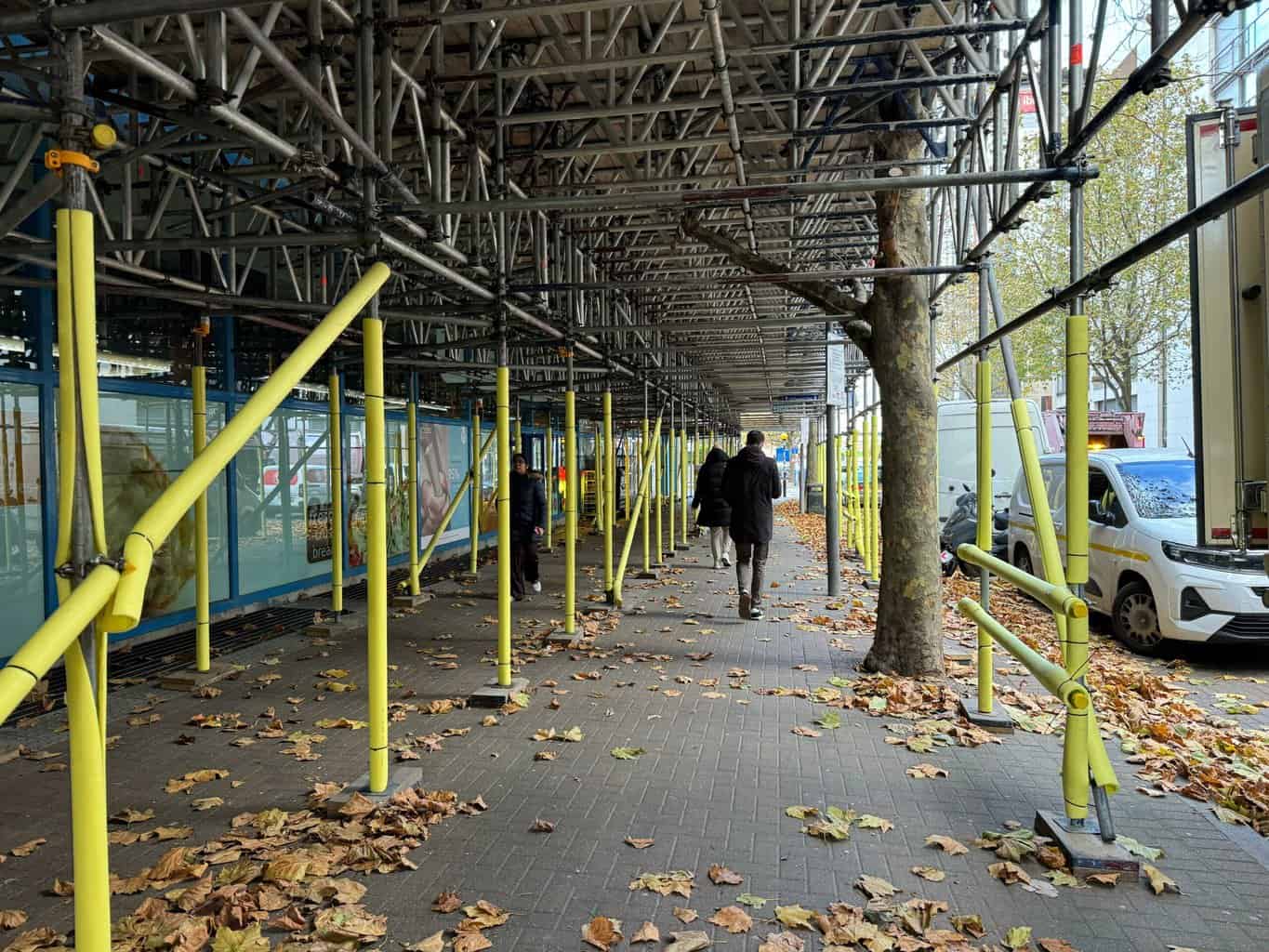
Our projects are often in bustling urban environments where we must maintain accessibility while construction work is underway. Incorporating dedicated walkways and protective gantries into the scaffold designs provides safe pedestrian routes while minimising disruption.
At Blashford Tower, we constructed a dedicated walkway to maintain safe access to the adjacent medical centre during essential recladding and fire safety works. Similarly, at Wells House on Oxford Street, we used a fully-wrapped scaffold to enclose the work area and bridged design to ensure public access to the neighbouring properties without compromising on safety or operational efficiency.
Routine inspections and immediate maintenance
Our obligation to public safety doesn’t end when the scaffold structure has been installed. Regular monitoring, and rapid responses to any issue, secures the ongoing safety of both workers and the public. A scaffolding structure must be inspected and maintained regularly to ensure its ongoing integrity. Our teams conduct routine inspections of the structure, particularly after adverse weather conditions or reports of debris falling onto the structure. This involves thorough checks to confirm barriers, signs, and safety features are intact and capable of withstanding changing conditions and assessing any damage caused by impact. Any required repairs, such as to components or impact absorption layers, are carried out promptly to prevent potential hazards affecting public safety.
Putting our safety protocols into practice
The Euston Station Project
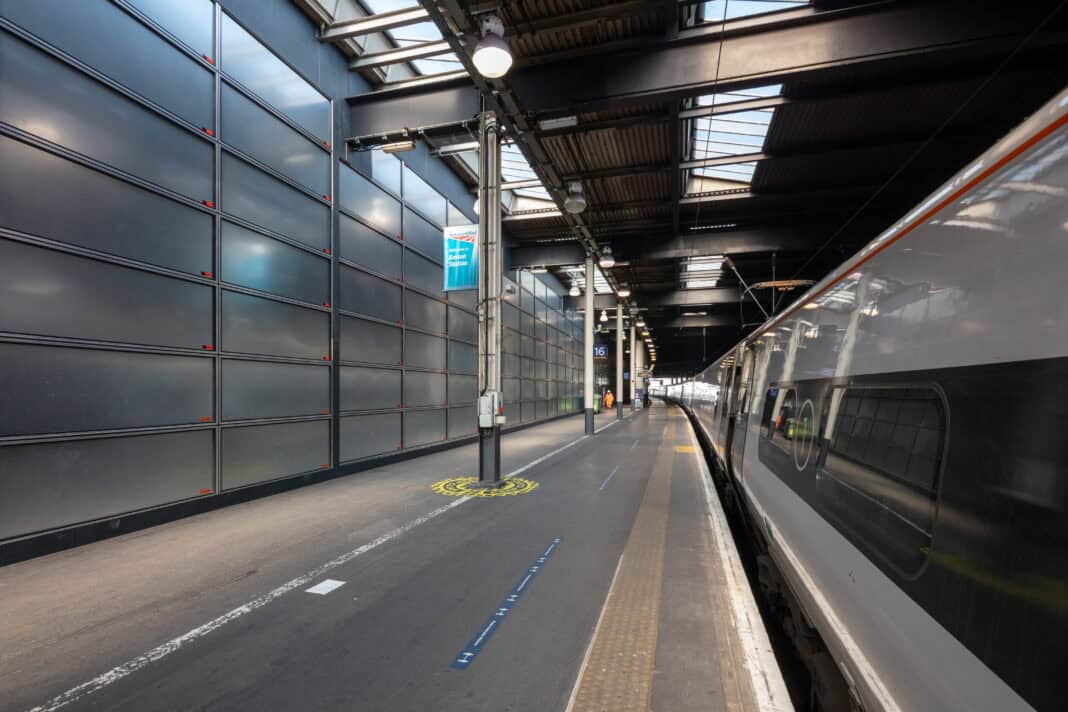
Public safety considerations took centre stage during HS2 enabling works at Euston Station for a long term client Skanska , where we installed containment screens spanning the length of three platforms to separate public areas from active construction zones.
The 8m high screens, spanning 230m, were clad with modular acoustic panels designed to withstand high volume crowd loadings. The encapsulation screens incorporated Layher’s solid scaffold containment panels, which provided robust safety barriers while reducing noise pollution and creating a containment screen that eliminated all construction dust from entering the public areas of the station and platforms.
The screens, which at the time were the largest of their kind in Europe, were secured at their head to the stations roof primary and secondary steel beams and using kentledge at base level to avoid penetrative fixings into the platform .
Westgate Apartments
One of our recent challenging yet successful projects was at Westgate Apartments near London’s Excel Arena, where public safety was paramount. Here, we were called in for an emergency response after glass balustrades fell from the upper floors of the 11 storey building down to ground level, posing an immediate threat to public safety.
To protect pedestrians, we collaborated closely with the client’s appointed structural engineer to design a custom, multi-tiered scaffolding solution. The team installed two decks, one front elevation and one rear elevation. In addition, we constructed an emergency response deck for the consultation stage, where we agreed on the deck’s impact loading requirement. The deck was retrofitted to the specifications and built for the rear elevation deck.
We recommended full-height independent scaffold access in one narrow part of the building beside a busy road as a cost-effective alternative to high-load protection decks. This solution overcame the possibility of falling debris and provided the access required for the project’s next stage.
By using 3D visualisation, we’ve enabled the client to remotely inspect the design via a virtual walkthrough, giving them confidence in the system’s ability to protect the public.
Innovation in scaffolding design
The Westgate Apartments and Euston Station project exemplify how we put innovation at the heart of our public safety strategy. Whether integrating 3D design tools or adopting innovative solutions such as Layher’s containment panel at Euston Station (to ensure no single-use plastic material was used) we’re constantly looking for ways to enhance our scaffolding solutions. Our designs protect the public and reflect our commitment to sustainability and efficiency.
Commitment to public safety
Protecting the public must be a core part of any scaffolding project. At Millcroft, we combine rigorous assessments, advanced design and the skills of our experienced teams to deliver scaffolding solutions that prioritise safety above all else. Whether busy city centre developments or major infrastructure works, by integrating modern practices and traditional expertise, we don’t just build scaffolding – we create safe environments that allow construction works to continue without compromising public wellbeing.