
UK construction activity is expected to recover from 2027 after a difficult start to the year, according to Glenigan’s Summer 2026 Construction Forecast.
The report predicts underlying project starts, covering schemes under £100m, will fall by 1% in 2026 before rising by 11% in 2027 and a further 4% in 2028.
That would leave activity 13% higher than 2025 levels by the end of the forecast period.
Glenigan said the short-term picture remains weak, with investors and developers reassessing planned schemes following a volatile six months for the UK and global economy.
But the construction intelligence firm expects improving economic conditions, stronger public spending and renewed private investment to support a wider recovery from next year.
Allan Wilen, economics director at Glenigan, said the sector had faced “a turbulent few months”, with projects being reviewed and rescheduled.
He said activity was expected to strengthen from 2027 as confidence returns across private and public sector markets.
“There are some particularly exciting growth areas as Government funding is released and investor appetite starts to return to the market,” he said.
“Contractors will need to be quick off the mark as more favourable conditions are finally felt.”
Public sector work expected to rise
Education and health are forecast to be among the stronger areas of growth.
Education project starts are expected to rise by 8% in 2026, followed by 20% growth in 2027 and a further 5% in 2028.
Glenigan said school construction will continue to dominate, supported by clearer funding for rebuilding and refurbishment work across ageing education estates.
Health work is also forecast to recover. Starts are expected to rise by 9% this year, another 9% in 2027 and 14% in 2028.
The forecast points to increased capital funding, deferred NHS schemes and work linked to estate repairs, diagnostic hubs and community care facilities.
Civils and utilities provide further support

Civil engineering activity is expected to remain flat in 2026 before rising by 15% in 2027.
Glenigan said water, energy and transport work should support the sector over the forecast period.
Water investment is expected to increase following Ofwat’s approval of £104bn of upgrades and repairs between 2025 and 2030.
Electricity networks, renewables, offshore wind and nuclear projects, including Hinkley Point C and Sizewell C, are also expected to support demand.
Transport infrastructure is forecast to strengthen from next year, helped by funding for road maintenance, rail upgrades, HS2 and the TransPennine Route.
Offices and industrial work show mixed picture
Office starts are expected to rise by 21% in 2026, making the sector one of the stronger performers this year.
Glenigan said demand is being driven by high-quality, energy-efficient office space, flexible working requirements and data centre development linked to artificial intelligence.
However, office activity is forecast to fall by 11% in 2027 after recent growth, before returning to a 4% rise in 2028.
Industrial work is expected to fall by 9% this year, before rising by 16% in 2027 and 5% in 2028.
Demand for logistics space, business investment and planning policy changes are expected to support the recovery.
Housebuilding tipped for 2027 recovery
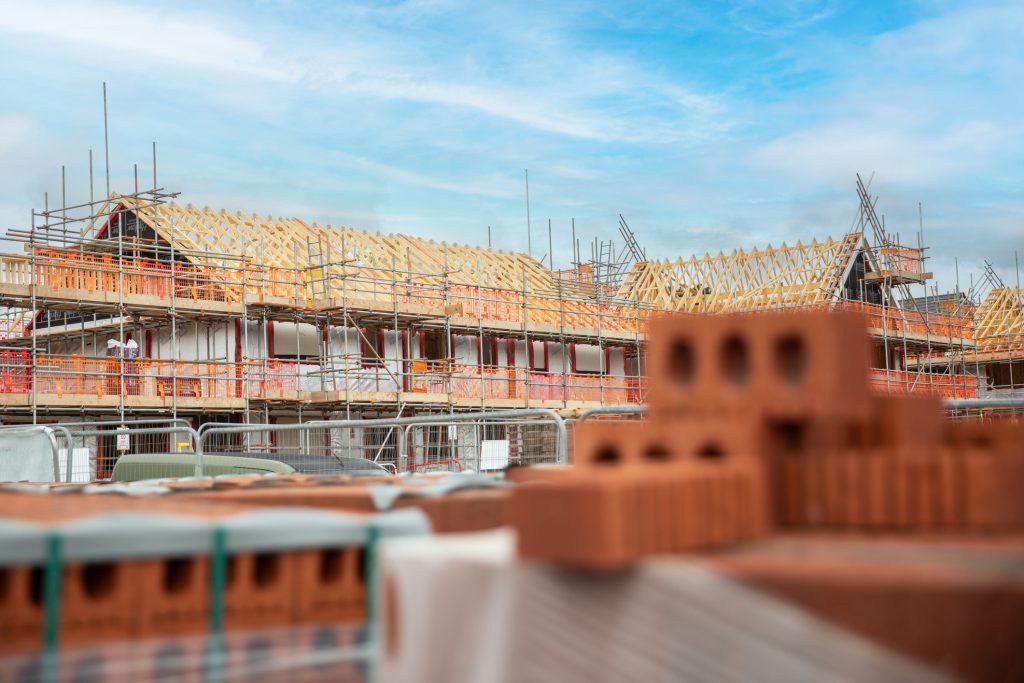
Private and social housebuilding are both expected to finish 2026 in negative territory.
Private housing starts are forecast to fall by 5% this year, while social housing is expected to fall by 3%.
Glenigan expects private housing to rebound by 13% in 2027 and 5% in 2028, supported by lower borrowing costs, better consumer confidence and planning reform.
Social housing starts are forecast to rise by 8% in 2027 and 4% in 2028.
The report said higher Government funding, changes to the Social Housing Rent Cap and faster Building Safety Regulator approvals should help more schemes move forward.
Retail and leisure still under pressure
Retail construction is forecast to rise by 1% in 2026, followed by 10% growth in 2027 and a 4% fall in 2028.
Glenigan said supermarket work is expected to remain the largest part of retail activity.
Hotel and leisure starts are forecast to fall by 12% this year, before rising by 11% in 2027 and slipping by 1% in 2028.
The sector has been hit by cost pressure, weaker margins and uncertainty affecting travel and hospitality investment.
Glenigan said a recovering economy and lower business rates for retail, hospitality and leisure could help operators bring forward delayed schemes.
For scaffolding and access contractors, the forecast points to a market that may remain uneven through the rest of 2026, before stronger tender pipelines begin to appear in 2027.