
Bricklayer’s Near-Fatal Fall Results in £12,000 Fine

ADVERTISEMENT

A Shropshire-based construction company has been fined £12,000 after a bricklayer sustained serious injuries in a near-fatal workplace accident. 

The Health and Safety Executive (HSE) ordered the company, which was overseeing the conversion of agricultural barns into houses in Telford, to also pay costs of £4,139 at Cannock Magistrates’ Court on 21 July 2023.

Scott Ife, a 30-year-old bricklayer from Bridgnorth, suffered a fractured skull and damage to his facial nerve after falling through a stairwell opening on 8 June 2020. At the time of the incident, Mr Ife was 27 years old and working on a two-storey extension to the property.

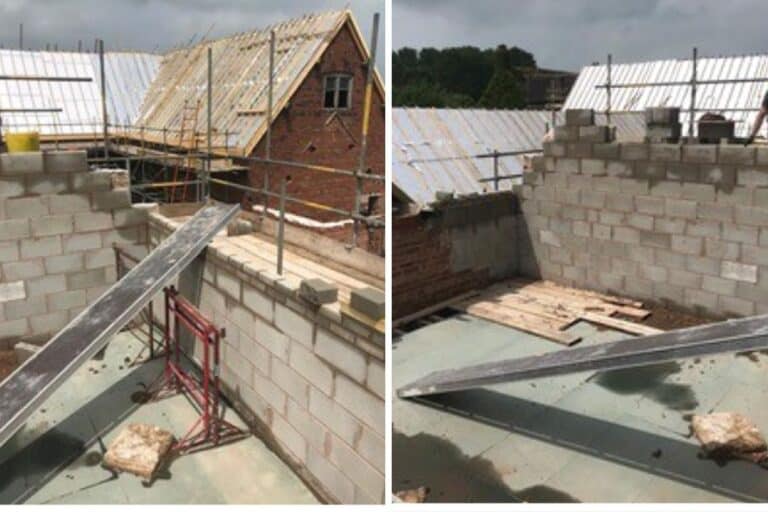
The court heard that Mr Ife and a colleague set up a working platform using Youngman boards on the first floor. Due to an unprotected stairwell opening, one end of the boards was left unsupported. 

Tragically, while pointing up the blocks to form the gable walls, Mr Ife lost his balance, fell onto the unsupported boards, and through the stairwell opening. The accident caused him to plummet four-and-a-half metres onto the concrete floor below, leading to a three-day hospitalisation.

The HSE investigation that followed uncovered numerous safety failings by 2 Counties Construction (Midlands) Ltd. These included a lack of suitable controls to prevent falls into the building and through stairwell openings, inadequate planning, poor selection of equipment for working at height, and insufficient site management arrangements.

“This incident could and should have been easily avoided,” said HSE inspector David Brassington. “Work at height needs to be properly planned and managed to ensure that appropriate precautions are used. We are fortunate that the injuries resulting from these failings were not more serious.”

2 Counties Construction (Midlands) Ltd, based in Broomhall, Worcester, pleaded guilty to breaching the Construction (Design and Management) Regulations 2015.

SM Newsdesk
SM Newsdeskhttps://www.scaffmag.com
The staff at ScaffMag.com the leading scaffolding site for a digital generation.

Most popular ↑

Saudi firm breaks 27-year-old scaffolding world record

Saudi scaffolding firm Manar Al Omran has set a new Guinness World Record after building a 67.40m free-standing scaffold in Dammam.

CSCS challenges CISRS case for leaving card scheme

CSCS has challenged the reasons for CISRS’s planned departure, while CISRS tells ScaffMag its legal advice and concerns over duplicate cards underpin the decision.

Australian scaffolding group enters administration with over 650 jobs at risk

A group of companies linked to one of Australia’s...

China joins IASA as global membership continues to expand

China has become the latest country to join the...

SG4:10 We Think The Answer Is Fast Guard™

If Carlsberg made advance guardrails.....  could this be the...

Latest news

Right-to-work rules extend liability through construction supply chains

Contractors face new responsibilities for labour supplied through subcontracting chains as expanded right-to-work rules come into force.
- Advertisement -
More from

Right-to-work rules extend liability through construction supply chains

Contractors face new responsibilities for labour supplied through subcontracting chains as expanded right-to-work rules come into force.

Housing permission slump raises questions over future scaffolding workload

Planning permissions for new homes in England have fallen to their lowest quarterly level since 2012, raising questions over the volume of residential work likely to reach scaffolding contractors further down the construction pipeline.

Builder fined £120,000 after fatal fall through unsafe floor

W G Carter has been fined £120,000 after carpenter Richard “Felix” Roper suffered fatal injuries in a fall during building work, with HSE pointing to safer access and work sequencing.

Queensland coroner calls for mandatory tower scaffold controls after fatal collapse

A Queensland coroner has called for mandatory additional controls on freestanding tower scaffolds in public places after finding that the industry’s accepted height-to-base rule of thumb was not enough to protect against strong winds.
Latest articles