
PERI Training Courses Eligible for Substantial CITB Funding

ADVERTISEMENT

In a significant boost for the construction sector, PERI, a leading provider of formwork, system scaffolding and training, has announced that its courses will now be heavily subsidised for levy-registered employers in London, with many other regions across Great Britain also eligible for the funding.

This initiative is part of PERI’s recent partnership with the Construction Industry Training Board (CITB) through the Employer Networks programme. Under this scheme, CITB will fund 70% of the cost for any course offered by PERI, a move designed to make high-quality training more accessible to a broader range of employers across the industry.

The Employer Networks initiative, launched by CITB, aims to address the growing skills gap in the construction sector by encouraging employers to invest more in workforce training.

By partnering with trusted delivery organisations like PERI, CITB hopes to provide more workers with the necessary skills to meet industry demands and ensure safer working environments.

PERI, which has been a CITB Approved Training Organisation since 2020, views this initiative as a vital opportunity to expand its training services and reach more employers.

The company offers an extensive range of scaffolding and formwork courses, including specialised jumpform climbing courses, at its 600-square-metre flagship training facility in Brentwood. Additionally, PERI provides on-site training across the UK upon request.
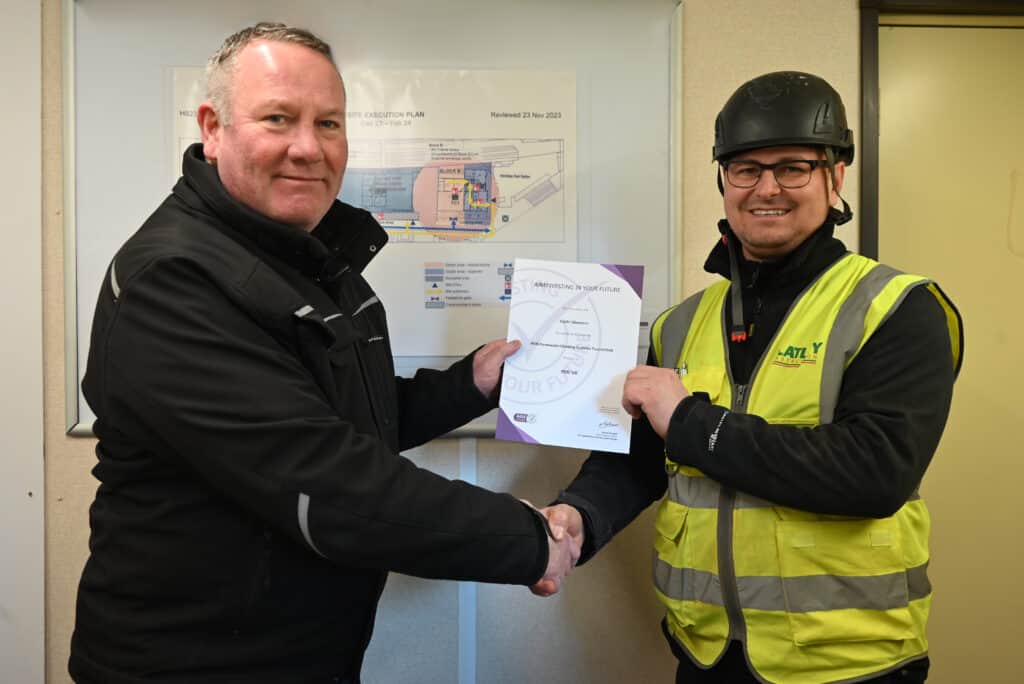
Terry Hall, Field Services Manager at PERI, expressed enthusiasm about the new funding opportunities: “We are on a mission to make formwork training compulsory across the construction industry. Joining forces with CITB and being part of the Employer Networks initiative widens our reach and will enable us to demonstrate the importance of proper, regulated training to more contractors.

We hope to see more employers in the industry at our Brentwood training facility as they make the most of the funding offered by CITB.”

Currently, the funding is available to employers in parts of England, Wales, and Scotland, with plans to extend it across all of Great Britain by the end of October 2024. This expansion aims to ensure that more companies can benefit from the initiative, ultimately leading to a better-trained and safer workforce in the construction sector.


SM Newsdesk
SM Newsdeskhttps://www.scaffmag.com
The staff at ScaffMag.com the leading scaffolding site for a digital generation.

Most popular ↑

Government announces paternity pay for self-employed dads

Self-employed fathers and partners are to receive two weeks of support under government plans, with payments currently worth up to £194 a week.

Two taken to hospital after Streatham scaffolding collapse

Two people were rescued before firefighters arrived after scaffolding collapsed on Streatham High Road on 25 October. Both were taken to hospital.

Luton plans £11m scaffolding framework

Luton Council is preparing an estimated £11.04m scaffolding framework and will hold a supplier briefing next week ahead of a planned December tender.

Scaffold Innovations: GapClamp™

  Since the Work at Height Regulations 2005 came into...

CISRS says CSCS notice was served to negotiate “from a stronger position”

NASC president Sarah Klieve says CISRS served CSCS notice to negotiate from a stronger position, as Build UK says the card rules don’t block other sectors.

Latest news

Hong Kong plans safety overhaul after Wang Fuk Court fire report

Hong Kong has announced changes to building-renovation oversight following the release of the Wang Fuk Court fire inquiry report, which contains 120 recommendations.
- Advertisement -
More from

Self-employment reforms could shift proof burden onto contractors

Proposed worker-status changes could put the burden of proving genuine self-employment on contractors. A new assessment puts the economy-wide annual net direct cost at £167.8m.

Scaffolding firms face tighter harassment duties from 30 October

Stronger harassment duties and new union-access rules take effect across Great Britain on 30 October, with implications for firms working on client-controlled sites.

Budget 2026: what it means for scaffolding firms

Fuel duty relief, higher minimum wages and apprenticeship measures feature in Budget 2026, as NASC warns investment promises must translate into construction work.

Alimak targets £6m savings as construction profits fall

Alimak sets out SEK80m (about £6m) annual savings target as construction profits fall, while reporting positive UK parts and service demand.
Latest articles