Engineering History: The Scaffolding That’s Redefining Halifax’s Skyline

ADVERTISEMENT

ScaffMag discovers the story behind one of the UK’s most ambitious scaffolding projects—a transformative refurbishment of the iconic former Halifax Building Society’s head office. Crossway Scaffolding has redefined what’s possible in the scaffolding industry with a blend of cutting-edge engineering, collaboration, and a deep respect for heritage.


The former Halifax Building Society’s head office, is a striking example of 1970s architectural ambition, which stands as a landmark in the cityscape. Initially built in 1974 and opened by the Queen, this listed building was one of the most advanced constructions of its time.

The building, whose design won a Royal Institute of British Architect’s Award, featured a futuristic, cantilevered structure supported by deep steel beams and concrete stair towers. The design gave the illusion of the building “hanging in mid-air,” a feature that still draws admiration today.

Beneath its bold exterior lies a fascinating history. With basements extending nearly 10 meters underground, the building originally housed a deed retrieval system that could deliver documents directly to desks at the press of a button—an innovation unheard of in its time.

Fast forward 50 years, and this architectural marvel required modernisation. It prompted a near to £100 million refurbishment to preserve its historical significance, while preparing it for a new chapter.

The Challenge: Balancing History and Modernity

Taking on a project of this scale and complexity was no small feat. The head office needed a complete overhaul of its glazing system, with glass panels weighing up to half a tonne each. Each panel had to be removed and replaced delicately without compromising the building’s structural integrity or disrupting its iconic appearance.

“The building itself posed unique challenges,” explained Alan Slater, Head of Technical & Product Support at TRAD UK. “The scaffold couldn’t be tied into the structure until it reached circa the 20 metre high mark, meaning everything below had to be buttressed. With roads and public walkways adjacent, this required precise engineering and innovative solutions.”

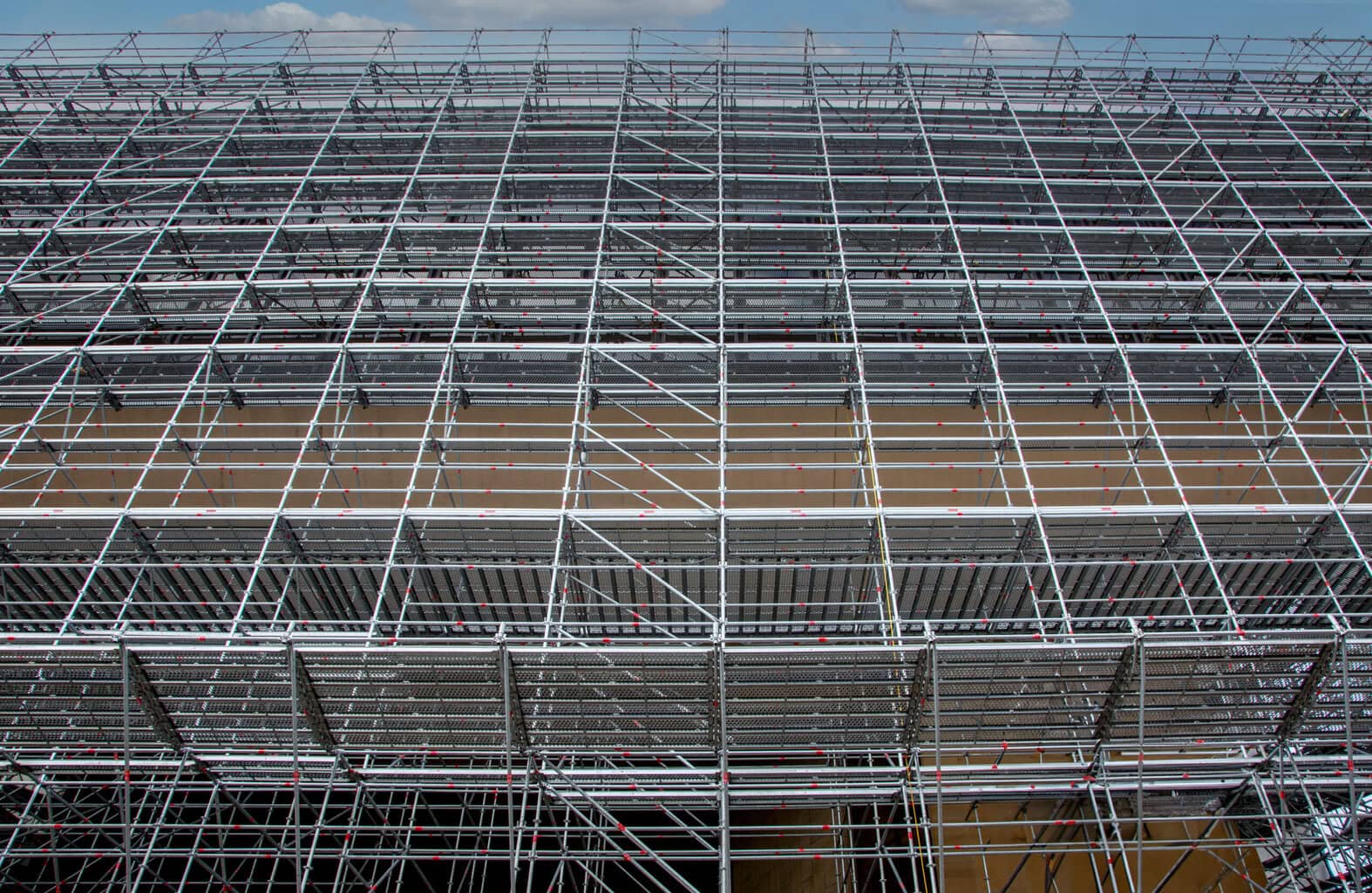
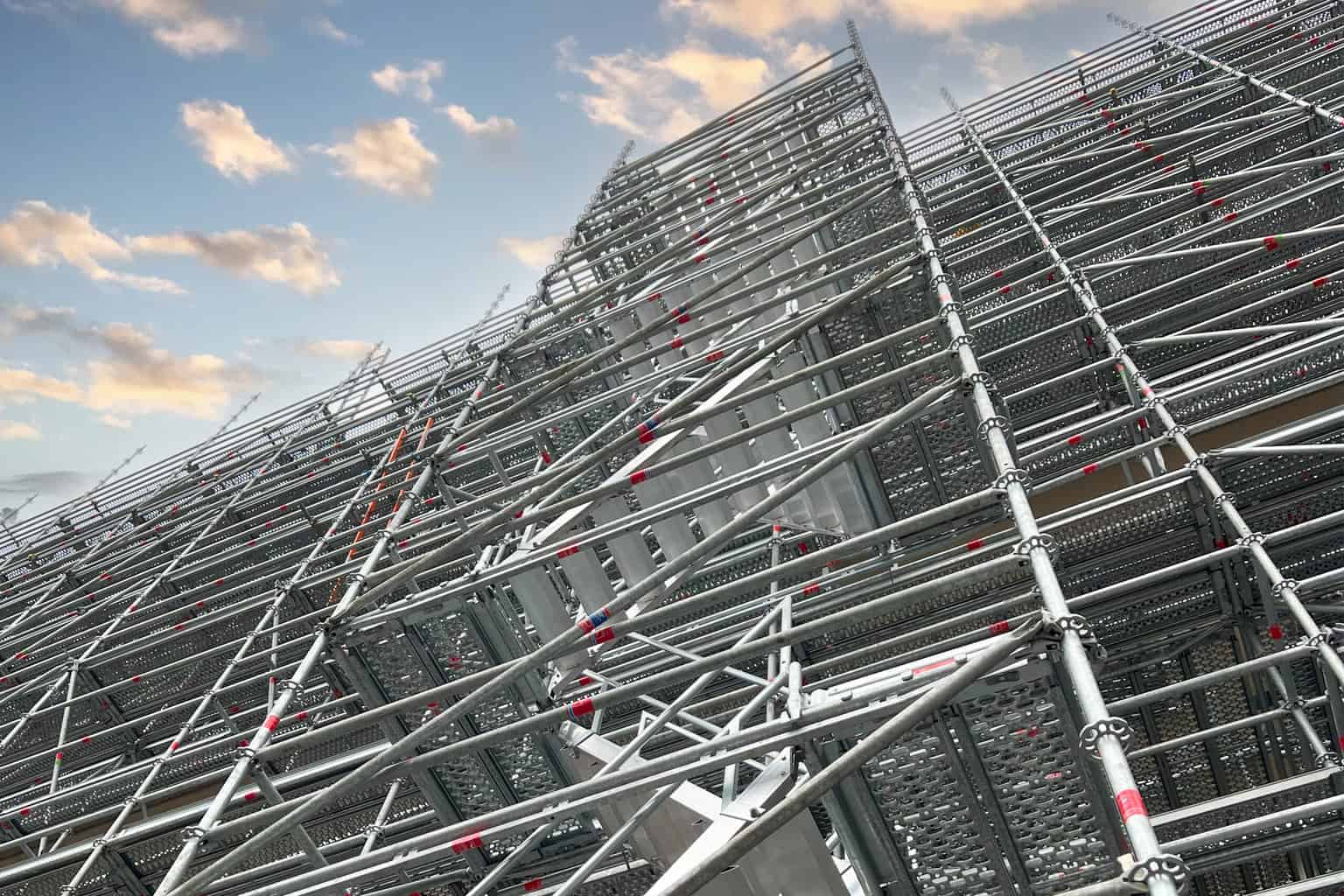
Crossway Scaffolding installed 20,000 square meters of Plettac Metrix System Scaffold, a cutting-edge system selected for its efficiency and adaptability.

In partnership with TRAD UK, the company invested over £1 million in scaffolding materials. This was Crossway’s largest project using the Plettac Metrix system, and its success left a lasting impression.

Crossway’s Contract Manager Luke Schofield highlighted the system’s advantages: “One of our most seasoned scaffolders, who had been using tube and fitting for 25 years, didn’t want to go back after working with this system. The precision and speed it offers are game-changers.”

Innovative Redesigns

The project demanded creativity and precision, starting with a reworking of the initial designs. Crossway was initially provided with 73 scaffold drawings but ultimately required 174 due to the complexity of the structure.

Working in partnership with Manchester-based Buckley Design Solutions to redesign key elements, utilising advanced bracing techniques, which saved both time and resources.

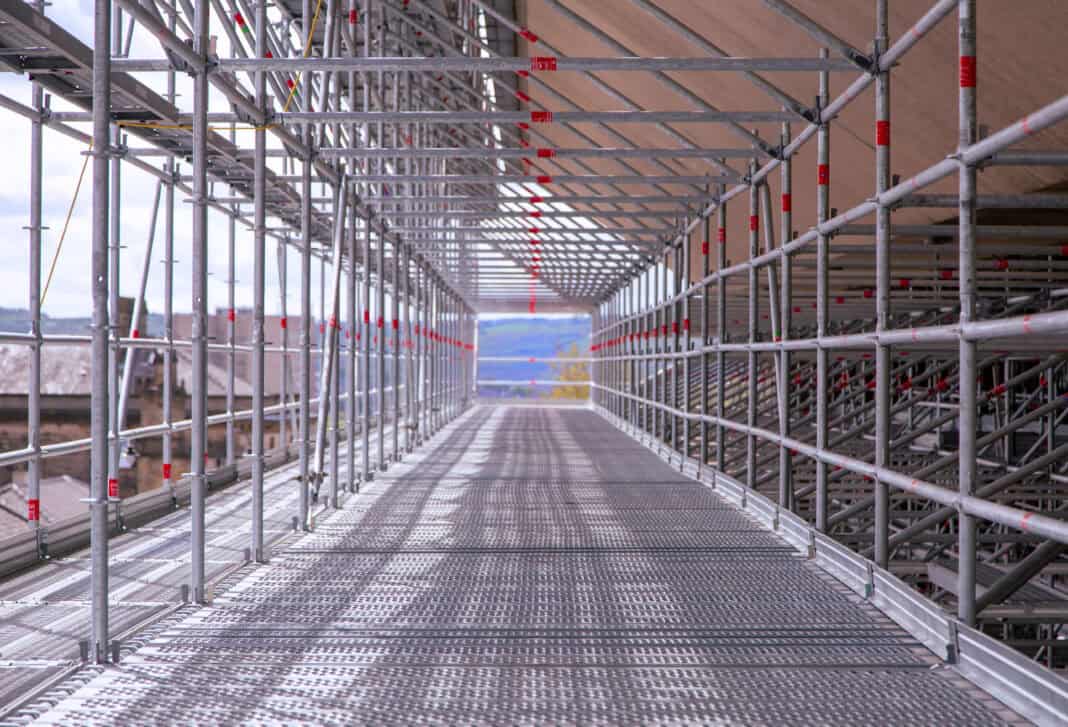
The installation of a 350-meter NIKO rail system around the building was another standout feature. This system supported the weight of the massive glass panels, which were transported along a 2.5-meter-wide scaffold walkway to hoist locations. The operation was seamless, aided by meticulous planning and the use of innovative equipment described as “sucker machines” for the glass.

Supporting the Community

Crossway’s commitment to social value was evident throughout the project. Five apprentices worked on-site, three of whom lived within 15 minutes of the project. This not only fostered local employment but also provided invaluable hands-on experience.

“This is the kind of project that shapes careers,” said Steve Fearnehough, Managing Director at Crossway. “Our apprentices gained exposure to some of the most advanced scaffolding techniques and learned to adapt to the unique challenges of a listed building.”

Collaboration at the Core
The partnership between Crossway and TRAD UK was a cornerstone of the project’s success. With regular site visits and constant communication, both companies worked together to address challenges and ensure smooth progress.

“We’ve been working with Crossway for over 25 years,” said Alan Slater, Head of Technical & Product Support at TRAD UK. “The mutual trust and open dialogue between our teams made all the difference. This level of collaboration and partnership is what complex projects like this need.”
The proximity of Crossway’s base and TRAD UK’s Leeds depot, just 5 miles and 20 miles from the site respectively, also played a vital role in minimising environmental impact. “Every delivery was carefully coordinated,” Stewart Quinn, TRAD UK’s Regional Director added. “This approach allowed us to collectively reduce our carbon footprint while keeping the project on schedule.”

Environmental Responsibility: A Greener Future

Crossway implemented Just-In-Time deliveries, reducing transport emissions and storage demands. Additionally, using steel decks instead of traditional timber further highlighted the company’s commitment to sustainability.
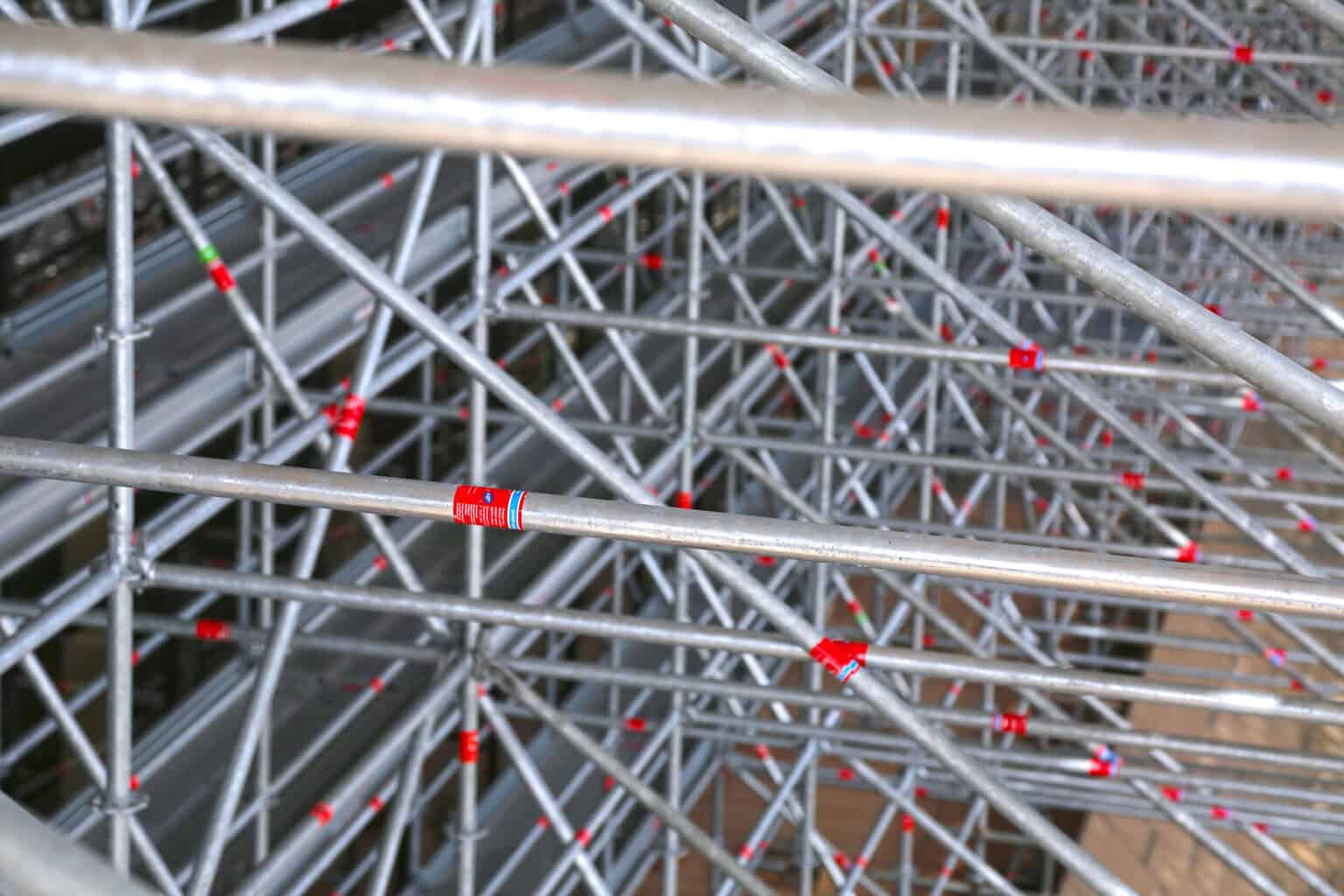
As the former Halifax Building Society’s head office undergoes its transformation, the project stands as a testament to Crossway Scaffolding’s ingenuity and dedication. By blending advanced engineering, innovative design, and a commitment to people and the planet, Crossway has helped in the restoration of an architectural icon and set a new benchmark for scaffolding excellence.
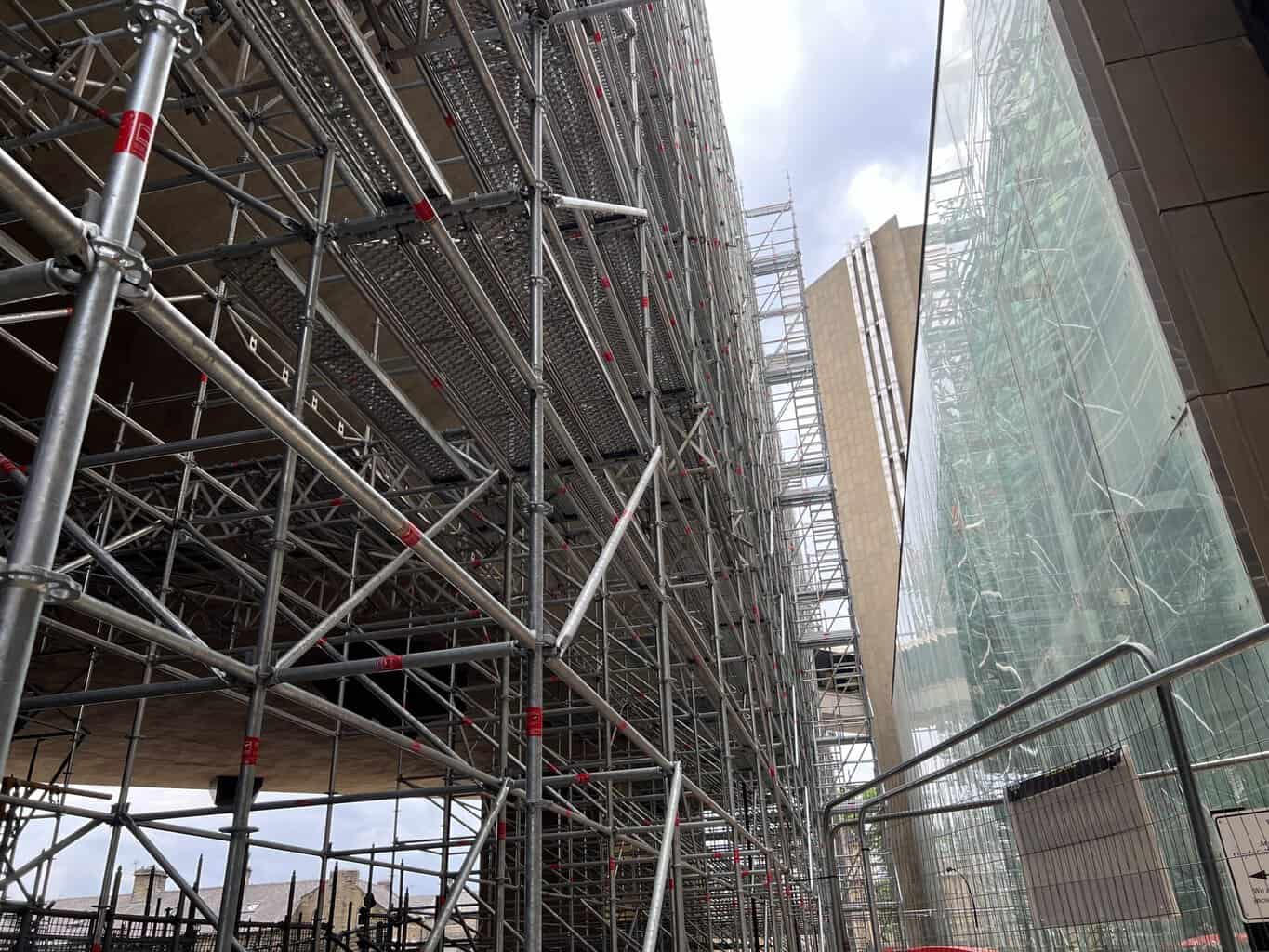
This scaffolding excellence has also recently been recognised `by the National Access and Scaffolding Confederation (NASC), with the project being a finalist in the Project of the Year (Major) category at their recent annual awards ceremony in Belfast, which is a true testament to the dedication of all involved, in making such a complex and innovative scheme work.

“This was a monumental task, but our team rose to the occasion,” said Steve Fearnehough. “It’s a proud moment for us to see this project come together so beautifully.”

With the external refurbishment nearing completion, this isn’t just another scaffolding job—it’s a masterclass in innovation, collaboration, and community-focused construction, a legacy that will endure for years to come.

Most popular ↑

Two workers killed in Spain after mast climbing platform collapse

Two workers have been killed following the collapse of...

Scottish offshore workers urged to consider scaffolding careers

The Construction Industry Training Board is targeting workers from...

Robot named Douglas begins work on Tilbury Douglas site

Tilbury Douglas has begun using a humanoid robot to...

NASC warns members over online conduct in new media policy

The National Access and Scaffolding Confederation said the new...

Latest news

Engineering History: The Scaffolding That’s Redefining Halifax’s Skyline

ADVERTISEMENT

ScaffMag discovers the story behind one of the UK’s most ambitious scaffolding projects—a transformative refurbishment of the iconic former Halifax Building Society’s head office. Crossway Scaffolding has redefined what’s possible in the scaffolding industry with a blend of cutting-edge engineering, collaboration, and a deep respect for heritage.


The former Halifax Building Society’s head office, is a striking example of 1970s architectural ambition, which stands as a landmark in the cityscape. Initially built in 1974 and opened by the Queen, this listed building was one of the most advanced constructions of its time.

The building, whose design won a Royal Institute of British Architect’s Award, featured a futuristic, cantilevered structure supported by deep steel beams and concrete stair towers. The design gave the illusion of the building “hanging in mid-air,” a feature that still draws admiration today.

Beneath its bold exterior lies a fascinating history. With basements extending nearly 10 meters underground, the building originally housed a deed retrieval system that could deliver documents directly to desks at the press of a button—an innovation unheard of in its time.

Fast forward 50 years, and this architectural marvel required modernisation. It prompted a near to £100 million refurbishment to preserve its historical significance, while preparing it for a new chapter.

The Challenge: Balancing History and Modernity

Taking on a project of this scale and complexity was no small feat. The head office needed a complete overhaul of its glazing system, with glass panels weighing up to half a tonne each. Each panel had to be removed and replaced delicately without compromising the building’s structural integrity or disrupting its iconic appearance.

“The building itself posed unique challenges,” explained Alan Slater, Head of Technical & Product Support at TRAD UK. “The scaffold couldn’t be tied into the structure until it reached circa the 20 metre high mark, meaning everything below had to be buttressed. With roads and public walkways adjacent, this required precise engineering and innovative solutions.”

Crossway Scaffolding installed 20,000 square meters of Plettac Metrix System Scaffold, a cutting-edge system selected for its efficiency and adaptability.

In partnership with TRAD UK, the company invested over £1 million in scaffolding materials. This was Crossway’s largest project using the Plettac Metrix system, and its success left a lasting impression.

Crossway’s Contract Manager Luke Schofield highlighted the system’s advantages: “One of our most seasoned scaffolders, who had been using tube and fitting for 25 years, didn’t want to go back after working with this system. The precision and speed it offers are game-changers.”

Innovative Redesigns

The project demanded creativity and precision, starting with a reworking of the initial designs. Crossway was initially provided with 73 scaffold drawings but ultimately required 174 due to the complexity of the structure.

Working in partnership with Manchester-based Buckley Design Solutions to redesign key elements, utilising advanced bracing techniques, which saved both time and resources.

The installation of a 350-meter NIKO rail system around the building was another standout feature. This system supported the weight of the massive glass panels, which were transported along a 2.5-meter-wide scaffold walkway to hoist locations. The operation was seamless, aided by meticulous planning and the use of innovative equipment described as “sucker machines” for the glass.

Supporting the Community

Crossway’s commitment to social value was evident throughout the project. Five apprentices worked on-site, three of whom lived within 15 minutes of the project. This not only fostered local employment but also provided invaluable hands-on experience.

“This is the kind of project that shapes careers,” said Steve Fearnehough, Managing Director at Crossway. “Our apprentices gained exposure to some of the most advanced scaffolding techniques and learned to adapt to the unique challenges of a listed building.”

Collaboration at the Core

The partnership between Crossway and TRAD UK was a cornerstone of the project’s success. With regular site visits and constant communication, both companies worked together to address challenges and ensure smooth progress.

“We’ve been working with Crossway for over 25 years,” said Alan Slater, Head of Technical & Product Support at TRAD UK. “The mutual trust and open dialogue between our teams made all the difference. This level of collaboration and partnership is what complex projects like this need.”

The proximity of Crossway’s base and TRAD UK’s Leeds depot, just 5 miles and 20 miles from the site respectively, also played a vital role in minimising environmental impact. “Every delivery was carefully coordinated,” Stewart Quinn, TRAD UK’s Regional Director added. “This approach allowed us to collectively reduce our carbon footprint while keeping the project on schedule.”

Environmental Responsibility: A Greener Future

Crossway implemented Just-In-Time deliveries, reducing transport emissions and storage demands. Additionally, using steel decks instead of traditional timber further highlighted the company’s commitment to sustainability.

As the former Halifax Building Society’s head office undergoes its transformation, the project stands as a testament to Crossway Scaffolding’s ingenuity and dedication. By blending advanced engineering, innovative design, and a commitment to people and the planet, Crossway has helped in the restoration of an architectural icon and set a new benchmark for scaffolding excellence.

This scaffolding excellence has also recently been recognised `by the National Access and Scaffolding Confederation (NASC), with the project being a finalist in the Project of the Year (Major) category at their recent annual awards ceremony in Belfast, which is a true testament to the dedication of all involved, in making such a complex and innovative scheme work.

“This was a monumental task, but our team rose to the occasion,” said Steve Fearnehough. “It’s a proud moment for us to see this project come together so beautifully.”

With the external refurbishment nearing completion, this isn’t just another scaffolding job—it’s a masterclass in innovation, collaboration, and community-focused construction, a legacy that will endure for years to come.
Popular Categories

Latest posts

Scaffolding firms urged to review RIDDOR procedures as HSE consults on changes

The Health and Safety Executive has launched a consultation on proposed changes to the Reporting of Injuries, Diseases and Dangerous Occurrences Regulations 2013, known...

Scottish offshore workers urged to consider scaffolding careers

The Construction Industry Training Board is targeting workers from Scotland’s offshore energy sector as part of efforts to widen the construction talent pool and...

NASC warns members over online conduct in new media policy

The National Access and Scaffolding Confederation said the new Social Media and General Media Policy sets expectations for how its members, CISRS centres and...

Two workers killed in Spain after mast climbing platform collapse

Two workers have been killed following the collapse of a twin mast climbing work platform in Benidorm, Spain. The incident happened on Wednesday, 22 April,...

Brogan wins Manchester student accommodation access package

Brogan Group has secured the powered access package for a student accommodation building in Manchester. The access specialist will provide several passenger and goods hoists...

‘Not every scaffolder is ok’: Alan Osborn backs mental health campaign at ScaffChamp

Alan Osborn is set to shave his head at ScaffChamp 2026 as part of a campaign to raise £5,000 for men’s mental health and...

Baton opens early adopter programme for scaffolding contractors

Baton has opened applications for its Early Adopter Programme, giving scaffolding contractors early access to a software platform designed specifically for construction subcontractors. The company...

SCA joins Coriant in move to widen access and industrial services capability

Coriant has announced the acquisition of specialist contractor SCA, in a move that further expands the group’s capabilities in access, temporary containment and industrial...

Robot named Douglas begins work on Tilbury Douglas site

Tilbury Douglas has begun using a humanoid robot to carry out administrative and data-collection tasks on a live construction site. The contractor says the...

HAKI reports sharp UK sales drop as construction starts stall

The Swedish-listed scaffolding and access safety group said UK revenues fell to SEK 52 million (£4.2 million) in the three months to 31 March,...

Spring Issue #29 | Past issues >>

Latest topics

Most popular ⚡︎

Two workers killed in Spain after mast climbing platform collapse

Two workers have been killed following the collapse of...

Scottish offshore workers urged to consider scaffolding careers

The Construction Industry Training Board is targeting workers from...

Robot named Douglas begins work on Tilbury Douglas site

Tilbury Douglas has begun using a humanoid robot to...

NASC warns members over online conduct in new media policy

The National Access and Scaffolding Confederation said the new...

Related articles

ADVERTISEMENTS
More from
Latest articles

TRAD UK launches charity campaign supporting Epilepsy Action

TRAD UK has launched a new fundraising campaign in support of Epilepsy Action, the...

Scaffolding firms urged to review RIDDOR procedures as HSE consults on changes

The Health and Safety Executive has launched a consultation on proposed changes to the...

Scottish offshore workers urged to consider scaffolding careers

The Construction Industry Training Board is targeting workers from Scotland’s offshore energy sector as...

NASC warns members over online conduct in new media policy

The National Access and Scaffolding Confederation said the new Social Media and General Media...

Two workers killed in Spain after mast climbing platform collapse

Two workers have been killed following the collapse of a twin mast climbing work...

Brogan wins Manchester student accommodation access package

Brogan Group has secured the powered access package for a student accommodation building in...