
Scaffolding firms are being urged to review hot-weather controls as an amber heat-health alert remains in force across large parts of England.
The alert covers London, the South East, South West and East of England until 8pm on Tuesday 23 June. Yellow alerts are also in place for the East Midlands and West Midlands.
The warnings come as temperatures are expected to rise again over the weekend, with hot and humid conditions forecast across parts of the country.
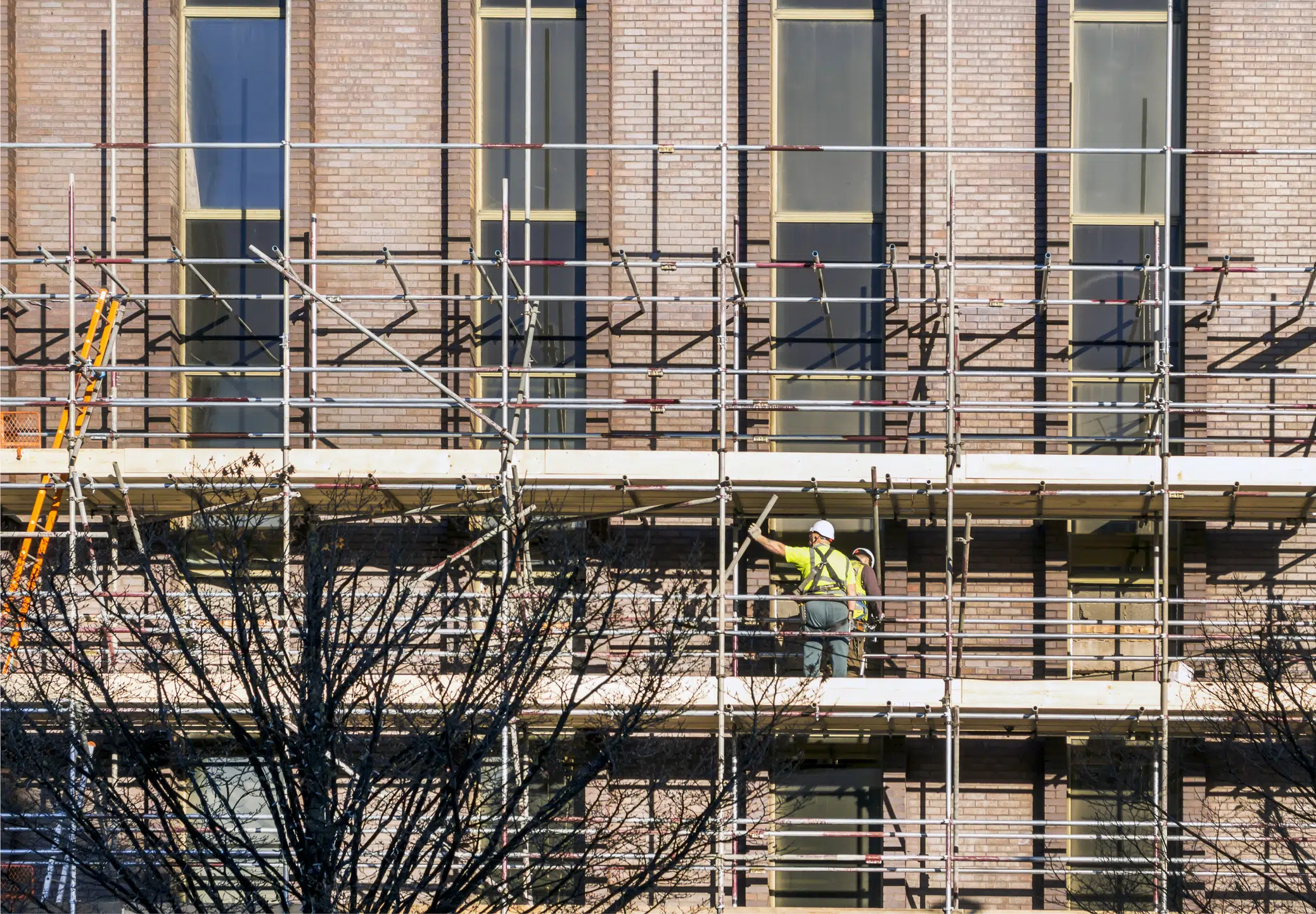
For scaffold contractors, the issue is not simply comfort. Heavy physical work, direct sunlight, limited shade and PPE can quickly increase the risk of dehydration, fatigue and reduced concentration.
That matters on sites where workers are handling materials, climbing lifts or carrying out work at height.
Amber alert in force
The UK Health Security Agency said the amber alert reflects the likely effect of sustained high temperatures on health and social care services, particularly for people who are more vulnerable to heat.
The alerts are not a legal warning requiring sites to stop work. But they provide a clear signal for employers to reassess conditions and make sure controls are in place before temperatures peak.
The Health and Safety Executive says employers must assess temperature-related risks for outdoor workers and put suitable controls in place.
Its guidance includes moving work to cooler parts of the day where possible, providing more frequent rest breaks, making shade available, and ensuring workers have free access to cool drinking water.
The HSE also advises firms to make sure workers understand the early signs of heat stress, including loss of concentration, cramps, severe thirst and fainting.
No legal maximum temperature
The UK has no legal maximum working temperature for outdoor workers.
Employers are still required to protect workers from adverse weather and assess risks under general health and safety law. That places the responsibility on contractors to decide when conditions require changed working hours, additional breaks, altered tasks or extra supervision.
For scaffold firms, planning needs to go beyond a reminder to drink water.
Supervisors should consider which tasks involve the heaviest physical effort, which areas of the site have little shade, and whether workers can take genuine breaks away from direct sun and heat radiating from steel, concrete or plant.
PPE also needs attention. Required protection cannot be compromised, but firms should consider whether lighter and more breathable compliant options are available for hot conditions.
Research points to June risk
The alert comes as tradesman insurer Protectivity publishes research claiming that June contains 5 of the 10 calendar dates most likely to see temperatures reach 27°C or above during working hours.
The company’s analysis identified 20 June as the second highest-risk date in its dataset, behind 12 August.
Protectivity examined historical weather data across UK cities, counting days where temperatures reached 27°C or more for at least 2 hours between 6am and 6pm.
Its research placed St Albans at the top of its ranking with 47 days above that level. The City of London followed with 45 days, while Oxford and Cambridge recorded 37 each.
The figures are company analysis rather than an official heat-risk ranking. But they support the wider point that hot-weather planning cannot wait until July or August.
Chris Trotman, underwriting manager at Protectivity, said: “Five of the 10 most dangerous dates in our dataset fall in June, and yet June is often when sites are running at full capacity with no particular heat protocols in place.
“Self-employed tradespeople in particular, who make up the largest self-employed workforce of any sector in the UK, have no employer to mandate rest breaks or enforce a heat policy on their behalf.”
What scaffold firms should do
The most useful response is practical.
Firms should check forecasts before shifts begin, schedule demanding work for cooler parts of the day where possible, provide easy access to water and shaded rest areas, and make sure supervisors are watching for early signs of heat stress.
Workers returning from time away or new to physically demanding work may also need time to adjust to hotter conditions.
Hot weather does not automatically mean work must stop. But where temperatures, humidity, workload and PPE combine to affect a worker’s health or ability to work safely, firms need to act.