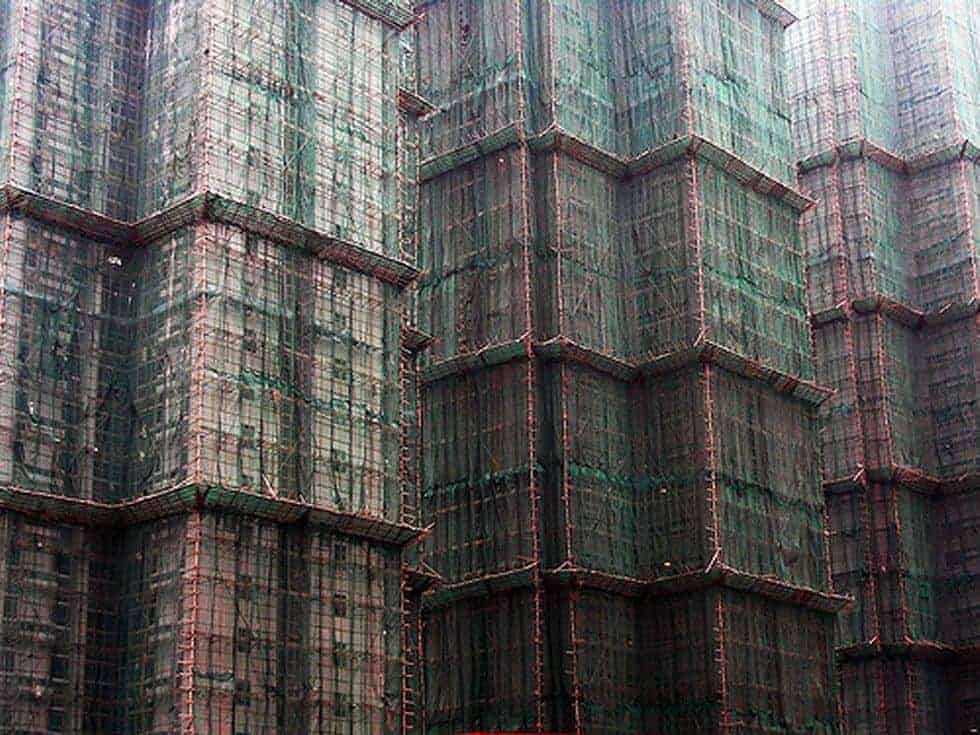
Access International have today reported that China plans to half the use of scaffolding in the country by the end of 2015 – the final year of the current five year plan – by dramatically increasing the use of mechanised access, including aerial work platforms and mast climbing platforms.
The policy was described by Mr Li Shoulin, a research fellow at the China Academy of Building Research, during the most recent meeting of the Work Safety Committee, the organisation created by US equipment manufacturers Terex and Oshkosh alongside the American Chamber of Commerce in China (AmCham). The committee is lobbying for improved work safety practices in working at height and mining.
The latest Work Safety Committee meeting was held during the bauma china exhibition and attended by western and Chinese manufacturers including Terex, Oshkosh, Snorkel, Haulotte, Sinoboom and Dingli, as well as IPAF. CEOs from Terex AWP, Haulotte and JLG were in attendance.
Mr Li described how scaffolding collapses and falls from height are the cause of 62% of all work-related accidents in China. As part of the country’s 12th Five Year Plan (2011-2015), the Ministry of Housing and Urban-Rural Development has set itself the target of reducing scaffold use by more than 50%. Around 400 million tonnes of steel scaffolding are in use in China today, according to Mr Li.
Mr Li said China has already taken major steps towards this goal by developing, over the past five years, domestic manufacturing capacity in powered access for machines including self-propelled booms, underbridge inspection platforms, mast climbers, atrium lifts and building maintenance units (BMUs).
These ‘centres of excellence’ for powered access include Beijing Jingcheng Heavy Industry (self-propelled booms), CABR Construction Machinery Technology (underbridge inspection units), Hangzhou Sivge Aerial Work Machinery (vertical mast platforms for low level building access) and Hebei Pufeng Construction Machinery (mast climbing work platforms).
Terex AWP said during its press conference at bauma china that it expected the aerial work platform market to grow at an annual rate of between 25% and 50% in the years up to 2015, driven both by the growth of the equipment rental sector in the country and by Chinese government drives to improve worker safety, of which the scaffolding replacement programme is one example.
Via: Access International