
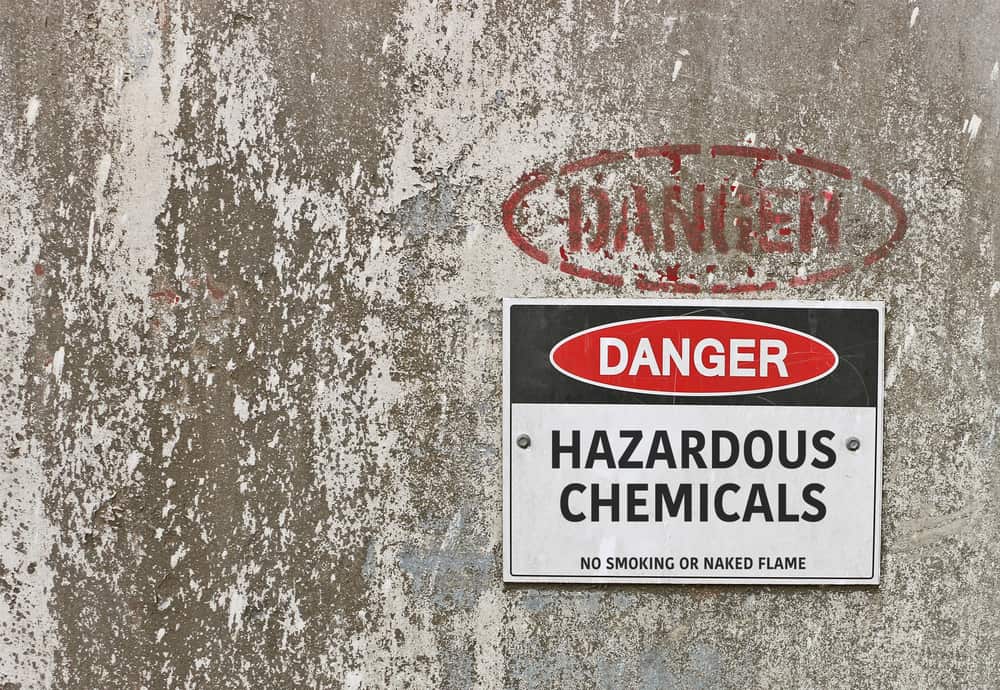
Companies fined after scaffolder suffers serious chemical burns

ADVERTISEMENT

Two New Zealand based businesses have been sentenced for health and safety failings after a scaffolder suffered serious chemical burns to his hands.

A court in New Zealand heard how in April 2018, a steel galvanising plant based in Hamilton contracted Total Access Limited to erect and dismantle scaffolding above one of its covered galvanising tanks next to a tank of caustic soda.

While dismantling the scaffolding the scaffolder noticed the guard rails were slippery. By the time the job was complete the worker’s hands were swollen, shaking and throbbing. There were also black marks on them from chemical burns.

As a result, the scaffolder spent two months with his hands in bandages while another worker also suffered burns to his right arm, neck and shoulder.

A WorkSafe investigation found that hazardous vapour from the adjacent tank had condensed on the scaffolding causing the chemical burns when contacted by the workers.

WorkSafe’s Head of Specialist Interventions Simon Humphries said neither company had discussed risks posed by these hazardous chemicals thoroughly.

“Other than the risks of falling into the tanks or inhaling fumes from the tanks neither company considered the risk of these toxic vapours.

“This is a hazardous substance that is extremely harmful when it comes into contact with skin.

“It is extremely disappointing that neither company had the foresight to consider the effects these chemicals may have on workers. Businesses must engage with one another to ensure all health and safety risks are recognised before work on any job takes place.”

In a decision released on October 21, Total Access Limited was ordered to pay a fine of $165,000, while Perry Metal Protection Limited was ordered to pay a fine of $227,500.
SM Newsdesk
SM Newsdeskhttps://www.scaffmag.com
The staff at ScaffMag.com the leading scaffolding site for a digital generation.

Most popular ↑

CISRS says CSCS notice was served to negotiate “from a stronger position”

NASC president Sarah Klieve says CISRS served CSCS notice to negotiate from a stronger position, as Build UK says the card rules don’t block other sectors.

86m Layher scaffold completed at Giotto’s Bell Tower

An 86-metre scaffold erected in just over four months will support a five-year restoration of the Florence landmark while keeping it open to visitors.

WorkSafe targets fall risks on New Zealand residential sites

WorkSafe New Zealand is inspecting residential sites from October to December, with falls from height accounting for 70% of construction prohibition notices.

Scaffold Innovations: GapClamp™

  Since the Work at Height Regulations 2005 came into...

Monthly Scaff Walk launched to support mental health conversations

A new monthly walking event aimed at bringing people from across the scaffolding and construction industry together to talk about mental health will begin in London later this month.

Latest news

Lee Marley turnover hits £95.4m as profit falls

The masonry and scaffolding contractor invested £2.99m in scaffold and other fixed assets and entered 2026 with £131m of secured work.
- Advertisement -
More from

Worker dies in fall as campaigners count 21 Hong Kong construction deaths this year

A 34-year-old worker has died in a fall at a Tung Chung public housing site, the 21st construction death in Hong Kong this year according to a victims' rights group.

SAA backs scaffold safety education after Queensland coroner’s findings

SAA supports education following any changes to Queensland’s scaffolding code and calls for stability assessments to account for wind exposure and public safety.

WorkSafe targets fall risks on New Zealand residential sites

WorkSafe New Zealand is inspecting residential sites from October to December, with falls from height accounting for 70% of construction prohibition notices.

Queensland coroner calls for mandatory tower scaffold controls after fatal collapse

A Queensland coroner has called for mandatory additional controls on freestanding tower scaffolds in public places after finding that the industry’s accepted height-to-base rule of thumb was not enough to protect against strong winds.
Latest articles