Company fined after worker fractures back and ribs following fall

A company has been fined after a worker fractured his back and ribs following a fall from a house in Cheshire.
Renka Limited, a company hired to supply and install windows, doors, and frames at a property in Frodsham, Cheshire, has been fined £12,000 and ordered to pay £3863.25 in costs after one of its employees suffered fractures to his back and ribs following a fall from a house.
The incident occurred on 31 August 2021 when the worker, who was 35 years old at the time, fell approximately five meters from a platform made by Renka workers using the boards from a tower scaffold that was too large to be positioned in the area where it was needed.
“The incident could have been prevented by the adequate planning of the work and the provision of suitable equipment for work at height, together with relevant training and instructions,” said HSE inspector Sara Andrews.
“It is fortunate that the injuries suffered by the employee were not far more serious, or even fatal.”
According to an investigation by the Health and Safety Executive (HSE), Renka Limited failed to adequately plan the work at height and provide suitable work equipment to enable the work to be carried out safely.
“Renka Limited failed to adequately plan the work at height and failed to provide suitable work equipment to enable the work to be carried out safely,” the HSE report stated.
The investigation also found that the company’s employees had not been provided with any instruction on how the work should be carried out and had not been provided with adequate training for working at height.
“The company’s employees had not been provided with adequate training for working at height,” the report stated.
Renka Limited pleaded guilty to breaching the Work at Height Regulations 2005. The company was fined at Birmingham Magistrates’ Court on 20 February 2023.
Date announced for Scaffolding Conference 2023
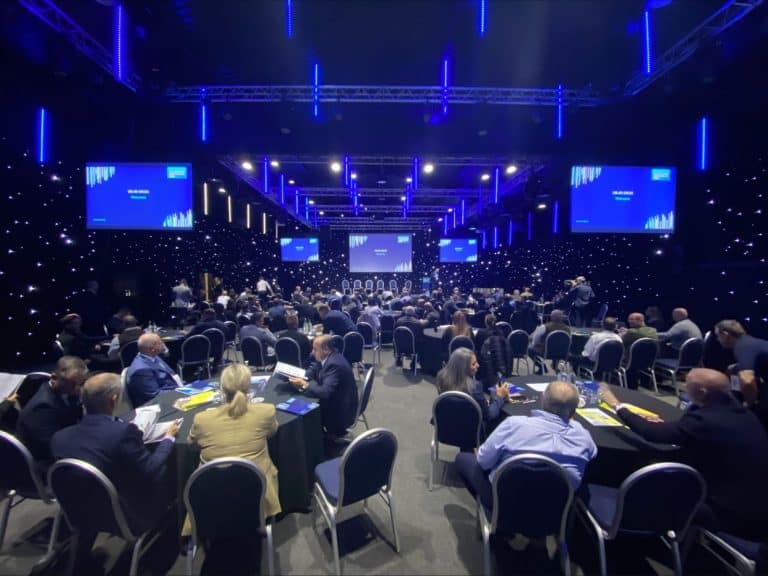
The Scaffolding Association has recently announced the date for its highly anticipated Scaffolding Conference 2023.
Scheduled to take place on the 12th of October 2023, the conference will return to the Heart of England Conference and Events Centre located in Warwickshire.
Following a successful event last year, the upcoming conference aims to draw a bigger crowd and is expected to feature more exhibitors, seminars, and discussions.
The first-ever dedicated scaffolding and access Conference, which took place last year, drew over 150 attendees from various sectors of the scaffolding and access industry. The conference was open to both members and non-members and provided a platform to address several industry-relevant subjects.
The conference was jam-packed with discussions on various topics, including a live contract review, National Scaffolding Week and awards, labour shortages, skills and training, scaffold insurance, and the HGV price-fixing scandal. Attendees also had the opportunity to engage in an interesting discussion on the future of scaffolding and how system scaffolding would play a crucial role.
As the scaffolding industry continues to grow, the Scaffolding Association’s upcoming conference aims to facilitate the exchange of ideas and promote best practices for safe and efficient scaffolding operations.
The event is expected to draw a diverse group of industry professionals, allowing attendees to network, learn from experts, and stay up-to-date on industry trends and practices.
The Scaffolding Association is calling on all industry professionals to mark their calendars and ensure that they attend this critical event, which promises to be one of the highlights of the year. With the support of industry players, the conference will be a valuable resource for scaffolding and access professionals, promoting excellence and safety within the industry.
New CISRS training centre opens in Qatar

A brand new CISRS OSTS (Overseas Scaffolder Training Scheme) centre has opened in Doha, Qatar.
The new training facility results from a partnership between UK-based CISRS provider AIS/Survivex and Qatari-based Vibrant Consultancy. The move comes in response to an increasing demand for scaffolders in the region, driven by the expanding Liquified Natural Gas (LNG) sector.
During a recent visit, CISRS Auditor Trevor Donoghue audited the new centre and granted it accreditation to deliver Level one and two Scaffolder CISRS courses and Basic Scaffold Inspection and Supervisor CISRS programmes.
CISRS Managing Director Dave Mosley expressed his delight at the new facility, now the fourth CISRS OSTS centre in the region, making it the most in any territory outside the UK. He noted this is excellent news for the area and the CISRS OSTS scheme.
Trevor Donoghue praised the centre’s excellent training facilities and its capacity to increase its CISRS-approved training portfolio in the future. He expressed confidence that the centre would be a valuable asset for further developing a skills base within the Qatari scaffolding industry.
Jithin Chakkooth, Operations Director of Vibrant Consultancy W.L.L, said that the project had been years in the planning and months in its execution and that the team was thrilled to see their vision and dreams come true. He expressed gratitude for the opportunity to work with AIS/Survivex and looked forward to a successful partnership.
The opening of this new CISRS OSTS centre in Qatar is a significant development in the region’s scaffolding industry, providing the skills and training required for the growing LNG sector.
Company fined £120K after man fell to his death
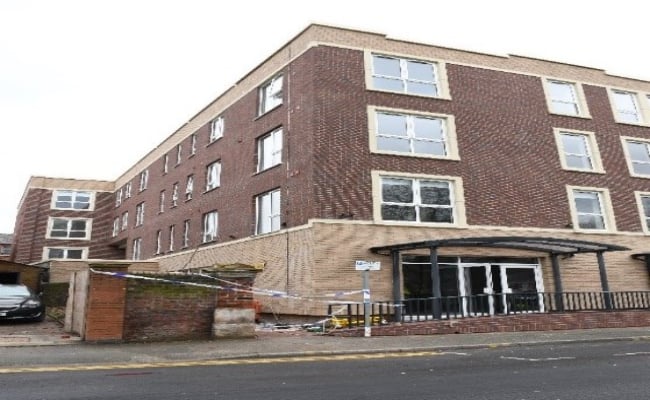
A company has been fined £120,000 after a worker fell to his death while working on a roof.
The victim, 36-year-old father-of-one Dennis Vincent, was working on a project to install a lightning protection system at an office block in Warrington. With another worker, Mr Vincent was using ropes to lower access equipment from the roof when he and the frame fell from the roof to the ground.
A Health and Safety Executive (HSE) investigation found that Mr Vincent’s employer, PTSG Electrical Services Limited, had failed to adequately assess the risks associated with the work, with little consideration given to the work at height hierarchy of control, and opting for personal protection measures over more suitable collective protection measures, such as scaffolding or a mobile elevating work platform (MEWP).
In addition, the company had not planned to safely get the rope access equipment on and off the roof, providing no instructions to the operatives.
PTSG Electrical Services Limited pleaded guilty to breaching the Health and Safety at Work etc. Act 1974 was fined £120,000 and ordered to pay £5,448.51 in costs.
HSE inspector Sara Andrews expressed condolences to Mr Vincent’s family and emphasized that the incident could easily have been avoided with better planning to ensure adequate controls were in place to prevent falls from the roof. While rope access techniques are appropriate in some circumstances, they should only be used if more appropriate measures, such as fixed scaffolding, cannot be.
Two more companies will appear in Liverpool Crown Court later this year concerning the incident, having pleaded not guilty at an earlier hearing. The HSE warned companies that it would not hesitate to take appropriate enforcement action against those who fall below the required standards.
Warning issued over dodgy PPE and Safety Equipment

The British Safety Industry Federation (BSIF) has warned those responsible for procuring PPE and safety products to be cautious of substandard and non-compliant products.
The BSIF has revealed that its latest non-member product tests have highlighted the availability of a high level of non-compliant products in the market.
From December 2021 to December 2022, the BSIF tested 127 non-member products to check their compliance with relevant standards and whether they performed as advertised.
The results indicated that only 18 (15%) of the products were fully compliant, while 108 products (85%) failed to meet the regulatory criteria, many of which are still available and being sold to unsuspecting users.
Examples of substandard products that the BSIF found on sale in 2022 include an ‘indestructible safety trainer’ that failed the midsole penetration test, ‘cut-resistant gloves’ that didn’t pass the relevant cut test, and a ‘safety harness & lanyard’ provided without any user instructions or documentation.
The BSIF’s findings around non-member products are in contrast to the results of tests carried out on products supplied by BSIF Registered Safety Suppliers who are committed to only selling certified PPE and trading honestly and ethically.
The products of Registered Safety Suppliers are tested annually as part of the scheme’s audit process. If they fail to meet the test criteria, any issues must be addressed and rectified immediately for members to remain part of the scheme. Of 387 tests completed on Registered Safety Supplier’s products between December 2021 and December 2022, 332 products (86%) passed immediately, and all issues related to the remaining 55 products (14%) have now been resolved.
Companies displaying the BSIF shield have signed a binding declaration that the PPE and safety equipment they offer meets the correct standards, fully complies with the regulations, and is UKCA and CE-marked.
By using a Registered Safety Supplier, buyers and end-users can be confident that they will receive genuine products that are fit for purpose, as well as genuine information and guidance.
Alan Murray, CEO of the BSIF, commented on the findings, saying: “Our latest findings are very concerning and reinforce the importance of only using a BSIF Registered Safety Supplier when procuring PPE and safety equipment. The reality is that selling PPE and safety equipment comes with complex responsibilities, and it can be hard for even the most diligent suppliers to keep up with the rules and regulations.”
Murray added: “We urge all buyers and specifiers to review their current processes and consider what assurances they have that the PPE and safety equipment they are being supplied with is fit for purpose. Specifying a Registered Safety Supplier is the easiest way to ensure you are only dealing with compliant, competent, and trustworthy suppliers.”
For a complete list of Registered Safety Suppliers, buyers and specifiers can visit https://www.registeredsafetysupplierscheme.co.uk/.
Strike action looms on 40 offshore installations

Unite the union has confirmed that over 700 offshore members at Bilfinger UK Limited, will be balloted on strike action due to a dispute over pay.
The ballot will last four weeks, opening on 17 February and closing on 17 March. Any strike action and overtime ban will be from early April 2023 following a successful ballot result.
Unite is demanding an increase above the base rate of pay set in the Energy Services Agreement (ESA) for 2022 and for this to be backdated to last July. The ESA agreed last year to a 4 per cent uplift, which was meant to be paid in January 2023 but has yet to be paid to date.
Bilfinger has refused to increase pay beyond the ESA base rate at a time when the broader cost of living stands at 13.4 per cent (RPI). Bilfinger has yet to implement any pay award and allowance uplifts that were also agreed in November 2022.
Several oil and gas operators will be hit if the strike goes ahead, including BP, CNRI, Ithaca, Harbour, Repsol, and Taqa. Unite predicts that any strike action on the offshore installations will impact production and planned work, with nearly 40 installations being hit by hundreds of tradespersons not completing planned work.
Sharon Graham, Unite general secretary, said, “The UK’s oil and gas operators and contractors are being served with record numbers of industrial action ballots. There is one simple reason why this is happening – corporate greed. Companies like Bilfinger have refused to pay attention to the concerns of our members by offering a decent and fair pay rise. Unite will continue to fully support all our members fighting back for good jobs, pay and conditions across the offshore sector.”
Shauna Wright, Unite industrial officer, added, “Unite has served notice on Bilfinger because our members feel that their voices and concerns have not been heard. We will now ballot more than 700 workers across nearly 40 offshore installations where Bilfinger UK Limited has a presence. This development comes after months of failed attempts by Unite to get Bilfinger to increase pay beyond the ESA base rate. Our members are angry and they have had enough. It’s time Bilfinger paid their workforce what they deserve before a wave of industrial unrest hits the UK Continental Shelf.”
Bilfinger Response
A Bilfinger UK spokesperson who spoke to Scaffmag said: “Bilfinger UK joined the Energy Services Agreement (ESA) in May last year, and are aligned with ESA base rate pay. Efforts to date to address pay concerns have been via the ESA. We’re disappointed that Unite has raised a dispute with Bilfinger directly on base rate pay as this potentially risks undermining the ESA. We will continue to work with Unite to find a resolution that will best support our employees and their families.
“The January rate increase and allowance uplifts agreed in November will be implemented in the coming weeks and backdated for employees. We appreciate our employees’ patience over the time it has taken to complete the necessary processes for its implementation.”
This latest offshore dispute at Bilfinger is part of a wave of industrial unrest hitting the United Kingdom Continental Shelf (UKCS) with Unite involved in a series of conflicts involving operators and contractors.
Unite has also criticised the UK Government’s inaction on taxing oil firms, as BP posted the biggest profits in its history, doubling to £23 billion in 2022. Shell also reported earnings of £32 billion, bringing the combined total profits of Britain’s top two energy companies to a record £55 billion.
PERI and K2 Scaffolding deliver refurbishment project in Belfast

PERI, a global leader in scaffolding and formwork technology, teamed up with Northern Ireland-based scaffolding contractor K2 Scaffolding to provide access requirements for a refurbishment project in Belfast.
The project involved the restoration of the Seamus Heaney Centre, a historic listed building on the outskirts of Belfast City Centre. The Seamus Heaney Centre at Queen’s University is recognised as an international centre of creative and research excellence in the field of literature.
As part of the refurbishment project, K2 Scaffolding was tasked with installing perimeter access to all floors to facilitate roof works and window replacement.
One of the main challenges during the design and installation of the scaffolding was protecting as much of the façade as possible, including its bay windows, which would determine how and where the scaffolding would be tied into the structure. To address this challenge, PERI’s scaffolding design team proposed a tie layout that reduced the required ties, protecting the façade where possible.
Cantilever brackets were incorporated to accommodate the bay windows and support the scaffolding deck spanning above. Brackets were also used externally to increase the width of the working platform and provide safer and seamless access to the on-site cabin.
Using the PERI UP scaffolding system was significant in the project’s success. This is the first time that the PERI UP system was used on a project in Northern Ireland, and it marked the start of a long-term partnership between PERI and K2 Scaffolding.
K2 Scaffolding recently invested £400,000 in the PERI UP scaffolding system, which allowed them to take on larger and more complex projects. The system proved to be intuitive, making it easy for K2 Scaffolding to adapt to it quickly.
The metric grid dimensions of the PERI UP system made it more practical for workers to access the chimney structure. With 25cm increments between the length of the scaffolding decks, scaffolders were able to adapt the arrangement to ensure working platforms were as close to the chimney walls as possible. Similarly, the use of PERI UP UHA spigots allowed flexible ledger-to-ledger connections, which accommodated the chimney’s geometry with no additional fittings required.
The entire build of the scaffolding solution took just five days to erect, with 42 tonnes of PERI UP Flex erected throughout the project.
Cathal Abram, Contracts Manager for K2 Scaffolding, noted the benefits that the PERI UP system brought to the project, including the time saved and reduced material requirements.
“The locking and ladder decks were advantageous for both time and safety, saving a significant amount of time as the self-locking feature meant the team didn’t need to tie the decks down during windy weather. These components played a substantial role in the speed of the project, reducing the predicted project time by 50%,” he said.
Overall, the partnership between PERI and K2 Scaffolding on this project successfully met the access requirements for the refurbishment of the Seamus Heaney Centre. The PERI UP system proved to be an intuitive and flexible solution for scaffolding requirements, allowing for faster installation and reduced material requirements.
The success of this project marks the beginning of a long-term partnership between the two companies, and they look forward to collaborating on future projects.
New Threshold Safety Ramp released by G-Deck
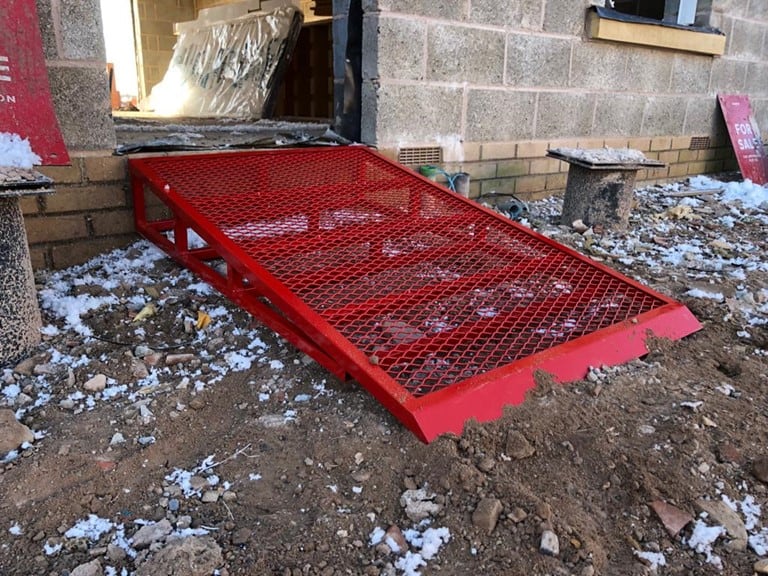
G-Deck, a leading supplier of site safety products, has just announced the release of its new ‘Threshold Safety Ramp’, designed to enhance the safety and accessibility of building sites.
The ramp is set to replace traditional scaffold boards or makeshift platforms, which can be unsafe and lead to severe injuries if a slip or trip occurs.
The Threshold Safety Ramp is developed with anti-slip solid mesh, making it ideal for wet or slippery conditions. Additionally, the ramp features easy carry handles for manual handling, an optional handrail system for side protection, and the ability to pin it into the floor for added stability and security.
This innovative ramp is designed to ensure a smooth and secure experience for all personnel entering and exiting new build plots and buildings, enhancing the safety and accessibility of construction sites. It also allows trades and personnel to transport materials quickly on trolleys or barrows without worrying about obstacles. Its unique mesh design minimises the buildup of mud on boots, keeping sites cleaner and more organised.
The Threshold Safety Ramp is just the latest addition to G-Deck’s growing product portfolio, which has been specifically designed to make building sites safer and more efficient. The company is thrilled to kick off 2023 with this new product innovation launch and is excited about the other developments still to come throughout the year.
For more information about the Threshold Safety Ramp or any of G-Deck’s other site safety products, visit their website or contact their customer service team.
Altrad Babcock to lead world-first green hydrogen project in Scotland
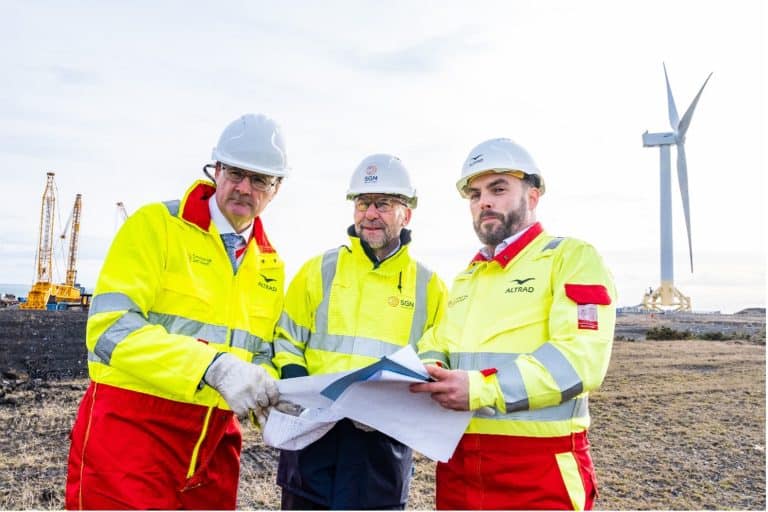
In a world-first green hydrogen project, Altrad Babcock has been selected as the main works contractor for a hydrogen gas network project in Fife, Scotland.
The project, known as H100 Fife, will provide green hydrogen for up to 300 homes in Levenmouth, on the east coast of Fife. The project is being carried out on behalf of gas distribution company SGN, and Altrad Babcock will be responsible for building the hydrogen production and storage site and handling all the civil, building, mechanical, and electrical control and instrumentation work.
SGN CEO Mark Wild commented on the appointment: “We’re pleased to announce our appointment of Altrad Babcock. They have a wealth of experience in delivering pioneering energy sector projects and will bring considerable knowledge and know-how to H100 Fife.”
The project is set to begin site development in the coming months, with procurement already underway. It is expected to provide zero-carbon fuel for heating and cooking for those who opt-in to the distribution network in 2024, making it the first 100% green hydrogen-to-homes zero-carbon network in the world.
This project could demonstrate the potential for the entire British gas network to deliver hydrogen gas.
Altrad Babcock’s Vice President of Major Projects, David Cornforth, added: “This first-of-a-kind project will demonstrate the practicality of bringing green hydrogen gas to domestic customers for the first time, supporting evidence for future low carbon policy decisions and paving a clear path for similar applications in the future.”
The project is a groundbreaking initiative that could pave the way for the broader adoption of green hydrogen as a sustainable energy source. With Altrad Babcock’s extensive experience in complex construction and engineering projects, this is an exciting development for the future of sustainable energy.
Layher TwixBeam takes centre stage in I-Scaff’s latest project

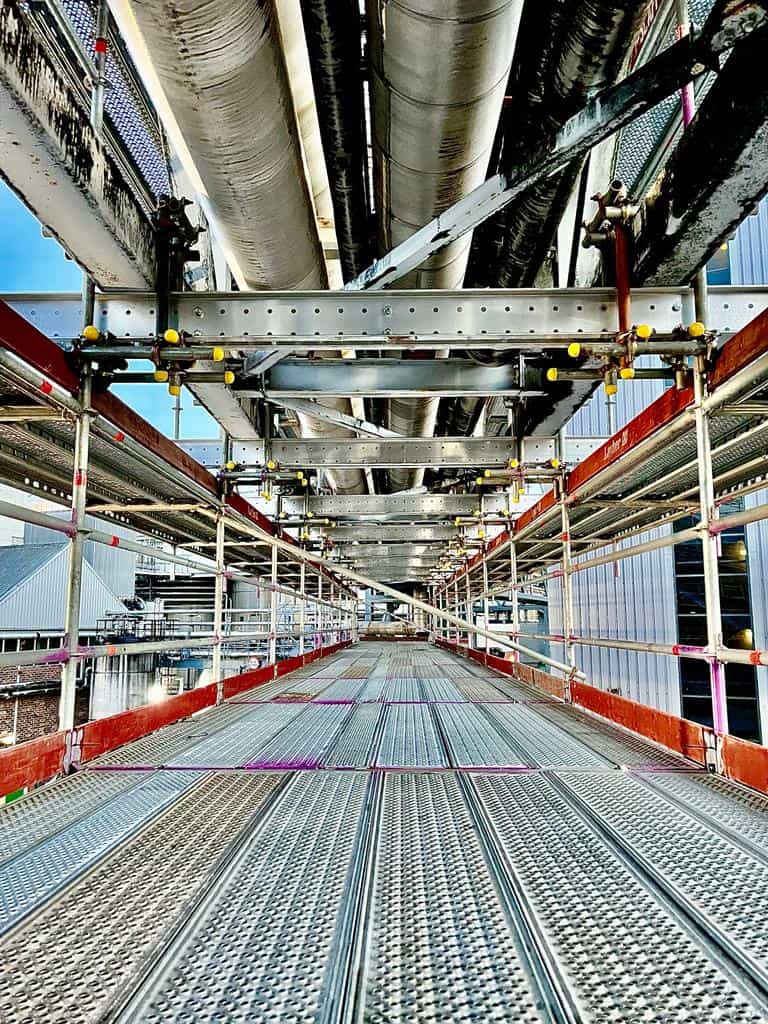
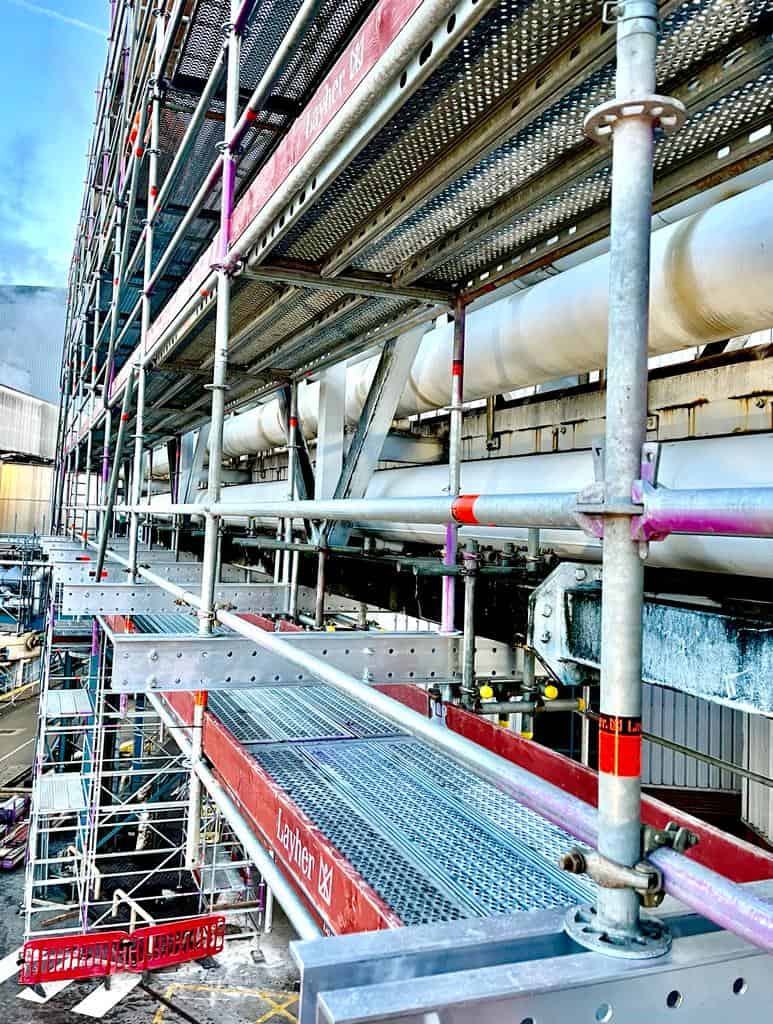
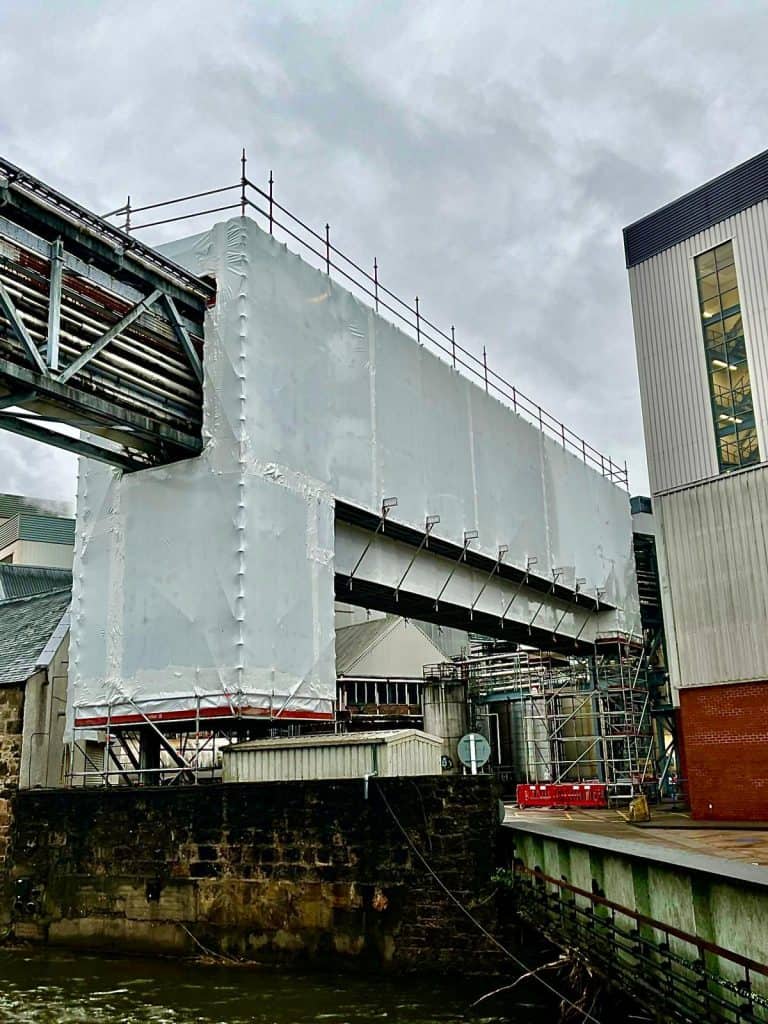
I-Scaff Access Solutions Ltd has demonstrated its innovative approach while making history by using Layher’s award-winning TwixBeam during a pipe bridge refurbishment project at a Whisky distillery.
Scottish scaffolding specialists I-Scaff Access Solutions Ltd, based in Fife, is renowned for its innovative approach to scaffolding. Their constant willingness to embrace cutting-edge new technologies and scaffolding products has resulted in a long history of exceptional customer service, creative solutions, and first-class advice for their portfolio of blue-chip clients.
They have recently proven their innovative spirit once again and, while doing so, made history by being the first in the UK to use Layher’s award-winning new TwixBeam during a significant pipe bridge refurbishment project at a Whisky distillery.
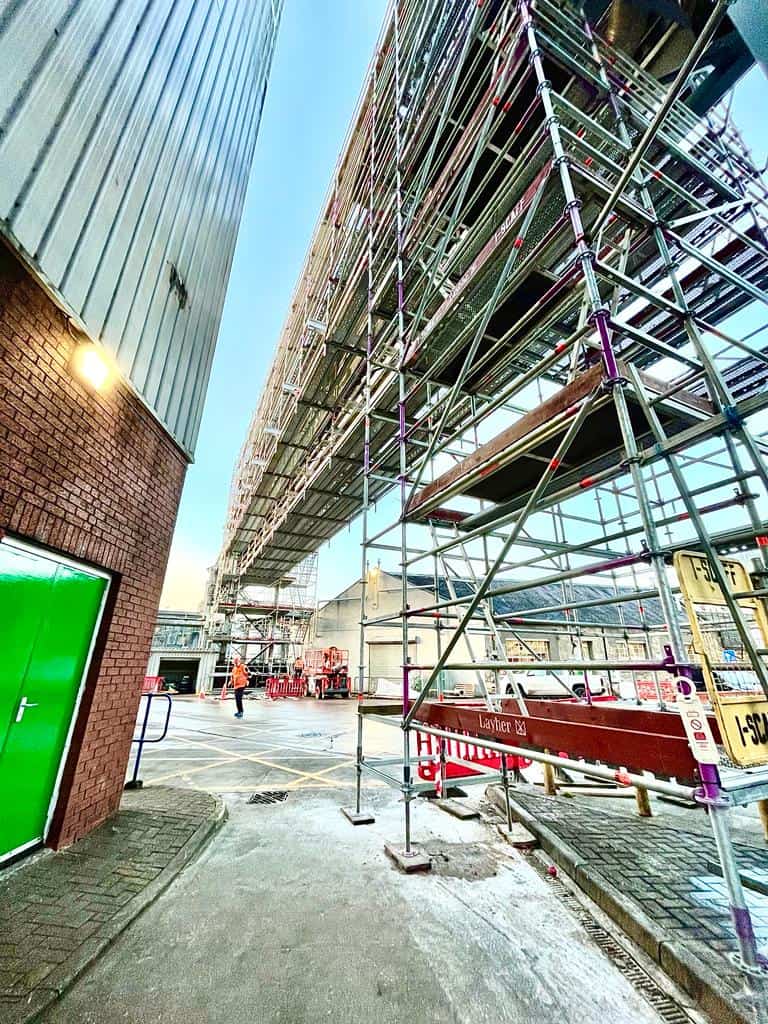
The project presented the Scottish scaffolders with a challenge in that the pipe bridge project required a 29m span and had to remain operational around the clock, with minimal disruption to the distillery’s operations.
I-Scaff’s team quickly set to work following approval of the Layher design, and the TwixBeams were installed swiftly. The integrated Allround access scaffold was suspended below and punched off the beams upwards, allowing sections of the roadway to remain open during the build. The overall disruption was only two days, which was a remarkable achievement.
“The TwixBeam played a critical role in the project’s success”
Ross Brown, Managing Director of I-Scaff, explained that they were tasked with providing full access and encapsulation for blasting and painting operations during the bridge refurbishment project. They had previously undertaken two other bridge access projects on the same site, but this was their first time using TwixBeam.
“An important factor was that during the build and after, the section of road that the 29m span covered had to remain operational 24/7,” Brown explained.
“In addition to this, there was a desire for safety and speed of erection reasons to reduce the contact points and have the roadway closed the least amount of time possible during the erection process.”
Brown further explained that the TwixBeam played a critical role in the project’s success.
“There were material savings from using the TwixBeam. At first, the design consisted of 1.25mm deep HD aluminium beams, tubes fittings and Allround scaffolding. However, following a design desktop audit of materials, self-weight, deflection, and build time, it was decided that the Layher TwixBeam integrated with Layher Allround would not only be lighter but also stronger, faster, and at only 280mm in depth, [instead of 1.25mm depth] with the dual ability to hang off the bottom and punch upwards off the top of the beam in the same axis, provided much more flexibility, but also equated to a time saving of some +30% over the more traditional deep HD beam method.”
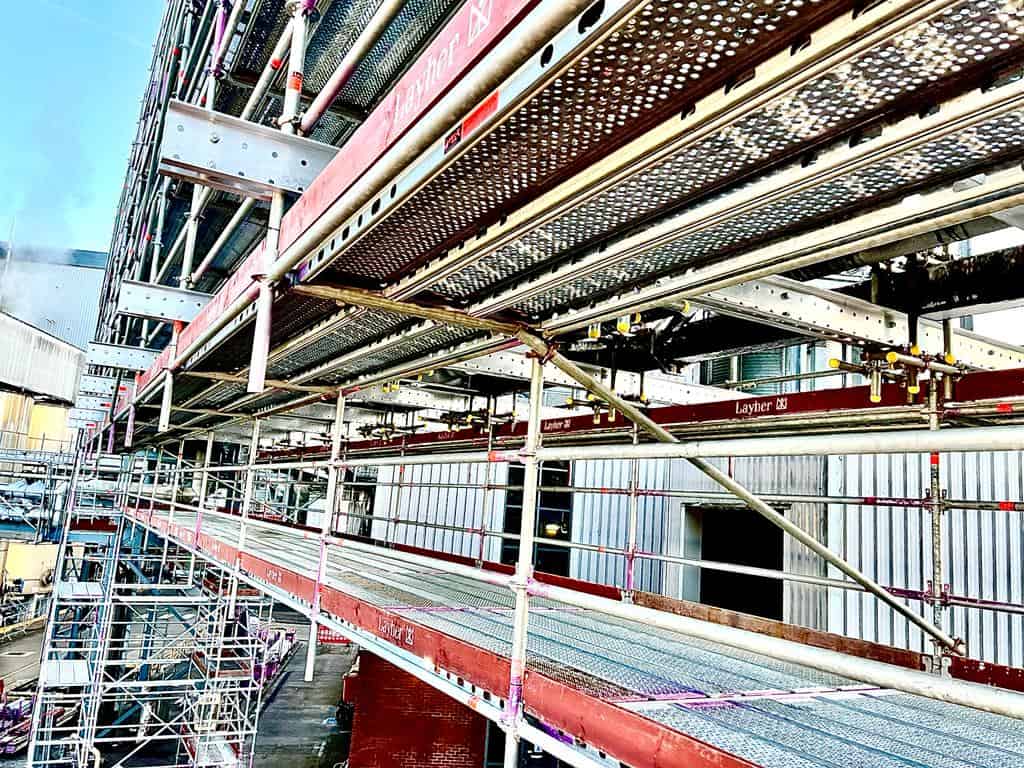

Brown continued, “Logistic and handling advantages were also seen in addition to those already mentioned. The logistic benefit is due to the variable lengths, and at only 280mm deep; TwixBeams are compact, with easier manual handling, and so many more fit onto your truck than much wider and cumbersome beams.
As a result, the TwixBeams is much more operative-friendly, in that the assembly methodology is a systematic installation procedure, with no time-consuming measuring required due to the integration and use of standard Allround components.”
I-Scaff’s use of TwixBeam resulted in physical benefits, such as keeping the roadway open, and minimising the potential for complications due to its quick and safe erection process.
Brown stated: “Due to the successful method with TwixBeam, planning is underway again using TwixBeam for the fourth installation over the river that runs into the plant.”
As with this project and many before, I-Scaff Access Solutions Ltd has proven time and time again to be a leader in the scaffolding industry thanks to its outside-the-box thinking and innovative approach to scaffolding by utilising products from Layher the world’s leading system scaffolding manufacturer.
Brown concluded: “The TwixBeam played a critical role in the project’s success, and with the use of this technology, the roadway remained open, safety was a top priority, and the time savings made the project much more operative-friendly.”