Reaching for the sky – A potted history of scaffolding

ADVERTISEMENT

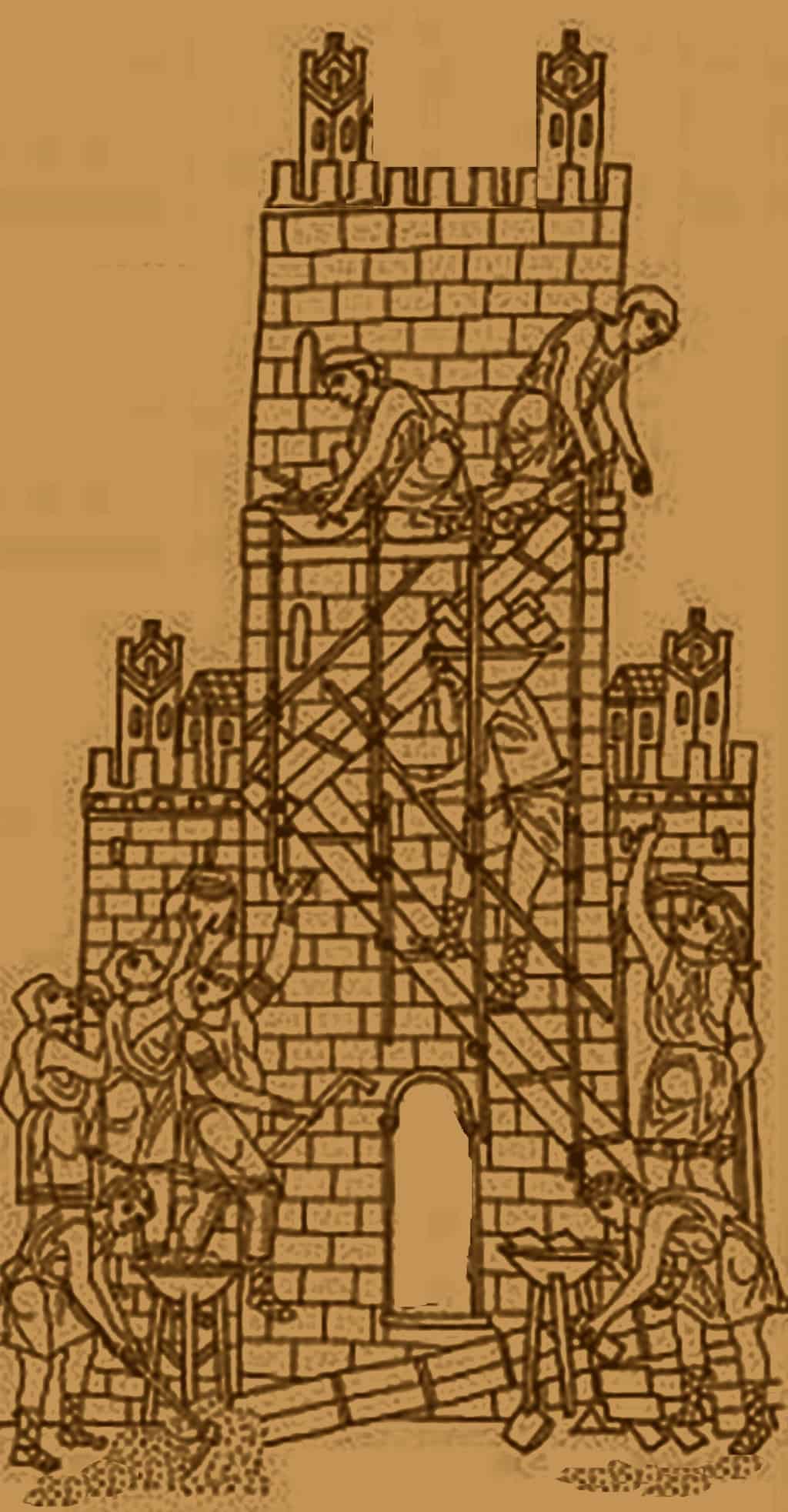
It’s known that the use of scaffolding dates way back to prehistoric times because holes still exist in the walls of Palaeolithic caves at Lascaux  in south-western France that were used for staging to enable the primitive occupants to paint their famous wall paintings over 17,000 years ago.

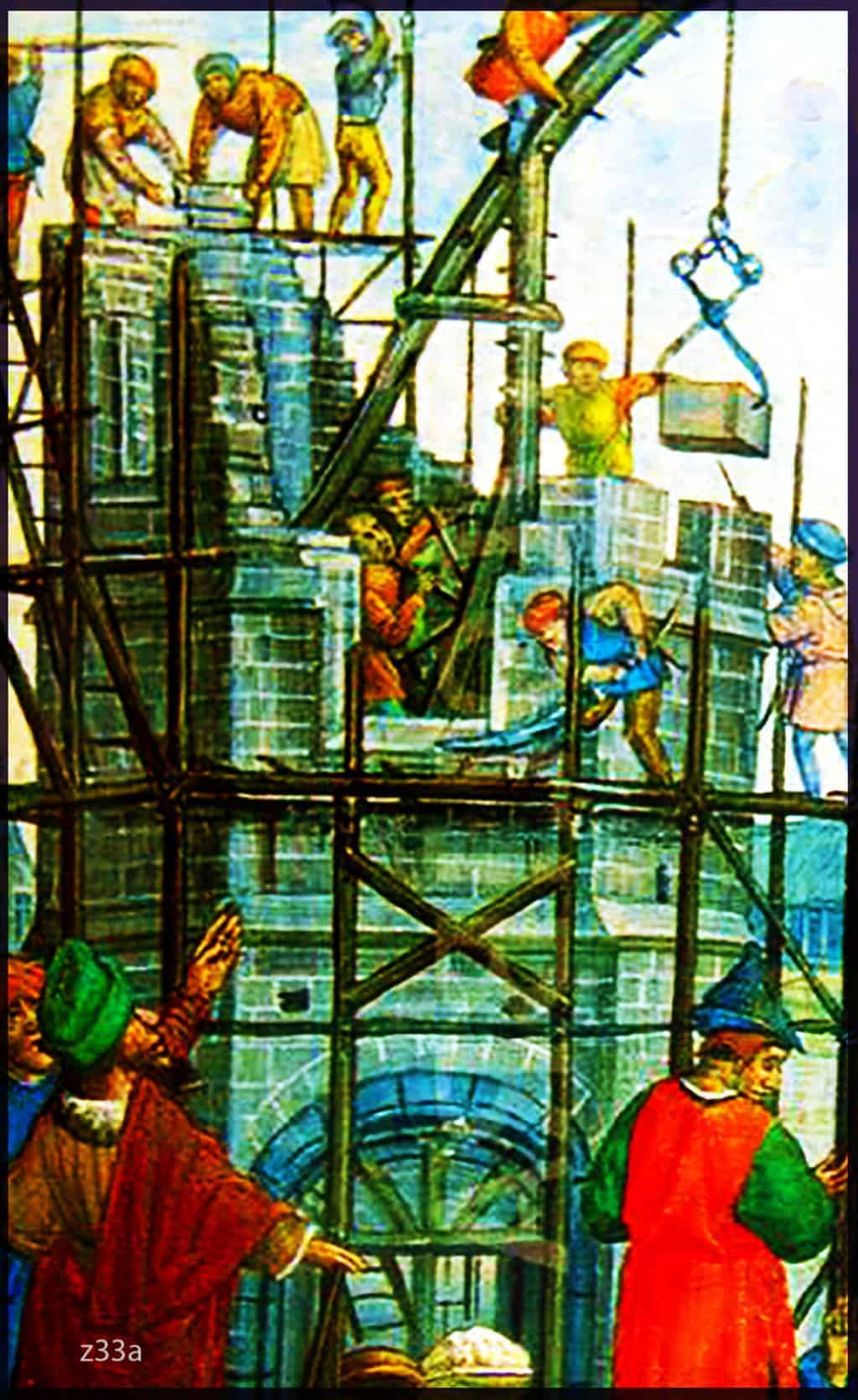
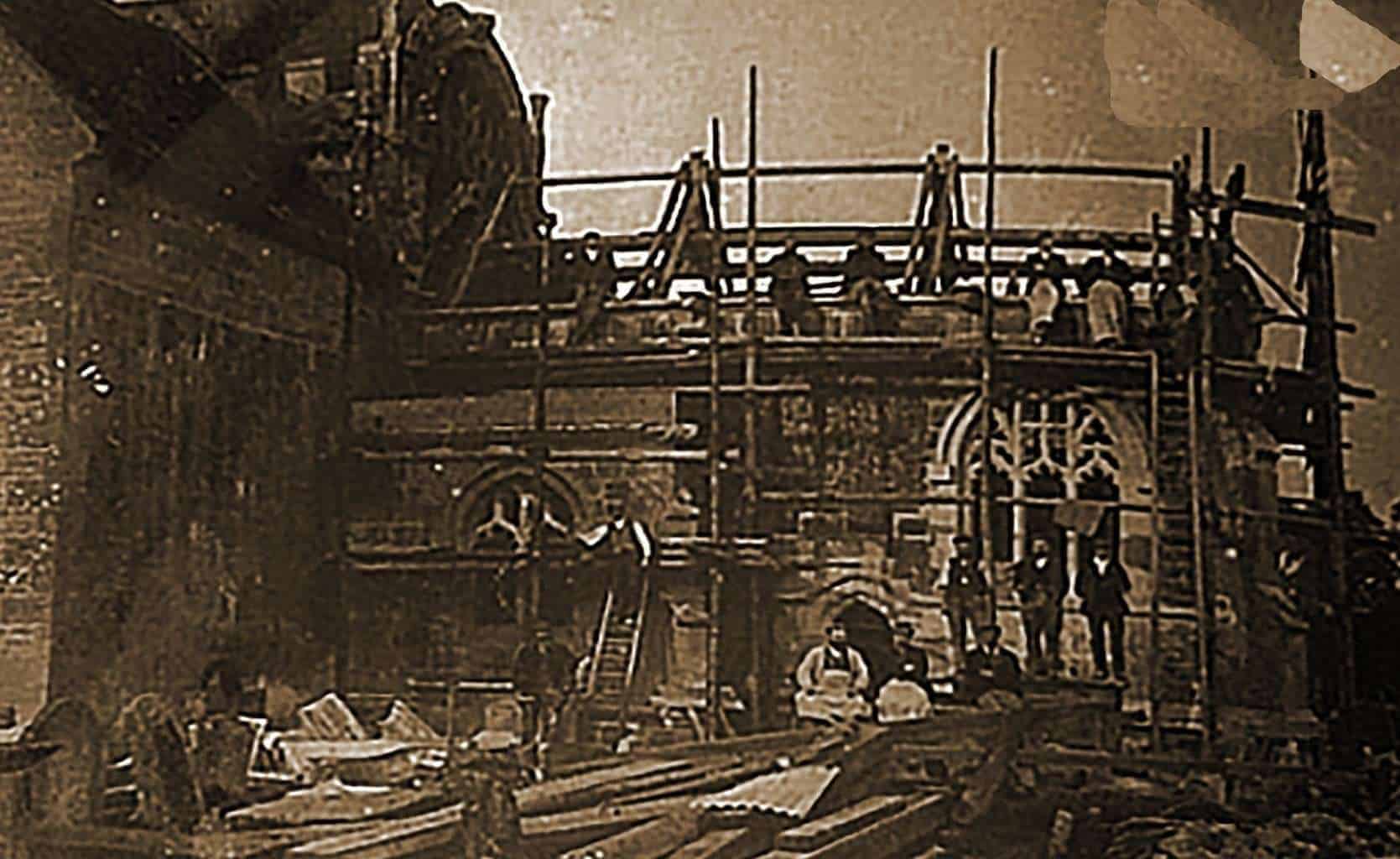
There’s also strong documentary evidence that the Egyptian pharaohs used wooden scaffolding for buildings associated with the pyramids. Later in Medieval times, specialised bands of monks were trained as scaffolders to construct abbeys and churches, a trend that continued well into the 20th century when scaffolder monks were photographed building Buckfast Abbey.
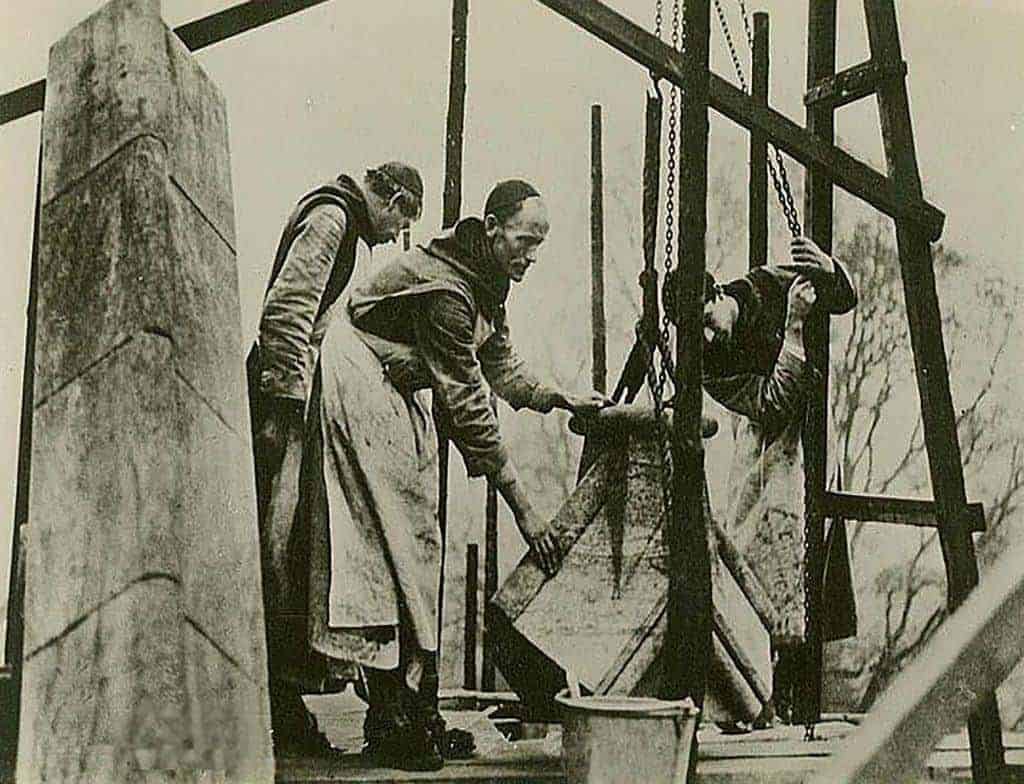
scaffolder-monks-building-buckfast-abbey-in-the-1930s
Scaffolder monks building Buckfast Abbey in the 1930s, Image credit: Colin Waters Historic Picture Library

Early Days

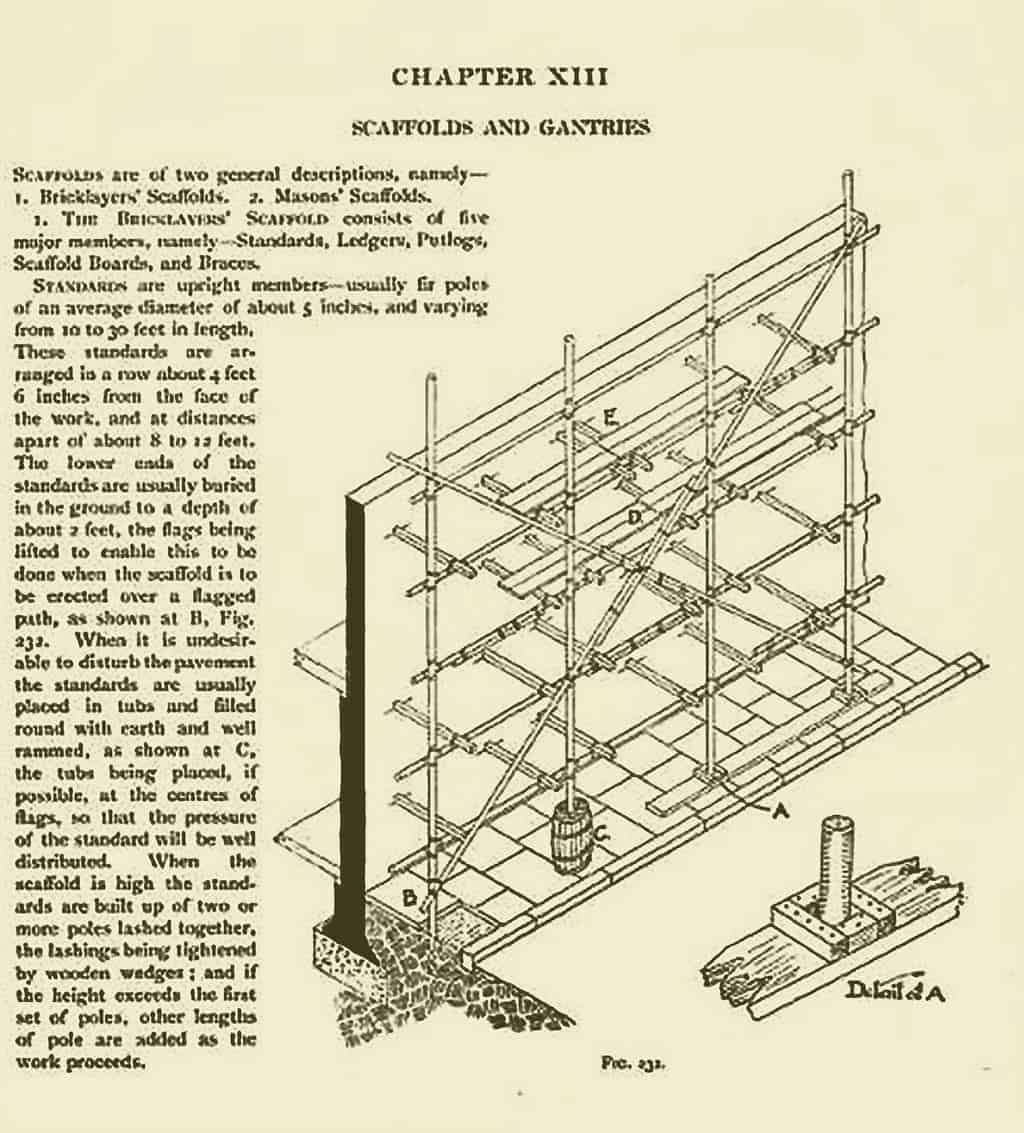
Before the introduction of metal tubes in the early 1900’s, wooden branches or lengths of bamboo were widely used as a method of scaffold construction.

The practice of using tubes tied together with ropes made of hemp (hemping) is still used throughout Eastern countries and even nearer to home in Spain and Italy today.

It was in the early 1900’s when Daniel Palmer-Jones (affectionately known as the ‘Grandfather of Scaffolding’) and his brother David were involved in the trade. They realised that a standard set of fixings was needed that would hold together not only the traditional wooden poles, but also the newly introduced metal scaffolding which had a tendency to slip when tied together with ropes.
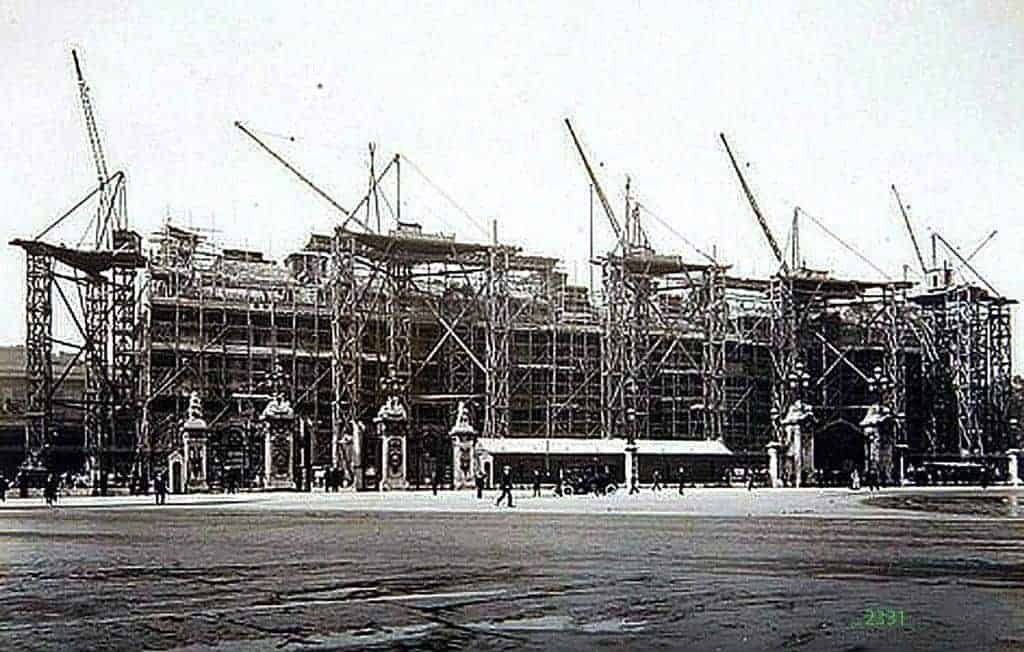
building-buckingham-palace-1913
Building of Buckingham Palace 1913, Image credit: Colin Waters Historic Picture Library

After a number of experiments, they came up with their patented ‘Rapid Scaffixers’ which proved so popular that the invention led to the brothers being awarded a contract involving the remodelling of Buckingham Palace in 1913.
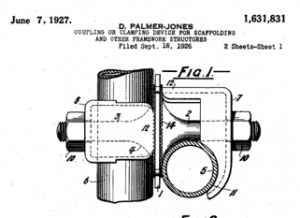
snip20161209_2
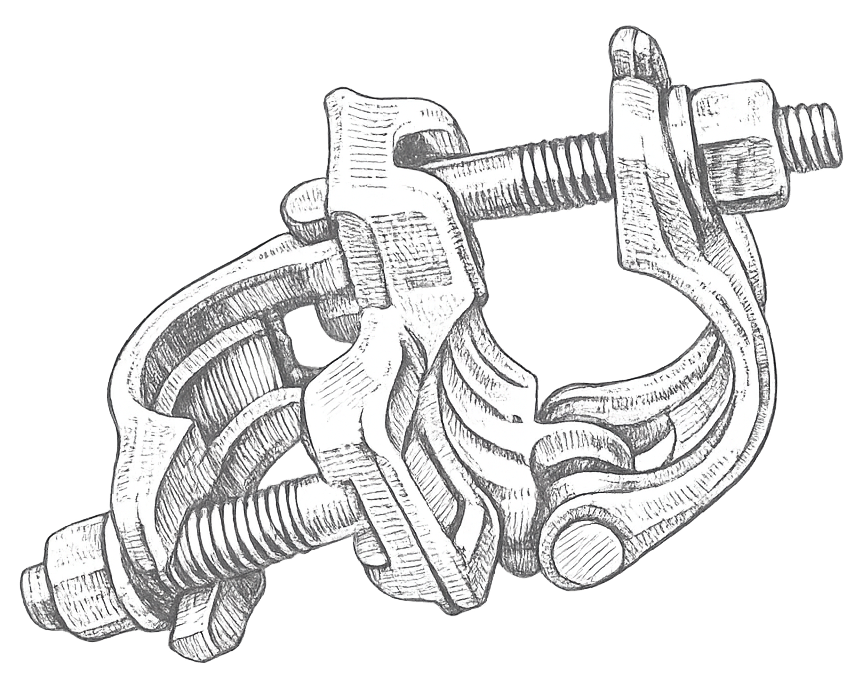
Daniel Palmer-Jones invention ‘Improved Universal Coupler’

Six years later Palmer-Jones invented the ‘Improved Universal Coupler’ which soon became a standard pattern used by the industry right up to the present day. 

By the 1920’s metal poles were being used in the form of two inch water pipes which because of their standard  dimensions  allowed other parts to be similarly standardised, leading to greater stability and safety.

Post War Construction

Following World War II, a massive building program was begun to reconstruct many of the bombed areas of Britain. The first frame system was introduced by SGB, in 1944, and a year later its use was adopted for rebuilding projects throughout the nation, allowing the company to become the successful construction company it is today.
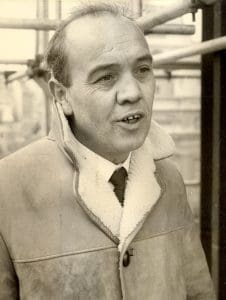
Patrick Hanifan, Coventry Scaffolding

Lots of other scaffold companies owe their success to the post-war building boom. Coventry Scaffolding for instance, started in a small way In 1950 when Pat Hannifan, a former Royal Navy recruit worked as a fruit and vegetable seller and part time scaffolder. 

Together with five other brothers he rented a bombed-out Catholic Church and using a second-hand lorry, began trading as the Coventry Scaffolding Company.

They went on to attract major contracts and by the 1970’s Coventry Scaffolding were building stands for the UK visit of US President Nixon; the repair of the BT Tower previously damaged in an alleged IRA bomb plot; and the building of cradles and scaffolding for a number of prominent London buildings.
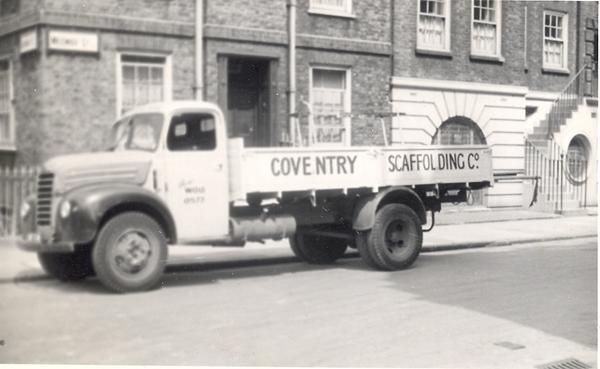
coventry scaffolding lorry
Image credit: Coventry Scaffolding

More impressive high profile jobs came their way in the 1980’s and by 2005; the company had become the first scaffolding company to be granted a Royal Warrant. You can read more about their impressive rise from humble origins on their web page.

Safety

Safety has always been a priority for scaffolders, but apparently not always for employers. In the early years following WW2, men were recruited to work on building sites where unskilled labourers ‘cut their teeth’ as rookie scaffold workers.

On the The Oral History Noticeboard website we’re told a 1960’s scaffolder, George Garnham recalls not wearing any gloves, clips, harnesses or other safety gear. He also tells how workers froze as they climbed the scaffolding.

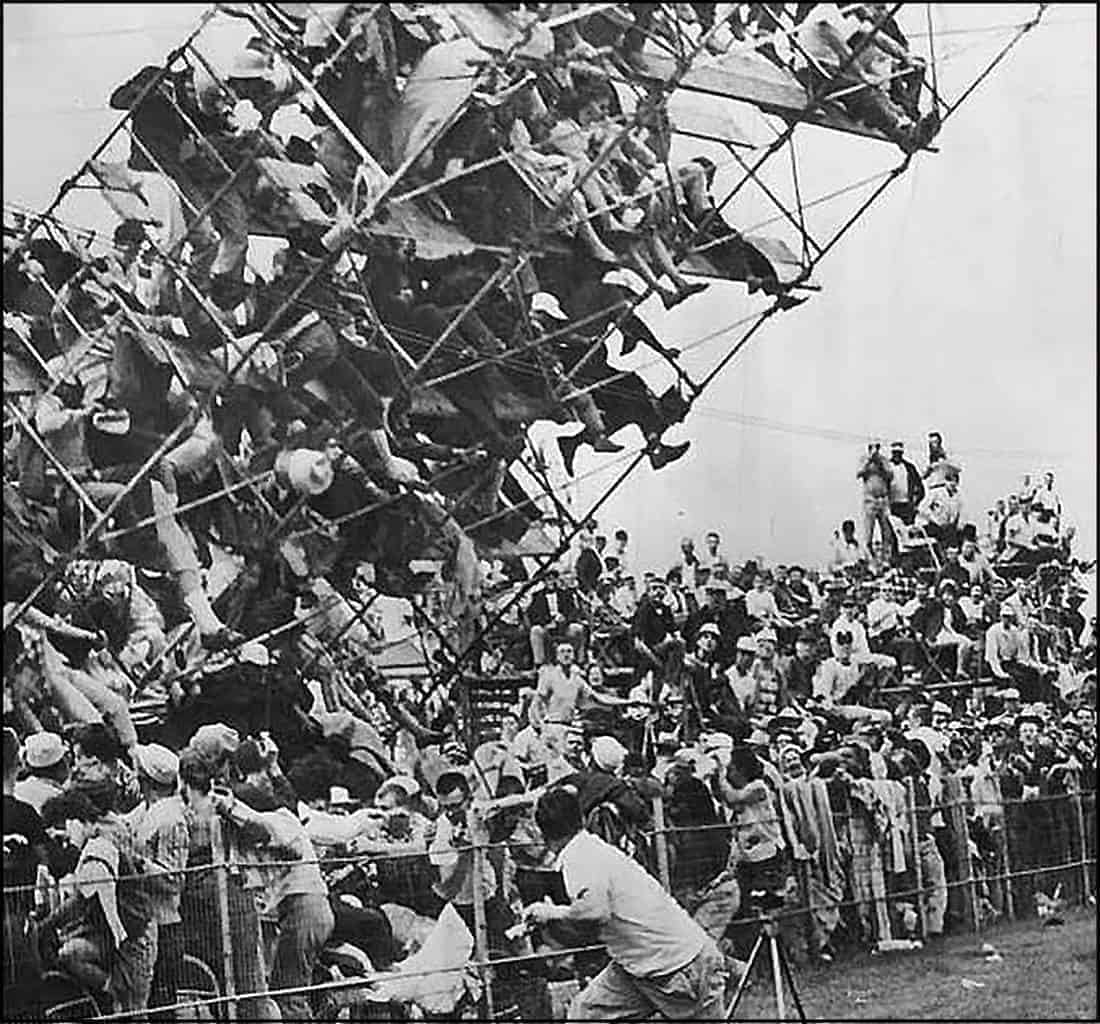
Much earlier during the reconstruction of the Hyde Park Crystal Palace in 1853, 7000 workers were taken on, including lots of scaffold workers. Whether these men were really qualified for the job has often been queried because on the 15th of August in that year tons of scaffolding supporting one of the main parts of the structure collapsed killing twelve workers.

Not all such accidents involving scaffold failure involved the workers themselves. In 1855 for example, excited crowds were watching troops re-enact the Crimean War battle of Sebastopol in Cremorne Gardens in Chelsea when the scaffold set up for the enactment collapsed allegedly due to the sheer weight of the marching soldiers. Horrified onlookers watched on as the soldiers fell, many of them becoming impaled on their own bayonets.

Modern Times

Though scaffolding methods and equipment have become standardised over the years, this doesn’t mean that there hasn’t been continual improvements (e.g. scaffold netting).  In Coventry and other places during the 1960’s for instance, ‘Operation Winter Working’ was introduced by the Ministry of Public Buildings and Works in order to extend working hours for those in the construction industry. Innovations included the cladding of towers in plastic sheeting and the use of heaters installed at their bases so that work could continue during inclement weather.

Despite these modern improvements many old working practices are still evident in the industry today. As an example the block and tackle system was just as familiar to Roman scaffold workers as it is in modern times.

Chris Warburton whose job involves the restoration of old buildings is quoted on the Health and Safety at Work website as saying Once, I was working on a church. We were around 12 lifts up on scaffolding, and we had to lift the blocks of stone up there, using a modern electric hoist…But when we positioned them, we were back to Roman technology – using blocks and tackles and chain hoists…”

Terms and expressions used by scaffolders have also changed considerably.  Lots of old hands have fond memories of working on early construction jobs and recall the old terms they used for equipment, many of which are often lost on younger men in the trade.

Gallery
Most popular ↑

Wayne Connolly honoured as NASC opens 2026 awards entries

NASC has opened entries for the 2026 Scaffolding Excellence...

CISRS Accreditation Granted For Safety & Access Indian Training Center

  CISRS has awarded Safety & Access Ltd full overseas...

The Scaffolding Association adds free seminar on Scaffolding Ties to roadshow

Due to recent scaffold collapses from around the UK,...

GKR scaffolders help save woman’s life at London project

A GKR Scaffolding site team has been praised after...

TRAD UK launches charity campaign supporting Epilepsy Action

TRAD UK has launched a new fundraising campaign in...

Latest news

Reaching for the sky – A potted history of scaffolding

ADVERTISEMENT

It’s known that the use of scaffolding dates way back to prehistoric times because holes still exist in the walls of Palaeolithic caves at Lascaux  in south-western France that were used for staging to enable the primitive occupants to paint their famous wall paintings over 17,000 years ago.

There’s also strong documentary evidence that the Egyptian pharaohs used wooden scaffolding for buildings associated with the pyramids. Later in Medieval times, specialised bands of monks were trained as scaffolders to construct abbeys and churches, a trend that continued well into the 20th century when scaffolder monks were photographed building Buckfast Abbey.

scaffolder-monks-building-buckfast-abbey-in-the-1930s
Scaffolder monks building Buckfast Abbey in the 1930s, Image credit: Colin Waters Historic Picture Library

Early Days

Before the introduction of metal tubes in the early 1900’s, wooden branches or lengths of bamboo were widely used as a method of scaffold construction.

The practice of using tubes tied together with ropes made of hemp (hemping) is still used throughout Eastern countries and even nearer to home in Spain and Italy today.

It was in the early 1900’s when Daniel Palmer-Jones (affectionately known as the ‘Grandfather of Scaffolding’) and his brother David were involved in the trade. They realised that a standard set of fixings was needed that would hold together not only the traditional wooden poles, but also the newly introduced metal scaffolding which had a tendency to slip when tied together with ropes.

building-buckingham-palace-1913
Building of Buckingham Palace 1913, Image credit: Colin Waters Historic Picture Library

After a number of experiments, they came up with their patented ‘Rapid Scaffixers’ which proved so popular that the invention led to the brothers being awarded a contract involving the remodelling of Buckingham Palace in 1913.

snip20161209_2
Daniel Palmer-Jones invention ‘Improved Universal Coupler’

Six years later Palmer-Jones invented the ‘Improved Universal Coupler’ which soon became a standard pattern used by the industry right up to the present day. 

By the 1920’s metal poles were being used in the form of two inch water pipes which because of their standard  dimensions  allowed other parts to be similarly standardised, leading to greater stability and safety.

Post War Construction

Following World War II, a massive building program was begun to reconstruct many of the bombed areas of Britain. The first frame system was introduced by SGB, in 1944, and a year later its use was adopted for rebuilding projects throughout the nation, allowing the company to become the successful construction company it is today.

Patrick Hanifan, Coventry Scaffolding

Lots of other scaffold companies owe their success to the post-war building boom. Coventry Scaffolding for instance, started in a small way In 1950 when Pat Hannifan, a former Royal Navy recruit worked as a fruit and vegetable seller and part time scaffolder. 

Together with five other brothers he rented a bombed-out Catholic Church and using a second-hand lorry, began trading as the Coventry Scaffolding Company.

They went on to attract major contracts and by the 1970’s Coventry Scaffolding were building stands for the UK visit of US President Nixon; the repair of the BT Tower previously damaged in an alleged IRA bomb plot; and the building of cradles and scaffolding for a number of prominent London buildings.

coventry scaffolding lorry
Image credit: Coventry Scaffolding

More impressive high profile jobs came their way in the 1980’s and by 2005; the company had become the first scaffolding company to be granted a Royal Warrant. You can read more about their impressive rise from humble origins on their web page.

Safety

Safety has always been a priority for scaffolders, but apparently not always for employers. In the early years following WW2, men were recruited to work on building sites where unskilled labourers ‘cut their teeth’ as rookie scaffold workers.

On the The Oral History Noticeboard website we’re told a 1960’s scaffolder, George Garnham recalls not wearing any gloves, clips, harnesses or other safety gear. He also tells how workers froze as they climbed the scaffolding.

Much earlier during the reconstruction of the Hyde Park Crystal Palace in 1853, 7000 workers were taken on, including lots of scaffold workers. Whether these men were really qualified for the job has often been queried because on the 15th of August in that year tons of scaffolding supporting one of the main parts of the structure collapsed killing twelve workers.

Not all such accidents involving scaffold failure involved the workers themselves. In 1855 for example, excited crowds were watching troops re-enact the Crimean War battle of Sebastopol in Cremorne Gardens in Chelsea when the scaffold set up for the enactment collapsed allegedly due to the sheer weight of the marching soldiers. Horrified onlookers watched on as the soldiers fell, many of them becoming impaled on their own bayonets.

Modern Times

Though scaffolding methods and equipment have become standardised over the years, this doesn’t mean that there hasn’t been continual improvements (e.g. scaffold netting).  In Coventry and other places during the 1960’s for instance, ‘Operation Winter Working’ was introduced by the Ministry of Public Buildings and Works in order to extend working hours for those in the construction industry. Innovations included the cladding of towers in plastic sheeting and the use of heaters installed at their bases so that work could continue during inclement weather.

Despite these modern improvements many old working practices are still evident in the industry today. As an example the block and tackle system was just as familiar to Roman scaffold workers as it is in modern times.

Chris Warburton whose job involves the restoration of old buildings is quoted on the Health and Safety at Work website as saying Once, I was working on a church. We were around 12 lifts up on scaffolding, and we had to lift the blocks of stone up there, using a modern electric hoist…But when we positioned them, we were back to Roman technology – using blocks and tackles and chain hoists…”

Terms and expressions used by scaffolders have also changed considerably.  Lots of old hands have fond memories of working on early construction jobs and recall the old terms they used for equipment, many of which are often lost on younger men in the trade.

Gallery
Popular Categories

Latest posts

HAKI CEO Sverker Lindberg to step down by 2027

HAKI Safety has confirmed that its President and CEO, Sverker Lindberg, will leave his position no later than April 2027. The company said Lindberg has...

Staht signs US distribution deal for digital pull testing range

UK digital pull testing manufacturer Staht has appointed Diversified Fall Protection as its exclusive distributor in the United States. The agreement will see Diversified market,...

GKR scaffolders help save woman’s life at London project

A GKR Scaffolding site team has been praised after helping to save the life of a woman who collapsed outside a live London project. The...

King’s Award recognises Lee Marley Group’s training work

Lee Marley Group has received a King’s Award for Enterprise in recognition of its work to widen access to careers in construction. The large-scale construction...

Mock the Week star to host ScaffEx26 awards night

Comedian and television presenter Dara Ó Briain has been confirmed as the host of this year’s Scaffolding Excellence Awards. The awards evening will take place...

Wayne Connolly honoured as NASC opens 2026 awards entries

NASC has opened entries for the 2026 Scaffolding Excellence Awards, with this year’s apprentice category renamed in memory of former NASC president and CISRS...

TRAD UK launches charity campaign supporting Epilepsy Action

TRAD UK has launched a new fundraising campaign in support of Epilepsy Action, the national charity helping people and families affected by epilepsy. The 2026-27...

Scaffolding firms urged to review RIDDOR procedures as HSE consults on changes

The Health and Safety Executive has launched a consultation on proposed changes to the Reporting of Injuries, Diseases and Dangerous Occurrences Regulations 2013, known...

Scottish offshore workers urged to consider scaffolding careers

The Construction Industry Training Board is targeting workers from Scotland’s offshore energy sector as part of efforts to widen the construction talent pool and...

NASC warns members over online conduct in new media policy

The National Access and Scaffolding Confederation said the new Social Media and General Media Policy sets expectations for how its members, CISRS centres and...

Spring Issue #29 | Past issues >>

Latest topics

Most popular ⚡︎

Wayne Connolly honoured as NASC opens 2026 awards entries

NASC has opened entries for the 2026 Scaffolding Excellence...

CISRS Accreditation Granted For Safety & Access Indian Training Center

  CISRS has awarded Safety & Access Ltd full overseas...

The Scaffolding Association adds free seminar on Scaffolding Ties to roadshow

Due to recent scaffold collapses from around the UK,...

GKR scaffolders help save woman’s life at London project

A GKR Scaffolding site team has been praised after...

TRAD UK launches charity campaign supporting Epilepsy Action

TRAD UK has launched a new fundraising campaign in...

Related articles

ADVERTISEMENTS
More from
Latest articles

Australian scaffolding body warns Kwikform collapse exposes subcontractor risks

Australia’s scaffolding trade body has said the voluntary administration of the Kwikform group highlights...

HAKI CEO Sverker Lindberg to step down by 2027

HAKI Safety has confirmed that its President and CEO, Sverker Lindberg, will leave his...

Staht signs US distribution deal for digital pull testing range

UK digital pull testing manufacturer Staht has appointed Diversified Fall Protection as its exclusive...

GKR scaffolders help save woman’s life at London project

A GKR Scaffolding site team has been praised after helping to save the life...

King’s Award recognises Lee Marley Group’s training work

Lee Marley Group has received a King’s Award for Enterprise in recognition of its...

Mock the Week star to host ScaffEx26 awards night

Comedian and television presenter Dara Ó Briain has been confirmed as the host of...