
T

hroughout my career working with system scaffolding – predominantly Layher – I’ve had approaches from manufacturers with ‘copied’ products. These are companies that essentially supply poor copies of original manufacturers’ components – whatever they say, this is what they do. It’s their business model.
Obviously traditional tube, fitting and boards are a commodity – but system scaffolding is not. All the original system scaffolding manufacturers I know do far more than just supply the equipment. They are investing in support and service to make sure their clients get as much value as possible out of their investment.
Companies that promote mixing simply can’t – or don’t want to – do that. Their price is cheaper because they just want to sell the kit. They don’t want to help scaffolding contractors succeed and they have no interest whatsoever in your business doing well. Their marketing strategy is simply to get in ahead of the original manufacturer with a cheap and substandard copy and cast doubt on whether or not your current supplier can meet demand at short notice.
My own experience is that of course there can be a supply issue. I have experienced this when using another manufacturer’s equipment. I’ve had jobs that were partially built and had to be taken down, or where projects were nearly complete but couldn’t be handed over because of the lack of components required to complete them – leading to several week’s delay. Is this what you want? In the 25 years that I used Layher system scaffolding as part of my equipment mix, I never ever had a problem with supply.
If you choose to go down the mixing route – which I clearly wouldn’t advise – you will end up polluting your stock. Instead of using 100% genuine components from a single supplier, you will have a combination of equipment that’s not all manufactured to the same quality or tolerances. There are certainly obvious technical difficulties with copies – a subject for a different article, perhaps.
Your clients will not like this. Would you? They need you to be accountable for the reliability and safety of the scaffold you erect, and they want to be completely confident that you’re using authentic equipment on their site.
What’s more, polluting your stock means a lower resale value when you need to sell some components to rebalance your stock. For example, Layher’s market penetration means there is a long-established market for good-quality second hand Layher system scaffolding – but if your stock is contaminated with copy equipment, you won’t be able to realise the full resale value – if you can sell it at all.
As I’ve said, I was regularly approached by companies offering mixed product when I was MD at TRAD Scaffolding. Although the base product was certainly cheaper, I would never buy it. I knew my clients wouldn’t want me to mix scaffolding products and I was convinced that there was no good reason to dilute the quality of my stock.
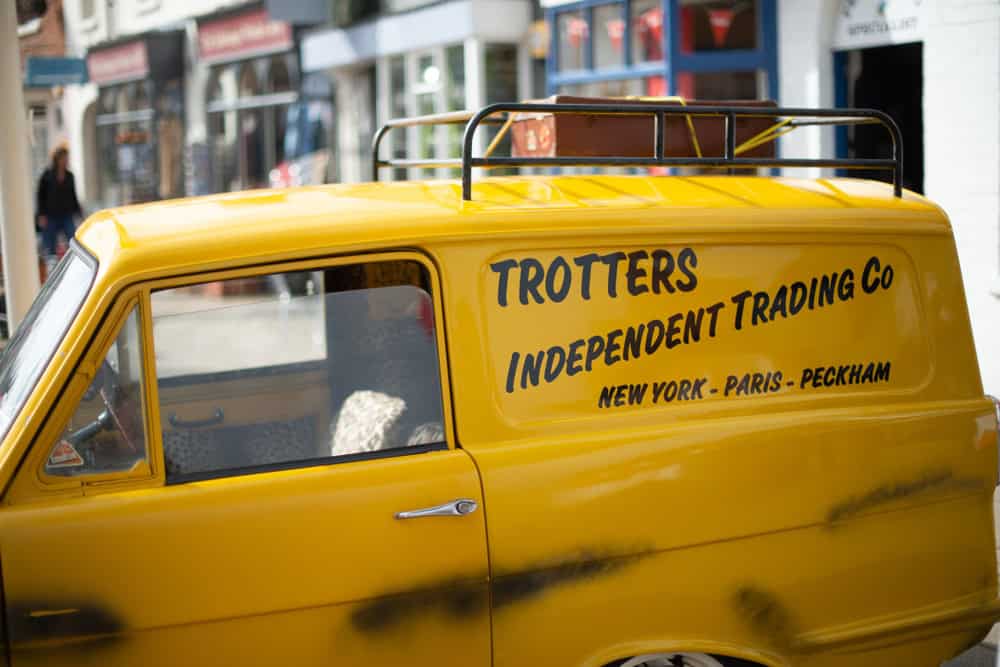
In fact, using mixed equipment makes no business sense whatsoever. To me, it’s like buying a cheaper version of a luxury brand: you know it’s not the real deal, and you know it’s probably going to stop working, or fall apart. If you bought your partner a cheap copy of some designer gear from Del Boy rather than an original, what would happen? Maybe you’d find yourself locked out with your bags on the pavement!
Just like fake designer goods, buying copy system scaffolding looks like a saving in the short term – and perhaps it is. But in the long term, it has the potential to damage your business, your relationships with clients and your reputation – all of which you’ve worked hard to establish.
Instead of going for the cheap option, take a long-term view and choose carefully from the genuine original manufacturers on the UK market. I’d always say that your best choice is Layher, but of course it’s up to you which system you choose. But once you’ve made a choice, you need to stick with it. You want to be completely confident in the reliability, quality and supply of the system you choose.
Why would I promote Layher’s systems above the others available? It’s because of the complete service offering they have. With depots across the UK, a specialist sales team with in-depth knowledge and experience of system and its benefits, and constant innovation to help your business deliver more efficient, safe and cost-effective projects, it really is the best choice in my view.
Layher’s in-house design team supports you to make the best use of your equipment, and the company has immense stock levels across the UK at any one time – well in excess of any other system scaffolding manufacturer. If the equipment is not in the UK, it can be delivered in just 2-3 days.
As an example of Layher’s manufacturing capacity, it can produce 35,000 ledgers in one day. The company has also just built the largest galvanising plant in Europe. So you’re not just buying the kit – you’re buying innovation, engineering expertise, training, product support and ongoing customer service. In fact, Tier 1 and 3 contractors regularly approach Layher direct to ask about using system on their projects.
Layher has great brand awareness – there’s no getting away from the fact that it is the JCB of the scaffolding world – and will support your business to make the most of your system scaffolding option. It also has dedicated schemes to help you buy your equipment in a manageable way.
You only get what you pay for – so to support your own business growth, choose a sustainable, reliable original manufacturer, and never be tempted to mix.