The Scaffolding Association Australia has backed an industry education campaign following any changes to Queensland’s Scaffolding Code of Practice, in its response to the coronial findings into the death of Andy Jones.
In a statement published on 6 October, SAA said clearer guidance on tower scaffold stability needed to be supported by education so that those responsible for scaffolding understood how to apply it on site.
The association also supported continuing review of codes of practice, standards and practical guidance as industry experience and understanding of risk develop.
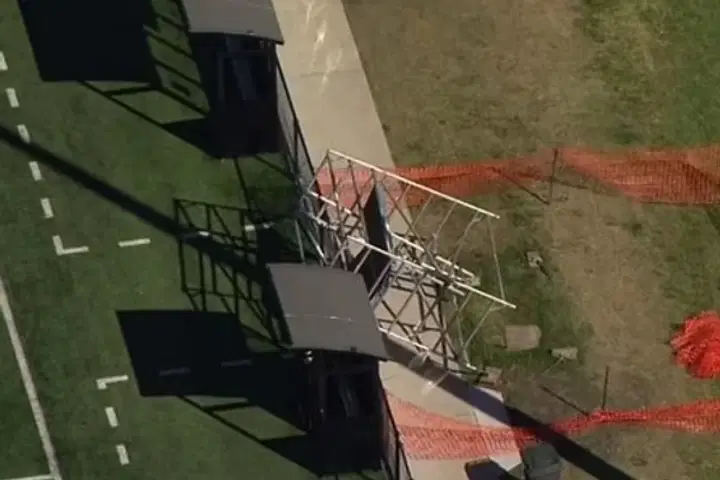
Jones died after a freestanding tower scaffold fell in strong winds at Mitchelton Football Club in Brisbane in July 2021.
As Scaffmag reported last week, Coroner Megan Fairweather recommended clearer requirements for freestanding towers in public places, including a definition of “strong winds” and additional stability controls appropriate to the circumstances.
Her recommendations also called for education following amendments to the code, then a compliance campaign.
SAA’s response focuses on how those lessons are understood and applied across the industry. It said a scaffold’s location, wind exposure, configuration and time in place all needed to inform stability decisions, alongside the consequences of failure.
“Height-to-base ratios can be useful as a starting point,” the association said in its statement.
It pointed to its existing Australian Best Practice Guidelines for Scaffolding, which describe height-to-width ratios as minimum requirements and recognise the need to consider environmental factors.
The guidelines identify ties, outriggers, rakers, guying and appropriately secured counterweights as possible additional stability measures, depending on the circumstances. They also recognise that aluminium scaffolds can be particularly susceptible to wind-related instability.
SAA said public locations required particular attention because people nearby may have no knowledge of a scaffold’s operating limits or the risks created by changing weather.
The association said manufacturers, suppliers, hire companies, contractors, supervisors, designers, engineers and site managers all had a role in making stability information and appropriate controls clear.
It expressed sympathy for Jones’ family and said the value of the coroner’s work would be measured by whether its lessons helped prevent another incident.