Ross Brown and Robbie Andrews didn’t take an all-apprentice team to ScaffChamp to chase the stopwatch. They wanted to prove a point about young scaffolders, training and what the industry chooses to value.
The scaffolding industry has been talking about its apprentice problem for years. The complaint is consistent: young people aren’t interested, they don’t want to graft, the cost of training isn’t worth the risk of them leaving. Companies cite college disruption, low retention rates and the straightforward economics of hiring experienced labour over developing someone from scratch.
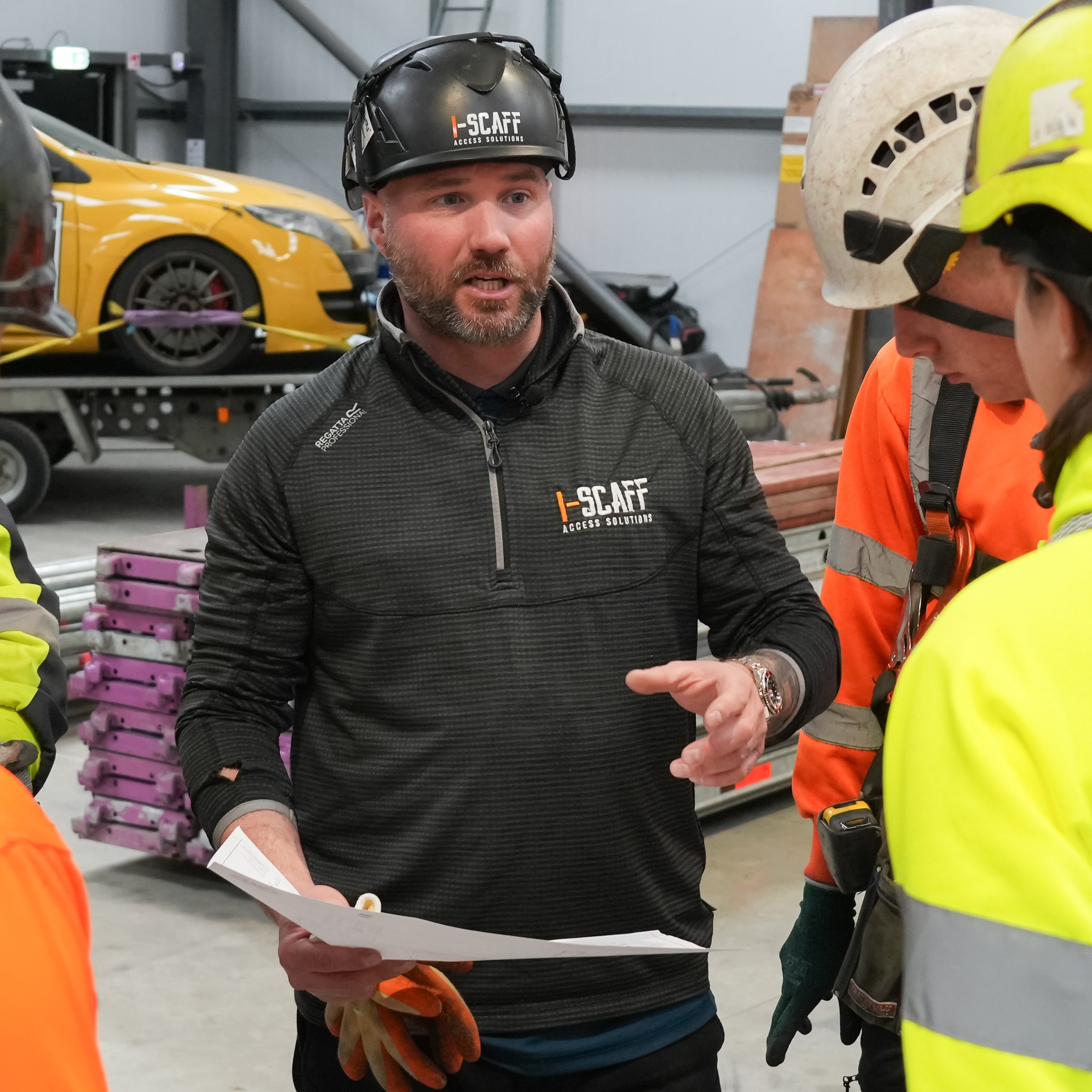
Ross Brown has heard all of it. He doesn’t buy any of it.
“I don’t think we’re struggling to get young people in,” says the director of I-Scaff in Scotland. “We’re maybe doing the wrong things to attract them.”
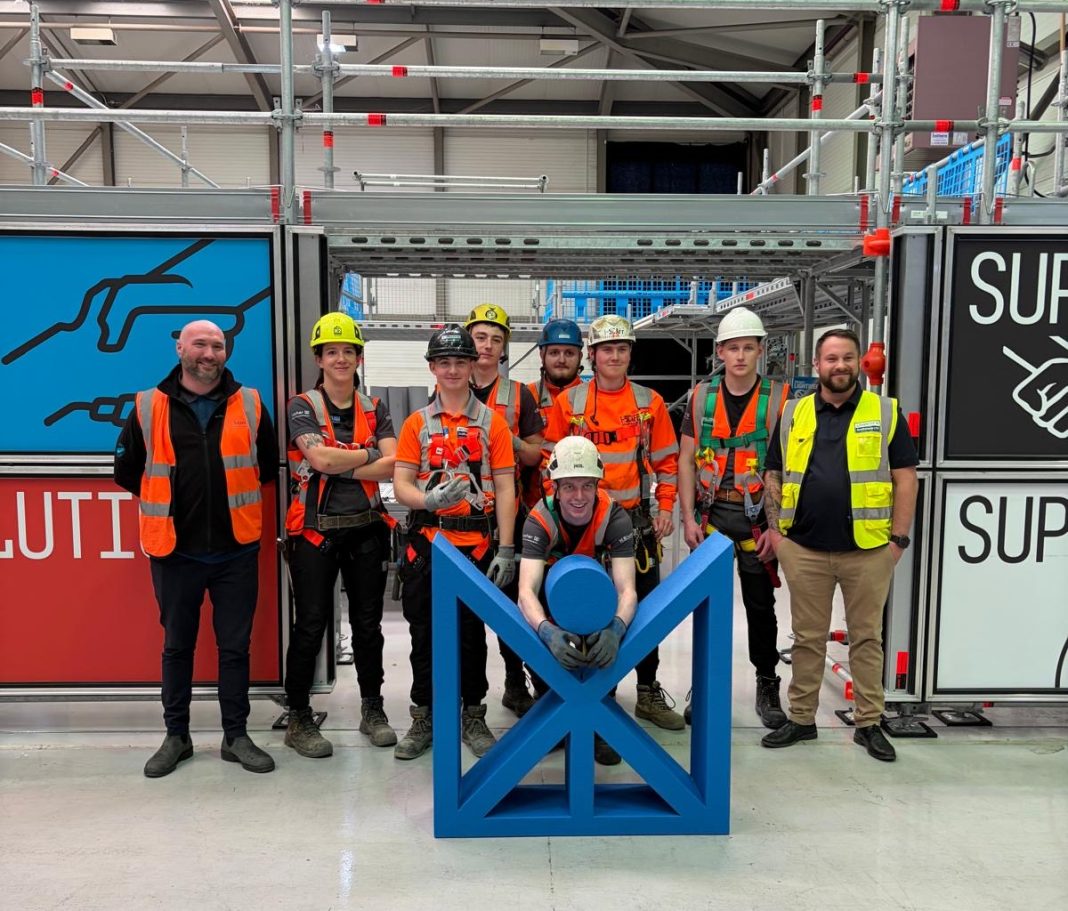
That distinction is the idea behind one of the more unusual entries at this year’s ScaffChamp competition in Vilnius. Brown and Robbie Andrews of Advanced NI Scaffolding assembled a team of seven apprentices, aged 17 to 20, drawn from companies across Scotland and Northern Ireland. None of them had competed internationally before. Several had never heard of ScaffChamp until they got the call.
The goal was never the leaderboard.
The idea
The conversation that started it happened at ScaffEx in Manchester last year. Brown and Andrews had just finished speaking on a NASC panel about the difficulty of attracting young talent into the industry. Walking off stage, Brown turned to Andrews with a proposal.
“Why don’t we put a team together fully based on apprentices?” Brown recalls. “They’ve got no pressure. The pressure’s on everybody else. Nobody wants to come last to the apprentice team.”
What Brown had observed at the previous year’s ScaffChamp was a UK team carrying the weight of expectation, having told everyone they were going to win before they left. Brown saw something more useful in the opposite approach: send people who have nothing to prove, cover every cost so they never have to think about money, and let them come home as ambassadors for what the industry can actually offer.
The problem, as he sees it, is one of perception. Young people growing up in the UK encounter scaffolding in one context: wrapped around houses and buildings undergoing maintenance. They see tubes and boards on a residential street and assume that’s the whole picture.
“They don’t know about scaffolding the Forth Bridge, working on wind farms or offshore oil rigs,” Brown says. “We had a school group come to an open day once and they were like, what, you scaffold on the fourth floor? You do oil rigs? They didn’t realise all this cool stuff was out there.”
That gap between the industry’s reality and public perception of it is, Brown argues, the actual recruitment problem. It is not that young people don’t want to work. It is that no one has shown them what the work actually is.
Building the team
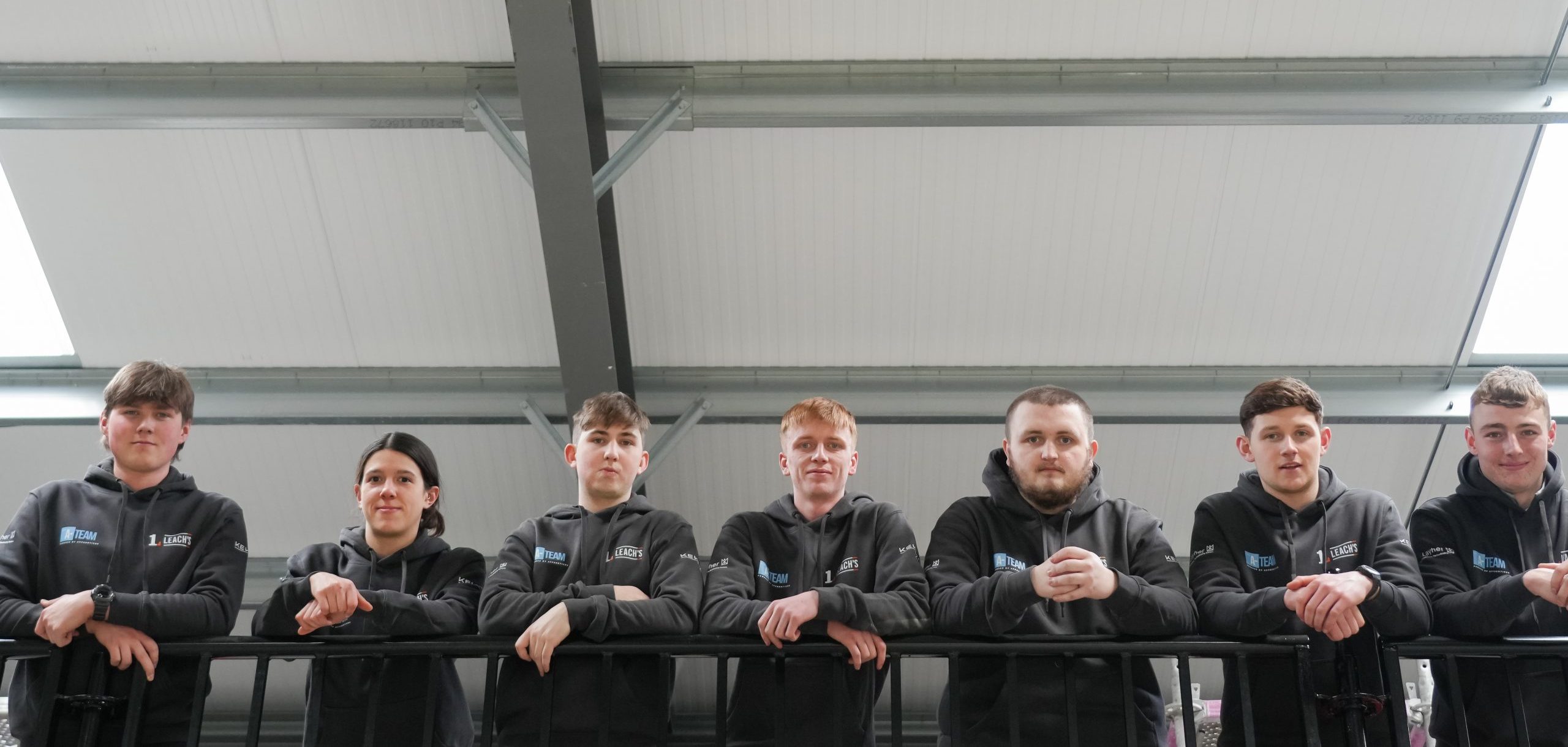
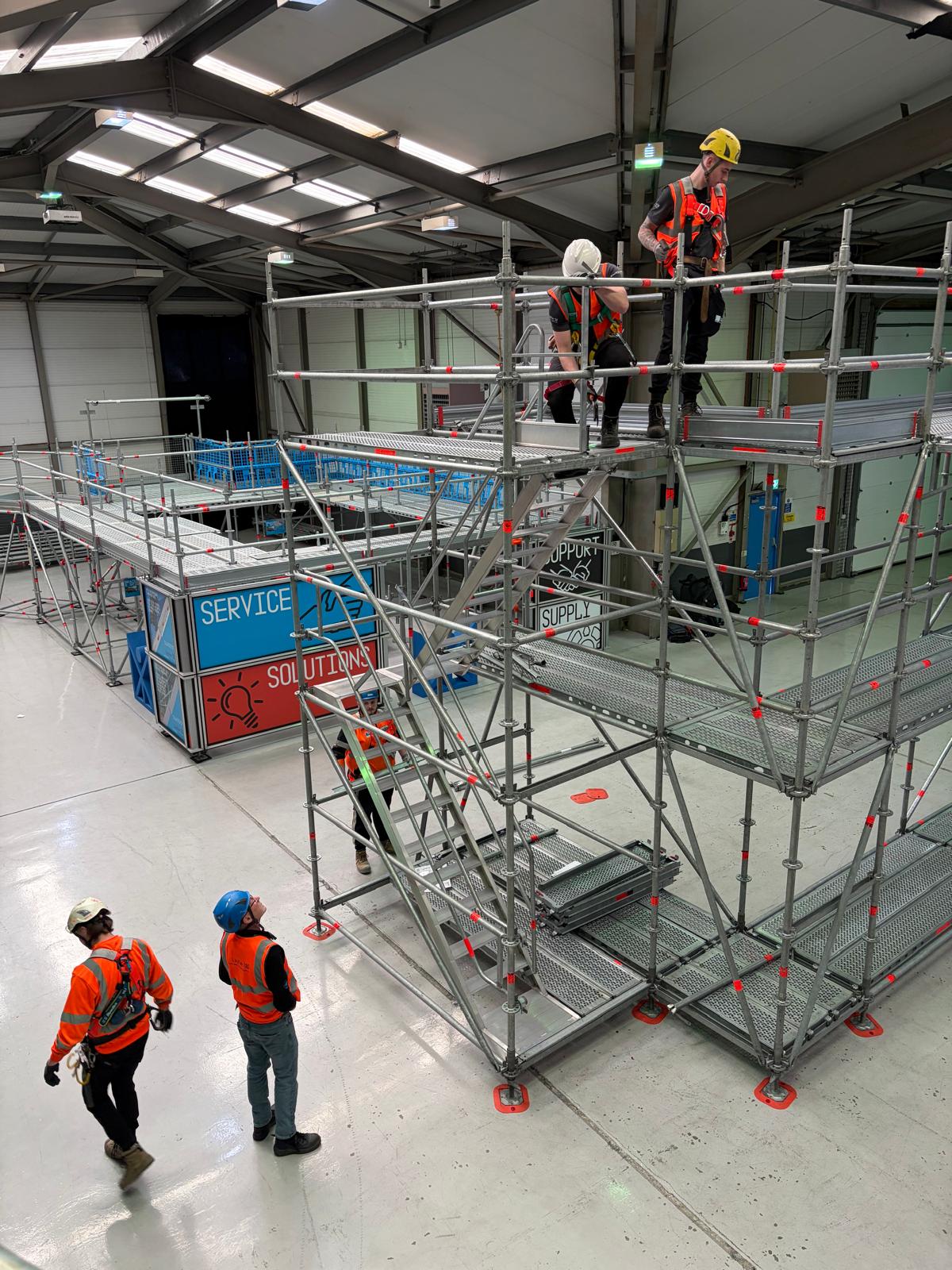
Getting the team together required an open call, time trials at the Advanced NI yard and a significant fundraising effort. Brown worked out costs at roughly £1,800 per head, covering flights, accommodation and daily food. The goal was that every apprentice would attend at no cost to themselves whatsoever.
He approached employers, industry contacts and companies with no direct stake in the competition. The response surprised him.
“Some Scottish companies just saw it on LinkedIn and sent a message saying, we don’t have an apprentice on the team, but we’re happy to pay for one,” Brown says.
Around £24,000 was raised in total. Brown set up a dedicated bank account with full transparency, statements shared on request. He also made a clear ask of employers who weren’t contributing financially: give their apprentices the time off as paid working days, not holiday.
Layher UK supported the initiative by hosting the team’s SSPTS training at its headquarters in Letchworth, meeting all associated costs. The qualification would go on the apprentices’ CISRS cards. Two further sessions were planned around it: the first at the I-Scaff yard in Scotland, the third in Belfast, before the competition. The structure was deliberate. Scottish apprentices would travel to Northern Ireland; the Northern Irish would come to Scotland. The whole point was to show that the industry extends beyond each person’s postcode.
The team
The seven apprentices represent a range of experience levels. Liam Bissett, 20, from Brand Access in Scotland, holds a Part 2 and is time served. His father Mark was previously Layher’s Scottish sales manager. At the other end of the scale, Michael from Advanced NI had just completed his initial assessment and was due to sit Part 1 the week after Letchworth.
Jay, from I-Scaff, is a frontrunner for the team captain role, though not for the obvious reasons. Brown describes him as careful rather than fast on the tools, but strong on planning and design. He reads drawings accurately, runs weekly staff plans in the office and has ambitions to move into scaffold design after completing his advanced card.
At ScaffChamp, Brown is not looking for someone who can work the quickest. He wants someone who can interpret a digital build model under pressure and direct everyone else.
“See the guys that showed a bit of keenness early on,” Brown says. “They’re the ones who progress. The ones stuck in the macho attitude are still on the tools at 55 with nowhere left to go.”
There is also Sophia, from Northern Ireland, who learned she was going to Lithuania when a colleague phoned her out of the blue.
“I didn’t even really know it was a thing until she rang me,” Sophia says. “I was like, oh my god. But it’s dead cool. I’m very excited.”
The evening before the second day of training at Letchworth, the team went out together. Phones stayed in pockets. They sat at an Italian restaurant, moved between pubs, and by the time Brown and his co-organiser called it a night, the apprentices were still going. They were all up for breakfast the following morning.
“It was a good little test,” Brown says. “We left them out on their own and no one took the piss.”
The cohesion Brown had been trying to build arrived faster than he expected.
“Not all apprentices are a lot of dickheads, Some of them are rough diamonds.”
What success looks like
The competition approach for Vilnius is methodical. Having watched teams lose time chasing speed at the expense of accuracy, Brown plans to break the build down lift by lift. The team will focus solely on the section from zero to two metres, stop, cross-check, then move on. Roles are fixed: pads and jacks, ledgers, braces and transoms, decks.
“In the entire history of ScaffChamp, the fastest team has never won,” Brown says. “The fastest teams get the most penalties.”
But results were never the real measure of this.
Brown’s goals are twofold. The first is directed at the industry. Anti-apprentice attitudes, the reluctance to pay apprentice wages or invest in someone who might leave, are self-defeating. The industry cannot rely indefinitely on experienced labour while refusing to develop the people coming behind them.
“Not all apprentices are a lot of dickheads,” he says. “Some of them are rough diamonds.”
The second goal is directed outward. If young people who have never considered scaffolding see others their own age competing internationally, travelling across Europe, working across borders and building things that matter, the conversation changes. The industry stops looking like a fallback and starts looking like a choice.
Brown is already planning for next year. Same model, new cohort, fresh application process. He expects more applicants, because this group will have made the journey visible. At the end of this year, he will go back to every contributor to agree what happens to any surplus: roll it over to give a new group the same experience in 2027, or donate it to an industry charity. Either way, the sponsors decide.
“The industry has given me amazing opportunities,” he says. “If we can show them that, we’ve done the job.”
For a full account of the team’s performance at ScaffChamp 2026, see the latest issue of Scaffmag here.