
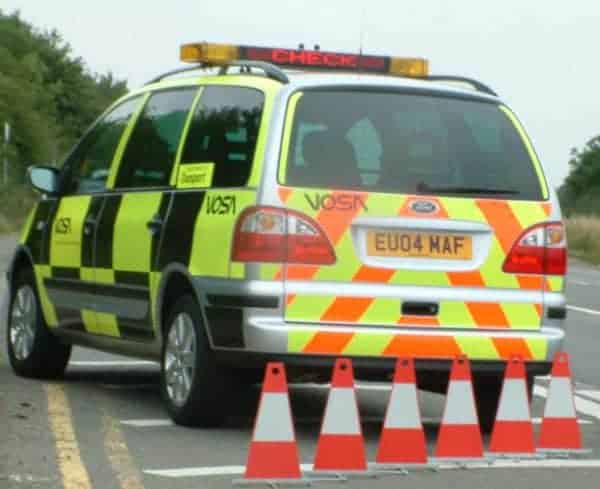
VOSA rumours of mandatory closed backs on 7.5 tonne scaffolding vehicles, Now quashed !

ADVERTISEMENT

vosa-large

Scaffmag can exclusively confirm that rumours about VOSA looking to introduce regulations for mandatory closed backs on 7.5 tonne scaffolding vehicles have today been officially quashed.

Rumours were flying around the scaffolding industry over the last few weeks that VOSA (The Vehicle and Operator Services Agency) were already enforcing or looking into introduce regulations for mandatory closed backs on 7.5 tonne scaffolding vehicles. We contacted VOSA for more information. VOSA told ScaffMag:

Many operators have removed the tail gate fitted to the original vehicle for ease of access and to allow for longer scaffolding tubes and associated equipment to be loaded on to the vehicle. This allows the tubes and equipment to move towards the rear of the vehicle and therefore some other type of restraint is required to prevent the 50% movement of the load to the rear.

As long as the load is secured to the vehicle in a manner that the load is not likely to cause a danger of injury to any person in or on the road then this would satisfy the requirement placed on the operator and driver by the Road Vehicles Construction and Use Regulations 1986 and the Road Traffic Act 1988.

At present there is no intention of requesting mandatory fitment of tailgates to 7.5 tonnes vehicles. 

A VOSA spokesperson said:
“There are no regulations which require mandatory methods for securing loads on vehicles. The legislation which VOSA use to prohibit and prosecute are the existing Construction and Use regs and Road Traffic act. whereby the use of a vehicle/trailer is such that a nuisance or danger is likely to be caused due to various reasons one of which is an insecure load.” 

“As an organisation we have become more proactive in dealing with vehicles where it is clear to our examiners that a load is not secure and in these circumstances we will either provide guidance and advice or in more serious circumstances we will issues a prohibition and Graduated Fixed Penalty and Deposit (GFPD). The advice we will give at the roadside regarding safe loading would mirror that provided in the DfT Code of Practice “Safety of loads on vehicles” and/or that provided in the EU best practice guidelines documents readily available on the internet. Our expectations of drivers is that the load is secure in transit.” 

Story By: Daniel Norton
SM Newsdesk
SM Newsdeskhttps://www.scaffmag.com
The staff at ScaffMag.com the leading scaffolding site for a digital generation.

Most popular ↑

Contractor injured in fall during Port Kembla scaffold erection

ABC reports that a contractor was injured in a fall during scaffold erection at BlueScope’s Port Kembla steelworks on 29 October. SafeWork NSW inspectors visited the site.

Ibstock issues profit warning as brick demand weakens

Ibstock has reportedly cut production and lowered its earnings expectations after third-quarter brick sales fell short of forecasts.

Shield tackles hilltop access challenge in 19-day scaffold build

Shield erected access around the 38-metre Lansdowne Monument in 19 days despite a steep, rutted route that kept vans and lorries away from the hilltop.

Scaffolding firms face tighter harassment duties from 30 October

Stronger harassment duties and new union-access rules take effect across Great Britain on 30 October, with implications for firms working on client-controlled sites.

Scaffold Innovations: GapClamp™

  Since the Work at Height Regulations 2005 came into...

Latest news

Four injured in Taiwan market scaffold collapse

Taipei has halted work at the old Beitou market demolition site after a scaffold collapse injured four people. Investigations are continuing.
- Advertisement -
More from

Self-employment reforms could shift proof burden onto contractors

Proposed worker-status changes could put the burden of proving genuine self-employment on contractors. A new assessment puts the economy-wide annual net direct cost at £167.8m.

Scaffolding firms face tighter harassment duties from 30 October

Stronger harassment duties and new union-access rules take effect across Great Britain on 30 October, with implications for firms working on client-controlled sites.

Budget 2026: what it means for scaffolding firms

Fuel duty relief, higher minimum wages and apprenticeship measures feature in Budget 2026, as NASC warns investment promises must translate into construction work.

Alimak targets £6m savings as construction profits fall

Alimak sets out SEK80m (about £6m) annual savings target as construction profits fall, while reporting positive UK parts and service demand.
Latest articles