
Business owner and entrepreneur, Greg Wilkes, who with over 20 years of experience running construction companies from the ground up, tells us businesses can not only survive in 2021 but also grow.
By now, we are all sick of talking and hearing about Coronavirus. Whilst we all welcome the roll-out of the vaccine so we can get back to ‘normal’, in reality, we know for most it will not be ‘business as usual’ for a very long time ahead.
How about the scaffolding industry? What does 2021 have in store? How can your business not only survive this year, but rapidly scale up?
In this article, we will look at 7 ways that you can scale up your scaffolding business.
The Construction Industry
What does the current and near-future look like for the construction industry? You will be pleased to know things are still looking very bright. Unlike other industries like hospitality and aviation that have been hit really hard, the construction industry is still thriving and that is expected to continue throughout 2021.
At the time of writing, construction sites have not been affected by the lockdowns.
Also, the housing market is still strong. Whilst people are continuing to move, they will continue to renovate & extend their new homes, which means there is plenty of work for smaller scaffolding firms.
Combine that with Boris Johnson’s commitment to Build, Build, Build announced last year during the pandemic, you can clearly see that the government wants to ensure construction infrastructure increases, rather than deceases.
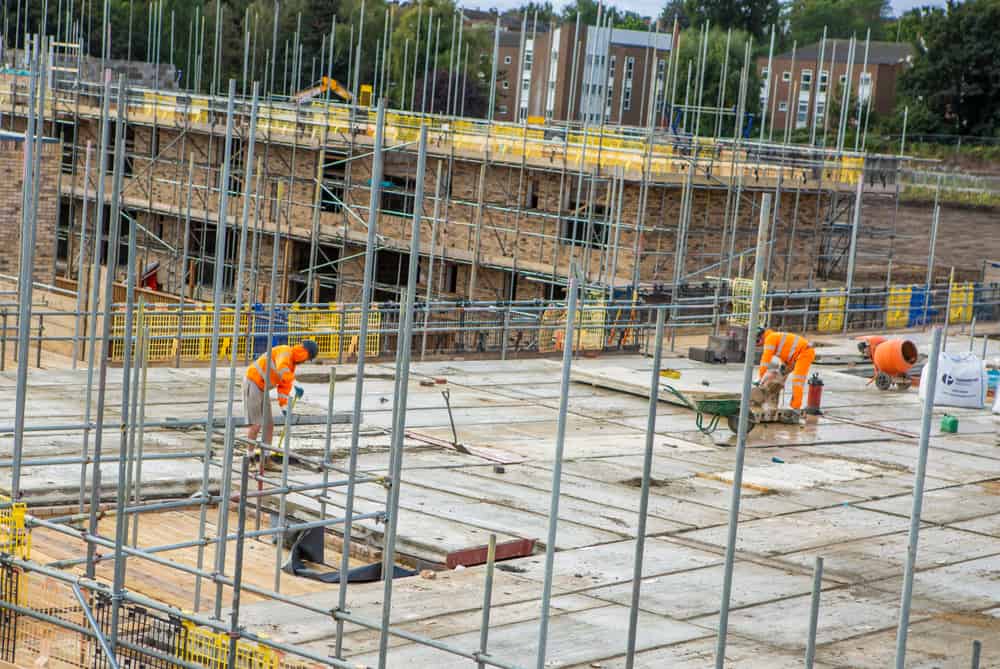
New home developments are still going strong and as a result, main contractors will be busy providing great opportunities for scaffolders.
In summary, there is a large demand for scaffolds currently and in the foreseeable future.
This is great news. However, not all businesses feel the same. They are anxious about what the future holds for their business and are reluctant to scale-up or unsure how to.
To follow are 7 ways you can scale your business in the midst of a pandemic:
1. If you’re not growing you’re going backwards
Many scaffolding business owners will be fearful and will start to scale back. Not because they have seen something that suggests the construction industry is going to take a hit but because of the general fear in the population. They are worried that this industry will be next, so they err on the side of caution. Hence they go backwards.
This climate gives you the chance to get the jump on those fearful & who are scaling back.
If the work is there, take it and don’t be fearful of expanding.
2. Taking Opportunities
Competitors with high overheads/debt may be going bust, this will give opportunities to snap up good staff & contracts
Always keep an eye on your competitors and what they are up to. Find out who your target customers are using for their contracts and be sure they know who you are so that you are waiting in the wings as soon as the company either goes bust or isn’t meeting their standards of service.
If a company does go bust and you are looking for good staff, get in contact with the owner, offer your condolences and honestly tell them you are looking for good quality staff, can he give you the contacts for the ones he has had to let go. Most decent bosses would be delighted to find their hardworking, loyal team members a new job as letting go of your staff is one of the most painful parts of your business going bust.
3. Environment
Something we will hear about non-stop over the next decade is the environment.
Our world is becoming increasingly aware of the damage being done to our planet and as government and businesses have strict targets to reach by 2030 to radically reduce our carbon footprint.
If you can find ways to make your business greener, this will give you a massive edge over your competitors when pitching to clients and trying to win contracts.
4. Scale up smart
Keep lean (low overheads) don’t commit to hiring offices, keep remote. Keep hold of capital in case there is a downturn, so consider leasing options rather buying new vehicles to create a cash buffer.
5. Marketing
Gone are the days when you could stick an ad in the yellow pages and business would come to you. These days there seems to be a million ways to advertise and everyone is pointing you in a different direction. If you get it wrong and use the wrong platforms, you can spend a lot of time and effort trying to promote your business with limited or zero return.
You need to be clear on who you are targeting and where they are hanging out in the virtual world.
For example, if you are a small scaffolding firm that wants to increase your local business, then you are likely hoping to gain business from homeowners renovating. Estate Agents, Builders, Roofers, painters and decorators etc. might be the contacts you want to network with to gain business.
Do you think randomly posting daily on your Twitter, Facebook and Instagram pages will bring these kinds of contacts to your doorstep? Unlikely.
You will need to strategically target them through email campaigns, paid (and well-targeted) Facebook ads, direct outreach through LinkedIn or to their SM profiles. Consider joining specialist groups within these platforms, as this is where they are likely to be.
If you are a larger scaffolding firm targeting larger contracts, email marketing is likely to yield good results. LinkedIn is an amazing way to reach the inbox of the exact person you are looking to reach without having to get through that tough receptionist. You can also try lead generation sites like Glenigans which list thousands of projects each week along with main contractor contact details.
6. Online Presence
When you go to book a hotel, what is the first thing you do before you book it? Most people would check the reviews, they would be looking on TripAdvisor or something similar to weigh up if that hotel is as it appears. The same can be said for any business. When people are looking to use a new service, they will check the online reviews so if you don’t have many (or any) you will likely be losing custom.
Get hold of all previous customers and ask them for a review, if they were happy with your service. Send them a link directly to it to make it easy for them. If they are willing, get them to review you across several platforms from Google, Trustpilot, Facebook business & Yell (these all rank highly in the Google algorithm)
7. Operating Systems
Having good operating systems is vital if you want to rapidly scale up your scaffolding business successfully.
From CRM systems, to automating your sales and marketing, software for estimating, stock control and accountancy. It’s important to get the best systems in place that automate as much of the work as possible which leaves you more time to focus on the important aspects of growing the business rather than administration. You ideally want to be able to look at how each area of your business is operating at a glance. This will raise any red flags & you can decide which areas need improvement.
Conclusion
If you own a scaffolding business there is ample opportunity now and throughout the year to rapidly scale up your business. With the right systems in place, loyal staff and a good marketing plan, you will be all set to achieve amazing results.
If you would like more information on practical ways to scale your business, I am offering Scaffmag readers a free copy of my Amazon #1 book: Building Your Future- A step by step guide to creating a £1m+ construction business.
This article was first published in the ScaffMag Magazine Issue 12