NASC contractor members recorded zero operative fatalities in 2025, according to the organisation’s latest Safety Report.
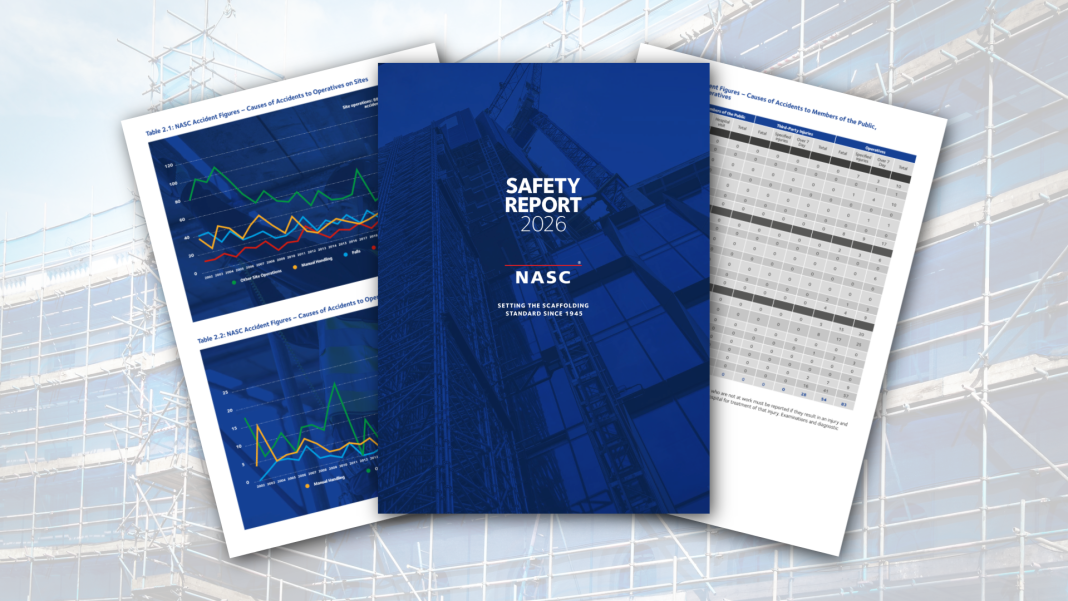
The 2026 NASC Safety Report, published today to coincide with NASC Safety Day, is based on RIDDOR accident data submitted by all NASC contractor members.
The report shows 82 reportable accidents across a combined workforce of 20,168 operatives employed by 332 contractor members.
NASC said this equated to one RIDDOR accident for every 470,000 operative hours worked.
Accident rates remain below 10-year average
The trade body’s Accident Incident Rate stood at 4.07, while its Accident Frequency Rate was 0.21. Both figures remain below the 10-year averages of 5.2 and 0.26 respectively.
The figures come as NASC membership continues to grow. Contractor membership rose to 332 in 2025, while the number of operatives working for NASC contractor members passed 20,000 for the first time.
The report also sets the figures against wider construction safety data. It cites Health and Safety Executive figures showing 35 fatal injuries in construction in 2024/25, the highest number of any industry sector.
Falls from height remained a major concern across construction. According to data referenced in the report from the No Falls Foundation and HSE, falls from height accounted for 35 lives lost in Great Britain in 2025, representing 28% of all workplace fatalities.
Slips and trips now lead accident causes
Within NASC contractor member data, the most common causes of injury were slips and trips on the same level, manual handling, and falls from height.
Slips and trips were the leading cause, with 25 reported incidents in 2025, up from 21 in 2024. Manual handling injuries fell slightly, from 22 to 20. Falls from height involving persons reduced from 19 to 17.
The report said 88.5% of reportable accidents occurred on site, with 11.5% taking place in yards.
Of the 82 RIDDOR accidents involving operatives, 28 were specified injuries and 54 were over-seven-day injuries. Fractures were the most common injury type, occurring in 46% of all RIDDOR accidents.
The report also found that 14 of the 17 falls from height were from under 4m, while 3 were from 4m or above. The highest reported fall was 22m. One further fall from a scaffold was arrested by a safety harness.
Mark Collinson, Head of Technical at NASC, said recording zero operative fatalities among contractor members was an “encouraging outcome”, particularly as the contractor member workforce had grown to record levels.
“These results reflect NASC members’ commitment to recognised best-practice guidance, investment in competence and high standards on site,” he said.
“But safety is never something we can take for granted. Every RIDDOR affects a person, a family and a workforce. The report gives us useful insight, but what matters most is how we act on it: identifying trends, improving guidance, sharing learning and supporting members to keep improving.”
NASC Group CEO Clive Dickin said the report reflected decades of work by members, committees, clients, training partners and the wider industry.
“There is no room for complacency,” he said. “Falls from height remain the leading cause of workplace fatalities in our country, and the sector must keep raising standards.”
Smaller firms record higher accident ratio
The report said smaller and medium-sized contractors continued to account for a higher proportion of RIDDOR reports relative to workforce size.
It said companies with between 1 and 200 operatives contributed around 50% more RIDDOR accident reports than would be expected based on their share of the workforce. Larger companies, particularly those with more than 200 operatives, reported proportionally fewer incidents.
The report suggested this may reflect differences in management structure, with larger companies more likely to have dedicated safety teams, greater resources and higher levels of supervision.
Alan Harris, chair of NASC’s Health and Safety Committee, said training support remained a priority, particularly as smaller companies continued to join the organisation.
He said NASC would maintain focus on manual handling, slips and trips, and falls from height, while placing renewed attention on falling materials during 2026.
The Safety Report has been published alongside NASC Safety Day, which brings together member companies, safety professionals and industry experts for talks, demonstrations and discussion.
NASC said feedback from the event will help inform the next phase of its safety guidance.