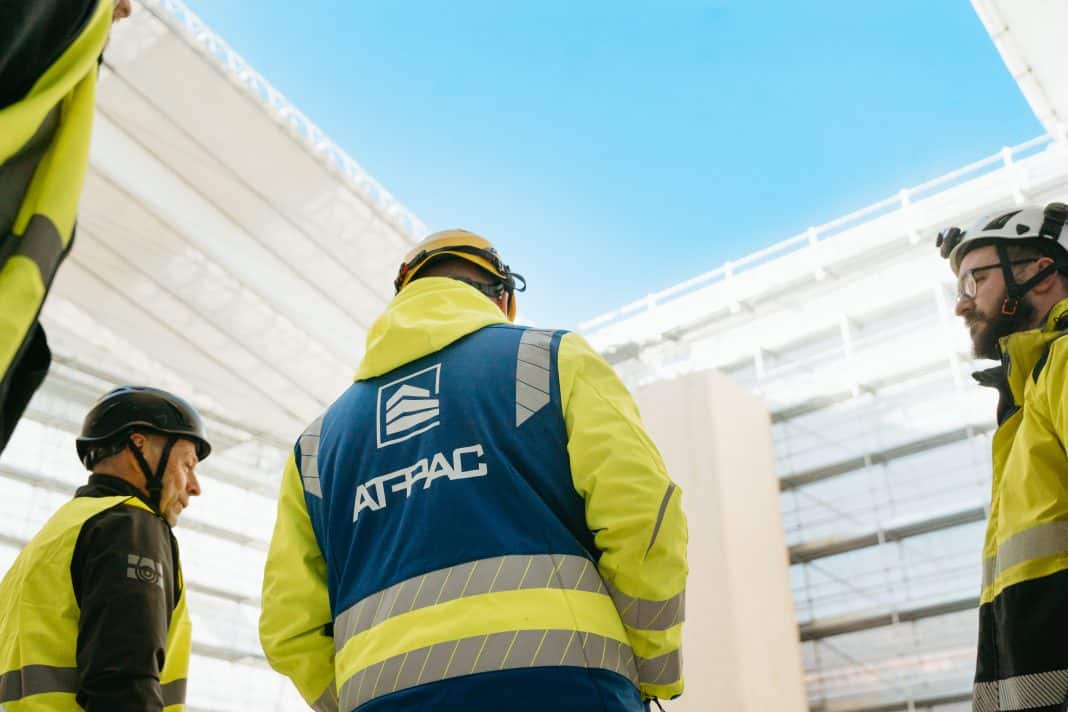
There are businesses in the scaffolding industry that have spent 20, 30, even 40 years building brilliant reputations.
They’ve delivered major projects, they have incredibly knowledgeable people within their teams, they’re trusted by their clients, known throughout the industry and have decades of experience behind them.
But look at some of those same businesses online and you’d never know it.
And that’s something I’ve noticed more and more since we started working within the scaffolding and access sector at Petite Agency. There can be a real disconnect between the business people know within the industry and the business they see online. That doesn’t mean every scaffolding company suddenly needs to launch on TikTok or start chasing the latest social media trend.
Actually, I think it’s almost the opposite. Your marketing should be doing a better job of communicating the reputation you’ve already built.
Your first impression happens earlier than you think
For years, businesses in this sector have grown through relationships, reputation, referrals and doing good work. None of that has suddenly become less important.
But the way people research businesses has changed.
Before somebody picks up the phone, responds to an introduction, applies for a role or meets your team at an event, there’s a good chance they’ve already looked you up.
They might visit your website, look at your LinkedIn page, or look at the people running the business too.
And what they find creates an impression.
If you’ve delivered some of the biggest or most technically challenging projects in your market, does your online presence demonstrate that?
If you’ve got 30 years of expertise within the business, are you sharing any of it?
If your people are one of the reasons clients choose to work with you, can anyone actually see them?
And if you’re an ambitious £20m business, does your brand look and sound like one?
That last question is one I think more established businesses should be asking themselves.
Good marketing isn’t about making a business look like something it isn’t.
It’s about closing the gap between the business people experience in person and the business they find online.
I’ve sat with MDs who can talk for an hour about a project they’re proud of, a problem their team solved or a decision that changed the direction of the business. That knowledge, experience and perspective is incredibly valuable, yet none of it exists online.
And that’s the gap.
Because the person researching your business before they pick up the phone doesn’t get that conversation. They get your website. They get your LinkedIn page. They get whatever impression they form in the first 30 seconds.
Your projects are content.
Your technical expertise is content.
Your people are content.
The knowledge sitting within your leadership team is content.
Businesses rarely lack interesting things to say. The challenge is turning that knowledge and expertise into content that people actually want to see.
Your best marketing might already be sitting in front of you
You don’t have to lose the personality that’s made the business successful in the first place.
Some of the most effective content we see isn’t polished corporate marketing. It’s an MD sharing a genuine opinion. An engineer explaining how they solved a difficult problem. A photograph from site with a story behind it. A member of the team sharing something they know inside out.
It works because it gives people something corporate marketing often can’t: a genuine insight into the people, expertise and thinking behind the business.
The aim shouldn’t be to make every business look the same. It should be to make your marketing look and feel more like the business behind it.
And when businesses do start showing more of what sits behind the brand, the response can be bigger than you might expect.
One business we work with in the sector generated more than 600,000 organic impressions over a 12-month period, with a 17.8% engagement rate on LinkedIn, through content that consistently shared its projects, people and expertise.
The numbers are impressive. But for me, the more interesting question is where that content came from.
The projects were already happening, the expertise was already there and the people already had the knowledge. Our team simply helped give the business a way to share more of it.
And chances are, there’s a huge amount happening inside your business that you’re not making enough of either.
Start with the gap
If you’re wondering where to start, I’d ask one simple question:
If somebody knew nothing about your business and only had your online presence to judge you by, would they understand why you’re good at what you do?
Look at your website and LinkedIn through that lens.
Would they see your expertise? Your people? Your best work? Your scale? Your personality? What you stand for? Why clients trust you?
If the answer is no, there’s your gap.
You don’t need to create a better story. You need to do a better job of telling the one you’ve already got.
You’ve built the reputation. Don’t leave it to speak for itself.
Sophia Gowland is the founder of Petite Agency, a specialist B2B marketing agency working with businesses and industry leaders across the scaffolding and access sector. Her column appears on Scaffmag every month.