CPA's revised construction outlook points to further weakness in housing and refurbishment, according to Roofing Today's report on the Autumn forecasts.
CPA's revised construction outlook points to further weakness in housing and refurbishment, according to Roofing Today's report on the Autumn forecasts.
CPA's revised construction outlook points to further weakness in housing and refurbishment, according to Roofing Today's report on the Autumn forecasts.
CPA's revised construction outlook points to further weakness in housing and refurbishment, according to Roofing Today's report on the Autumn forecasts.
Subcontractors across the UK and Ireland remain optimistic about the year ahead despite a tightening construction pipeline, according to a new annual report from Once For All, the business behind Constructionline.
The inaugural Construction Marketplace Health Index draws on data from Once For All’s Marketplace platform (formerly Constructionline) covering construction activity from the 2018–19 financial year through to 2024–25.
Once For All said its Marketplace tracks more than 10,000 projects and contract opportunities each year, with opportunities collectively valued at more than £219bn in 2025.
The index reports that total project value and volume fell to a seven-year low in 2024–25. However, a survey of 134 subcontractors found 63% described themselves as optimistic or very optimistic about the year ahead.
Fewer than one in five respondents said work was simply not available, pointing to continued confidence in parts of the supply chain even as competition increases.
New builds dominate as capital concentrates
The report suggests investment has been concentrating in new build activity. Over the seven-year period, new build projects accounted for more than £360bn, representing 74% of total construction value and 48% of all construction projects, the index said.
In the last two financial years, the average value of high-value projects increased by 16.75%, while mid and lower-value work fell back, including extensions down 29.29% and alterations/conversions down 0.66%. The index argues this points to capital being reserved for fewer, larger and more complex schemes.
Housing remained the largest single contributor by value, at £177.3bn across 13,666 projects, according to the index.
It also points to rising average project values in sectors including energy (+80.36%), industrial (+88.88%) and air transport (+87.80%) over the two most recent financial years, suggesting potential areas of opportunity for specialist subcontractors.
“Visibility” named top barrier to winning work
The report identifies “visibility” as the biggest obstacle to securing work. 34% of subcontractors surveyed said being noticed by the right contractors was their main challenge.
Once For All said digital tools are emerging as a response, with 28% of subcontractors reporting they are using technology platforms to access opportunities and improve efficiency.
Andy Preston, Head of Marketplace at Once For All, said: “What comes through clearly in the data is that subcontractor confidence has not disappeared, but the construction market around them has changed.”
Jonah Butterworth, Company Director at Lifetime Electrical Services, said: “The work is still there, but finding it and speaking to the right people is often the hardest part.”
The index concludes that, as high-value opportunities shift towards fewer, larger projects, subcontractors may need to be more selective about which projects, regions and sectors are worth pursuing.
Denmark’s new Storstrøm Bridge is entering its final construction phase, with the 3.8km crossing set to become the country’s third-longest bridge when it opens to road traffic later this year.
The project forms part of a wider north–south transport corridor linking Scandinavia with Central Europe. Together with the Fehmarnbelt Fixed Link, it is designed to improve cross-border passenger and freight connections by both road and rail.
Formwork and access specialist Doka has been involved in the scheme since 2019, supporting several key stages of the build. Its scope has included solutions for the approach bridges on both sides, prefabricated onshore pierheads, cantilever structures linking precast bridge segments to the pylon, and the climbing formwork used during construction of the main tower.
At the centre of the structure is a 102m cable-stayed pylon, which transfers all structural forces into the foundations below. The pylon’s variable geometry, integrated recesses and casing pipes for stay cables presented significant technical challenges during construction, particularly under exposed coastal wind conditions.
Storstrøm Bridge
Aurelia Penza, Technical Manager at Itinera, said the project required a system capable of adapting to changing geometries while maintaining stability under high wind loads.
The final structural phase of the cable-stayed section was supported by a purpose-built working platform anchored to the pylon and erected in stages using load-bearing towers. Integrated stair towers provided access throughout the closing works.
The bridge is expected to open to road traffic in 2026, with rail services scheduled to follow.
For the wider access and temporary works sector, the project highlights the level of engineering coordination now required on large-scale European infrastructure schemes.
Please subscribe to our free newsletter to gain full access to all our articles.
Many scaffold firms worldwide are already using AI to analyse inspection records, flag anomalies, and reduce the administrative burden for site managers. It is one example among a growing number of examples.
Artificial intelligence is reshaping parts of construction, drafting reports, modelling structures, and predicting risk patterns. But beyond today’s tools sits a much bigger idea: Artificial General Intelligence.
AGI refers to a form of AI that can think and reason across tasks in the same way a human can. Unlike the systems we use today, which are trained for specific jobs, AGI would be capable of transferring knowledge from one field to another, solving unfamiliar problems and adapting without being retrained. In simple terms, current AI is a powerful assistant. AGI would be closer to a digital mind.
The idea is not new. Progress stalled for decades until machine learning shifted the approach from programmed rules to pattern recognition. Over the past decade, advances in neural networks and computing power have produced systems that can write, code, interpret images, and handle vast amounts of data.
AGI, however, remains theoretical. There is no confirmed timeline. Some believe it could emerge within a few decades. Others argue it may prove far more difficult than expected. What is certain is that AI capability is increasing quickly.
Which raises a serious question for our sector. If machines eventually reach human-level reasoning, will we still need scaffolding?
Buildings will still be built. Infrastructure will still need to be maintained. Façades will still require inspection. Gravity will not just disappear.
But consider what construction itself might look like if advanced intelligence systems enable fully autonomous robotics, large-scale off-site fabrication, self-assembling materials or high-capacity drones capable of replacing some forms of access.
Traditional site practices could shift significantly. In certain applications, conventional scaffolding might be reduced. Some activities could become automated or engineered out entirely.
That does not mean scaffolding disappears. It means its role evolves.
And to understand how, it helps to picture what AGI-assisted scaffolding could actually look like. Designs are stress-tested instantly against multiple standards. Real-time load data feeding predictive safety models. Commercial variations are identified automatically before the margin is lost. Competence verification is linked directly to the digital identity on-site.
These are not distant fantasies; the data infrastructure to support them is already being built. NASC and CISRS have invested heavily in digital foundations that future tools will rely on. Some firms are already using IoT monitoring to provide real-time visibility over temporary works.
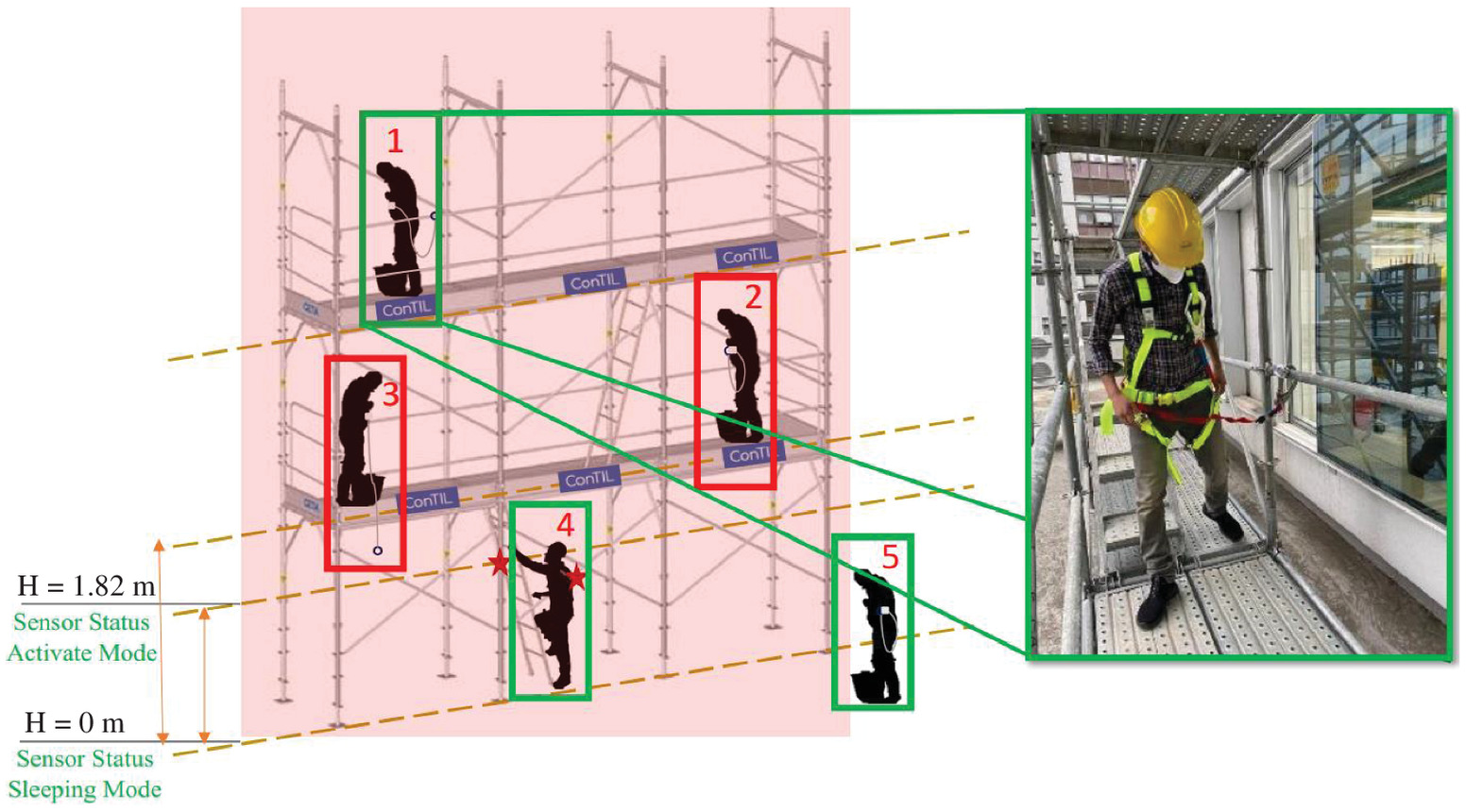
Fall Prevention from Scaffolding Using Computer Vision and IoT-Based Monitoring
However, construction remains physical. The weather affects programmes. Materials behave unpredictably. Temporary works exist because environments are complex and imperfect.
Even in a highly automated future, buildings will need repair, modification, and inspection. Unexpected problems will still arise. Access will still be required. The future looks less like replacement and more like integration.
There are also hard limits to what intelligence systems can replace. Temporary works carry legal accountability. Someone signs off on a design. Someone carries responsibility if something fails. That element of professional judgment cannot simply be outsourced to software, and it is worth noting that regulation and liability frameworks are likely to resist full automation, even when the technology might, in theory, enable it.
Physical installation on live construction sites, in unpredictable environments, also remains a complex human task. Robotics may advance, but widespread deployment in chaotic real-world conditions is far from simple.
At the same time, experienced voices in the industry are warning that technology without a strong management culture solves very little. That tension matters. The strategic question is not whether scaffolding survives AGI. The question is whether scaffold firms are preparing for a construction environment where intelligent systems are embedded across procurement, compliance, safety, and commercial management.
If major contractors move towards AI-driven oversight and fully digitised compliance systems, firms still operating on fragmented paperwork will struggle to keep pace. The companies that thrive will likely be those that adopt digital tools carefully, improve operational visibility, and invest in people alongside technology.
AGI may one day transform industries in ways we cannot yet predict. But scaffolding exists because the built environment requires safe, temporary access to complex structures. As long as buildings are constructed, repaired, and maintained in the real world, that need does not disappear.
The future of scaffolding is unlikely to be replaced by intelligence. It is more likely to be reshaped by it.
And that process has already begun.
The International Access & Scaffolding Association has announced that the Taiwan Scaffold Development Association and the Korea Temporary Equipment & Engineering Association have joined as member organisations.
The move continues a period of steady expansion for IASA, which in recent months has added further international representation as it works to position itself as a unified voice for the scaffolding and access sector worldwide.
IASA said both TSDA and KTEA bring strong national representation and technical expertise, along with a shared focus on safety, training and professional standards. Their inclusion strengthens the association’s footprint in East Asia and broadens its platform for regulatory dialogue and knowledge exchange.
David Brown, Chairman of IASA, said the addition of the two bodies reinforces the organisation’s long-term direction.
“IASA is delighted to welcome both TSDA and KTEA to our international membership. Their involvement strengthens our global network and supports our mission to promote excellence, innovation and knowledge-sharing across the scaffolding and access sector.”
Lee Nam Soo, President of KTEA, said the Korean association looked forward to deeper international cooperation and technical exchange, aligned with global standards.
Peter Chen, Chairman of TSDA, described the membership as a milestone for Taiwan’s scaffolding sector and said closer collaboration through IASA would support continued improvement in expertise and quality.
IASA said the new members will take part in ongoing initiatives aimed at harmonising international training and competency frameworks, sharing best practice across borders and strengthening cooperation between contractors, suppliers and industry bodies.
With member organisations now spanning Europe, North America, Asia and Australasia, IASA’s expansion signals a broader effort to align standards and improve consistency in workforce competence across markets that operate under different regulatory systems.
The association has increasingly positioned itself not simply as a networking forum, but as a platform for long-term regulatory alignment and professional development across the global access and scaffolding industry.
Labour’s pledge to build 1.5 million new homes over the course of this Parliament is facing fresh pressure amid warnings of a shortage of scaffolders.
The National Access and Scaffolding Confederation (NASC) has said at least 6,000 new scaffolders are needed each month to meet projected housebuilding demand and replace retiring workers.
CISRS states that more than 68,000 valid cards are in circulation and estimates that around 120,000 people are involved in scaffolding erection in some capacity.
NASC chief executive Clive Dickin has said that attracting and retaining talent is a significant challenge, warning that around seven per cent of the skilled workforce is expected to retire by 2029.
Labour, led by Keir Starmer, has committed to delivering 300,000 homes a year. That level of output has not been achieved consistently for more than five decades.
Industry bodies say labour shortages remain a constraint across the construction industry. The Chartered Institute of Building has previously warned that skills gaps could slow the delivery of housing and infrastructure targets.
A government spokesperson said £625 million is being invested to attract and train the next generation of construction workers, including scaffolders, describing it as action to address years of underinvestment in skills.
Pressure is particularly acute in London. Under proposals developed by Housing Secretary Steve Reed and the Mayor of London Sadiq Khan, developers have been offered fast-tracked applications if they agree to reduce affordable housing provision on some schemes from 35 per cent to 20 per cent.
Labour’s national target includes 88,000 homes a year in the capital. However, recent industry figures indicate that private sector starts in London fell sharply last year, with just over 5,500 homes begun in 2025 and fewer than 20,000 expected to complete by year end.
Critics argue that output levels required to meet the 1.5 million homes target will depend not only on planning reform, but on whether the industry can recruit and retain enough skilled workers to keep pace.
For the scaffolding sector, the warning is clear. Without sustained investment in training, recruitment and retention, the supply chain may struggle to support the scale of housebuilding now being proposed.
Self-employed tradespeople earned an average of £1,000 per week in January, according to analysis by Hudson Contract, which manages the industry’s largest payroll for subcontractors.
That figure was down 7.7 per cent on December. However, it remained 1.5 per cent higher than the £985 average recorded in January 2025.
The seasonal downturn was most visible in external trades, where site activity is heavily weather-dependent. Bricklaying earnings fell 15.9 per cent month on month. Scaffolding was down 15.4 per cent. Demolition dropped 12.9 per cent.
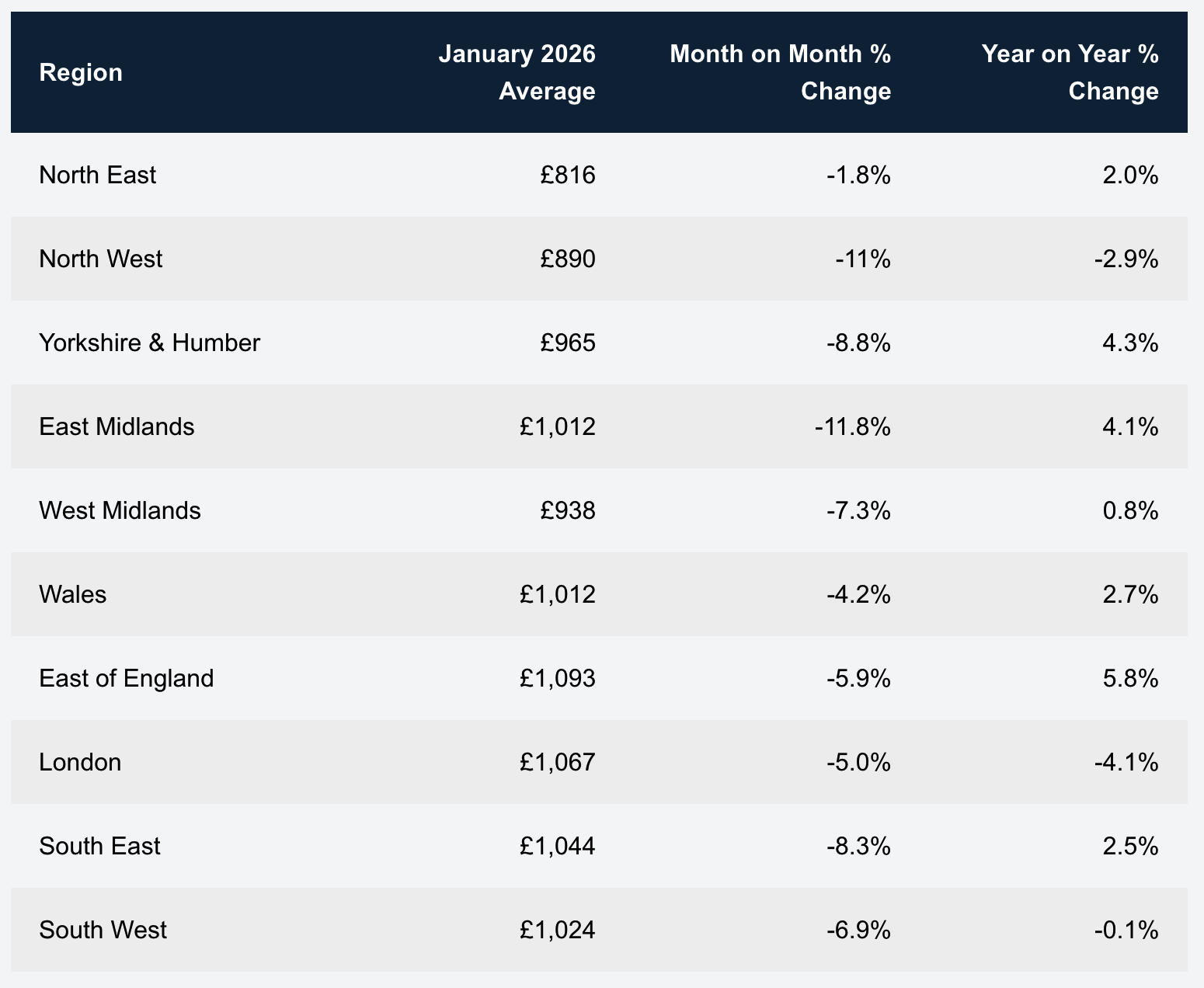
Regional picture
Earnings varied across England and Wales:
Credit: Hudson Contract
Private housing was the only sector to decline, with orders falling 10.4 per cent year on year.
A report in the Financial Times said construction starts on homes in London were 94 per cent below target, the lowest figure for any major city in the developed world this century.
‘Darker clouds’ ahead
Ian Anfield, managing director of Hudson Contract, described the dip in earnings as predictable for this time of year.
He said external trades typically see work disrupted during winter and expects activity to recover as conditions improve.
However, he warned that the sector faces mounting structural pressures.
Construction firms, he said, are being squeezed by rising finance and insurance costs, higher employer National Insurance contributions, increased national minimum wage bills, disruption linked to the Employment Rights Act, the VAT domestic reverse charge and growing regulatory complexity.
He added that these pressures are making it harder and more expensive for firms to recruit and train new workers.
On housebuilding, Anfield said the sector risks stalling.
He compared it to a tanker that, once stopped, takes significant time to restart. Without intervention, he warned that when demand returns, there may not be enough firms or workers left to meet housing needs.
Hudson Contract tracks pay across 17 trades in 10 regions and supplies labour market data to the Bank of England to inform policy decisions on skilled labour demand. The Bridlington-based firm serves around 2,600 construction SMEs across England and Wales.
Construction charity Band of Builders has released a six-month schedule of upcoming projects, aimed at encouraging tradespeople to commit time in advance.
The registered charity delivers practical building projects for members of the UK construction industry and their families who are facing serious illness or injury. Its work relies heavily on volunteer trades, delivery partners and corporate backers.
With volunteers often balancing full workloads, BoB says publishing projects early will make it easier for supporters to “slot” the builds into their diaries.
The charity is close to completing its 50th project since launch.
Upcoming projects
Jay, Ipswich – March
General builder Jay began extending his family home before being diagnosed with spinal cancer. The property has been left unfinished. BoB will complete the extension, including rendering, roof finishing, kitchen installation, and electrical works.
Keren, Burnley – April
Keren has early-onset Alzheimer’s. Her daughter, Vicky, has given up work to care for her, but their home remains unlivable due to incomplete renovation works. BoB will finish the renovation so the family can live safely and comfortably together.
James, Cheshire – May
Eleven-year-old James has cerebral palsy, sight impairment, and global developmental delay. He uses a wheelchair outdoors. BoB will transform his garden into a safe, accessible space, including soil levelling, retaining walls, paths and fencing.
Jonathan, Market Bosworth – June
Following a stroke, Jonathan has worked hard on his recovery. However, uneven ground and slippery steps at his home have led to repeated falls. BoB will install a large block-paved area with a gentle slope, removing the need for steps and improving safety.
Amelia, Norfolk – July
Three-year-old Amelia has cerebral palsy. Her mother, Karis, requires a larger downstairs bedroom, a wet room, and a ramp to support her care. Although the family has applied for a Disabled Facilities Grant, funding is unlikely to cover the full cost. BoB will step in to bridge the gap.
Call for volunteers
Tony Steel, Operations Director at Band of Builders, said the charity wanted to give tradespeople as much notice as possible.
“We know that tradespeople have busy diaries, so we’ve released our six-month schedule to give volunteers as much notice as possible, plus details about what’s involved in each project,” he said.
“Tradespeople travel from all over the UK to volunteer their time on our projects. We’d love to hear from potential volunteers for our upcoming projects, whether they’re BoB veterans or new volunteers who want to join us in transforming the lives of others.”
More information and volunteer registration details are available via the Band of Builders website.
A new scaffolding-focused podcast has launched today with a clear ambition: to raise the profile of the industry while keeping conversations engaging and accessible.
The Brace Yourself Podcast is co-hosted by Ben Beaumont and Simon Boyes, both associated with ScaffPlan and bringing experience from different parts of the world and different aspects of the industry. The show blends professional insight with light-touch humour, with both hosts sharing a similar outlook on where the sector needs to go, and the challenges ahead.
Speaking to Scaffmag, Beaumont said the show grew from the natural chemistry between the two hosts.
“We wanted something professional, but not dry,” he said. “There’s a lot of negativity online. We’d rather highlight good practice and solutions without naming and shaming, promoting the positive aspects of the industry to a wider audience, and highlighting all great things that this industry does.”
Between serious and entertaining
The podcast is designed to sit between technical discussion and pure comedy. Humour draws listeners in before moving into more substantive topics.
The first episode explores how to grow a business using system scaffolding, gaining insight from people who have done just that, alongside practical guidance for contractors and companies wanting to do the same.
The hosts also plan to cover a range of future topics including marketing and brand building within the sector, insight into the role of trade associations, and examine major project case studies, focusing on what worked, what did not, and what lessons can be learned.
“Humour boosts engagement and opens the door to professional messages,” Beaumont said. “We want to find a blend between fun and ‘not taking ourselves too seriously’, with real experience, helpful guidance and knowledge, and engaging guests who we can all learn from”
Launch schedule
The first four episodes are already recorded or booked ahead of the first week of March. Early content will spotlight ScaffChamp 2026, with guests involved in the competition’s organisation.
The schedule also includes senior figures from major international companies sharing their expertise, and figures from across the globe discussing topics that people from all corners of the industry will find engaging. and leaders from scaffolding associations in the UK, Australia and the United States.
Episodes will be released fortnightly, in the first and third week of each month.
Format and recurring features
Episodes will be distributed across Spotify, Amazon Music, iTunes and YouTube.
You can subscribe to the show on all platforms HERE
One of the show’s recurring features, ‘Penthouse to the Doghouse’, was the idea of the show’s host, Simon Boyes. It will invite listeners to submit photographs of exemplary scaffolds alongside weaker examples.
Guests will have 30 seconds to defend the poorer examples in a satirical challenge format, designed to encourage higher standards without resorting to direct criticism of individuals or companies, and have some fun with what is an important topic for everyone.
“We want a constructive, uplifting voice for the industry,” Beaumont said. “Showcase how great an industry scaffolding is, bring together topics and people from across the globe, and give people something to be proud of.”
The International Access & Scaffolding Association has formally launched International Scaffolding and Access Day, which will be celebrated each year on 14 May.
The initiative is described as the first fully independent global day formally recognised by IASA and its international membership.
The annual event aims to highlight the essential role played by the scaffolding and access sector in construction, infrastructure, safety and economic development. It will also focus attention on the challenges and opportunities facing the industry.
To mark the launch, IASA said it has written to Presidents and Prime Ministers around the world outlining the purpose of the day and the contribution made by the sector to national economies and public safety.
IASA is encouraging contractors, manufacturers, educators, trade bodies and individual scaffolders to mark 14 May each year by sharing messages of support and recognition for the workforce.
David Brown, Chairman of IASA, said the day would provide a moment for the global community to recognise the skill and professionalism of those working in scaffolding and access.
“It provides an opportunity to highlight the vital role our industry plays in construction, infrastructure and safety, while also focusing on the challenges and opportunities that will shape its future,” he said.
“By coming together on 14 May each year, we can promote excellence, inspire the next generation of talent, drive innovation, and strengthen standards across the world.”
Five key global challenges
International Scaffolding and Access Day will centre on five priority areas identified by IASA as critical to the long-term sustainability of the sector:
Improving the image of scaffolding by promoting professionalism, safety and pride.
Developing global talent by attracting, training and retaining new entrants.
Driving innovation through new technologies and safer systems of work.
Strengthening compliance to protect workers, clients and the public.
Standardising training to improve competence, consistency and workforce mobility across borders.
IASA said the initiative is intended to be inclusive and industry-led, giving the global scaffolding community a shared platform to address common issues.
For 2026, the theme of the day will be:
“Recognising the industry. Supporting its people. Shaping its future.”
Organisations and individuals are being urged to mark 14 May by engaging with colleagues and clients, and by sharing stories and images that reflect pride in the sector and commitment to its continued development.
Bilfinger has signed a long-term framework agreement with Söderenergi AB to deliver scaffolding services across the Swedish district heating producer’s facilities.
The companies said the agreement is intended to improve safety and efficiency during maintenance work and to support day-to-day operations at Söderenergi’s sites.
Söderenergi supplies district heating to the Stockholm region and states that it primarily uses recovered and renewable biofuels, positioning district heating as part of a broader circular-economy approach.
Bilfinger said its scope includes the design, assembly and maintenance of scaffolding, with the aim of creating safer access for planned maintenance and supporting more efficient execution on site.
Martin Steffens, Department Manager for Scaffolding & Insulation at Bilfinger in Stockholm, said: “We are proud of our new framework agreement with Söderenergi. Together, we are creating a safer, more efficient, and sustainable working environment, with quality at every step.”
Bilfinger described the agreement as aligned with its strategy to be “No. 1” for customers in improving efficiency and sustainability, as it continues to grow its industrial services work in the Nordic region.




 Which raises a serious question for our sector. If machines eventually reach human-level reasoning, will we still need scaffolding?
Buildings will still be built. Infrastructure will still need to be maintained. Façades will still require inspection. Gravity will not just disappear.
But consider what construction itself might look like if advanced intelligence systems enable fully autonomous robotics, large-scale off-site fabrication, self-assembling materials or high-capacity drones capable of replacing some forms of access.
Which raises a serious question for our sector. If machines eventually reach human-level reasoning, will we still need scaffolding?
Buildings will still be built. Infrastructure will still need to be maintained. Façades will still require inspection. Gravity will not just disappear.
But consider what construction itself might look like if advanced intelligence systems enable fully autonomous robotics, large-scale off-site fabrication, self-assembling materials or high-capacity drones capable of replacing some forms of access.
 Traditional site practices could shift significantly. In certain applications, conventional scaffolding might be reduced. Some activities could become automated or engineered out entirely.
That does not mean scaffolding disappears. It means its role evolves.
And to understand how, it helps to picture what AGI-assisted scaffolding could actually look like. Designs are stress-tested instantly against multiple standards. Real-time load data feeding predictive safety models. Commercial variations are identified automatically before the margin is lost. Competence verification is linked directly to the digital identity on-site.
These are not distant fantasies; the data infrastructure to support them is already being built. NASC and CISRS have invested heavily in digital foundations that future tools will rely on. Some firms are already using IoT monitoring to provide real-time visibility over temporary works.
Traditional site practices could shift significantly. In certain applications, conventional scaffolding might be reduced. Some activities could become automated or engineered out entirely.
That does not mean scaffolding disappears. It means its role evolves.
And to understand how, it helps to picture what AGI-assisted scaffolding could actually look like. Designs are stress-tested instantly against multiple standards. Real-time load data feeding predictive safety models. Commercial variations are identified automatically before the margin is lost. Competence verification is linked directly to the digital identity on-site.
These are not distant fantasies; the data infrastructure to support them is already being built. NASC and CISRS have invested heavily in digital foundations that future tools will rely on. Some firms are already using IoT monitoring to provide real-time visibility over temporary works.

 At the same time, experienced voices in the industry are warning that technology without a strong management culture solves very little. That tension matters. The strategic question is not whether scaffolding survives AGI. The question is whether scaffold firms are preparing for a construction environment where intelligent systems are embedded across procurement, compliance, safety, and commercial management.
If major contractors move towards AI-driven oversight and fully digitised compliance systems, firms still operating on fragmented paperwork will struggle to keep pace. The companies that thrive will likely be those that adopt digital tools carefully, improve operational visibility, and invest in people alongside technology.
AGI may one day transform industries in ways we cannot yet predict. But scaffolding exists because the built environment requires safe, temporary access to complex structures. As long as buildings are constructed, repaired, and maintained in the real world, that need does not disappear.
The future of scaffolding is unlikely to be replaced by intelligence. It is more likely to be reshaped by it.
And that process has already begun.
At the same time, experienced voices in the industry are warning that technology without a strong management culture solves very little. That tension matters. The strategic question is not whether scaffolding survives AGI. The question is whether scaffold firms are preparing for a construction environment where intelligent systems are embedded across procurement, compliance, safety, and commercial management.
If major contractors move towards AI-driven oversight and fully digitised compliance systems, firms still operating on fragmented paperwork will struggle to keep pace. The companies that thrive will likely be those that adopt digital tools carefully, improve operational visibility, and invest in people alongside technology.
AGI may one day transform industries in ways we cannot yet predict. But scaffolding exists because the built environment requires safe, temporary access to complex structures. As long as buildings are constructed, repaired, and maintained in the real world, that need does not disappear.
The future of scaffolding is unlikely to be replaced by intelligence. It is more likely to be reshaped by it.
And that process has already begun. Which raises a serious question for our sector. If machines eventually reach human-level reasoning, will we still need scaffolding?
Buildings will still be built. Infrastructure will still need to be maintained. Façades will still require inspection. Gravity will not just disappear.
But consider what construction itself might look like if advanced intelligence systems enable fully autonomous robotics, large-scale off-site fabrication, self-assembling materials or high-capacity drones capable of replacing some forms of access.
Which raises a serious question for our sector. If machines eventually reach human-level reasoning, will we still need scaffolding?
Buildings will still be built. Infrastructure will still need to be maintained. Façades will still require inspection. Gravity will not just disappear.
But consider what construction itself might look like if advanced intelligence systems enable fully autonomous robotics, large-scale off-site fabrication, self-assembling materials or high-capacity drones capable of replacing some forms of access.
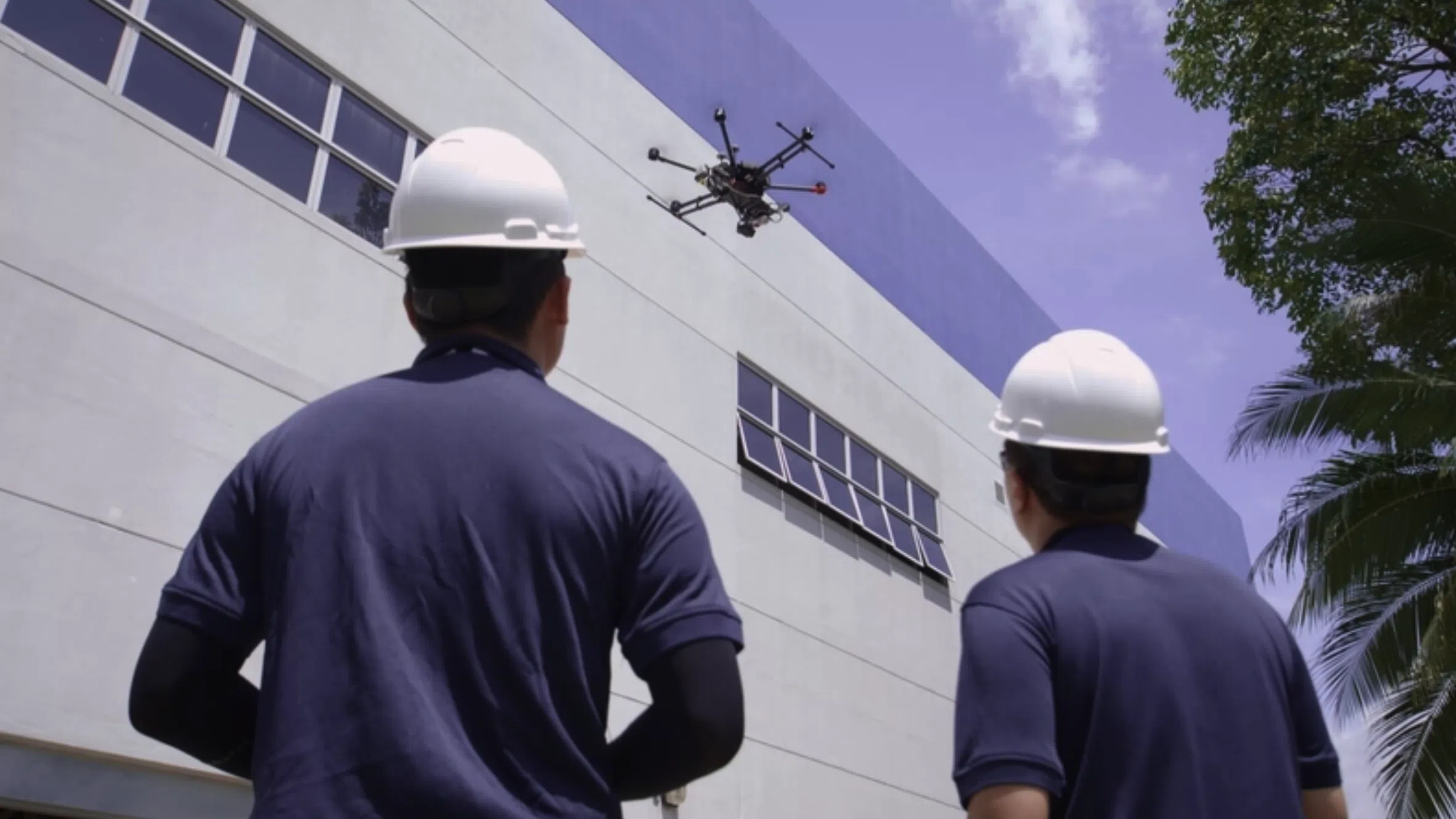 Traditional site practices could shift significantly. In certain applications, conventional scaffolding might be reduced. Some activities could become automated or engineered out entirely.
That does not mean scaffolding disappears. It means its role evolves.
And to understand how, it helps to picture what AGI-assisted scaffolding could actually look like. Designs are stress-tested instantly against multiple standards. Real-time load data feeding predictive safety models. Commercial variations are identified automatically before the margin is lost. Competence verification is linked directly to the digital identity on-site.
These are not distant fantasies; the data infrastructure to support them is already being built. NASC and CISRS have invested heavily in digital foundations that future tools will rely on. Some firms are already using IoT monitoring to provide real-time visibility over temporary works.
Traditional site practices could shift significantly. In certain applications, conventional scaffolding might be reduced. Some activities could become automated or engineered out entirely.
That does not mean scaffolding disappears. It means its role evolves.
And to understand how, it helps to picture what AGI-assisted scaffolding could actually look like. Designs are stress-tested instantly against multiple standards. Real-time load data feeding predictive safety models. Commercial variations are identified automatically before the margin is lost. Competence verification is linked directly to the digital identity on-site.
These are not distant fantasies; the data infrastructure to support them is already being built. NASC and CISRS have invested heavily in digital foundations that future tools will rely on. Some firms are already using IoT monitoring to provide real-time visibility over temporary works.
 At the same time, experienced voices in the industry are warning that technology without a strong management culture solves very little. That tension matters. The strategic question is not whether scaffolding survives AGI. The question is whether scaffold firms are preparing for a construction environment where intelligent systems are embedded across procurement, compliance, safety, and commercial management.
If major contractors move towards AI-driven oversight and fully digitised compliance systems, firms still operating on fragmented paperwork will struggle to keep pace. The companies that thrive will likely be those that adopt digital tools carefully, improve operational visibility, and invest in people alongside technology.
AGI may one day transform industries in ways we cannot yet predict. But scaffolding exists because the built environment requires safe, temporary access to complex structures. As long as buildings are constructed, repaired, and maintained in the real world, that need does not disappear.
The future of scaffolding is unlikely to be replaced by intelligence. It is more likely to be reshaped by it.
And that process has already begun.
At the same time, experienced voices in the industry are warning that technology without a strong management culture solves very little. That tension matters. The strategic question is not whether scaffolding survives AGI. The question is whether scaffold firms are preparing for a construction environment where intelligent systems are embedded across procurement, compliance, safety, and commercial management.
If major contractors move towards AI-driven oversight and fully digitised compliance systems, firms still operating on fragmented paperwork will struggle to keep pace. The companies that thrive will likely be those that adopt digital tools carefully, improve operational visibility, and invest in people alongside technology.
AGI may one day transform industries in ways we cannot yet predict. But scaffolding exists because the built environment requires safe, temporary access to complex structures. As long as buildings are constructed, repaired, and maintained in the real world, that need does not disappear.
The future of scaffolding is unlikely to be replaced by intelligence. It is more likely to be reshaped by it.
And that process has already begun.



 Jay, Ipswich – March
General builder Jay began extending his family home before being diagnosed with spinal cancer. The property has been left unfinished. BoB will complete the extension, including rendering, roof finishing, kitchen installation, and electrical works.
Jay, Ipswich – March
General builder Jay began extending his family home before being diagnosed with spinal cancer. The property has been left unfinished. BoB will complete the extension, including rendering, roof finishing, kitchen installation, and electrical works.
 Jay, Ipswich – March
General builder Jay began extending his family home before being diagnosed with spinal cancer. The property has been left unfinished. BoB will complete the extension, including rendering, roof finishing, kitchen installation, and electrical works.
Jay, Ipswich – March
General builder Jay began extending his family home before being diagnosed with spinal cancer. The property has been left unfinished. BoB will complete the extension, including rendering, roof finishing, kitchen installation, and electrical works.
 Keren, Burnley – April
Keren has early-onset Alzheimer’s. Her daughter, Vicky, has given up work to care for her, but their home remains unlivable due to incomplete renovation works. BoB will finish the renovation so the family can live safely and comfortably together.
Keren, Burnley – April
Keren has early-onset Alzheimer’s. Her daughter, Vicky, has given up work to care for her, but their home remains unlivable due to incomplete renovation works. BoB will finish the renovation so the family can live safely and comfortably together.
 James, Cheshire – May
Eleven-year-old James has cerebral palsy, sight impairment, and global developmental delay. He uses a wheelchair outdoors. BoB will transform his garden into a safe, accessible space, including soil levelling, retaining walls, paths and fencing.
James, Cheshire – May
Eleven-year-old James has cerebral palsy, sight impairment, and global developmental delay. He uses a wheelchair outdoors. BoB will transform his garden into a safe, accessible space, including soil levelling, retaining walls, paths and fencing.
 Jonathan, Market Bosworth – June
Following a stroke, Jonathan has worked hard on his recovery. However, uneven ground and slippery steps at his home have led to repeated falls. BoB will install a large block-paved area with a gentle slope, removing the need for steps and improving safety.
Jonathan, Market Bosworth – June
Following a stroke, Jonathan has worked hard on his recovery. However, uneven ground and slippery steps at his home have led to repeated falls. BoB will install a large block-paved area with a gentle slope, removing the need for steps and improving safety.
 Amelia, Norfolk – July
Three-year-old Amelia has cerebral palsy. Her mother, Karis, requires a larger downstairs bedroom, a wet room, and a ramp to support her care. Although the family has applied for a Disabled Facilities Grant, funding is unlikely to cover the full cost. BoB will step in to bridge the gap.
Amelia, Norfolk – July
Three-year-old Amelia has cerebral palsy. Her mother, Karis, requires a larger downstairs bedroom, a wet room, and a ramp to support her care. Although the family has applied for a Disabled Facilities Grant, funding is unlikely to cover the full cost. BoB will step in to bridge the gap.

 “Humour boosts engagement and opens the door to professional messages,” Beaumont said. “We want to find a blend between fun and ‘not taking ourselves too seriously’, with real experience, helpful guidance and knowledge, and engaging guests who we can all learn from”
 “Humour boosts engagement and opens the door to professional messages,” Beaumont said. “We want to find a blend between fun and ‘not taking ourselves too seriously’, with real experience, helpful guidance and knowledge, and engaging guests who we can all learn from”