 Apache Workwear Trousers
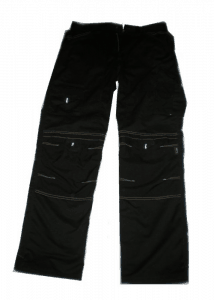
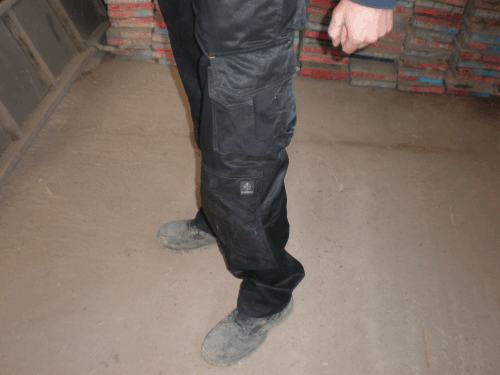
The apache brand seems to amaze me every time top quality gear at such a cheap price and these trousers did not disappoint.
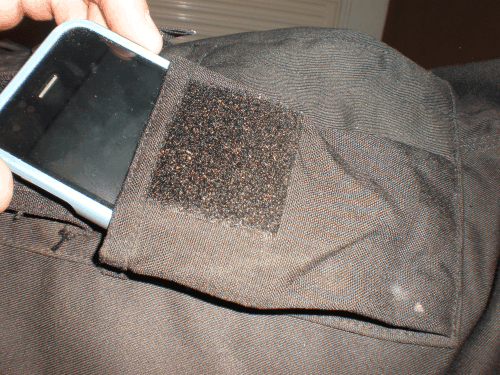
First off great styling with different color stitching on the knee area with a simple but effective velcro pocket to place the knee pad in. The trousers have seven pockets including a handy mobile phone pocket.
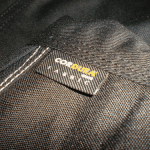
Very comfortable to wear although not as lightweight as the snickers, the apache pair are made from Cordura Brand Fabric which guarantees hard wearing reliable durability.
Overall the best pair of work trousers for your hard earned money, unbelievable price for what you get.
Price £25.99
ScaffMag Rating:
Apache Workwear Trousers
The apache brand seems to amaze me every time top quality gear at such a cheap price and these trousers did not disappoint.
First off great styling with different color stitching on the knee area with a simple but effective velcro pocket to place the knee pad in. The trousers have seven pockets including a handy mobile phone pocket.
Very comfortable to wear although not as lightweight as the snickers, the apache pair are made from Cordura Brand Fabric which guarantees hard wearing reliable durability.
Overall the best pair of work trousers for your hard earned money, unbelievable price for what you get.
Price £25.99
ScaffMag Rating:  Click here for more information
 Snickers Ultimate Trousers
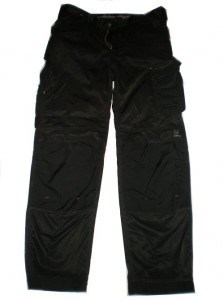
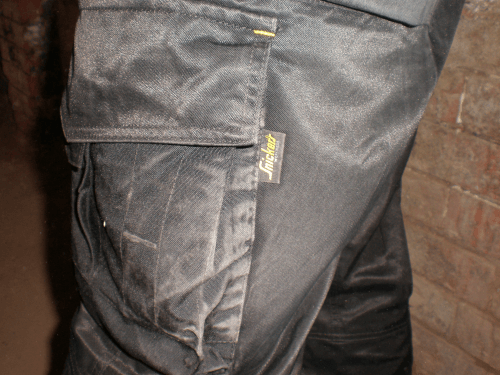
Probably the most well known brand of work trousers out there and quite rightly so. The Snickers trousers performed well during the review, they felt very comfortable and durable to wear.
The trousers are made from Cotton/Polyamide which make them incredibly lightweight. I also found the velcro pockets for the knee pads great for quick easy access to the pads.
Each pair comes with enough pockets to suit everybody including a handy mobile phone pocket for easy access.
Overall an amazing pair of work trousers but I cannot help but think you would be paying a premium just for the name.
Price £49.15
ScaffMag Rating:
Snickers Ultimate Trousers
Probably the most well known brand of work trousers out there and quite rightly so. The Snickers trousers performed well during the review, they felt very comfortable and durable to wear.
The trousers are made from Cotton/Polyamide which make them incredibly lightweight. I also found the velcro pockets for the knee pads great for quick easy access to the pads.
Each pair comes with enough pockets to suit everybody including a handy mobile phone pocket for easy access.
Overall an amazing pair of work trousers but I cannot help but think you would be paying a premium just for the name.
Price £49.15
ScaffMag Rating:  Click here for more information
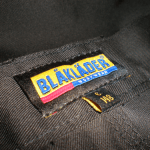
 Blaklader Craftsman Trousers 1570
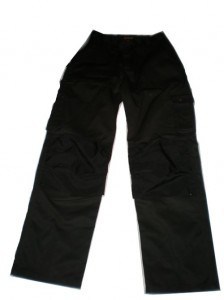
All the seams on the Blaklader Craftsman Trousers are triple stitched and guaranteed for life. The knee pad pockets are made from Cordura for extra durability with plenty of pockets to keep you happy but thats where the good news stops.
I think there is a few things lacking with the blaklader trousers, they seem to lack any kind of style at all also the knee pad pockets lacked velcro to keep the knee pad in position which was quite frustrating.
Overall if you are looking for a pair of work trousers in this price range I would say save your money and get your self a pair of Apache’s.
Price £41.00
ScaffMag Rating:
Blaklader Craftsman Trousers 1570
All the seams on the Blaklader Craftsman Trousers are triple stitched and guaranteed for life. The knee pad pockets are made from Cordura for extra durability with plenty of pockets to keep you happy but thats where the good news stops.
I think there is a few things lacking with the blaklader trousers, they seem to lack any kind of style at all also the knee pad pockets lacked velcro to keep the knee pad in position which was quite frustrating.
Overall if you are looking for a pair of work trousers in this price range I would say save your money and get your self a pair of Apache’s.
Price £41.00
ScaffMag Rating:  Click here for more information
Gallery
Click here for more information
Gallery


 Reviews By Daniel Norton
Trousers Supplied By Active-Workwear.com with thanks.
Reviews By Daniel Norton
Trousers Supplied By Active-Workwear.com with thanks.
Share your thoughts on this months review in the comments below.

 The Greater Manchester services to Eccles and MediaCityUK were suspended while police negotiated with the scaffolders to move the trucks.
The protest was over the collapse of Grace Scaffolding Limited
The Greater Manchester services to Eccles and MediaCityUK were suspended while police negotiated with the scaffolders to move the trucks.
The protest was over the collapse of Grace Scaffolding Limited 



 At the Ratcliffe-on-Soar power station in Nottinghamshire, electricians, scaffolders and welders all stayed out of work. More than 200 electricians picketed both gates at SSI steel works (formerly Corus) in Redcar, Teeside. Scaffolders and electricians refused to work.
A student delegation from Teesside University unfurled a banner saying “Students and workers unite and fight”. One worker from Middlesbrough said, “These protest are about freezing wages. “We’re going to need national action as these changes are going to have a knock-on effect on everybody.”
One electrician spoke of the solidarity they have received from students while another spoke about the importance of unity between public and private sector workers. A short meeting concluded with electricians blocking the Redcar entrance of the site. Traffic backed up around the roundabout.
Workers also stayed off the job at the Pembroke power station in Wales. Other sites to have walkouts included Stanlow in Ellesmere Port, Grangemouth in Scotland, Sellafield in Cumbria, West Burton in Nottinghamshire, Runcorn, Drax and Eggborough in north Yorkshire, Ferrybridge in west Yorkshire, Hinckley point in Somerset and Lindsey oil refinery in Lincolnshire.
In Saltend workers on one project protested and in Liverpool 20 workers from the John Moores University site refused to work and joined a protest there. In London, up to 200 workers protested at the Farringdon Crossrail construction site.
The electricians are campaigning to stop building bosses tearing up their national JIB agreement and cutting wages by up to 35 percent. Agencies are already recruiting the new grade of “installers” in preparation for the introduction of the new contracts.
Many of the workers protesting aren’t covered by the JIB agreement but are covered by the “blue book” national agreement instead.
One scaffolder said, “Our bosses are pushing through a pay freeze for us and pay cuts for the sparks.
“They are coming for us all, so we all have to fight back together.”
Via:
At the Ratcliffe-on-Soar power station in Nottinghamshire, electricians, scaffolders and welders all stayed out of work. More than 200 electricians picketed both gates at SSI steel works (formerly Corus) in Redcar, Teeside. Scaffolders and electricians refused to work.
A student delegation from Teesside University unfurled a banner saying “Students and workers unite and fight”. One worker from Middlesbrough said, “These protest are about freezing wages. “We’re going to need national action as these changes are going to have a knock-on effect on everybody.”
One electrician spoke of the solidarity they have received from students while another spoke about the importance of unity between public and private sector workers. A short meeting concluded with electricians blocking the Redcar entrance of the site. Traffic backed up around the roundabout.
Workers also stayed off the job at the Pembroke power station in Wales. Other sites to have walkouts included Stanlow in Ellesmere Port, Grangemouth in Scotland, Sellafield in Cumbria, West Burton in Nottinghamshire, Runcorn, Drax and Eggborough in north Yorkshire, Ferrybridge in west Yorkshire, Hinckley point in Somerset and Lindsey oil refinery in Lincolnshire.
In Saltend workers on one project protested and in Liverpool 20 workers from the John Moores University site refused to work and joined a protest there. In London, up to 200 workers protested at the Farringdon Crossrail construction site.
The electricians are campaigning to stop building bosses tearing up their national JIB agreement and cutting wages by up to 35 percent. Agencies are already recruiting the new grade of “installers” in preparation for the introduction of the new contracts.
Many of the workers protesting aren’t covered by the JIB agreement but are covered by the “blue book” national agreement instead.
One scaffolder said, “Our bosses are pushing through a pay freeze for us and pay cuts for the sparks.
“They are coming for us all, so we all have to fight back together.”
Via: 
 The ‘Get Britain Building’ initiative will focus on ‘shovel ready’ construction sites where work has stalled.
The government is aiming to build an additional 450,000 new homes by 2015.
Developers will compete for funds and building work on selected schemes could start next July.
It is hoped that up to 3,200 of the proposed new properties will be affordable homes and that the initiative will support up to 32,000 jobs.
The initiative is part of the new government housing strategy, also launched today, which includes:
A scheme worth hundreds of millions of pounds to underwrite a small percentage of mortgages for new-build homes. It is designed to reduce the size of a deposit, particularly for first-time buyers, by shifting the loan-to-value ratio. Banks are currently demanding deposits of up to 20% of the value of a property from first-time buyers.
An extra £50m on top of the £100m from this year’s budget towards an initiative to refurbish empty homes, mainly in deprived areas. Andrew Stunell, the Liberal Democrat communities minister, has said there are two years’ supply of homes locked up in empty property.
In a foreword to the government’s new housing strategy, Cameron and Clegg say: “By the time we came to office, house building rates had reached lows not seen in peace time since the 1920s. The economic and social consequences of this failure have affected millions.
“That lack of confidence is visible in derelict building sites and endless For Sale signs. It is doing huge damage to our economy and our society, so it is right for government to step in and take bold action to unblock the market.
“With this strategy we will unlock the housing market, get Britain building again, and give many more people the satisfaction and security that comes from stepping over their own threshold. These plans are ambitious – but we are determined to deliver on them.”
Via:
The ‘Get Britain Building’ initiative will focus on ‘shovel ready’ construction sites where work has stalled.
The government is aiming to build an additional 450,000 new homes by 2015.
Developers will compete for funds and building work on selected schemes could start next July.
It is hoped that up to 3,200 of the proposed new properties will be affordable homes and that the initiative will support up to 32,000 jobs.
The initiative is part of the new government housing strategy, also launched today, which includes:
A scheme worth hundreds of millions of pounds to underwrite a small percentage of mortgages for new-build homes. It is designed to reduce the size of a deposit, particularly for first-time buyers, by shifting the loan-to-value ratio. Banks are currently demanding deposits of up to 20% of the value of a property from first-time buyers.
An extra £50m on top of the £100m from this year’s budget towards an initiative to refurbish empty homes, mainly in deprived areas. Andrew Stunell, the Liberal Democrat communities minister, has said there are two years’ supply of homes locked up in empty property.
In a foreword to the government’s new housing strategy, Cameron and Clegg say: “By the time we came to office, house building rates had reached lows not seen in peace time since the 1920s. The economic and social consequences of this failure have affected millions.
“That lack of confidence is visible in derelict building sites and endless For Sale signs. It is doing huge damage to our economy and our society, so it is right for government to step in and take bold action to unblock the market.
“With this strategy we will unlock the housing market, get Britain building again, and give many more people the satisfaction and security that comes from stepping over their own threshold. These plans are ambitious – but we are determined to deliver on them.”
Via: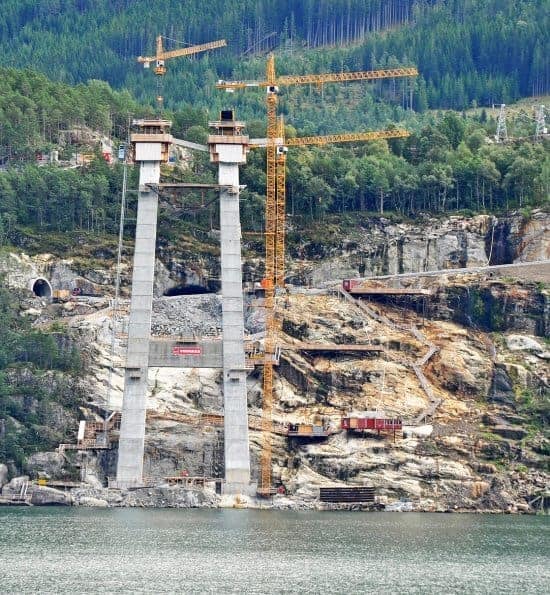
 Harsco has provided a variety of Self Climbing Formwork (SCF) systems, plus MANTO

 Scaffolding Systems South West bosses were fined a total of £13,000, Terrence Foster was fined £8,000 and his business partner Shaun Greenslade was fined £5,000. Both had to pay court costs of £2,040.
Exeter Magistrates court heard that on the 25 March 2009 a large section of scaffolding erected by Scaffolding Systems South West at a builders merchants came away from the building, damaging a number of parked cars.
The causes for the collapse that HSE inspectors found was that netting had been fixed to the scaffold that extended nearly a meter above the roof of the building. The netting was also fixed to the inside edge of the scaffold instead of the outside which basically made the scaffold a sail to the prevailing wind. The investigation also found there was inadequate stability measures on the scaffold to withstand foreseeable wind speeds, such as scaffolding ties.
HSE Inspector, Andrew Kingscott said:
Scaffolding Systems South West bosses were fined a total of £13,000, Terrence Foster was fined £8,000 and his business partner Shaun Greenslade was fined £5,000. Both had to pay court costs of £2,040.
Exeter Magistrates court heard that on the 25 March 2009 a large section of scaffolding erected by Scaffolding Systems South West at a builders merchants came away from the building, damaging a number of parked cars.
The causes for the collapse that HSE inspectors found was that netting had been fixed to the scaffold that extended nearly a meter above the roof of the building. The netting was also fixed to the inside edge of the scaffold instead of the outside which basically made the scaffold a sail to the prevailing wind. The investigation also found there was inadequate stability measures on the scaffold to withstand foreseeable wind speeds, such as scaffolding ties.
HSE Inspector, Andrew Kingscott said: