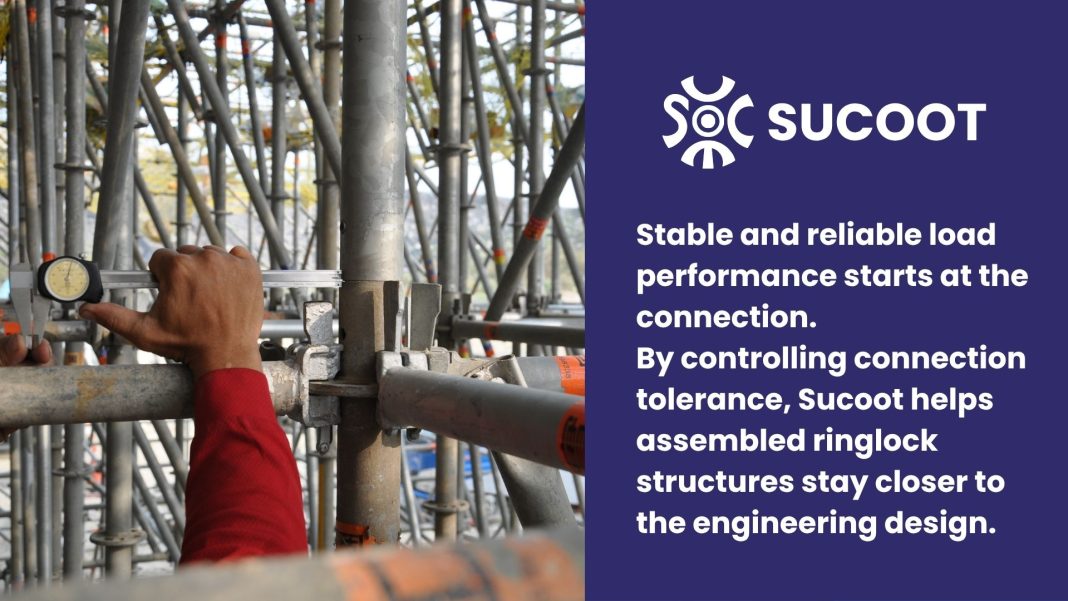
Precision has become a central issue in modern construction. As scaffolding and temporary works are used on more complex access, shoring and formwork projects, small variations in component fit can affect alignment, installation and how closely an erected structure reflects the engineer’s original calculations.
For Sucoot, that discussion starts with the ringlock connection. The Taiwan-based manufacturer says it controls the connection tolerance between vertical components to within 1.8mm. Its internal testing indicates that, at that tolerance, the system achieves around 94% of its structural design load. Sucoot says this gives design and erection teams greater confidence that a structure assembled in line with the approved drawings will perform as engineered.
A Taiwan-based alternative
Sucoot may be unfamiliar to some scaffolding contractors and distributors in the UK, Europe and the United States. But the company has worked in construction for more than 40 years, supplying ringlock scaffolding, shoring and formwork for access, civil engineering and concrete-forming projects.
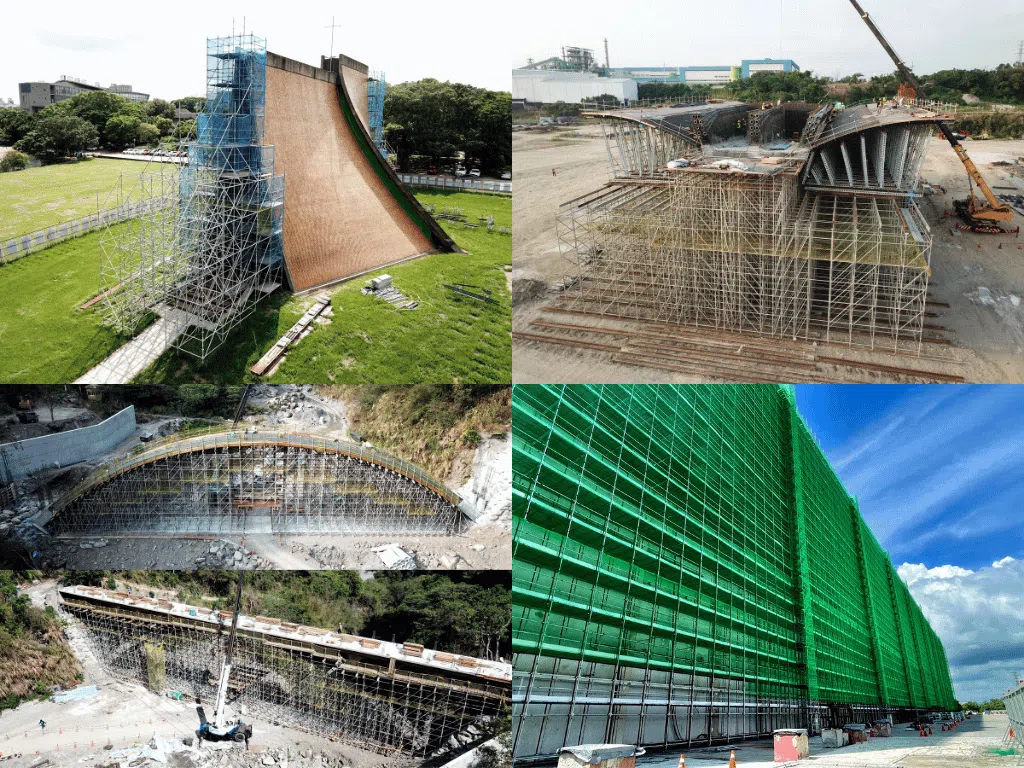
Based in Taichung, Taiwan, Sucoot manufactures access scaffolding, shoring systems for slab formwork, bridge formwork, box culverts, walls and columns. It is seeking to build wider recognition in international markets as an alternative for buyers who may otherwise focus on established European or US brands, or cost-led supply from China.
Discover more about Sucoot’s advanced shoring and scaffolding solutions
The company positions its offer between those routes: certified ringlock systems, controlled manufacturing and project-specific engineering solutions, with an emphasis on quality, technical support and performance, while offering a practical commercial alternative to some established premium brands.
While buyers should make their own project-specific assessment, this reflects the market position Sucoot is aiming to establish.
From material supply to engineered planning
Sucoot’s case is not limited to supplying components. The company says its professional engineering team provides structural layout and design planning, advanced load and structural analysis, and detailed erection and dismantling process plans. The intention is to provide job-site guidance that goes beyond a basic scaffolding drawing.
A key part of that approach is pre-construction layout planning. By resolving the structure, component arrangement and erection sequence before material reaches site, Sucoot says contractors can reduce time-consuming field adjustments and make the assembly workflow more predictable once work starts.
That process depends on manufacturing consistency. Components need to connect cleanly, structures need to stand to the planned geometry, and shoring towers need to carry the loads assumed in the design. In Sucoot’s view, those outcomes start with the accuracy of the connection itself.
Precision at the connection
Sucoot identifies its 1.8mm connection tolerance as the main technical differentiator in its ringlock system.
According to the company’s technical material, its testing found that a 1.8mm tolerance delivered actual load performance of about 94% of the design load. When the tolerance increased to 3.0mm, the reported load performance fell to around 50% of the design load.
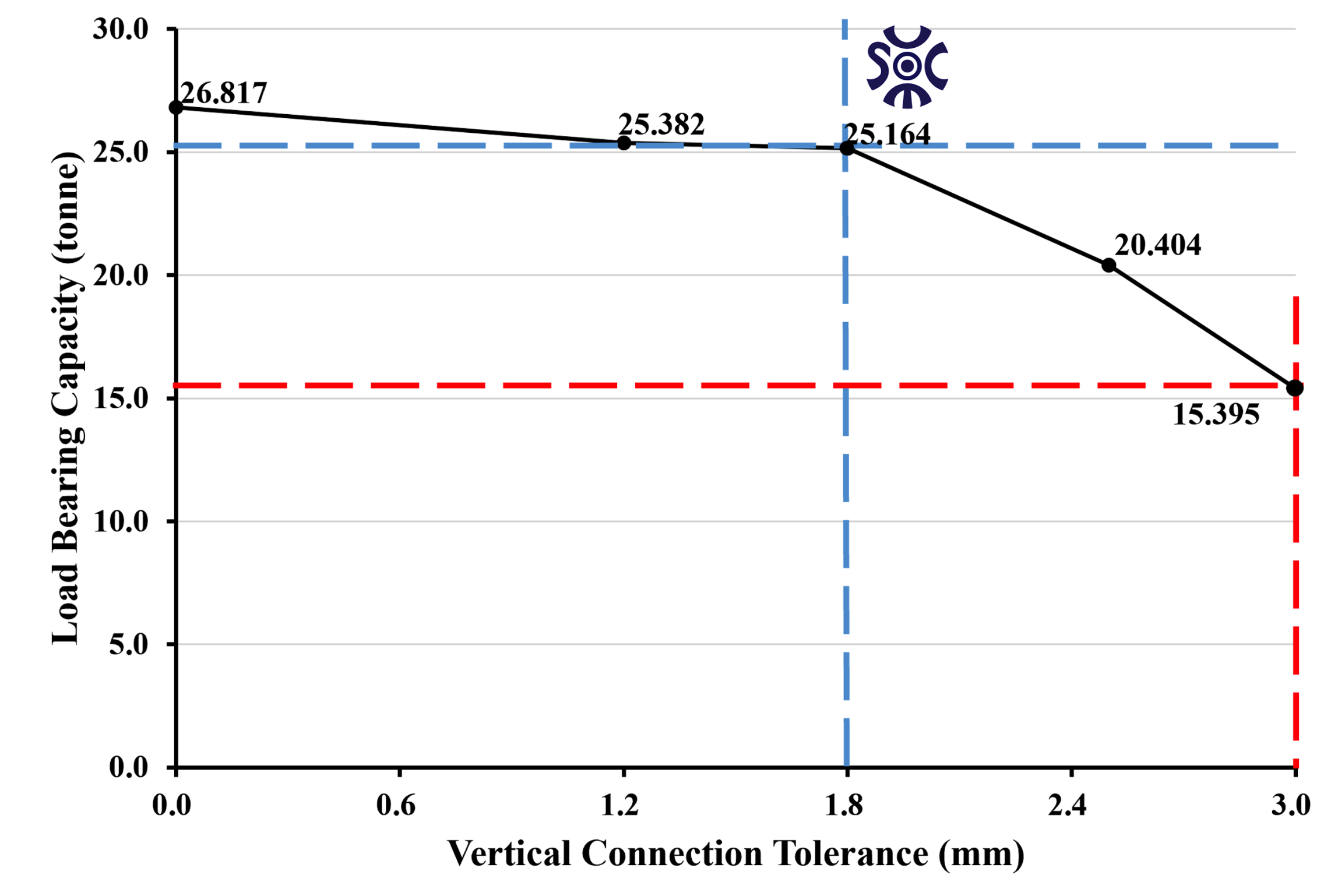
The figures are specific to Sucoot’s own testing, but the wider engineering point is straightforward. A small change in manufacturing accuracy can have a much larger impact once a scaffold or shoring structure is assembled. Sucoot says 1.8mm connection tolerance control supports on-site stability, safer installation and more efficient assembly because components align as intended.
Shoring performance and verified testing
The same argument extends to heavier shoring work. Sucoot says the load performance of its products is verified through random batch testing, alongside destructive physical testing. Its technical material states that its Ø60.2mm shoring scaffolding has achieved an ultimate breaking load of at least 72 tonnes for a four-leg shoring tower.
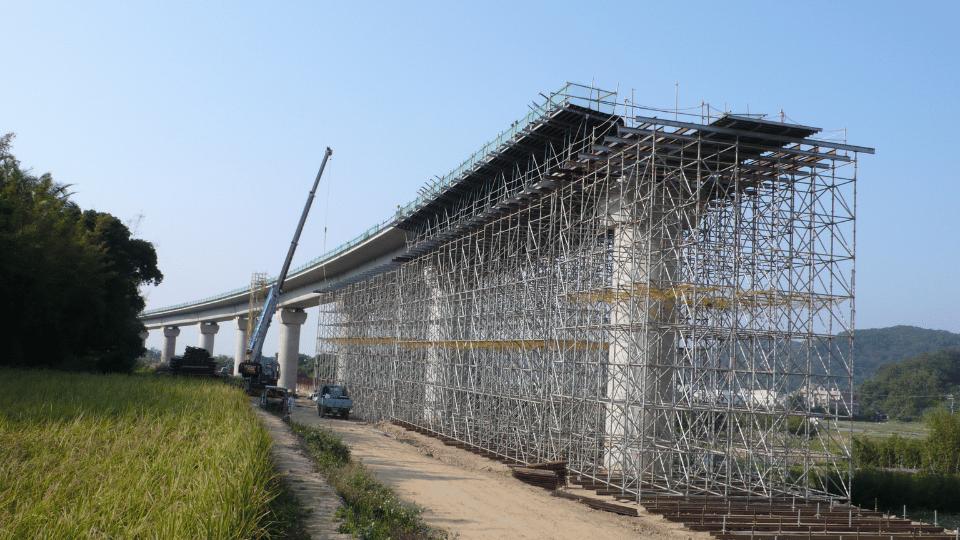
The company presents the system for applications including bridges, viaducts, power plants and high-tech factory projects. For bridge construction, thick slabs, high shoring systems, long spans and public works, project engineers or supervising consultants may also require a preloading test before concrete placement.
Such a test may involve applying around 1.1 times the estimated concrete load to the temporary works. The concrete pour proceeds only where the structure demonstrates the required stability. Sucoot says its 1.8mm connection tolerance helps its real-world shoring capacity align with its load calculations, provided the system is erected strictly in accordance with the approved design drawings.
It also says that this relationship between component accuracy, design calculations and site execution has helped it build trust with contractors and structural engineers in Taiwan. As with any temporary works system, project-specific design, inspection and competent supervision remain essential.
Block-stacking and planned erection
Component alignment is also relevant to Sucoot’s preferred block-stacking method, where project conditions allow. This approach assembles larger scaffold sections at ground level before they are lifted and connected to the erected structure. It can reduce the time operatives spend building at height, while making better use of available working space.
In one Sucoot’s project example, a 9m-high, 3.6m-long and 1.5m-wide scaffold section was pre-assembled on the ground as a six-leg modular block. A crane then lifted the block into place to connect it with the existing six legs of the structure. Sucoot says the block aligned cleanly with the erected section because the connections were manufactured to its precision allignment tolerance.
The approach still requires detailed lift planning, suitable lifting arrangements and competent management. But Sucoot argues that accurate component connections make this type of modular installation more practical, helping teams gain efficiency without compromising the planned geometry or safety of the structure.
Certification and international supply
For international buyers, certification is another part of the assessment. Sucoot’s ringlock scaffolding system is certified to EN 12810-1 and ANSI/ASSE A10.8, while the company also holds ISO 9001 certification.
Based on the certification information provided, Sucoot is positioned as the only known scaffolding manufacturer in Taiwan with both EN and ANSI certification for ringlock scaffolding.
Buyers should request the relevant current certificates and confirm their applicability to the intended project, market and configuration before purchase.
The wider position
Sucoot is not presenting itself simply as a supplier of ringlock components. Its proposition is that precision manufacturing, engineering planning, load analysis and site methods should work as one system. The company says this can give contractors more predictable installation and shoring performance, particularly where designs are complex and deviations on site are costly.
For international buyers more familiar with established European brands or lower-cost Chinese supply, Sucoot is seeking to position itself as a Taiwan-based alternative with certified ringlock scaffolding, engineering support and manufacturing control behind its offer. Its central argument is that the next generation of ringlock systems will be judged not only by the strength of individual components, but by how accurately the complete structure matches its engineered design.
More information about Sucoot’s ringlock scaffolding and formwork systems is available at www.sucoot.com.