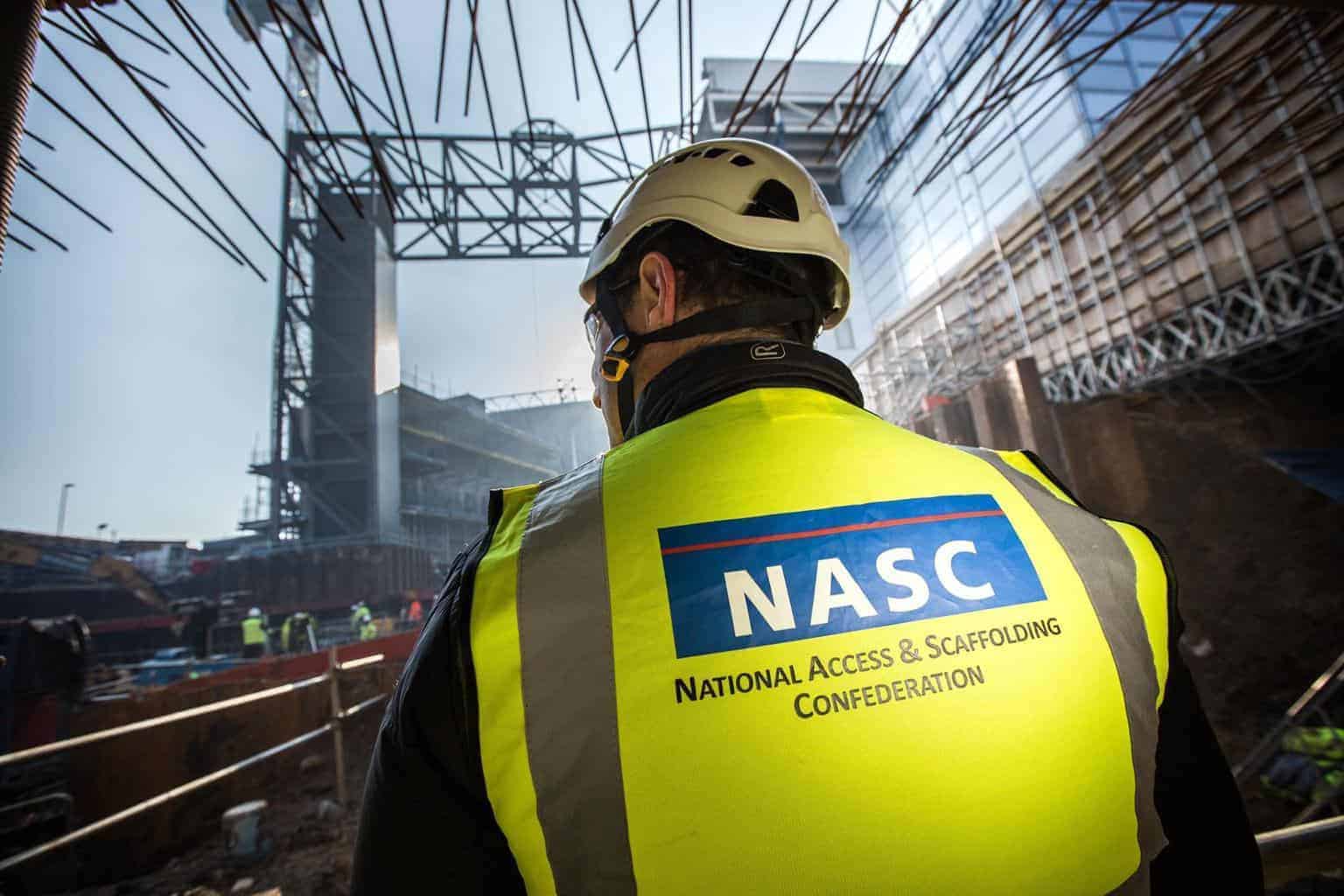
The National Access and Scaffolding Confederation (NASC) has published its annual safety report showing an increase of 27% in accidents and injuries among its members while on the job in 2018.
Members of the NASC recorded 113 accidents and injuries on site during 2018 – equating to one incident for every 150 operatives. While in 2017 the figure was just 89 which was an all-time low. An increase in falls from height was also recorded in 2018, there were 22 falls, up from 14 in 2017.
The figures were revealed in the NASC 2019 Safety Report, which documents and analyses accident and injury statistics for its full contracting members in the previous calendar year.
The 113 injuries recorded means that more than 99% of all NASC member operatives – a total of 16,645 employees – went through 2018 accident and injury-free. Pleasingly there were also no operative fatalities last year, for the sixth consecutive year.
The NASC report shows that the most common cause of accident and injury was ‘Slips, Trips and Fall on the same level’ – representing more than 43% of all accidents reported.
Des Moore, CEO of TRAD Group and NASC President, said: “The report shows that NASC members and their operatives continue to work incredibly safely at height.
“While it is slightly disappointing to see a slight year-on-year rise in the number of reported incidents, it is important to view this figure in context – taking into account the 16,000+ operatives who completed millions of working hours in 2018 without injury.
“Indeed, the annual incidence and frequency rates remain incredibly low, demonstrating how much value NASC full contracting members place on implementing and enforcing safe working standards on every project they undertake.
“However, there is always room for improvement. This is why the NASC will use the data collected to drive positive change – looking for ways to lead safety in our industry and help our members continually improve H&S standards on sites and in yards across the UK.
“We’re particularly keen to reduce slips and trips and will be working closely with clients and contractors to achieve this aim.”
Robin James, NASC Managing Director, added: “The NASC believes wholeheartedly in safety leadership, accountability and transparency, which is why it goes to such great lengths every year to collate, analyse and publish a detailed safety report to enable the NASC to focus on strategies and guidance to improve the scaffolding industry.
“It is only through this process that we are able to lead on safety through our ongoing collaboration with the Health & Safety Executive and other leading construction bodies, and the continued support and determination of NASC members, that our trade body can improve on its already excellent safety standards.”
NASC full contracting members are required to submit a detailed accident return as a requirement of membership. The NASC Safety Report is compiled from this data and includes:
- Injuries and fatalities to operatives, third parties and members of the public
- Accident types
- Detailed analysis of accidents
The full safety report can be viewed here.