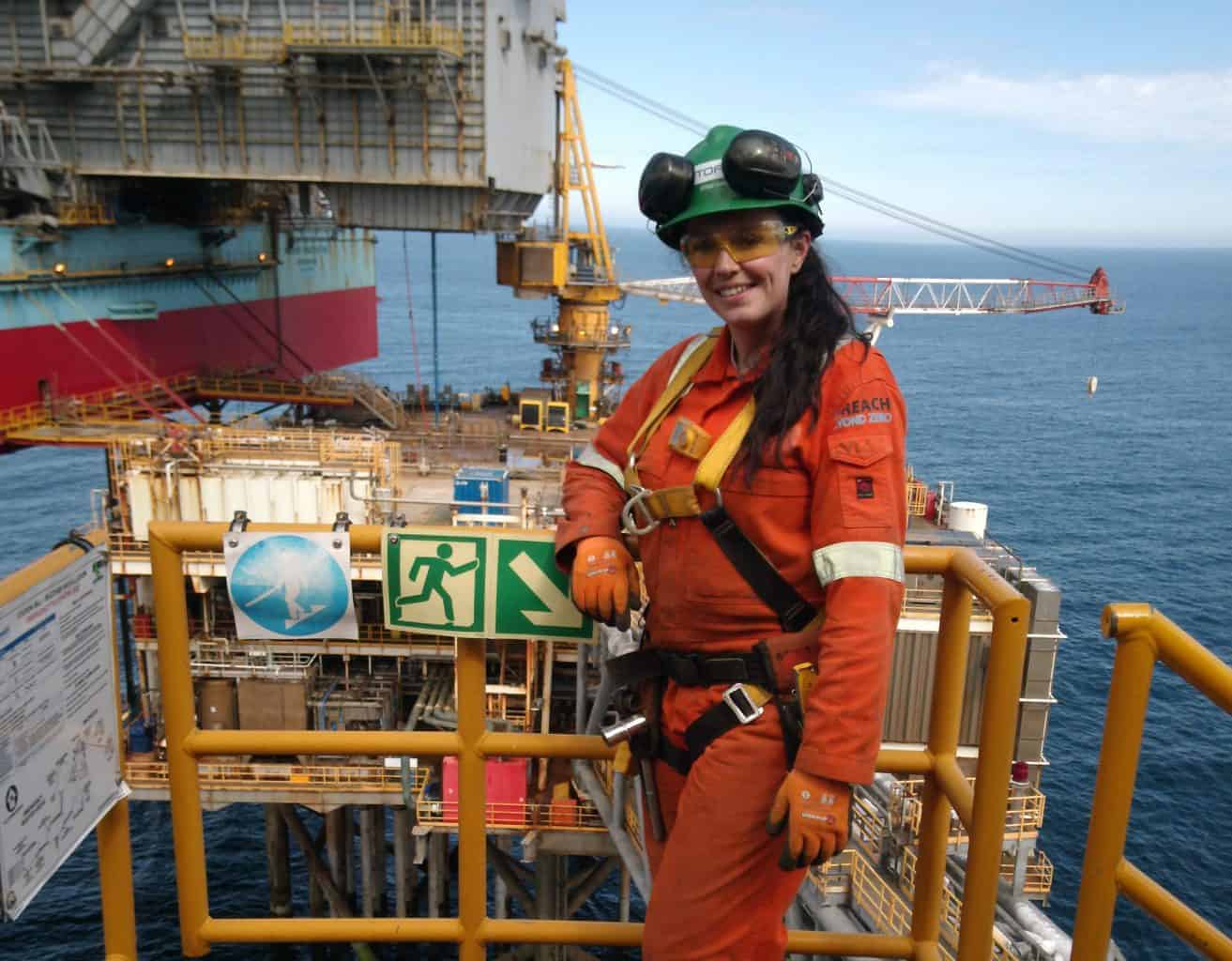
Scaffolder Vicky Welch has become the first UK female offshore scaffolder for Stork after completing her first trip in the North Sea.
Vicky, aged 29, is one of just six qualified female scaffolders in the UK. We reported a few months ago that Vicky had completed her offshore training in February with her sights set on an offshore career.
With all the relevant certification and offshore training, industrial services firm Stork was delighted to welcome Vicky as their first female scaffolder, setting a new precedent for other females to follow. Vicky has now completed her first trip offshore on CNOOC International’s Scott platform and has already been mobilised on her next scope to company’s Buzzard asset.
Vicky explained her thoughts on her first trip: “I was nervous as to how I would be accepted in the offshore environment and worried that people may change their behaviour around me. As the only female scaffolder offshore, I knew people may be intrigued about my skills and experience but I am no different to any other scaffolder. Nobody I worked with made my gender an issue. I proved I am capable of carrying out the job so they treated me the same as every other scaffolder on-board. You will always have people with more technical knowledge, others with more physical strength but the industry itself is a mix of different people and I just felt like part of the mix, regardless of my gender.”
While on her first trip offshore Vicky mentioned that she was pleased and encouraged to encounter other females on-board undertaking such roles as geologists, chemists and stewardesses.
“The offshore industry is changing and Vicky is an excellent example that gender does not dictate position”, a spokesperson from Stork said.
Vicky truly believes gender is irrelevant and it is about the right person for the job, she added: “I would only recommend a male or female to join the offshore industry if they are the right type of person. You have to be used to working in a harsh environment where the weather can change quickly and you can be working in confined and restricted spaces. The job is demanding but very rewarding and I would encourage anyone who is right for the job to choose a career in scaffolding offshore.”