Oil giant BP has been fined £650,000 after being found guilty of breaching health and safety rules, resulting in a scaffolder’s death almost nine years ago.
Sean Anderson fell through an open grating on BP’s Unity platform in 2014 while working as part of a contracted maintenance team employed by Cape Industrial Services.
Following a two-week trial at Aberdeen’s Sheriff Court, a jury found BP guilty of a breach of safety rules.
On sentencing the company to the £650,000 fine, Sheriff Graham Buchanan said that although the death of Sean Anderson had been “tragic and devastating” for his family, it had been an “isolated incident”.
Sheriff Buchanan said BP had made “significant efforts” to address the risks involved with an open grating but added: “They were inadequate on this occasion.
“The level of harm caused by BP’s breach was high, and that has to be taken into account. I do accept the likelihood of harm arising, in this case, was low.
“The fact that a man has died as a result of the offence means the penalty imposed will be significantly higher than one with no loss of life.
“The fine imposed must have some economic impact.”
Mr Anderson had suffered serious head injuries and been found lying face down in the sea after falling from the Unity platform at around 4 am on 4 September 2014.
The 43-year-old father of four had been due to fly home just one hour later.
Murdo McLeod, defence advocate for BP, said the company wanted to “convey the company’s deepest condolences to the family of Sean Anderson”.
He added: “This was a highly unusual case, and it’s not often that these matters proceed to trial. They are very rare, particularly when these powerful mitigating circumstances exist.
“First of all, there’s an excellent safety culture spoken of by witnesses and BP has sought to improve matters by introducing a similar policy with regard to assessment of risk when gratings are not covered.
“With regard to the gratings, while there may be an expectation that gratings should be covered, whether this should be done is a matter of opinion and is not clear cut.
“This is a very unusual and isolated incident and BP takes this matter very seriously.”
“There’s no evidence that a desire to increase profits resulted in the company cutting corners in terms of safety.”
The court had heard Mr Anderson, a multi-skilled scaffolder with rope access qualifications, would have known why the safety barrier had been erected and that it was safeguarding an opening on the deck.
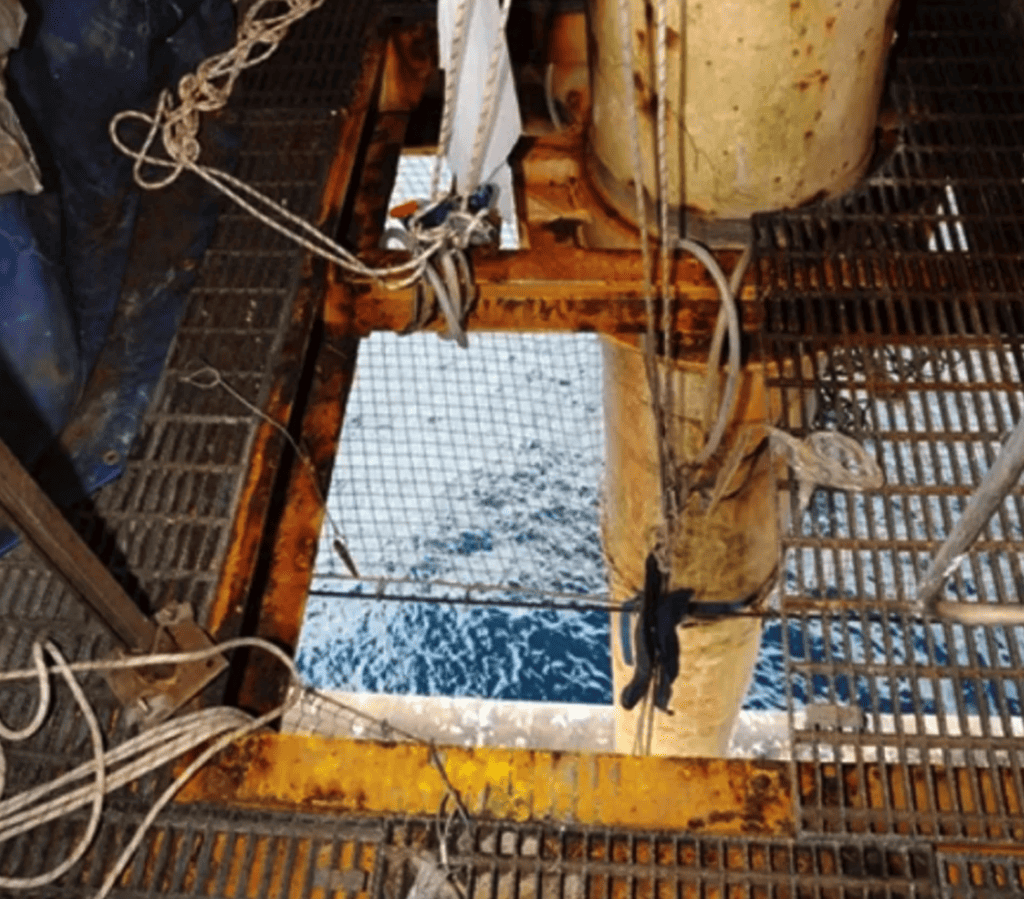
In the days running up to his death – Mr Anderson had been working as part of the team who had built the hard barrier protecting the fatal decking hole through which he fell.
On the night he died, bad weather meant the team carried out no work after stopping for a break at midnight.
At around 3:30 am, Sean – a “keen” worker – had asked the installation manager if anything could be done to “keep busy”, promptly rounding up three other men to tidy up the lower deck.
What happened next is unclear, but at 4 am, Tony Omar, who had been paired off with Sean to collect rubbish, remembers hearing three bangs and immediately raising the “man overboard” alarm.
The court heard that the night’s conditions had been foggy and dark, and Mr Anderson had not been found wearing a life jacket, harness or survival suit. He had been unconscious and was not breathing when pulled from the water.
A post-mortem later showed the cause of death was serious injuries to his head and chest sustained due to a “descent into the sea” from the oil installation. It was recorded that he had suffered severe and “predictably immediately” fatal head injuries, with extensive skull fracturing.
Toxicology results showed no signs of alcohol, drugs or gas poisoning – and no signs of natural diseases that would have resulted in his death.
BP owned the Unity rig, an unmanned pumping station in the Forties Field about 110 miles northeast of Aberdeen in 2014 but has since sold it to INEOS.
In a statement, BP said: “We acknowledge the outcome of the court proceedings. This was a tragic incident.
“While we know nothing can be said to change the pain felt by Sean Anderson’s family and friends, our deepest condolences remain firmly with them to this day.”
In her closing statement, fiscal Kristina Kelly told the jury that BP had a duty to ensure the contractors working on Unity were not exposed to risk, doing so in “so far as is reasonably practicable”.
She said: “BP put those workers at risk for the eight days running up to the 4 September 2014; by not having suitable and sufficient control measures in respect of open gratings on Unity.”
She said warning signs, or a cover on the grating could have been in place, adding: “Sean Anderson’s family fully expected him to come home safely.”
Ms Kelly told the court that BP’s procedures had now changed and any open gratings were now covered, she said these were “mistakes they have now learned from.”