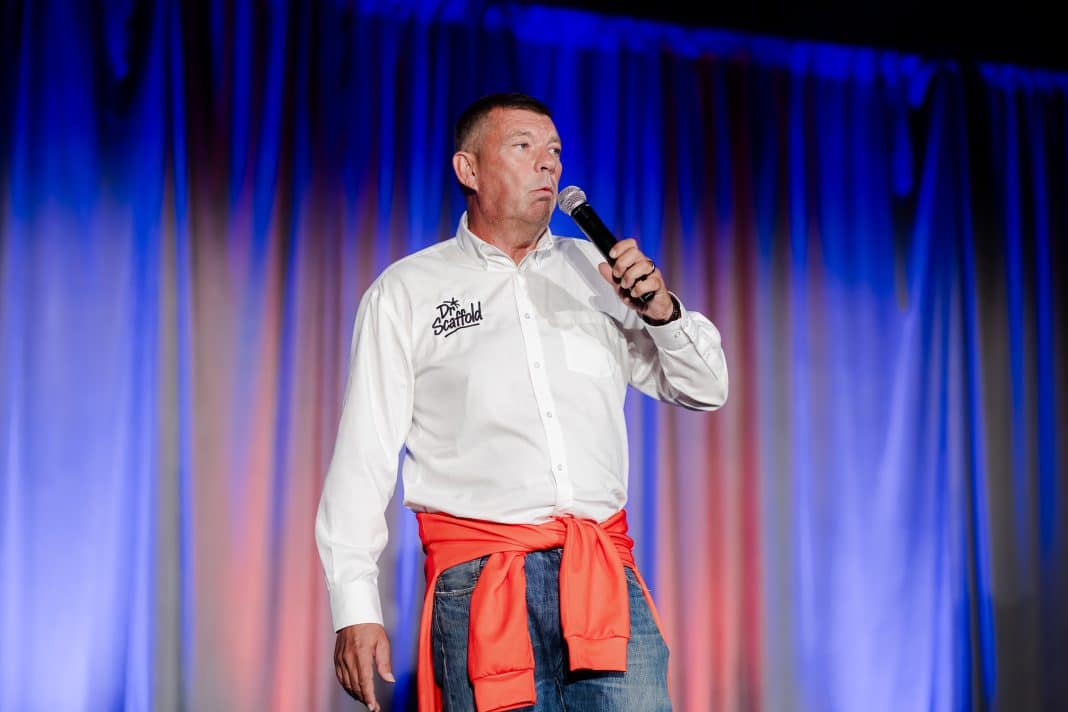
Alan Osborn has been made an honorary member of the Access Association of Canada (AAC), recognising his growing work to put mental health higher on the agenda across the international scaffolding and access industry.
The honour was announced in Nashville during the SAIA Annual Convention, where Osborn was invited to speak about mental health in construction and the practical steps companies can take to support the people working for them.
Loud, funny and instantly recognisable in his Dr. Scaffold hoodie, Osborn spent 30 years building scaffolds before moving into business ownership, consultancy and standards work. In recent years, he has become one of the trade’s most recognisable voices on mental health.
His Check Your Mate campaign encourages workers and managers to look out for colleagues, recognise changes in behaviour and have the confidence to start a conversation when something doesn’t seem right.
“Being made an honorary member of the AAC is a real privilege, but for me it’s about what we do next as an industry,” Osborn said.
“Recognition is welcome; action is vital. If Check Your Mate helps even one person feel able to speak up or one colleague spot the signs early, then it’s doing its job. The AAC is going to change the access industry in Canada.”
Speaking in Nashville, Osborn drew on something scaffolders already understand well: looking after the person working alongside you.
“In scaffolding and access, we’re brilliant at looking after each other when it comes to physical safety. We see a loose fitting or a risky set-up and we step in immediately. Mental health needs the same instinctive response,” he said.
“If something doesn’t look or feel right with a mate, that’s your cue to check in, not look away.”
Osborn spoke about the pressures that come with working in the trade, including long hours, travel, demanding programmes and high-risk sites. He also addressed the stigma that can still make people reluctant to admit when they are struggling.
It is a subject shaped by his own experience. Osborn has previously spoken openly about his personal struggles and about losing five people he describes as brothers from the scaffolding trade.
“The pressures on our workforce aren’t going away: tight programmes, long travel, demanding sites. What can change is how prepared we are to support people through those pressures,” he said.
“Check Your Mate is simply about giving everyone permission and confidence to start that conversation.”
Taking the message further
Osborn’s work has also received backing from Brandon Martin, President and Owner of InSite Software, who has been supporting his work and exploring how technology already used by scaffolding and access businesses could carry wellbeing prompts, training material and easier routes to support.
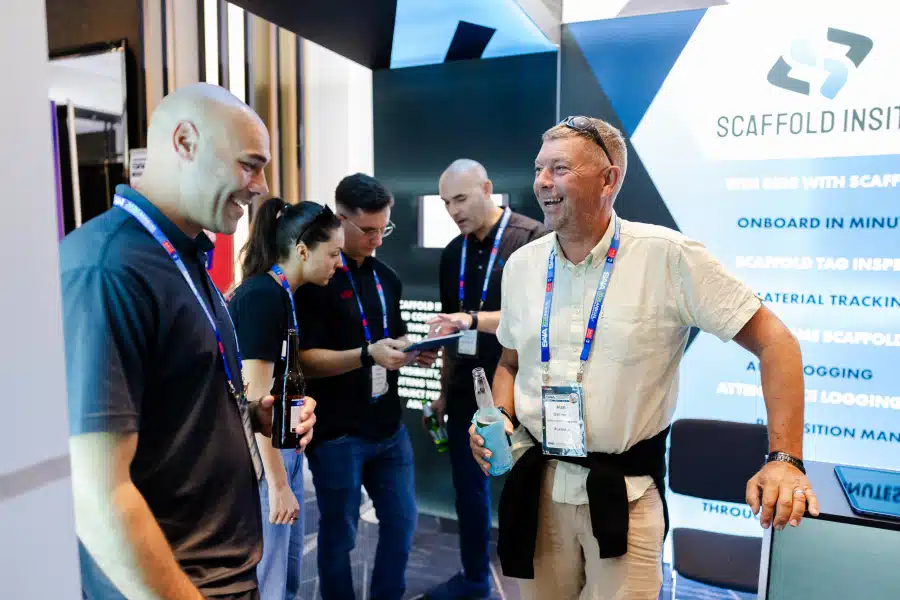
“Dr Osborn’s work aligns perfectly with where we believe the industry is heading,” Martin said. “Data, planning and software can help to design safer projects, but at the heart of every system are people. Supporting their mental health is not an add-on, it’s a core part of safety.”
InSite is looking at how wellbeing could be worked into the systems site teams already use during the working day.
“At InSite, we’re looking at how we can weave wellbeing into the everyday workflows our customers already use,” Martin said.
“If we can make it natural for site teams to receive prompts, access guidance, or flag concerns through the tools they’re in all day, then checking your mate becomes part of the process, not an extra task.”
Martin said the response in Nashville showed mental health was gaining a stronger place in conversations about safety across the wider access industry.
“When you have organisations like the AAC honouring Alan’s contribution, it sends a clear message: this isn’t a side issue. Mental health belongs in the same conversation as fall prevention, load management and design.”
For Osborn, much of the answer still comes back to people looking out for each other.
“I’ve seen first-hand that a five-minute chat on site can be more powerful than any poster or policy,” he said.
“When a supervisor or a colleague makes it clear that it’s okay to talk, the culture shifts. That’s the future of safety: PPE for the mind as well as the body.”
Martin believes technology can help make those conversations easier to start.
“I’m proud that InSite can play a small part in amplifying Check Your Mate,” he said. “Technology should serve people, not the other way round. If our software helps one supervisor start a conversation they might otherwise have avoided, that’s a win for us and, more importantly, for the person on the receiving end.”