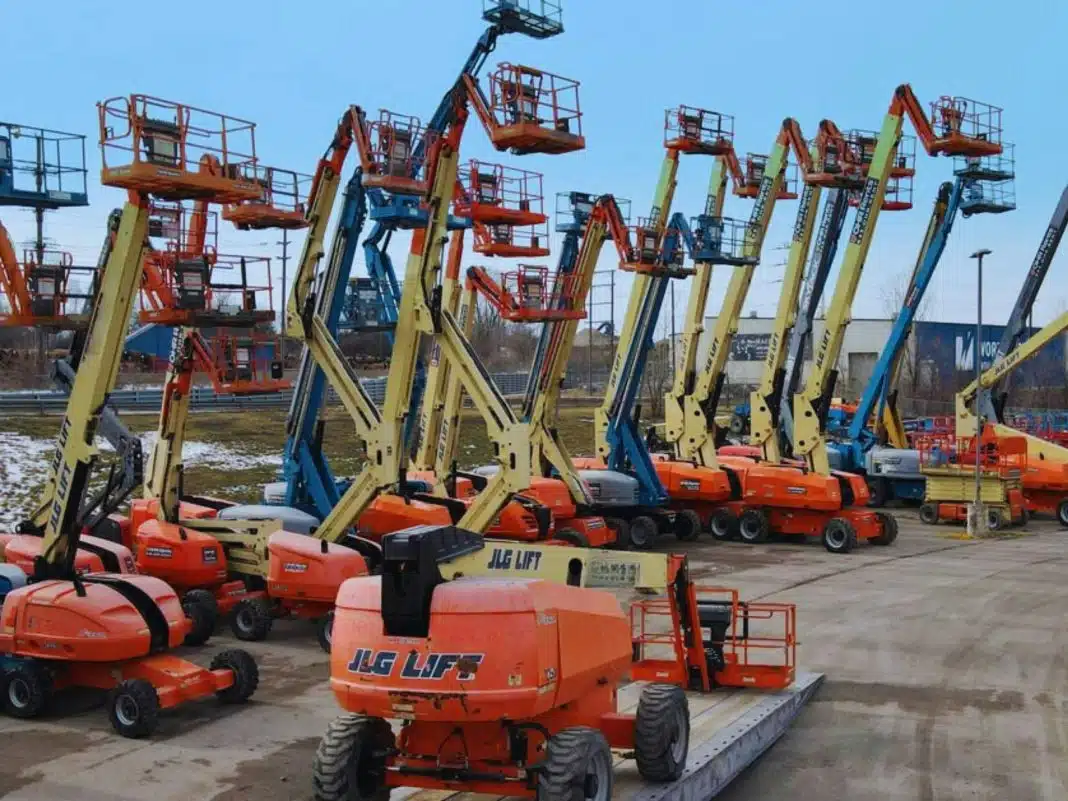
The UK’s trade watchdog has proposed anti-dumping duties of up to 82.89% on boom lifts made in China.
The Trade Remedies Authority (TRA) found that Chinese manufacturers had been selling the machines in the UK at unfairly low prices, harming British producers.
It said Chinese imports undercut UK prices by more than 25%.
If the government approves the duties, they will apply for five years.
The investigation began in December 2025 following a complaint from Niftylift, the UK boom lift manufacturer.
The TRA published its findings on 5 October.
It has proposed a rate of 21.01% for Zhejiang Dingli Machinery and 48.92% for Lingong Heavy Machinery, which trades as LGMG.
Thirteen other Chinese exporters that co-operated with the investigation would pay 27.67%. Any exporter that did not co-operate would pay the top rate of 82.89%.
The co-operating group includes the Chinese factories of several major Western brands, including JLG, Terex, which owns Genie, and Haulotte. Sinoboom, XCMG, Zoomlion, LiuGong and Sunward are also on the list.
The duties apply to where a machine is built rather than to the brand. A boom made by the same company in Europe or the US would not be affected.
Temporary duties have been in force since 20 August, set at 16.25% for Dingli, 64.25% for LGMG, 28.12% for the co-operating group and 71.74% for all other exporters.
Under the final proposal, Dingli’s rate would rise and LGMG’s would fall.
The measures cover self-propelled articulated and telescopic booms, including spider lifts, with a working height of 6m or more. Individual components imported separately are excluded.
The duties could push up the cost of new machines for UK hire companies, many of which have added lower-priced Chinese booms to their fleets in recent years.
Scaffolding contractors who hire powered access for their jobs may eventually see higher rates.
The European Union imposed similar duties on Chinese mobile elevating work platforms in 2025. The US introduced its own in 2021.
Companies affected have until 20 October to respond. The TRA will then make a final recommendation to the Business and Trade Secretary, who will decide whether the duties go ahead.