Scaffolder’s Fight for Cancer Research UK
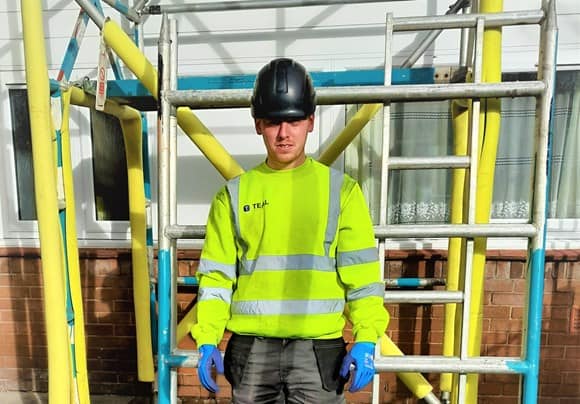
Scaffolder and rising MMA star, Bradley Rice is raising funds for Cancer Research UK.
The Teal Scaffold employee who works as a PASMA Scaffolding Operative at the company recently undertook an eight-week intensive MMA Bootcamp in preparation of Ultra MMA, a charity fundraiser.
The event which takes places on Friday 16th December at Liverpool’s iconic Olympia is supporting Bradley in raising much-needed funds for Cancer Research UK.
After competing in MMA competitions for over a decade, Bradley is set to take on one of his most challenging and important fights to date.
“Cancer Research UK is a charity that is very close to my heart, so I wanted to raise funds for the cause. The work they do to support not just those who are affected by cancer but also their families is priceless,” Bradley said.
Bradley’s Manager at Teal Scaffold, Kevin Williams added: “We are incredibly proud of Bradley. We have seen first-hand how hard he has worked in training in preparation for the big event and cause. The team at Teal Scaffold will be backing Bradley as he fights for a great cause. Good luck and well done to all those involved in the event.”
You can follow Bradley’s fight on LinkedIn and Twitter.
There’s still time to donate via the MMA stars Just Giving page or by purchasing a ticket for the fundraising event here.
London’s ULEZ set to expand in 2023

The London Ultra-Low Emission Zone (ULEZ) is set to be expanded to cover the whole of London from August 2023.
Many drivers in London will be charged an extra daily fee of £12.50 when new plans to expand the ULEZ come into force.
In a bid to boost air quality for its residents, the zone will be expanded to cover the whole capital from August 29 2023.
All vehicles entering London must meet the ULEZ standard (Euro VI/6 for diesel and Euro IV/4 for petrol) or pay the daily charge. HGVs over 3.5 tonnes have had to meet tougher London-wide Low Emission Zone standards since March 2021.
The scheme, which operates every day apart from Christmas Day, is currently limited to the area within the North and South Circular roads but will soon cover all of Greater London.
Transport for London (TfL) estimates that on an average day about 160,000 cars and 42,000 vans that use London’s roads would be liable for the £12.50 ULEZ fee.
Officials hope the scheme will encourage tens of thousands of those drivers to switch to vehicles that comply with the minimum emissions standards or use other modes of getting around such as walking, cycling or public transport.
To see if your vehicle meets the ULEZ emission standards, use the TfL vehicle checker.
JDC start scaffolding works on Queens Tower

Scaffolders at a Hertfordshire-based scaffolding firm have begun erecting a large free-standing scaffold that will soon encapsulate the Queens Tower at the Imperial College London.
The scaffolders working for JDC Scaffolding are said to be proud to be working on such an iconic monument after the firm was contracted by Russell Cawberry Ltd to supply access and a temporary roof to the 287ft tower.
Builders are set to refurbish the exterior of the stonework and make vital repairs to the copper roof covering.
Opened in 1893 to commemorate Queen Victoria’s Golden Jubilee the tower is all that remains of the Imperial Institute. The Institute which was not a great success was partially demolished between 1957-1967. From 1966-1968 work was carried out to enable the tower to be a standalone structure.
JDC will be erecting an 83.00m high free-standing scaffold formed of an inner access scaffold, an outer scaffold exoskeleton and a bespoke, circular temporary roof covering.
The main external scaffolding will encapsulate a 2 Tonne passenger/goods hoist supplied by Sunbelt Rentals UK & Ireland and a full-height Haki staircase supplied by UK System Scaffold Hire Ltd. The scaffold has been designed by RDG Engineering.
Charity Lunch Raises £224,000 for Construction Families

The Lighthouse Construction Industry Charity has raised a staggering £224,000 for families in construction at its annual Christmas lunch in London.
Construction’s top networking event and lunch was once again a highlight in this year’s calendar and over 900 guests were welcomed through the doors of the Westminster Park Plaza on Friday 2nd December for the Lighthouse Construction Industry Charity’s event in London.
Radio and television presenter Pete Graves, was MC for the day and opened proceedings with a warm welcome and a hint of the excitement to come with the day’s special guests. Then it was on to a hotly contested ‘heads and tails’ competition to get everyone in the mood for the entertainment to come.
Each year the Charity awards the ‘Peter Capel’ Cup to recognise outstanding achievement and contributions from organisations that support the charity. Competition for the coveted award is always fierce, but this year the judges were simply unable to select a clear winner. Three companies were announced as joint winners; Gallagher Group, Glencar Construction and Coinford, all of who received resounding cheers and applause from the appreciative audience. The award was in recognition of Gallagher Group and Glencar Construction for organising and sponsoring the charity’s ‘On Yer Bike’ challenge across Ireland in May, and to Gallagher Group and Coinford for organising the charity’s White Collar Boxing event.
A special mention was also given to Logan Price from O’Halloran and O’Brien for his individual achievement, raising almost £15,000 scaling Mont Blanc and the UK and Ireland’s 4 highest peaks.
All the winners of the lotto very generously donated their prize money straight back to the charity, so a special thank you goes to Dermot O’Grady from Ardent Tide, Kathy Marsden from MasterMac Surfacing, and James from J O’Doherty Haulage Ltd.
Guests enjoyed a gourmet three-course meal and auctioneer Addison Gelpey, prompted some frantic bidding for some unique lots and opportunities.
Top celebrities from the sporting world then graced the stage and football legends, Glen Hoddle and Paul Merson, were joined by ex rugby player and presenter, David Flatman. Along with boxing hard hitter David Haye ‘the Hayemaker’ to form an all star line up,
They all shared their own experiences with poor mental health, addiction, injury and near fatal heart attacks, with each adding plenty of humour to how these events had impacted on their lives and shaped how they dealt with the challenges of daily life. The audience were very appreciative of the remarkably candid and witty responses to some tricky questions and the celebrities received a standing ovation..
Bill Hill, CEO of the Lighthouse Construction Industry Charity said, “We are always amazed at the generosity of our supporters, particularly during these difficult times. Thank you never seems enough, but that support means that we can literally change and save people’s lives and that is truly humbling. Next year we have big plans to ensure that everyone can reach out for support through our ‘Make it Visible’ campaign and our on site team will be visiting more locations to help spread the word about out vital services. Each year we do more and more for our community but that is only possible with the dedicated and unerring support we receive and I would also like to take this opportunity to thank all the volunteers that helped on the day and our sponsors who make these events possible.”
The afternoon was wrapped up by opera singers, Damian Carter and Alexander Wall who treated the audience to rousing renditions of Nessun dorma and Sweet Caroline,prompting synchronised swaying and napkin waving. The festivities continued well into the evening with guests embracing the Christmas spirit and making the most of the networking opportunities.
Government plans to scrap Working at Height Regs
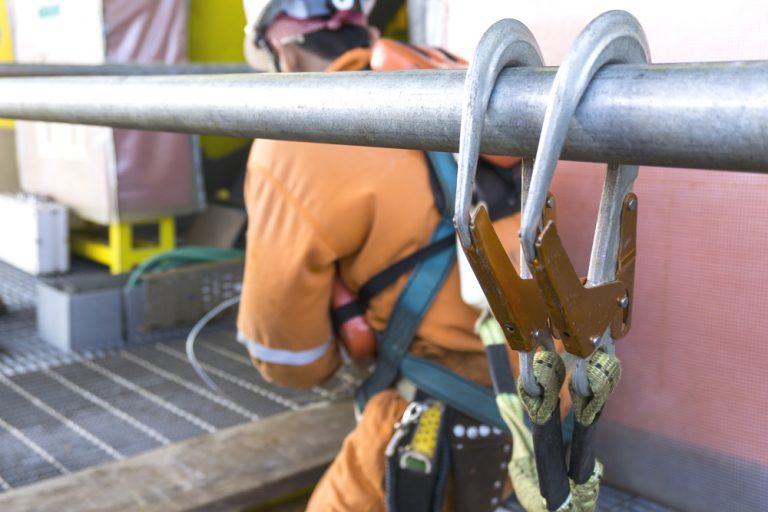
The Government is planning to scrap the UK’s Work at Height Regulations at the end of 2023 unless ministers in Westminster can be convinced to rescue them.
The Government is poised to scrap the Working at Height Regulations and over 2,400 other laws and regulations at the end of 2023 following the UK leaving the European Union.
The Revocation and Reform Bill which is currently being passed through Parliament seeks to remove EU-derived laws that remain on the UK statute book following Brexit.
The Bill proposes to remove many laws that are entwined with the EU and the Working at Height Regulations is just one of them. Others set for the chop include the Manual Handling Operations Regulations and Personal Protective Equipment at Work Regulations.
Repeal Campaign
Today the Access Industry Forum (AIF) is urging all in the industry to join its campaign to help save the Work at Height Regulations. The AIF said: “No one was calling for the repeal of the Work at Height Regulations. There was no campaign for reform; no one saying it’s unfit for purpose or burdensome. In fact, guidance has been simplified over the years. There has been no consultation, no parliamentary scrutiny. The issue is simply that they originated from an EU directive, so are being swept up in this mass clear out of regulations – despite extensive UK stakeholder consultation taking place before they were created and being an established UK law for almost two decades. If the Retained EU Law (Revocation and Reform) Bill passes, the whole lot will automatically be axed on 31 December 2023 unless the government takes action to save individual regulations.” AIF has submitted written evidence to the House of Commons Public Bill Committee, which is now considering the Retained EU Law (Revocation and Reform) Bill. It also has united the ten principal trade associations and federations involved in work at height: ATLAS, EPF, FASET, IPAF, IRATA, Ladder Association, NASC, PASMA, SAEMA and WAHSA.Support the Campaign
The AIF is asking many in our sector to urgently write to their MP to ask them to push for the Work at Height Regulations to be assimilated into UK law and excluded from ‘sunset clauses’ within the EU Law (Revocation and Reform) Bill. Chair of the AIF, Peter Bennett OBE said: “Employers don’t want falls from height in their workplaces. They want their workers to be safe and free from harm. They also want to avoid the investigations, negative publicity, delays, increased insurance premiums and upheaval of responding to an accident. The Work at Height Regulations is a compact piece of legislation that creates a useful framework for employers to manage the risks and avoid falls from height. The rules are straightforward and practical, they’re embedded in existing policies, procedures and training, and although they’re not perfect, the most important thing is that they work. I’m in no doubt that the Work at Height Regulations have saved lives and if this legislation cannot be rescued from the scrapheap, it’s workers who will pay the highest price of all.” For more information please visit the AIF website.Scaffolding firm brings Christmas magic to Blackpool
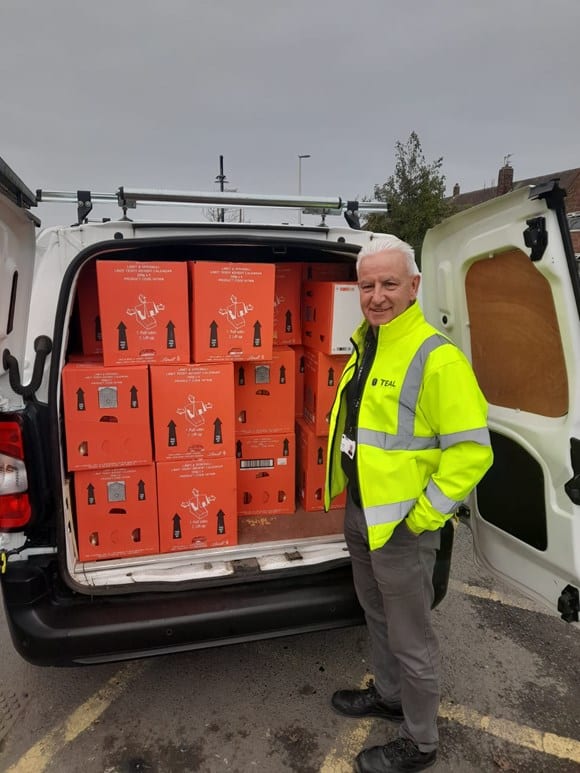
Teal Scaffold has joined forces this festive season with charity, HiS Church to provide Christmas donations.
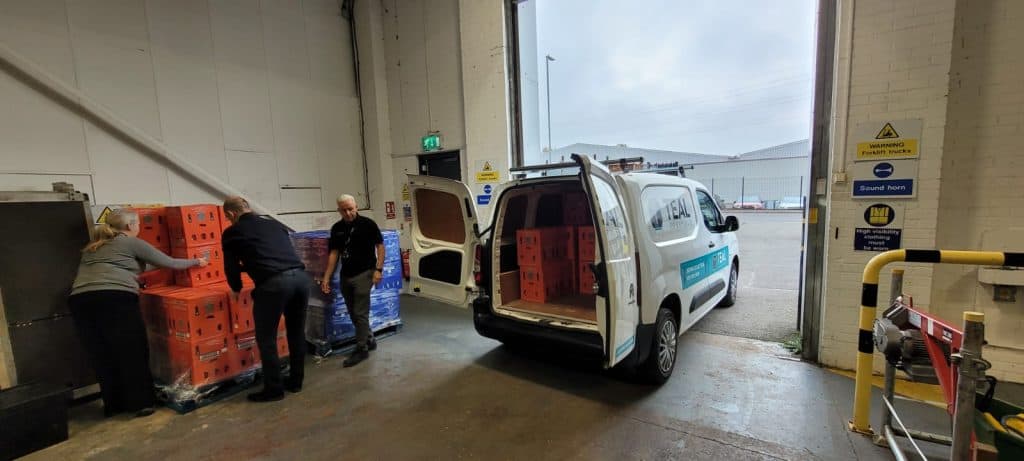
The duo collaboratively provided hundreds of Christmas advent calendars to the much-loved, Grange Youth Community Hub.
North-West-based Teal Scaffold was delighted to support the local community they’ve been working in this Christmas through the support of their latest donation.
The donation has provided much-needed Christmas cheer as families this winter face the looming cost-of-living crisis.
Teal Scaffold will continue to provide high-quality services over the coming weeks for their clients at Blackpool Victoria Hospital.
Head of Operations at Teal Scaffold, Dan McGregor said: “We are committed to creating opportunities and changing lives in the communities we serve. While not a huge expense to some, an advent calendar may be considered a luxury item for families in financial difficulty and struggling to pay their bills.
As prices continue to rise, households across the North West are unfortunately preparing for a challenging festive period. It’s my hope that by our donation and working with local charities in Blackpool, we are able to restore some festive cheer.”
 Groundwork CLM Development Manager, Cath Powell MBE added: “We are absolutely delighted to receive these wonderful Advent Calendars which will be distributed to the families of Grange Park by Father Christmas at our special Christmas Event where every child gets to visit Father Christmas in his beautiful grotto for free.
This added gift for the families will make their visit very special”.
The scaffolding firm, proudly part of The Sovini Group, made all this festive cheer possible thanks to donations from HiS Chuch Charity and The Grange Youth Community Hub.”
Groundwork CLM Development Manager, Cath Powell MBE added: “We are absolutely delighted to receive these wonderful Advent Calendars which will be distributed to the families of Grange Park by Father Christmas at our special Christmas Event where every child gets to visit Father Christmas in his beautiful grotto for free.
This added gift for the families will make their visit very special”.
The scaffolding firm, proudly part of The Sovini Group, made all this festive cheer possible thanks to donations from HiS Chuch Charity and The Grange Youth Community Hub.”
 Groundwork CLM Development Manager, Cath Powell MBE added: “We are absolutely delighted to receive these wonderful Advent Calendars which will be distributed to the families of Grange Park by Father Christmas at our special Christmas Event where every child gets to visit Father Christmas in his beautiful grotto for free.
This added gift for the families will make their visit very special”.
The scaffolding firm, proudly part of The Sovini Group, made all this festive cheer possible thanks to donations from HiS Chuch Charity and The Grange Youth Community Hub.”
Groundwork CLM Development Manager, Cath Powell MBE added: “We are absolutely delighted to receive these wonderful Advent Calendars which will be distributed to the families of Grange Park by Father Christmas at our special Christmas Event where every child gets to visit Father Christmas in his beautiful grotto for free.
This added gift for the families will make their visit very special”.
The scaffolding firm, proudly part of The Sovini Group, made all this festive cheer possible thanks to donations from HiS Chuch Charity and The Grange Youth Community Hub.” Training gap filled with over £10M of free courses
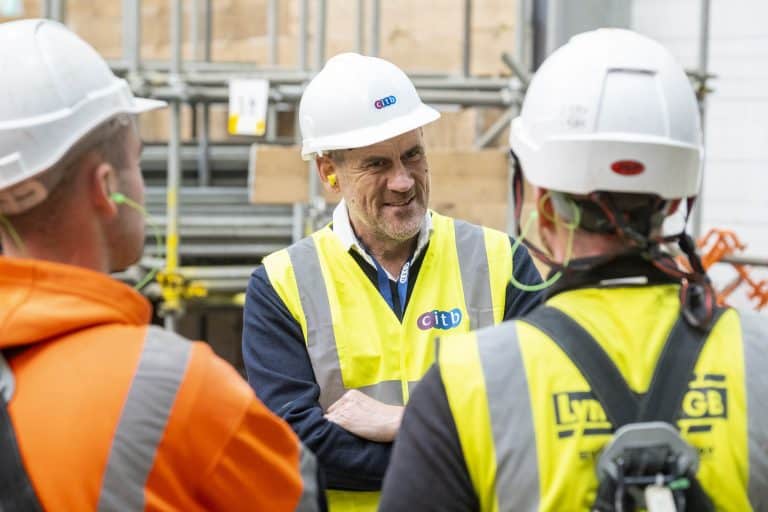
CITB has awarded contracts to the value of £10.5m, to four UK-wide training organisations which will provide 10,500 free ILM leadership and management courses to all sectors of the construction industry.
The industry has called for management and leadership skills to support them with the existing and future challenges, and this is backed by research undertaken by CITB which has highlighted gaps being faced in the industry.
This has included insight that shows management training and supervisory training has been in decline since 2017.
The contracts have been awarded to companies in England, Scotland and Wales. The OM Group Corporation Ltd will provide training across Scotland, Wales and the South of England.
The South of England contract is shared with Danny Sullivan and Sons Ltd and MKC Training Services Ltd.
The North of England provision will also be shared by the National Construction College and The OM Group Corporation Ltd.
Tim Balcon, CITB Chief Executive, said: “Providing these training opportunities is in direct response to feedback from industry that their workforce isn’t equipped with the essential Leadership & Management skills they need. The problem is worsened by the lack of financial investment in these essential skills to develop their workforces for the here and now and for the future.
“This investment is regionally focused as we look at localising support and solutions right across Britain. There is no one size fits all approach.
“We are also developing the capacity and capability of construction training provision by making it easier to access training which will support SME’s who may not have the resource to spend time researching a crowded training market for the right courses for their needs.”
The Leadership & Management Direct delivery commission will provide free of charge training to front-line managers, Site Supervisors and Site Managers. This will be in the form of 5 ILM modules leading to an ILM level 3 award or certificate in Leadership and Management Practice for the Construction and Built Environment Sector.
In accordance with UK government procurement regulations this commission will address social value. It will tackle workforce inequalities, increase supply chain resilience and capacity, and support educational attainments to address skills gaps and provide recognised qualifications.
Brogan Group Launch Santa’s Football Runner Game

The Scaffolding and Powered Access Contractor Brogan Group, are running a Christmas Game this December where players have a chance to win £150 in Amazon Vouchers and Brogan Group will match entries with donations to the Charity Barnardo’s.
Following on from its game last Christmas the Brogan Group is rerunning its Christmas Game this December where players in the UK and Ireland have a chance to win £150 in Amazon Vouchers operating a Football kicking Santa.
This year the amount Brogan Group are donating per player per week has doubled to £2 to its chosen Charity, which this year is Barnardo’s.
Barnardo’s protect, support, and nurture the UK’s most vulnerable children. Last year Barnardo’s worked with partners to support over 373,000 children, young people, parents and carers across the UK and Ireland. More about Barnardo’s. https://www.barnardos.org.uk/
You can play the game at Www.brogangroup.com it will run until the 22nd of December
Scaffolding Championships Goes Global
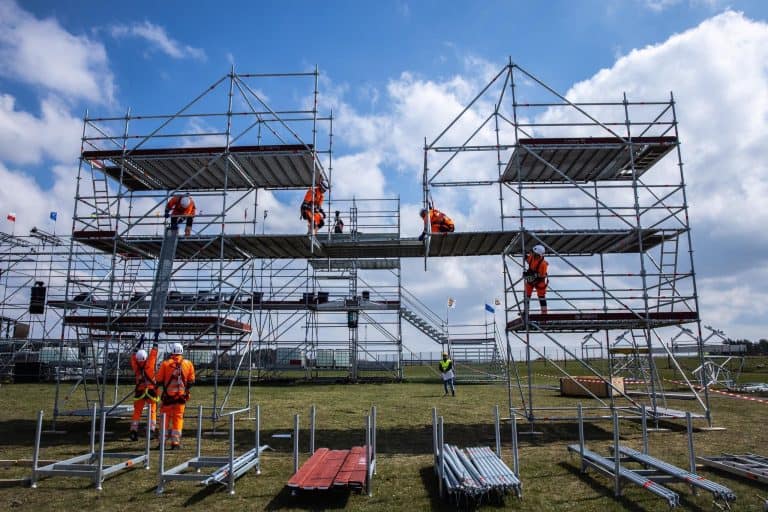
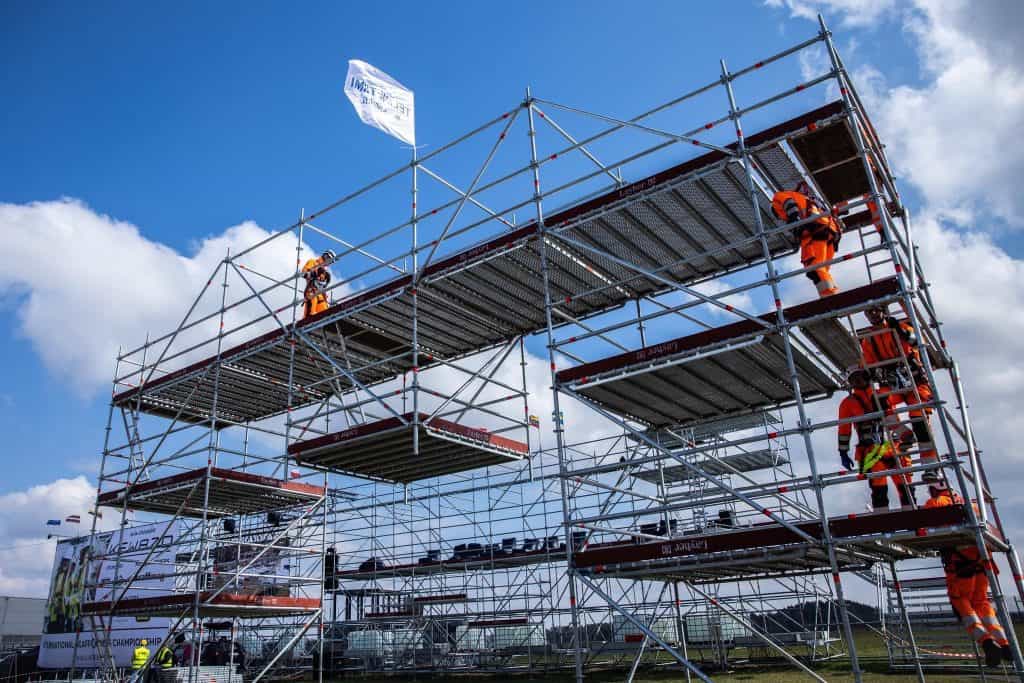
The third Scaffolding Championships is now set to be a global event after more teams from around the world including the UK sign up to compete.
The growing scaffolding event which is held in the city of Vilnius in Lithuania each year has so far attracted 13 teams of scaffolders from around the world to compete in next year’s competition.
Registration for the 2023 Scaffolding Championship is still currently open but the event organisers The Baltic Scaffolding Association have revealed that teams from Australia, Mongolia and now the UK have registered and are also set to attend.
Previous years have seen mostly European teams go head-to-head in a series of timed system scaffolding build-offs using the Layher Allround system.
This year’s event which saw defending champions Hotrema retain its champion status proved popular with those attending and those watching online. The organisers said that more than 120,000 people from around the world tuned in to the event’s live steam on YouTube and its social media networks.
 Next year’s Scaffolding Championships will be held on 26 – 27th May 2023. Teams of scaffolders from countries currently registered are Lithuania, Sweden, Finland, Denmark, Ireland, Poland, Mongolia, Australia, Bulgaria and the UK.
A spokesperson for The Baltic Scaffolding Association said “Although this year’s Championship was very popular, we didn’t expect so much interest for our event next year. Its grown so much that we have had to expand it to allow the registration for 3 extra teams to a total of 15.
Our 2023 Championship will again be live-streamed with translation for those that cannot attend but this time we are expecting to make it more interesting and interactive for viewers.”
If you are interested in competing in the event next year you can register at https://scaffchamp.com/
Next year’s Scaffolding Championships will be held on 26 – 27th May 2023. Teams of scaffolders from countries currently registered are Lithuania, Sweden, Finland, Denmark, Ireland, Poland, Mongolia, Australia, Bulgaria and the UK.
A spokesperson for The Baltic Scaffolding Association said “Although this year’s Championship was very popular, we didn’t expect so much interest for our event next year. Its grown so much that we have had to expand it to allow the registration for 3 extra teams to a total of 15.
Our 2023 Championship will again be live-streamed with translation for those that cannot attend but this time we are expecting to make it more interesting and interactive for viewers.”
If you are interested in competing in the event next year you can register at https://scaffchamp.com/
 Next year’s Scaffolding Championships will be held on 26 – 27th May 2023. Teams of scaffolders from countries currently registered are Lithuania, Sweden, Finland, Denmark, Ireland, Poland, Mongolia, Australia, Bulgaria and the UK.
A spokesperson for The Baltic Scaffolding Association said “Although this year’s Championship was very popular, we didn’t expect so much interest for our event next year. Its grown so much that we have had to expand it to allow the registration for 3 extra teams to a total of 15.
Our 2023 Championship will again be live-streamed with translation for those that cannot attend but this time we are expecting to make it more interesting and interactive for viewers.”
If you are interested in competing in the event next year you can register at https://scaffchamp.com/
Next year’s Scaffolding Championships will be held on 26 – 27th May 2023. Teams of scaffolders from countries currently registered are Lithuania, Sweden, Finland, Denmark, Ireland, Poland, Mongolia, Australia, Bulgaria and the UK.
A spokesperson for The Baltic Scaffolding Association said “Although this year’s Championship was very popular, we didn’t expect so much interest for our event next year. Its grown so much that we have had to expand it to allow the registration for 3 extra teams to a total of 15.
Our 2023 Championship will again be live-streamed with translation for those that cannot attend but this time we are expecting to make it more interesting and interactive for viewers.”
If you are interested in competing in the event next year you can register at https://scaffchamp.com/ New ONS figures shows suicide in construction on the rise

Shocking new data from the ONS reveals that workers in construction are now nearly FOUR times more likely to take their own lives compared to other sectors in 2021.
The Lighthouse Construction Industry Charity has been the first to share what these figures mean for our construction community and what is being done to help address these shocking figures.
Since the Stevenson/Farmer report in 2017, the charity has been working with Professor Billy Hare at Glasgow Caledonian University (GCU) to analyse the number of suicides in construction occupations so they have a better understanding where to focus preventative measures to support the industry.
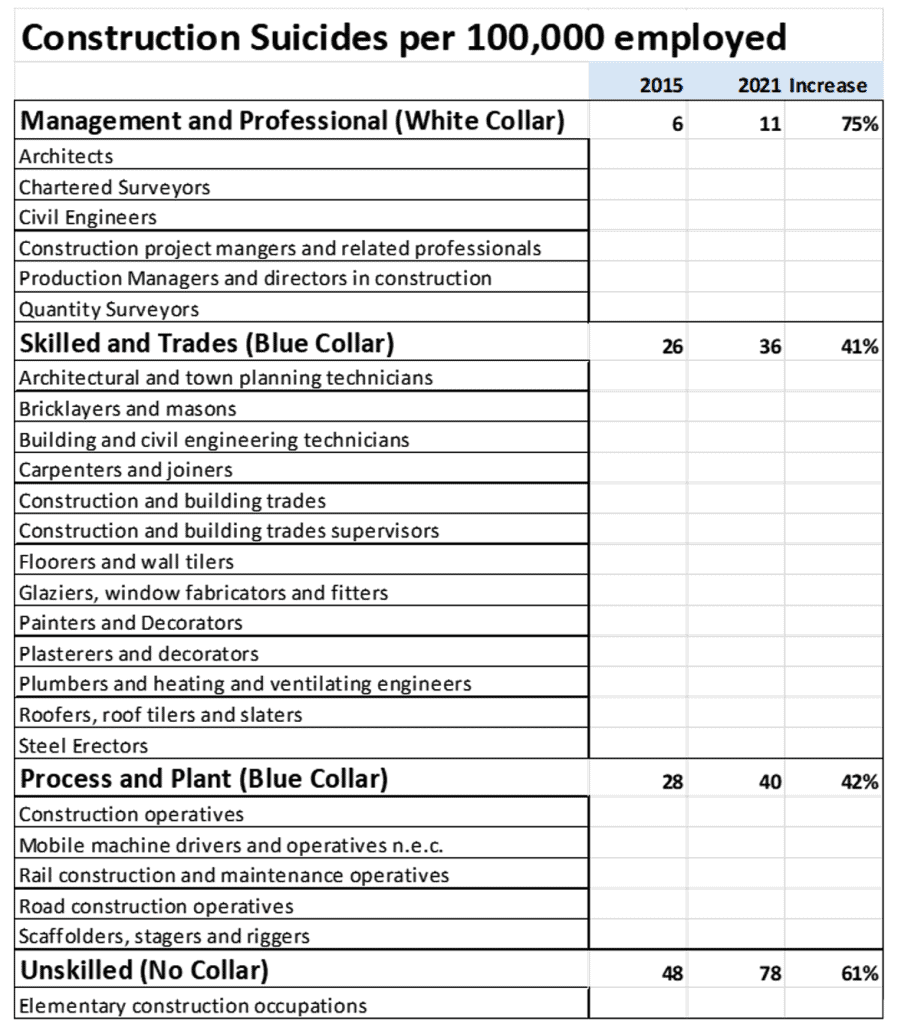
The number of suicides attributed to construction occupations in 2021 was 507, most of which are male (503). This figure constitutes a rise of 24 from the previous year and 25 more than the previous five year average and equates to 34 per 100,000 in employment. This is the highest rate since analysis of this data began at GCU.
The research identified that the number of suicides in construction rose from 26 to 34 per 100,000 in the seven years to 2021. It is often quoted that suicides within construction are three times that of the national industry average. Unfortunately, that figure is now nearer four times, meaning that workers in construction are nearly four times more likely to take their own lives compared to other sectors in 2021.
Professor Billy Hare of GCU said “Whilst it is unwise to react to a single year’s figures, the long-term rate of suicides is regrettably on an upward trajectory for those working in the construction industry, despite all the good work being done in recent years. This means we need to dig deeper to find and address the true root causes, and take collective action sooner rather than later.”
The summary table below shows the findings between occupational groups. In summary, every category has shown a significant increase since 2015.
 Bill Hill, CEO of the Lighthouse Construction Industry Charity said, “Over 87% of our construction workforce are male and over 50% of the sector is made up of self employed, agency staff or zero hour contract workers. Financial insecurity is a major factor for poor wellbeing in our workforce and the pandemic added greater anxiety and emotional burden.
The industry and charities like ours have made huge strides in recognising and delivering programmes to improve wellbeing but the results from 2021 simply galvanise our resolve to do more. Our messages of support are not reaching the boots on the ground. We all have a moral responsibility and an economic imperative to work together to improve the wellbeing and welfare or our workers.”
The industry is doing more than ever to recognise and address this major issue and the Construction Leadership Council (CLC) has asked the Lighthouse Construction Industry Charity and Mates In Mind Charity to work together to co-chair a major project to improve wellbeing and welfare within construction along with initiatives to accelerate universal culture change to reduce stigma, break down barriers and increase awareness of support services.
This major initiative called Make It Visible will look to unite the CITB, HSE, Supply Chain School, trade and professional bodies, clients and contractors to formulate and execute a plan of action with key deliverables and measurement to drive the change necessary to improve the wellbeing of our workforce and ultimately reduce the suicides in our industry.
In January 2023 the industry will be invited to a presentation of a study conducted by GCU looking at all the research and industry best practice on wellbeing over the last two years. The participants will be asked to vote on the priorities for the Make It Visible initiative to work on.
Sarah Meek, Managing Director of Mates in Mind said “These latest statistics demonstrate that we need to do more as an industry to prevent people reaching the point of crisis, by addressing the causes that negatively impact on one’s mental health and thereby reduce the need for safety nets.
There is much that we can do around prevention and employers should be encouraged to view their responsibility around this across their total workforce including their supply chain who, from our research earlier this year, have shown to be working with severe levels of anxiety. With positive moves already beginning which sees mental health starting to feature in frameworks, we must continue building on this and encourage conversations around how contracts are both procured and awarded to address some of the factors that can have such a detrimental effect.”
The full report can be downloaded here : Construction project risk & value management | Glasgow Caledonian University | Scotland, UK (gcu.ac.uk)
Bill Hill, CEO of the Lighthouse Construction Industry Charity said, “Over 87% of our construction workforce are male and over 50% of the sector is made up of self employed, agency staff or zero hour contract workers. Financial insecurity is a major factor for poor wellbeing in our workforce and the pandemic added greater anxiety and emotional burden.
The industry and charities like ours have made huge strides in recognising and delivering programmes to improve wellbeing but the results from 2021 simply galvanise our resolve to do more. Our messages of support are not reaching the boots on the ground. We all have a moral responsibility and an economic imperative to work together to improve the wellbeing and welfare or our workers.”
The industry is doing more than ever to recognise and address this major issue and the Construction Leadership Council (CLC) has asked the Lighthouse Construction Industry Charity and Mates In Mind Charity to work together to co-chair a major project to improve wellbeing and welfare within construction along with initiatives to accelerate universal culture change to reduce stigma, break down barriers and increase awareness of support services.
This major initiative called Make It Visible will look to unite the CITB, HSE, Supply Chain School, trade and professional bodies, clients and contractors to formulate and execute a plan of action with key deliverables and measurement to drive the change necessary to improve the wellbeing of our workforce and ultimately reduce the suicides in our industry.
In January 2023 the industry will be invited to a presentation of a study conducted by GCU looking at all the research and industry best practice on wellbeing over the last two years. The participants will be asked to vote on the priorities for the Make It Visible initiative to work on.
Sarah Meek, Managing Director of Mates in Mind said “These latest statistics demonstrate that we need to do more as an industry to prevent people reaching the point of crisis, by addressing the causes that negatively impact on one’s mental health and thereby reduce the need for safety nets.
There is much that we can do around prevention and employers should be encouraged to view their responsibility around this across their total workforce including their supply chain who, from our research earlier this year, have shown to be working with severe levels of anxiety. With positive moves already beginning which sees mental health starting to feature in frameworks, we must continue building on this and encourage conversations around how contracts are both procured and awarded to address some of the factors that can have such a detrimental effect.”
The full report can be downloaded here : Construction project risk & value management | Glasgow Caledonian University | Scotland, UK (gcu.ac.uk)
 Bill Hill, CEO of the Lighthouse Construction Industry Charity said, “Over 87% of our construction workforce are male and over 50% of the sector is made up of self employed, agency staff or zero hour contract workers. Financial insecurity is a major factor for poor wellbeing in our workforce and the pandemic added greater anxiety and emotional burden.
The industry and charities like ours have made huge strides in recognising and delivering programmes to improve wellbeing but the results from 2021 simply galvanise our resolve to do more. Our messages of support are not reaching the boots on the ground. We all have a moral responsibility and an economic imperative to work together to improve the wellbeing and welfare or our workers.”
The industry is doing more than ever to recognise and address this major issue and the Construction Leadership Council (CLC) has asked the Lighthouse Construction Industry Charity and Mates In Mind Charity to work together to co-chair a major project to improve wellbeing and welfare within construction along with initiatives to accelerate universal culture change to reduce stigma, break down barriers and increase awareness of support services.
This major initiative called Make It Visible will look to unite the CITB, HSE, Supply Chain School, trade and professional bodies, clients and contractors to formulate and execute a plan of action with key deliverables and measurement to drive the change necessary to improve the wellbeing of our workforce and ultimately reduce the suicides in our industry.
In January 2023 the industry will be invited to a presentation of a study conducted by GCU looking at all the research and industry best practice on wellbeing over the last two years. The participants will be asked to vote on the priorities for the Make It Visible initiative to work on.
Sarah Meek, Managing Director of Mates in Mind said “These latest statistics demonstrate that we need to do more as an industry to prevent people reaching the point of crisis, by addressing the causes that negatively impact on one’s mental health and thereby reduce the need for safety nets.
There is much that we can do around prevention and employers should be encouraged to view their responsibility around this across their total workforce including their supply chain who, from our research earlier this year, have shown to be working with severe levels of anxiety. With positive moves already beginning which sees mental health starting to feature in frameworks, we must continue building on this and encourage conversations around how contracts are both procured and awarded to address some of the factors that can have such a detrimental effect.”
The full report can be downloaded here : Construction project risk & value management | Glasgow Caledonian University | Scotland, UK (gcu.ac.uk)
Bill Hill, CEO of the Lighthouse Construction Industry Charity said, “Over 87% of our construction workforce are male and over 50% of the sector is made up of self employed, agency staff or zero hour contract workers. Financial insecurity is a major factor for poor wellbeing in our workforce and the pandemic added greater anxiety and emotional burden.
The industry and charities like ours have made huge strides in recognising and delivering programmes to improve wellbeing but the results from 2021 simply galvanise our resolve to do more. Our messages of support are not reaching the boots on the ground. We all have a moral responsibility and an economic imperative to work together to improve the wellbeing and welfare or our workers.”
The industry is doing more than ever to recognise and address this major issue and the Construction Leadership Council (CLC) has asked the Lighthouse Construction Industry Charity and Mates In Mind Charity to work together to co-chair a major project to improve wellbeing and welfare within construction along with initiatives to accelerate universal culture change to reduce stigma, break down barriers and increase awareness of support services.
This major initiative called Make It Visible will look to unite the CITB, HSE, Supply Chain School, trade and professional bodies, clients and contractors to formulate and execute a plan of action with key deliverables and measurement to drive the change necessary to improve the wellbeing of our workforce and ultimately reduce the suicides in our industry.
In January 2023 the industry will be invited to a presentation of a study conducted by GCU looking at all the research and industry best practice on wellbeing over the last two years. The participants will be asked to vote on the priorities for the Make It Visible initiative to work on.
Sarah Meek, Managing Director of Mates in Mind said “These latest statistics demonstrate that we need to do more as an industry to prevent people reaching the point of crisis, by addressing the causes that negatively impact on one’s mental health and thereby reduce the need for safety nets.
There is much that we can do around prevention and employers should be encouraged to view their responsibility around this across their total workforce including their supply chain who, from our research earlier this year, have shown to be working with severe levels of anxiety. With positive moves already beginning which sees mental health starting to feature in frameworks, we must continue building on this and encourage conversations around how contracts are both procured and awarded to address some of the factors that can have such a detrimental effect.”
The full report can be downloaded here : Construction project risk & value management | Glasgow Caledonian University | Scotland, UK (gcu.ac.uk)