Two men have been seriously injured after steelwork collapsed onto scaffolding erected on a town hall at a construction site in West London.
Dozens of police, fire and ambulance vehicles attended Hammersmith town hall in King Street after the incident at around 5.30pm on Wednesday.
According to reports, both men had suffered ‘life-threatening injuries and were rushed to a major trauma centre “as a priority”.
The Metropolitan police have said the men were taken to a central London hospital, and the Health and Safety Executive had been informed.
A source told Scaffmag: “The steelwork collapsed and took the scaffolding down with it, when the steelwork failed it knocked over the cherry picker the steelworkers were working on.”
It is believed that one of the steel erectors was thrown 30m from the cherry picker and the other was still attached by his harness.
The London ambulance service said: “An investigation has been launched after two men were injured after scaffolding attached to Hammersmith town hall collapsed late on Wednesday afternoon.
“Officers from the Metropolitan police attended along with firefighters.”
Over 15,000 people have downloaded CSCS Smart Check app since its launch in April.
It is already improving site safety and card checking procedures on UK construction sites. Developed by the 38 schemes displaying the CSCS logo, CSCS Smart Check allows those responsible for checking cards to verify all 2.1 million cards using one app on their smartphone or tablet.
Alan O’Neile, Head of Communications at CSCS, said: “CSCS Smart Check is the perfect solution for construction sites that do not have sophisticated card checking apparatus such as turnstiles. All you need is a mobile phone or tablet device in order to verify the qualifications and training of over 2 million construction workers in the UK.”
Since its launch, CSCS Smart Check has been downloaded over 15,000 times and is primarily used by construction site managers and gatekeepers to ensure people are qualified and have the right training for the role they do on site.
The app was designed and implemented to meet Construction Leadership Council requirements, which demand the development of a solution that uses smart technology to validate all cards displaying the CSCS logo.
Andy Reakes, chair of the app’s working group, said: “Having one app to check all physical and virtual cards at site gates, or on project entry, will continue to ensure greater efficiencies for employers and those checking cards.“CSCS Smart Check is the biggest change to site entry processes since the introduction of CSCS more than 20 years ago, so to see it already make an impact across the industry is welcomed by all involved. Clients and employers have a responsibility to ensure those working on their projects are qualified and competent and CSCS Smart Check makes it simpler than ever to undertake these essential checks.”
Currently CSCS Smart Check functions as a standalone application, incompatible with existing site entry systems such as turnstiles and desktop card readers. There is no immediate impact on existing card checking operations and employers can continue to use these systems if required.
Over the coming months, the app’s project team will reach out to employers and stakeholders to begin the process of enabling existing card checking systems to become compatible with CSCS Smart Check.
The app is free and available to download from the App Store and Google Play. For more information visit www.cscs.uk.com/smartcheck.
The Lighthouse Construction Industry Charity has announced some fantastic initiatives to coincide with Mental Health Awareness Week and is reminding everyone in construction about all of the freely available resources they offer.
The charity is launching three fantastic new masterclasses to complement the huge variety of free wellbeing masterclasses already available to anyone in construction and these can be booked now. Free New MasterclassesCrossing the line – Bullying vs Banter: Looks at what is meant by banter and when does it go too far and become bullying.
Taking Control -Drugs & Alcohol: The importance of why and how organisations carry out regular testing on their employees and the physical and mental effects of drugs and alcohol.
Promoting Happiness: Introduces happiness habits and provides an understanding of how to develop your attitude and improve your mindset.
As well as announcing their new masterclasses, the charity has also launched their Road to Wellbeing package as part of their Company Supporters programme. As from 1st May all Company Supporters will be able to access as many scheduled online mental health courses as they wish, completely free of charge. This even includes MHFA England approved Mental Health First Aider Courses.
Free Mental Health Training
MHFA England Mental Health Awareness ½ day
MHFA England First Aid Course 2 day
Managing Mental Health in the Workplace – 1 day CPD accredited
Company Supporters will now also have access to additional support including, a dedicated resources hub, wellbeing champion training and critical incident response.
Bill Hill, CEO of the Lighthouse Construction Industry Charity said, “There’s always a huge focus of activity around Mental Health Awareness Week which is fantastic, but with two construction workers taking their own life every single working day, we need to do more. We understand that for many companies, creating and delivering initiatives to improve workforce wellbeing can be difficult, time consuming and costly, so we want to make things as simple as possible. Our Road to Wellbeing package underpins our commitment to ensure that everyone has easy access to a variety of pro-active resources to support every level of an organisation, from site operatives through to senior management.”
Throughout Mental Health Awareness Week the charity will also be posting industry-relevant statistics on mental health across their social media channels and their website to signpost to their core charitable services.
Five core charitable services available to everyone in the industry for free
24/7 Construction Industry Helpline offering free and confidential emotional, physical and financial wellbeing support with translation services for those that need extra support.
Construction Industry Helpline Self Support App which complements the helpline and signposts to over 3000 accredited organisations offering specialist support.
Free text HARDHAT service that gives immediate access to text back counselling
Lighthouse Beacons. 160 volunteer centres across the country that offer a safe place to meet in a confidential environment.
CPD accredited Wellbeing Masterclasses covering topics such as Managing Stress, Building Resilience and Financial Management to name just a few.
If you need help or support now, or know someone that does, you can access free and confidential support 24/7 via:
Construction Industry Helpline on UK 0345 605 1956 / ROI 1800 939 122,
Or text HARDHAT to 85258 (UK) or 50808 (ROI)
Altrad has successfully raised a new €2.4 billion financing package to refinance existing facilities and strengthen its liquidity.
Industrial services giant Altrad has raised the new €2.4 billion financing package to refinance its existing debt facilities, finance future acquisitions and additional general working capital needs.
The firm said today the financing package put in place is composed of a mix of Term Loans, Acquisition & Capex and RCF facilities.
Based in France, Altrad offers high value-added solutions, mainly in the energy, power generation, process, oil and gas, environment and construction markets.
Its multi-disciplinary activities include engineering, mechanical works and projects as well as specialist services, access solutions, insulation and coatings. The Group is also a leading manufacturer of equipment for construction.
Altrad’s success is in part a product of its growth strategy and strong capacity for integration and transformation. Following major acquisitions between 2015 to 2017 (Hertel, Prezioso and Cape, adding c.€2 billion in revenue) and a significant number of acquisitions already announced in 2021/2022 (11 acquisitions adding c.€1,3 billion in diversified, recurring revenue streams), Altrad will turn over approximately €4,1 billion and employ 55,000 people worldwide.
This financing package consolidates numerous prior loans and provides a stable financial platform for Altrad’s continued growth plans, supported by its long-term relationship with banks and the introduction of new banks into Altrad’s banking pool.
The financing was provided by BNP Paribas, Crédit Agricole CIB and Natixis CIB acting as Coordinators and Mandated Arrangers & Bookrunners. CIC, HSBC and Société Générale acted as Mandated Arrangers & Bookrunners and Arkéa, Commerzbank, Crédit Agricole, Crédit Lyonnais, Crédit Mutuel, JP Morgan and La Banque Postale acted as Arrangers. Natixis CIB is Agent of the facilities.
Founder and President, Mohed Altrad, and Group co-CEO Ran Oren said: “We have always valued our relationships with our financial partners and we are delighted that both existing and new banks have demonstrated their trust in the Group through this new financing package. We wish to thank all participating banks for their support. Altrad is now well-positioned to continue its relentless focus on operational performance and will continue to pursue its acquisition strategy in order to create value and diversify its services and products offering.”
A scaffolder who suffered a severe electric shock on-site in West Auckland, New Zealand has come off life support despite suffering horrific injuries.
Jahden Nelson, 28, remains in ICU at the Middlemore Hospital having suffered severe burns, the amputation of both arms and failing kidney’s requiring dialysis every two days.
Jahden is now breathing by himself and only recently opened his eyes oblivious to his injuries, though it’s thought medical staff would quickly inform him of the situation. The highly skilled scaffolder has undergone daily operations since the accident to remove burnt tissue and ward off infection.
Still in a critical condition, it seems he now faces months of recovery and even years of rehabilitation due to the seriousness of his injuries.
It’s thought he was holding a steel scaffolding tube when it touched low-hanging overhead lines. Witnesses saw a “fireball” erupt following a loud explosion when the electric current tore through Nelson’s body before he collapsed.
Jahden Nelson, 28, has had both arms amputated.
His Mother, Toni Paikea whose been sleeping in the hospital car park revealed her son received a severe electric shock as he took the entire voltage of the power line. She also explained he suffered a heart attack on-site after the incident.
She told the media: “He’s got severe burns throughout his body and both arms have now been amputated. He’s going into the operating theatre again today, as doctors are looking for burnt fibres which have remained in his internal system and are causing the infections.“He’s needing support in every possible way. He’s on dialysis every second day because his kidneys are failing. I’ve offered to give him one of mine. The children – aged three, two and the youngest due to turn one this month, aren’t coping.“They want their dad home. I know they’re hurting. I can see it in their eyes. He’s a loving father, and he wears his heart on his shoulder. He’s just a beautiful, humble man.“As a parent, nothing can replace what’s lost. To have my son live through this and actually open his eyes and acknowledge me, it breaks your heart.”
Toni is demanding answers about why her son was permitted to work beneath live high-voltage powerlines without the power being disconnected at the Massey site.
Scaffmag has learned WorkSafe guidelines recommend employers identify electrical services and disconnect them if possible. A full safety analysis should also have been carried out by a certified person prior to work commencing with all workers property briefed.
The power lines company known as Vector confirmed a “close approach consent” was issued to Nelson’s employer, Supercity Scaffolding. A spokesperson said: “Vector’s role in this incident was limited to issuing a close approach consent before work began. These are issued in accordance with electricity safety standards to construction companies to provide minimum distances and safe work practices for working near power lines.“This is a standard process in the construction industry and is required for anyone working next to power lines. It identifies the minimum approach distance from lines – this is the calculated safe working distance that provides worker protection when working near power lines.”“The consent highlights the risks of working close to the lines and enables the company to work within defined areas. Once it has been issued, it is up to the company to manage within those parameters, maintaining safe distances from the power lines.“Once this has been issued, it’s up to the company to manage within those parameters, maintaining safe distances from the power lines.”
A spokesperson for Supercity Scaffolding cited they could not comment on an ongoing investigation. What’s more they wouldn’t confirm or deny the power wasn’t turned off.
They had however, offered to provide the family with food vouchers, petrol, also offering to pay for a car park at Middlemore Hospital. In fact, Vector also offered supermarket and petrol gift vouchers, worth $1000, as a social media site has raised nearly $50,000 to help them get through the crisis.
Meanwhile local MP Phil Twyford is trying to ensure the family have legal representation to make sure there’s a proper investigation into what’s happened and there’s real accountability.
Jahden’s mother added: “No money can ever erase what’s just happened.“What health and safety protocols were in place? I know, as an ex-business owner, you’re supposed to give a debrief on the work site as well as health and safety.“My son has been in the industry since he was 16. I know in my heart with his knowledge he would have thought the power lines were turned off because the lines weren’t sleeved.”
Worksafe has said as the investigation is ongoing, they could not comment any further aside from stating: “WorkSafe is investigating an incident involving a worker who suffered significant injury after contact with power lines while dismantling scaffolding.”
Scaffmag has discovered another New Zealand scaffolding company owner who does not wish to be named said: “Really it shouldn’t have happened.” “As far as we’re concerned there’s no grey area. You’re not going to put someone in the line of danger. We don’t allow workers within four metres of power cables when working. If lines were unsleeved you would expect them to have been disconnected while workers were onsite, or written confirmation provided that the site was safe.”
Toni believes the lines her son was working underneath weren’t sleeved. The investigation is continuing as Jahden begins his long battle toward recovery.
St Helens Plant has recently established a new strategic partnership with German-based system scaffolding manufacturers MJ Gerüst. Grahame Anderson reports.
When the best in automated scaffolding teams up with a diversity in solution specialist, great things are bound to happen. And in this case ‘Ringlock’ users in the UK are set to benefit from the new relationship. Why? Because St Helens Plant is the primary supplier of MJ Gerüst’s innovative system presented as Combi Metric, carrying the ability to combine with other Ringlock systems.
What’s more, the manufacturing process is fully robotic encompassing all the latest cutting-edge technology.
St Helens Plant has said they are looking forward to sharing more updates on the state-of-the-art, high-performance machinery and manufacturing processes, provided by MJ Gerüst.
A spokesperson explained: “Any type of ‘Ringlock’ currently in use or invested in, can be used in conjunction with St Helens Plant’s Ringlock (COMBI / COMBI METRIC).“For many years we have identified a common issue in the traditional system manufacturers such as Kwikstage or Cuplock.“We have the ability to ensure you have complete utilization of your stock, enabling us to convert any unusable stock back to useable product, put your assets back in use. To also ensure you get full product utilization we can assist in cutting down the product to the next usable size, again to provide full utilisation of your stock.“The great thing about St Helens Plant is we can provide a complete care package, by offering a repair and reconditioning service, alongside UK supply chain ability. This means we not only sell the equipment but also have the ability to repair and recondition damaged equipment.”
As part of a strong group of companies, MJ Gerüst, since the early 70s has specialised in the production and sales of top-quality scaffolding systems leading the market and complying with the provisions of DIN EN 74-1 and EN 12810 + EN 12811.
Their product philosophy consists not in developing new systems but in improving their overall performance. The company has a state-of-the-art automated manufacturing plant, spanned over more than 200,000 square metres. They rank among the top three of German scaffolding manufacturers
Partner company the JUNIOR-Group boasting 3,000 employees and based in the Sauerland region of Germany has seen significant growth over recent years. They recently purchased much larger premises in Plettenberg.
Back in the UK St Helens Plant are building up a large stock of fully automated manufactured Ringlock on site and in stock.
They told us: “We are in a prime position to supply, repair and recondition Ringlock of any brand for any customer. Through our new COMBI / COMBI METRIC Ringlock system customers can take advantage of competitively priced components and full systems.”
The bottom line is the creation of a complete-care, repair, replacement and supply service – for fully compatible Ringlock Systems, is set to strengthen the market.
1 of 4
It’s clear this dynamic European partnership can look forward to long-lasting success across the scaffolding industry.
www.sthelensplant.co.uk
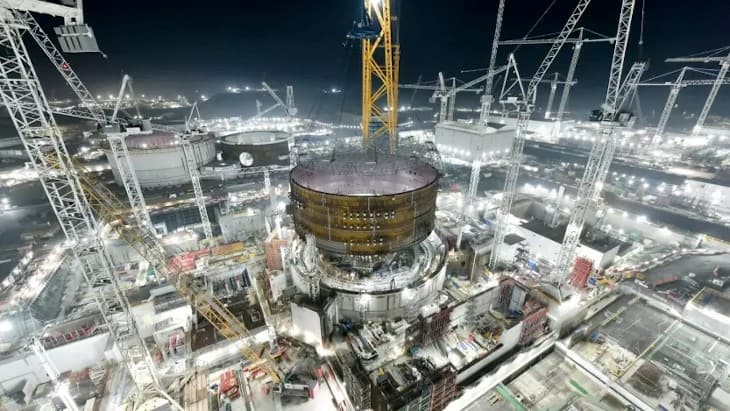
Safety Notices have been issued after a scaffold worker fell from scaffolding on the huge Hinkley Point C site under construction in Somerset.
The incident happened on 4 March when a scaffold worker fell approximately five metres but avoided serious injury.
The Office for Nuclear Regulation (ONR) found a failure to ensure the work was properly planned, appropriately supervised, and carried out safely.
It has now served Improvement notices to contractors working at the site.
The improvement notices were served on Tuesday this week to Bouygues Travaux Publics SAS and Laing O’Rourke Construction Limited, the joint venture partners in BYLOR JV, which is working on the under-construction EDF site.
The ONR established there was a failure by BYLOR to ensure that the work was properly planned, appropriately supervised, and carried out in a manner which was safe, so far as reasonably practicable.
Inspector John McKenniff said: “Thankfully on this occasion the worker did not sustain any serious injuries, but it could have been much more serious.
“We have issued this Improvement notice to ensure that both organisations take action to prevent any similar occurrences in the future.
“We will monitor the actions of BYLOR JV and will have no hesitation in taking action if further shortfalls are identified.”
A spokesperson for Hinkley Point C said: “We accept the findings of the regulator and have ensured that the shortfalls identified are addressed in order to avoid a repeat of such an incident.
“The safety of people working on our site is of paramount importance and we will continue to take action, alongside our contractor and trades union partners, in order to reinforce and improve our already strong safety culture and record.”
A spate of scaffolding accidents in Italy shows no signs of abating following the death of a 53-year-old worker near Lecce.
Oronzo Pisano, a self-employed builder, was working on a flat in Salve when he slipped and fell some six metres. Even though emergency services rushed to the scene, there was nothing they could do to save the man. The authorities there have ordered an autopsy to investigate the tragedy further.
The worrying trend also recently saw the death of a 51-year-old who was outside on scaffolding adjacent to the second floor of a property in the central Castro Pretorio area of Rome last month.
Once again, the fall proved fatal with emergency services unable to help. Safety inspectors were called within a short space of time along with police. Sadly, this followed on from another fatality at Forio, a village on the Naples Bay island. The 59-year-old was rushed to hospital but later died of his injuries.
Last September a 56-year-old man fell 10 metres from scaffolding placed on the roof of a building in Reggio Emlia. This was the 12th such accident within the course of just three days.
In fact, Scaffmag has learned more than 800 people were killed in accidents at work last year across the country, prompting the government to look closely at health and safety regulations.
During a speech in August last year Italian prime minister, Mario Draghi, said: “Among all the problems there is one thing that is dear to us all, to me in particular, and that is to try and do something to improve the unacceptable situation in terms of safety at work.”
An agreement was reached with trade unions to tighten safety regulations as well as the task of employing thousands of new health and safety inspectors.
Luigi Sbarra, the secretary of the Cisl workers union, said the implementation of measures needed to be accelerated. “Condolences and condemnation are not enough.”
The numbers of scaffolding accidents are the third largest in terms of the construction industry with much still needing to be done to ensure greater safety for workers.
In Italy, the institutional system of safety and health at work comes under the Ministry of Labour and Health, in conjunction with the Regional Coordination Committees and the social partners.
Their responsibilities include delivering advice for legislative developments, supervision, promoting health and assisting businesses.
It’s important to remember the law here in the UK requires employers and self-employed contractors to assess the risk of work at height and go on to organise and plan the work so it’s carried out safely.
Suitable precautions must be taken to prevent falls. General access scaffolds provide a means of working at height while preventing falls and should be provided whenever practicable.
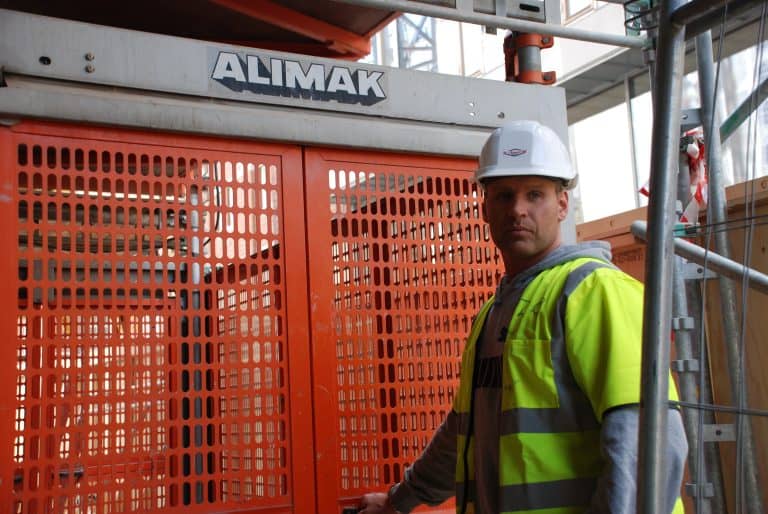
The Alimak Group is stopping all its business operations and pulling out of Russia.
Sweden based Alimak, a leading provider of vertical access solutions said, In the light of recent events and of European Union sanctions, Alimak Group has decided to exit its operations in Russia.
The latest development comes after Alimak announced in March that it was suspending all deliveries to customers in Russia and was not pursuing any new sales.
“In the light of recent developments, we have evaluated the situation and decided to exit our Russian operations. We have initiated a controlled exit process and we will do our utmost to ensure that our employees in Russia are taken care of in the best possible way during this process”, Ole Kristian Jødahl, CEO at Alimak Group said.
The Group has 15 employees in Russia. The company said the exit process will be executed with consideration toward those employees and customers.
They added that the actions are not expected to have any material impact on Group financials.
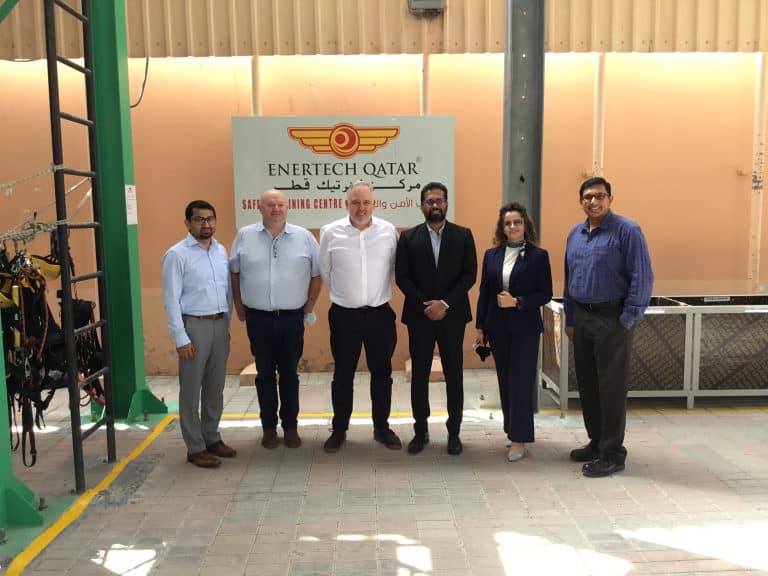
A new training partnership has been forged between Simian International and Enertech Qatar resulting in a new facility opening in Doha, Qatar.
After almost two years since its last visit to the region due to the Covid pandemic, CISRS has recently been out to the new facility and awarded it an official accreditation.
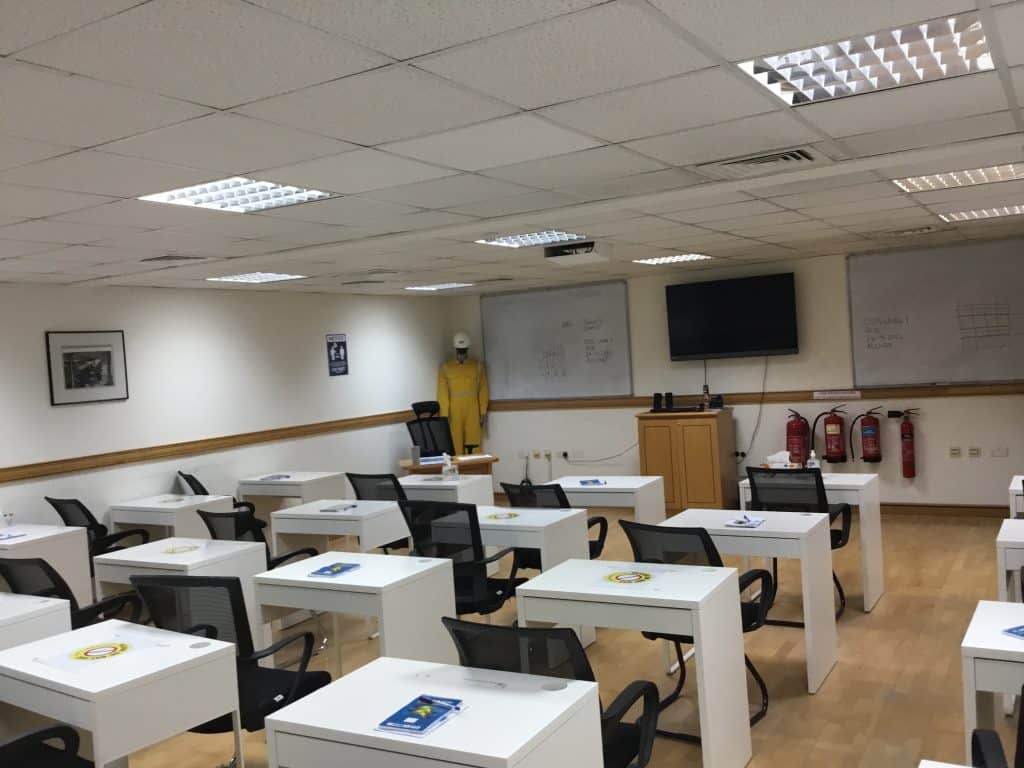
The new centre will offer CISRS OSTS Level 1, Level 2, Basic Scaffold Inspection, Advanced Scaffold Inspection and Scaffolding Supervisor courses.
Dave Mosley, CISRS Managing Director, said: “This project has been a long time in the making, due to discussions with several potential UK provider partners and then the onset of the COVID pandemic. We are very pleased to have at last had the opportunity to get out to Doha and carry out the accreditation visit.“They have done a great job with the practical area and it has been fitted out with all brand-new materials.”
Simian International will provide experienced qualified CISRS instructors to deliver the OSTS courses and it is envisaged that training will start in the next few weeks.
Simian International has an existing partnership in Qatar with local company QISC. They managed to keep their centre operating throughout the pandemic by introducing a strict set of COVID related RAMS and procedures, including social distancing, enhanced cleaning regimes and the wearing of masks.
They successfully completed their CISRS annual accreditation audit earlier in the week and continue to deliver a range of OSTS courses both at their centre and various on-site locations across the region.
Dave Mosley added: “We were concerned that the COVID pandemic may have had a negative effect on the OSTS scheme, however it continues to flourish in Qatar. There is a lot of work coming off in the oil, gas and energy sectors in the coming years and we will be pushing to ensure that scaffolders continue their training and assessment moving onto Level 2, 3 and 4.“CISRS plans to return to Qatar in the coming months to hold a seminar for clients, contractors and government officials to promote the benefits of a trained, qualified and competent workforce.”






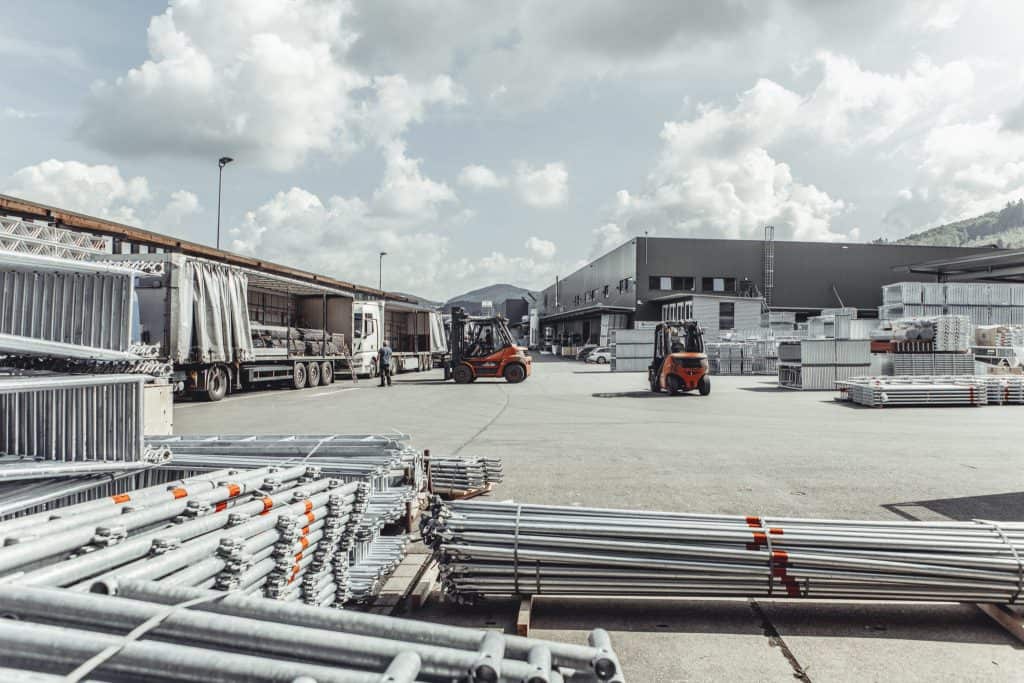 As part of a strong group of companies, MJ Gerüst, since the early 70s has specialised in the production and sales of top-quality scaffolding systems leading the market and complying with the provisions of DIN EN 74-1 and EN 12810 + EN 12811.
Their product philosophy consists not in developing new systems but in improving their overall performance. The company has a state-of-the-art automated manufacturing plant, spanned over more than 200,000 square metres. They rank among the top three of German scaffolding manufacturers
Partner company the JUNIOR-Group boasting 3,000 employees and based in the Sauerland region of Germany has seen significant growth over recent years. They recently purchased much larger premises in Plettenberg.
Back in the UK St Helens Plant are building up a large stock of fully automated manufactured Ringlock on site and in stock.
They told us: “We are in a prime position to supply, repair and recondition Ringlock of any brand for any customer. Through our new COMBI / COMBI METRIC Ringlock system customers can take advantage of competitively priced components and full systems.”
The bottom line is the creation of a complete-care, repair, replacement and supply service – for fully compatible Ringlock Systems, is set to strengthen the market.
As part of a strong group of companies, MJ Gerüst, since the early 70s has specialised in the production and sales of top-quality scaffolding systems leading the market and complying with the provisions of DIN EN 74-1 and EN 12810 + EN 12811.
Their product philosophy consists not in developing new systems but in improving their overall performance. The company has a state-of-the-art automated manufacturing plant, spanned over more than 200,000 square metres. They rank among the top three of German scaffolding manufacturers
Partner company the JUNIOR-Group boasting 3,000 employees and based in the Sauerland region of Germany has seen significant growth over recent years. They recently purchased much larger premises in Plettenberg.
Back in the UK St Helens Plant are building up a large stock of fully automated manufactured Ringlock on site and in stock.
They told us: “We are in a prime position to supply, repair and recondition Ringlock of any brand for any customer. Through our new COMBI / COMBI METRIC Ringlock system customers can take advantage of competitively priced components and full systems.”
The bottom line is the creation of a complete-care, repair, replacement and supply service – for fully compatible Ringlock Systems, is set to strengthen the market.


 Simian International has an existing partnership in Qatar with local company QISC. They managed to keep their centre operating throughout the pandemic by introducing a strict set of COVID related RAMS and procedures, including social distancing, enhanced cleaning regimes and the wearing of masks.
They successfully completed their CISRS annual accreditation audit earlier in the week and continue to deliver a range of OSTS courses both at their centre and various on-site locations across the region.
Dave Mosley added: “We were concerned that the COVID pandemic may have had a negative effect on the OSTS scheme, however it continues to flourish in Qatar. There is a lot of work coming off in the oil, gas and energy sectors in the coming years and we will be pushing to ensure that scaffolders continue their training and assessment moving onto Level 2, 3 and 4.
“CISRS plans to return to Qatar in the coming months to hold a seminar for clients, contractors and government officials to promote the benefits of a trained, qualified and competent workforce.”
Simian International has an existing partnership in Qatar with local company QISC. They managed to keep their centre operating throughout the pandemic by introducing a strict set of COVID related RAMS and procedures, including social distancing, enhanced cleaning regimes and the wearing of masks.
They successfully completed their CISRS annual accreditation audit earlier in the week and continue to deliver a range of OSTS courses both at their centre and various on-site locations across the region.
Dave Mosley added: “We were concerned that the COVID pandemic may have had a negative effect on the OSTS scheme, however it continues to flourish in Qatar. There is a lot of work coming off in the oil, gas and energy sectors in the coming years and we will be pushing to ensure that scaffolders continue their training and assessment moving onto Level 2, 3 and 4.
“CISRS plans to return to Qatar in the coming months to hold a seminar for clients, contractors and government officials to promote the benefits of a trained, qualified and competent workforce.”