West Anglia Training Association (WATA) of Huntingdon, Cambridge has become the latest training provider to gain Construction Industry Scaffolders Record Scheme (CISRS) accreditation.
Following successful completion of their CISRS accreditation audit which took place in early June, WATA can now offer the following courses: CISRS Part 1 Scaffolding, CISRS Operative Training Scheme (COTS), Basic Scaffold Inspection Training Scheme (SITS), and they are also looking to offer several System product courses in the near future.
A brand new purpose built practical training area has been erected at their site at Huntingdon, Cambridgeshire. It is fitted out to the highest specification using what the experienced staff at WATA feel are the most effective and efficient ideas for layout, training structures etc. that they had witnessed whilst visiting or working at other approved training providers.
Dave Mosley CISRS Scheme Manager said:
“WATA’s commitment to the CISRS scheme is reflected in the investment and drive they put into producing this high quality facility. Only six months ago on my first visit to the proposed site it was just a field with a few rabbits running around, in the very short time since that visit they now have an excellent centre in which to deliver CISRS training.”
The other facilities within the campus are of equally high quality, the classrooms, on site canteen and welfare provision will all make for a very conducive atmosphere for learning.
WATA will also offer Scaffolding Apprenticeships, which will be welcomed by the industry as there has been very high demand for apprentice places of late.
The Centre has managed to secure some additional funding and as such are currently able to offer CISRS training at a subsided rate. For more details on this you should contact the centre directly tel. 01480 435544 or email [email protected]
Chief Executive Officer Nigel Donohue said:
“We are delighted to have gained our initial CISRS accreditation at WATA, we have a great facility here and very experienced staff and it is our intention to add to the suite of CISRS courses we offer with Part 2 and Advanced Scaffolding as soon as the scheme rules allow.”
A Carlisle scaffolding firm has been fined £15,000 after an employee was seriously injured when he fell more than six metres through a roof light.
Contract Scaffolding Services Limited was prosecuted by the Health and Safety Executive (HSE) following the incident at a factory in Dalston, Cumbria, on 22 February 2013.
Carlisle Magistrates’ Court heard the company had been sub-contracted to fit edge protection around the roof of a building, to allow its removal ahead of the building’s demolition.
The 23-year-old trainee scaffolder, from Carlisle, who does not want to be named, was part of a four-strong team carrying out the work. He was wearing a harness, but this was not clipped onto anything at the time of the incident.
He was working on the roof and as he tried to walk past one of his colleagues, he stepped onto a roof light which gave way, causing him to fall through it.
As he fell, he struck parts of the internal steel structure of the building, causing severe cuts to his face and head, before hitting the concrete floor more than six and a half metres below and shattering his knee cap into 12 pieces. As a result of his injuries, he is no longer able to carry out manual work.
The court was told that although Contract Scaffolding Services Ltd had prepared a scaffolding plan, method statement and risk assessment prior to starting the work, it did not mention the presence of the fragile roof lights.
The scaffolding plan stated that workers would initially work from a cherry picker or scissor lift and that once a single handrail was installed they would gain access onto the roof.
This would prevent falls from the edge but offered no protection from a fall through the roof lights, which ran at four metre intervals and left less than half a metre of usable space where the scaffolders were working.
The plan made no mention of the need to wear a harness when working on the roof and the court heard that although the injured worker was issued with a harness, at five feet the lanyard was so long that even if it had been clipped onto the scaffolding it would not have stopped him falling through the roof lights due to their position.
Contract Scaffolding Services Limited, of Carleton Depot, London Road, Carlisle, was fined £15,000 and ordered to pay £920 costs after pleading guilty to breaching Section 2(1) of the Health and Safety at Work etc Act 1974 and Regulation 9(1) of the Work at Height Regulations 2005 on 18 June 2014.
Speaking after the hearing, HSE Inspector Martin Paren said:
“A worker at Contract Scaffolding Services Ltd has suffered injuries that could affect him from the rest of his life purely because the company failed to make sure its employees were safe.
“The risk of falling through fragile roof lights is well known in the industry but the risk assessment carried out by the company in this case failed to highlight their presence and to ensure a safe system of work was in place to prevent falls.
“A fall from a height of more than six metres could have been fatal. As it is, this young man has suffered serious injuries which could have easily been avoided because his employer failed in its duty to ensure his safety.”
The NASC has launched its 2014 Safety Report which documents the statistics for scaffolding accidents for all (201) NASC full contracting member companies in 2013, covering some 13,749 operatives (estimated to be around 75% of the UK’s total scaffolding operatives).
The report is being distributed from the NASC stand at the UK’s largest health and safety event, the S&H Expo at London ExCeL, from June 17-19. The report is also available for download from www.nasc.org.uk/safety_reports and hard copies are being sent out to all NASC full and information members and construction industry contacts.
All NASC full contracting members are required to submit a completed annual accident return form as part of the NASC membership criteria. The NASC Safety Report is based on data generated by this exercise:
Injuries and fatalities to operatives, members of the public and third parties
Accident causes and types
Detailed analysis of accidents
Comparison of HSE/NASC accident statistics
What the NASC does to support safe scaffolding practice
In line with current HSE reporting procedures, the 2014 Safety Report now reports on 7 day incidents only. As such, the 2014 report appears to show a marked reduction in incidents, when compared with 3 day reporting, as detailed in the 2013 Safety Report, and previous years.
There were no fatalities to operatives in 2013, although 30 major injuries were reported, and the total number of 7-day injuries was 66.
The 2014 NASC Safety Report showed that there were 15 falls from height in 2013, with the highest reported fall being from 5m. Six reported falls were from scaffolds or working platforms, five of which were from under 4m, with one fall at 4m or above.
The report also highlights that slips, trips and falls (STF) on the same level were the major cause of accidents in 2013, followed by manual handling, falls from height, and falls of materials. This is the tenth consecutive year that STF accidents have been the major cause of injury, amounting to nearly 43% of all injuries reported.
Manual handling injuries have increased from 9 in 2012 to 17 in 2013, which is an increase of nearly 89%. The NASC is keen to reduce this trend, in line with its guidance ‘SG6:10 Manual Handling In the Scaffolding Industry’ and associated publications ‘SG6 training DVD’ & ‘SG6 User Guide’ (both published by NASC in 2013).
When incident and accident figures are analysed by grade of operative, scaffolders suffered the largest number of accidents across all age ranges, totalling 46 (48%). This was followed by trainees 22, labourers 14, advanced scaffolders 7, supervisors 1, drivers 3 and managers 3.
The NASC has identified an increase in the number of 7 day incidents involving trainees in 2013. This is currently under investigation by the NASC Health & Safety Committee.
The highest number of accidents occurred in the 21-30 age group (42%), followed by the 31- 40 age group (18%) which means that these two groups accounted for nearly 60% of all accidents.
Overall the most common injury was a fracture of the hand, fingers and wrists(13%), followed by a fracture of the feet, toes & ankles (10%), sprain to the feet, toes & ankles (8%) and strain to the back.
NASC President, Kevin Ward said:
“It is without doubt welcome news that the long term trend of NASC member companies in terms of standards of safety performance continues to show improvement. This fact backed up by data collated in the NASC annual safety reports is the overriding factor that translates to the coalface, resulting in year on year reductions in not only minor & major accidents but also unnecessary fatalities of scaffolder operatives, third party labour utilising scaffolding structures, and other parties such as members of the public who can also be affected by the activities of scaffolding contractors.”
Adrian Rooney, Chairman of the NASC Health and Safety Committee, said:
“The NASC Safety Report shows yet again that the efforts and commitment shown by its member companies, and above all those who work on NASC committees and groups to produce safety guidance, training and associated literature, are succeeding.
“We have, once again, seen a fall in overall figures for accidents/incidents, despite an increase in the number of operatives. But most heartening is the correlation between member figures and those for our industry as a whole, which shows that NASC members continue to outperform the industry.
“The NASC Health and Safety Committee works tirelessly to produce best practice guidance for the industry which is accepted as a major contribution towards making our industry safer for all.”
NASC Managing Director, Robin James added:
“Once again, the annual NASC Safety Report has revealed interesting and positive statistics and provided engaging analysis, which can be used to help raise standards and levels of safety in the scaffolding and access industry. The rise in manual handling injuries and injuries to trainees is being looked at closely, and we will be encouraging members to work towards reducing these figures immediately.”
The NASC has launched a Google Android App version of its TG20:13 eGuide, which will provide a mobile, digital good practice guide for tube and fitting scaffolding.
The new App, which is compatible with all Android platform devices, was developed in conjunction with TG20:13 technical authors CADS, the App can be downloaded following this link –TG20:13 eGuide Android Installation
Owners of the full suite of TG20:13 publications will now have the option to install the eGuide onto a PC or a laptop, or install it onto their mobile android device.
The new eGuide App can be used offline, making it ideal for remote site work away from 4G, 3G or Wifi services. Any TG20:13 reports generated by the Android app can be quickly and easily shared to the cloud via third party App’s such as Dropbox, ensuring the workforce and customers are kept fully up to date.
Development of the App has taken several months and will add a further dimension to the full suite of TG20:13 publications.
Terry Roberts of CADS said:
“Scaffolders now have TG20:13 literally at their fingertips. TG20:13 has gone mobile. This is an example of the NASC delivering essential new guidance in a user friendly format to where it is needed most – on site.”
NASC Managing Director, Robin James said:
“We’re very excited to have the Android App version of the TG20:13 eGuide available to download. It will be a massive help to our 200+ contracting members and to the wider construction sector as a whole, and will help to raise industry standards.
“The aim of the TG20:13 eGuide App is to widen the reach of this new technical guidance, allowing more users to operate the innovative TG20:13 eGuide on site, assisting with speedy generation of TG20:13 compliance sheets, and helping to make scaffolding sites safer and compliant across the UK.”
London based JOS Scaffolding Limited was prosecuted on the strength of the photographic evidence and a subsequent HSE investigation into safety failings.
Carefree scaffolders put themselves and passers-by in danger as they worked unsafely at height above a busy Covent Garden street, a court has heard.
A nearby member of the public was so concerned about an imminent fall in Tavistock Street on 20 June 2013 they captured the work on camera and sent the images to the Health and Safety Executive (HSE).
Westminster Magistrates Court heard the firm was responsible for erecting a five-storey scaffold that was some ten metres above street level once complete.
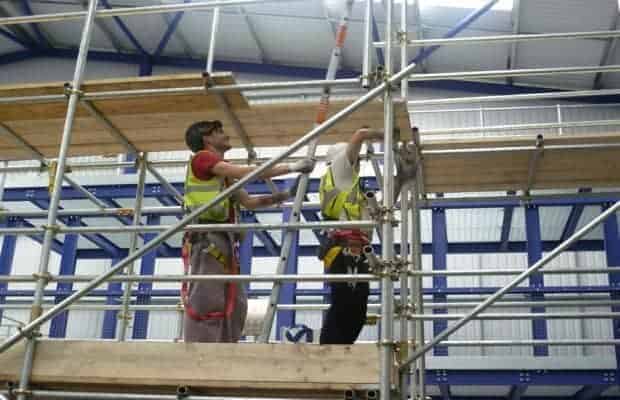
The unsafe work was during the initial construction phase as the structure took shape. Pictures showed workers using unsecure and precariously balanced boards to access and pass materials to higher levels. They also showed a worker sitting near the top of the structure casually dangling his legs over the side.
Magistrates were told there was nothing in place at this point of the work to prevent or mitigate a fall of persons or equipment or materials. This in turn put anyone walking underneath or alongside the scaffold at risk.
HSE established the work was poorly planned and managed, and that two of the three-man team erecting the scaffold were lacking training and accreditation to prove their competence.
In short, the work fell well below the legally required standard – although both HSE and the court acknowledged that efforts had been made to improve standards once the failings were brought to the company’s attention.
JOS Scaffolding Limited, of Gray’s Inn Road, London, WC1, was fined a total of £5,000 and ordered to pay £734 in costs after pleading guilty to two breaches of the Work at Height Regulations 2005.
After the hearing, HSE Inspector Andrew Verrall-Withers commented:
“Scaffolding work is fraught with risk and can be extremely dangerous if it isn’t carried out properly. The standards here were sorely lacking and the photographic evidence speaks for itself in terms of the risks taken.
“None of the missing measures, such as guard rails and secured boards and ladders, were difficult to provide, and there was no excuse. “It isn’t just the workers themselves who could end up getting seriously hurt or killed. People should be able to walk along a pavement without having to worry about a piece of scaffold slipping from the hands of an overhead worker.
“Thankfully nobody was injured, but that doesn’t detract from JOS Scaffolding failing to ensure the work at height was properly planned, managed and executed in a safe manner. I would like to thank the concerned member of the public who brought the matter to our attention and who provided such clear visual evidence.”
The Construction Index has reported that Scaffolding firm Altrad Beaver 84 has acquired Star Events Group for a seven figure sum.
Star Events Group supplies temporary structures, staging and rigging services to the events sector, a market that Beaver 84 had been targeting.
Star Events becomes a subsidiary of Altrad Beaver 84 but will stay based at its own Bedford premises.
Star Events director Roger Barrett said:
“For some time now we have been aware of the need for substantial investment to ensure our industry leading status. This deal puts us in a position to maintain everything that works so well within the company, coupled with the commercial strength of the Altrad Group.”
Four of Star Events’ management retain their shares in the company and get new job titles: Roger Barrett becomes special projects director; Celine Watson-Lamb is operations director; Pete Holdich is head of structures; and Jane Russen is sales & client liaison executive.
Altrad Beaver 84 managing director Steve Tysoe has taken on the role of managing director at Star Events as well. He said:
“This acquisition forms part of our growth strategy in the events sector, which already uses a number of products that are made by Altrad Group businesses. Star Events’ portfolio of ingenuity, expertise and equipment is unsurpassed and I look forward to helping the company realise its considerable contemporary ambition.”
CADS launch latest update to SMART Scaffolder business software with some great new features.
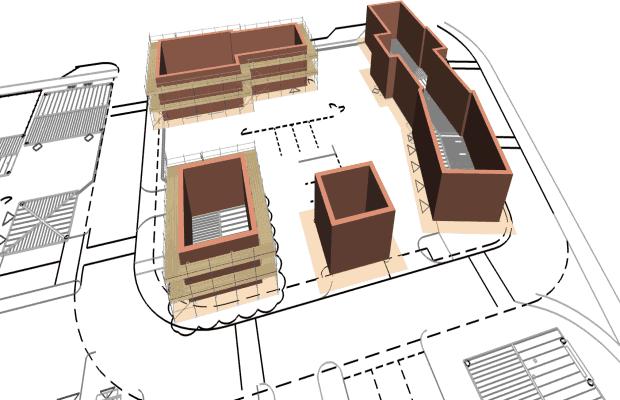
Fresh on the heels of the TG20:13 work undertaken by CADS on behalf of the NASC, their versatile SMART Scaffolder business software continues to grow. The latest update introduces some handy new functionality. SMART Scaffolder v5.3 contains many new exciting features, not least of which is the ability to bring 2D site plans in to the software and with a few clicks model entire scaffolding structures! In addition, with many clients responding to the government drive for BIM adoption, SMART Scaffolder now enables the creation and export of 3D files compatible with software such as Autodesk Revit, Navisworks and structural design and analysis software such as Scia Engineer. BIM stands for Building Information Modelling, the design technology that is sweeping the construction industry by storm! The new BIM Toolbox module helps SMART Scaffolder users share their 3D models with their customers. Users can exploit the increased productivity and improved communication benefits of 3D BIM modelling now; with this powerful fully integrated module for SMART Scaffolder! BIM Toolbox features: Import of 2D Files
Import 2D CAD files in DXF, DWG and PDF file formats.
Quickly position scaffolds over site layouts and existing buildings.
Quickly trace over building outlines helped by a ‘Intersection Snap’ tool.
Easily manipulate and scale the imported drawing to suit.
Filter out unwanted information by switching off layers and colours.
Export of 3D Files
Provide customers with 3D IFC files they can use in Revit etc.
Export 3D IFC files for import into Structural Engineering software.
If you wish to learn more there is more information including a great video illustrating the import of a 2D site plan and modelling of a scaffold on the SMART Scaffolder website. Just visit www.smartscaffolder.com/bimtoolbox to learn more about BIM, IFC files and BIM Toolbox. CADS is also holding two FREE seminars in June. These will be in Nottingham 11th June and Hull 17th June, with registration open now. For further information contact: Email: [email protected] Tel: 01202 603031 Web: www.smartscaffolder.com
A family run Kent based scaffolding firm will be raising money for our wounded servicemen, women and veterans in the 2014 Hero Ride.
Mercer Scaffolding are proud to announce their participation in the 2014 Hero Ride on 8th June. The signature event is hosted by the Help For Heroes charity and raises money for our wounded servicemen, women and veterans.
The Mercer Team has organised its own 30 mile bike ride, from its yard in Longfield to the meeting point at Blackheath Common. We’d love for you to join us on this special occasion and bring your friends along. To add to the challenge and as a token of respect we’ve built a scaffold tower fixed to a bike trailer, which will be shared voluntarily between riders along the route. At the meeting point in Blackheath, over 2000 riders will come together and make their way 10 miles into Central London, after completing their own Hero Rides from different parts of the UK. To mark this occasion riders will then gather at the Cenotaph for a ceremony, before falling into formation for the finale along the Horse Guards Parade.To donate please visit: http://www.bmycharity.com/Mercerscaffolding
For more information please visit: http://www.mercerscaffolding.com/hero-ride-2014.html
A scaffolding firm and the owner of a roofing company have been fined after a worker suffered serious injuries when he plunged nine metres through a fragile warehouse roof in Northampton.
Labourer Stephen Allibon was walking on fragile asbestos cement sheeting during roofing work on 13 August 2012 when it gave way beneath him. He fell onto a metal pallet and then the concrete floor.
He sustained three fractures to his right arm, multiple fractures to his face and head, a punctured lung, damage to his chest and a severe gash to his right leg.
Mr Allibon, who is still unable to work, now has reduced movement in his right arm and right leg, numbness in his left arm, and suffers chest problems and dizzy spells.
His employer, Beekay Scaffolding Ltd, and contractor William Thomas Toone, trading as Industrial Roofing Services (IRS), were both prosecuted by the Health and Safety Executive (HSE) after an investigation identified they had both failed to make sure the work was carried out safely.
Northampton Magistrates’ Court heard today (19 May) that Beekay had been contracted by IRS to erect scaffolding for a warehouse roof repair in Watford village.
Repair work to the roof was planned in two stages. Protective nets and scaffolding were put in place to the south side to allow repairs to take place there before being moved to the north side to complete the work.
However, poor management meant that when Mr Allibon was moving scaffolding tubes from the south side of the roof, there was no edge protection and no netting remaining under the perimeter of the roof where he was walking, nor were the scaffolders using platforms of any kind.
HSE found that both companies had agreed safety precautions in advance of the work but both had failed to ensure they were implemented properly during the course of the work, exposing the workers to extreme risk.
Beekay Scaffolding Ltd of Obelisk Rise, Kingsthorpe, Northampton, was fined £6,000 and ordered to pay costs of £2,640 after admitting two breaches of the Work at Height Regulations 2005 and a single breach of the Construction (Design and Management) Regulations 2007.
William Thomas Toone, trading as Industrial Roofing Services (IRS), of The Leys, Roade, Northampton, was fined £2,500 and ordered to pay costs of £1,400 after pleading guilty to a breach of the Health and Safety at Work etc Act 1974.
Speaking after the hearing, HSE Inspector Richard Lockwood said:
“Mr Allibon suffered very serious injuries, but we could easily be talking about a fatal incident. Simple, straightforward, common sense procedures could have prevented this fall and the severe consequences it has had for one worker and his family.
“Both IRS and Beekay Scaffolding fell very far short of a safe and reasonable standard. They were clearly informed of the dangers. If properly used, the precautions would have reduced the risk to a minimal level.
“The dangers of working at height are well-known in industry, yet workers still die or are permanently disabled because of the poor safety standards and lack of safeguards that still exist among some contractors.
“It is essential that the hazards associated with working at height are recognised and understood by those carrying out the work.”
CISRS have announced that they are very excited about the positive response CISRS scaffolding training is receiving within the Middle East region.
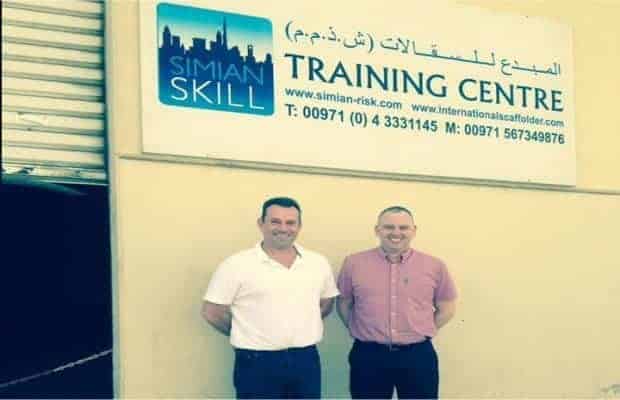
Having recently returned to the UK after carrying out successful annual accreditation visits to two CISRS providers – Safety and Access Middle East in Ajman and Simian Skills in Dubai – CISRS have announced that they are very excited about the positive response CISRS scaffolding training is receiving within the region.
Whilst both training providers have only been in operation for a 12 month period, several hundred delegates have now undertaken CISRS Overseas Scaffolder Training Scheme (OSTS) courses. These have included Level 1 Scaffolder, Basic Scaffold Inspection and Scaffolding Supervision.
Although scaffolding training is not necessarily a new thing in this region it is only in recent times that clients and contractors are beginning to question the suitability, course content and duration of some of the previously available courses.
The introduction of the CISRS scheme is seen as a massive step forwards in improving the safety and quality of scaffolding erected on site. As such, many of the major players within the region are looking to implement a scheme which reflects UK standards.
Dave Mosley (CISRS Scheme Manager) said:
“I feel that there are great opportunities for the CISRS scheme within the Middle East, as there is a vast amount of work in both construction and the booming oil and gas sectors. Both CISRS providers in the Middle East are making excellent progress with some very important clients. It would be amazing to think that in the not too distant future CISRS could become the qualification of choice for the scaffolding sector within this region.“
The reputation of the CISRS scheme is beginning to grow – with requests for CISRS training coming from all around the Middle East. CISRS training has already taken place in Abu Dhabi and Bahrain, and just to emphasise the point that things are starting to happen, Safety and Access Middle East has just gained approval for a new CISRS centre in Ras Laffan in Qatar, where they are supporting QATAR Petroleum with their scaffolding training requirements. Primarily they are looking for Scaffolding Supervisor and Scaffolding Inspection training, but there is scope at the centre through further development to cover the full range of courses.
CISRS will be looking to return to the region later in the year for a promotional visit and to meet with further interested parties.
We use cookies on our website to give you the most relevant experience by remembering your preferences and repeat visits. By clicking “Accept”, you consent to the use of ALL the cookies.
This website uses cookies to improve your experience while you navigate through the website. Out of these, the cookies that are categorized as necessary are stored on your browser as they are essential for the working of basic functionalities of the website. We also use third-party cookies that help us analyze and understand how you use this website. These cookies will be stored in your browser only with your consent. You also have the option to opt-out of these cookies. But opting out of some of these cookies may affect your browsing experience.
Necessary cookies are absolutely essential for the website to function properly. These cookies ensure basic functionalities and security features of the website, anonymously.
Cookie
Duration
Description
cookielawinfo-checbox-analytics
11 months
This cookie is set by GDPR Cookie Consent plugin. The cookie is used to store the user consent for the cookies in the category "Analytics".
cookielawinfo-checbox-functional
11 months
The cookie is set by GDPR cookie consent to record the user consent for the cookies in the category "Functional".
cookielawinfo-checbox-others
11 months
This cookie is set by GDPR Cookie Consent plugin. The cookie is used to store the user consent for the cookies in the category "Other.
cookielawinfo-checkbox-necessary
11 months
This cookie is set by GDPR Cookie Consent plugin. The cookies is used to store the user consent for the cookies in the category "Necessary".
cookielawinfo-checkbox-performance
11 months
This cookie is set by GDPR Cookie Consent plugin. The cookie is used to store the user consent for the cookies in the category "Performance".
viewed_cookie_policy
11 months
The cookie is set by the GDPR Cookie Consent plugin and is used to store whether or not user has consented to the use of cookies. It does not store any personal data.
Functional cookies help to perform certain functionalities like sharing the content of the website on social media platforms, collect feedbacks, and other third-party features.
Performance cookies are used to understand and analyze the key performance indexes of the website which helps in delivering a better user experience for the visitors.
Analytical cookies are used to understand how visitors interact with the website. These cookies help provide information on metrics the number of visitors, bounce rate, traffic source, etc.
Advertisement cookies are used to provide visitors with relevant ads and marketing campaigns. These cookies track visitors across websites and collect information to provide customized ads.







 Scaffolder, Basic Scaffold Inspection and Scaffolding Supervision.
Although scaffolding training is not necessarily a new thing in this region it is only in recent times that clients and contractors are beginning to question the suitability, course content and duration of some of the previously available courses.
The introduction of the CISRS scheme is seen as a massive step forwards in improving the safety and quality of scaffolding erected on site. As such, many of the major players within the region are looking to implement a scheme which reflects UK standards.
Dave Mosley (CISRS Scheme Manager) said:
Scaffolder, Basic Scaffold Inspection and Scaffolding Supervision.
Although scaffolding training is not necessarily a new thing in this region it is only in recent times that clients and contractors are beginning to question the suitability, course content and duration of some of the previously available courses.
The introduction of the CISRS scheme is seen as a massive step forwards in improving the safety and quality of scaffolding erected on site. As such, many of the major players within the region are looking to implement a scheme which reflects UK standards.
Dave Mosley (CISRS Scheme Manager) said: