TRAD Hire & Sales Ltd introduces their innovative Plettac METRIX system scaffold and ALTRIX temporary roof system to their Andover Depot

Following a series of highly successful open days throughout the UK showcasing their innovative Plettac METRIX system scaffold to industry professionals, TRAD Hire & Sales Ltd, the UK’s leading scaffold supplier, have now launched the system in their Andover Depot, along with their new temporary roof system, ALTRIX.
The Plettac METRIX system, which is already available from several of TRAD Hire & Sales Ltd’s other depots, is a galvanised tubular system whose colour coded horizontal members are divisible along both bay length and width. This gives the system a huge advantage over other systems, massively increasing the versatility and adaptability.
A further benefit of Plettac METRIX is that the system incorporates an optional integral SG4:15 compliant Permanent Advanced Guardrail. Erected from the lift below, the guardrail allows scaffolders to erect and dismantle in complete safety.
The feedback received from the industry is positive, scaffolding and construction firms who are already using the system are reinforcing the above benefits and quoting labour saving and significantly reduced assembly times.
Plettac use the latest 3D modelling and stress analysis software along with state-of-the-art manufacturing to produce a modern system which conforms to BS EN 12810 & 12811, has passed the NASC’s rigorous audit for the Scaffold Product Code of Practice and has CISRS approval.
Adam Whately, Operations Manager at the Andover depot, speaks about the system:
“If you want speed, safety and adaptability, you cannot better Plettac METRIX. I’m proud to be able to demonstrate it here at Andover. As you can use extra vertical members within the bay it is uniquely adaptable, meaning the scaffold appears to be specifically made for the project. It is a fantastic addition to the already first-class choice of scaffolding products we have here at TRAD Hire & Sales Ltd Andover.”
The ALTRIX Temporary Roof System is an all-aluminium weather protection system which has been designed to work with any scaffold type, but compliments Plettac METRIX perfectly.
Following the same scheme as Plettac METRIX, the components are colour-coded making them easily identifiable. Being aluminium, the components are extremely light-weight; this along with Push-Fit technology enables quicker assembly times.
The ALTRIX system philosophy is “more than just a roof”; many of the components have been designed with dual roles in mind, meaning they can be used in other scaffolding applications. For example: forming gantries and bridged sections.
Following the success of the open days, TRAD Hire & Sales Ltd will be setting up a Plettac METRIX and ALTRIX demonstration area at their Andover depot for customers to view the products for themselves. The demonstration area will be a permanent fixture and anyone interested in the products are encouraged to come and experience them first hand.
Book a demonstration of the Plettac METRIX System Scaffold today at TRAD Hire & Sale’s Andover depot.
For further information on Plettac METRIX at TRAD Hire & Sales Andover, including demonstrations and technical advice, contact Adam Whatley on +44 (0)126 435 0505 or email [email protected].
Scaffolding firm fined after Scaffolder fell over 4m

An East Anglian Scaffolding firm was fined after a worker fell over four metres suffering severe injuries.
Colchester Magistrates’ Court heard how a 39 year old worker fell from the second lift of a scaffold while it was being dismantled. Mr Hemphill (39 years old) fell approximately 5m. Before striking the ground Mr Hemphill collided with the scaffolding twice before finally hitting the ground below. He sustained nine broken ribs (left side), a punctured lung, fractured skull and a fractured spleen. He spent five days in hospital and at the time of the accident was expected to have at least 3 to 4 months off work. An investigation by the Health and Safety Executive into the incident which occurred on 23 February 2015 found that there were no guard rails on the area from where Mr Hemphill was working and neither was he provided with a harness and lanyard to clip on with. As a result there was nothing to stop him from falling. SP Scaffolding (East Anglia) Limited of Gosbecks Road, Colchester, Essex pleaded guilty to breaching Work at height Regulations 2005, regulation 6(3) and were fined £8,000 with costs of £3,003. Speaking after the hearing HSE Inspector Julie Rayner, said: “This incident could easily have been avoided had a guard rail been in place or if Mr Hemphill had been provided with a harness & lanyard to wear which was clipped on when he was working. “The guidance relating to scaffolding is very clear – no person working on a scaffold, whether putting it up or taking it down should be in any area unless it has a guard rail or they are wearing suitable fall arrest harnesses which are clipped on. “This case clearly highlights the need to ensure that all people working for you, employees or not are suitably trained and that they know the required standards and implement them.”Traffic Commissioner finds Scaffolder ‘unfit’ to hold an operator’s licence

Regulator finds Gravesend scaffolder “entirely unfit” to hold an operator’s licence.
 A Gravesend scaffolder’s contempt for the law and public safety has led the region’s Traffic Commissioner to refuse his application to run commercial vehicles.
Anthony Graves, who applied for a licence to run vehicles from Albion Parade in Gravesend, was described as “entirely unfit” to hold an operator’s licence by industry regulator, Nick Denton.
The Traffic Commissioner for London and the South East also concluded that he had made a frivolous application. Mr Graves, who planned to trade as Allscaff, failed to attend a public inquiry in Eastbourne which was arranged to consider his licence application.
During the inquiry, the Traffic Commissioner heard that two vehicles had been stopped on 08 and 29 July last year by government inspectors. Checks revealed that both vehicles were overloaded, untaxed and uninsured. The first driver said he was working for Allscaff. The second driver was Mr Graves.
Examiners from the Driver and Vehicle Standards Agency (DVSA) identified that Mr Graves did not have the correct category of licence to drive the vehicle he was in. The vehicle was found to be 45% overloaded.
Both vehicles were also operating illegally, as they were not specified on a valid operator’s licence.
After examining the evidence, the Traffic Commissioner concluded:
“I find that Mr Graves has knowingly operated on more than one occasion without an operator’s licence and has operated severely overloaded vehicles which were not taxed or insured. He himself drove a 7.5 tonne vehicle without being licensed to do so.”
Mr Denton also found there was substantial evidence to suggest that the application made by Mr Graves was a front for Chris Ball. Mr Ball’s vehicles had previously been impounded for illegal operation, following revocation of his company’s operator’s licence.
The driver of the vehicle stopped on 08 July said he was given instructions by Chris Ball on the day and the vehicle he was driving was registered to C Ball Scaffolding. Bank statements provided with the application made by Mr Graves appeared to show Mr Ball as the main funder of Allscaff.
A Gravesend scaffolder’s contempt for the law and public safety has led the region’s Traffic Commissioner to refuse his application to run commercial vehicles.
Anthony Graves, who applied for a licence to run vehicles from Albion Parade in Gravesend, was described as “entirely unfit” to hold an operator’s licence by industry regulator, Nick Denton.
The Traffic Commissioner for London and the South East also concluded that he had made a frivolous application. Mr Graves, who planned to trade as Allscaff, failed to attend a public inquiry in Eastbourne which was arranged to consider his licence application.
During the inquiry, the Traffic Commissioner heard that two vehicles had been stopped on 08 and 29 July last year by government inspectors. Checks revealed that both vehicles were overloaded, untaxed and uninsured. The first driver said he was working for Allscaff. The second driver was Mr Graves.
Examiners from the Driver and Vehicle Standards Agency (DVSA) identified that Mr Graves did not have the correct category of licence to drive the vehicle he was in. The vehicle was found to be 45% overloaded.
Both vehicles were also operating illegally, as they were not specified on a valid operator’s licence.
After examining the evidence, the Traffic Commissioner concluded:
“I find that Mr Graves has knowingly operated on more than one occasion without an operator’s licence and has operated severely overloaded vehicles which were not taxed or insured. He himself drove a 7.5 tonne vehicle without being licensed to do so.”
Mr Denton also found there was substantial evidence to suggest that the application made by Mr Graves was a front for Chris Ball. Mr Ball’s vehicles had previously been impounded for illegal operation, following revocation of his company’s operator’s licence.
The driver of the vehicle stopped on 08 July said he was given instructions by Chris Ball on the day and the vehicle he was driving was registered to C Ball Scaffolding. Bank statements provided with the application made by Mr Graves appeared to show Mr Ball as the main funder of Allscaff. TRAD Scaffolding Invests in New Operating Facilities at Heathrow for West London Division
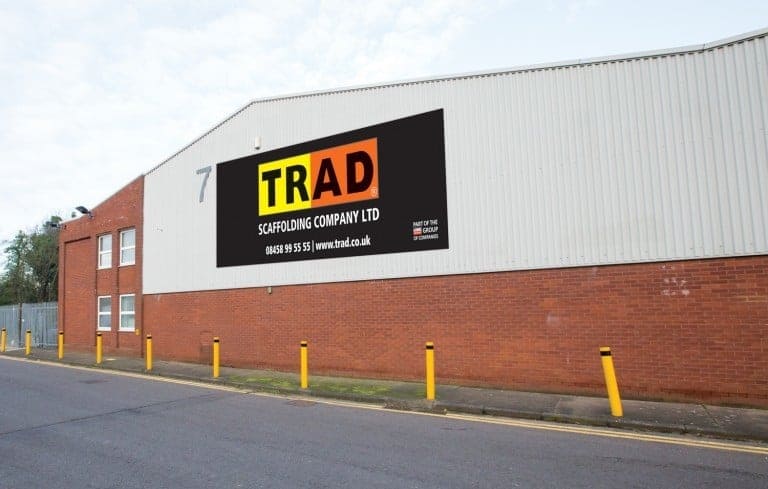
TRAD’s Rail & Air Division based in West London is celebrating its 70% growth within two years by relocating to new, larger premises near Heathrow.
The new site includes both internal and external storage facilities covering some 22,000 square metres along with fully refurbished offices and includes the provision of a meeting area for our clients.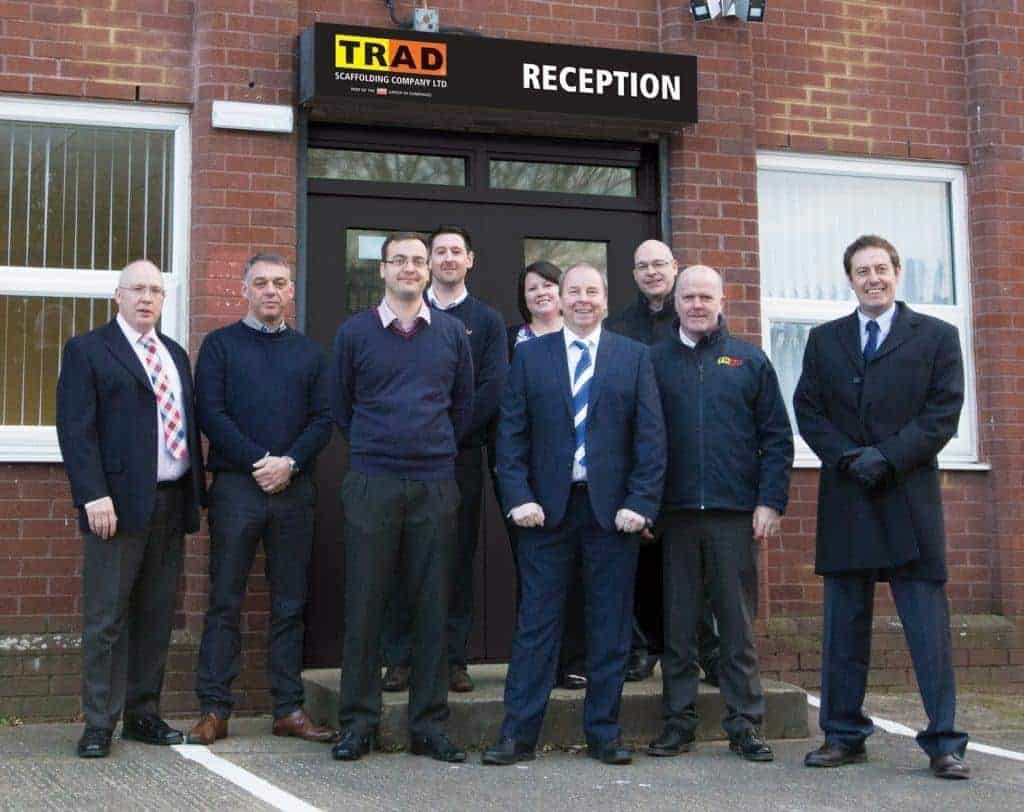
Over 4,600 workers have CSCS cards revoked by CITB

The Construction Skills Certification Scheme and the Construction Industry Training Board confirmed today they have revoked 4,615 cards.
The move follows a probe into fraudulent activity at centres where candidates were taking tests accredited by both CITB and the British Safety Council which was highlighted on BBC’s Newsnight.
CSCS wrote to all affected card holders in November to tell them that they needed to retake their Health, Safety and Environment (HS&E) Test.
Vouchers were provided to pay for retesting and steps were taken to reduce inconvenience for businesses.
More than 6,000 candidates who had completed the HS&E Test and 2,000 people who had completed the Site Safety Plus certificate were required to retake their test.
They were asked to register by 20 December 2105 or risk the cancellation of their CSCS card.
A total of 5,480 did not register to retake their test and as a result their test result is now void and of those individuals who have already used their test result to obtain a card, 4,615 cards have been revoked.
The 553 remaining candidates have until the 14 February to successfully take their test before their cards are also revoked.
Graham Wren, Chief Executive at CSCS, said: “We take assurance that CITB’s in-depth analysis was accurate.
“While we accept that some people have been inconvenienced we have kept this to a minimum and removed unsafe cards from circulation.”
“We are urging employers to check the validity of all cards by either electronically reading the CSCS SmartCard or by using “Card Checker” via the CITB website, to make sure that invalid cards are not permitted on site.
“While the number of people suspected of fraudulent activity is relatively small, compared to the 400,000 cards issued each year, this type of behaviour has the potential to undermine legitimate employees and harm the reputation of the industry.
“It is important employers are able to trust the training and qualification providers as well as the card certification schemes carrying the CSCS logo.” 
48.3 Reveal the Secrets of Scaffold Design
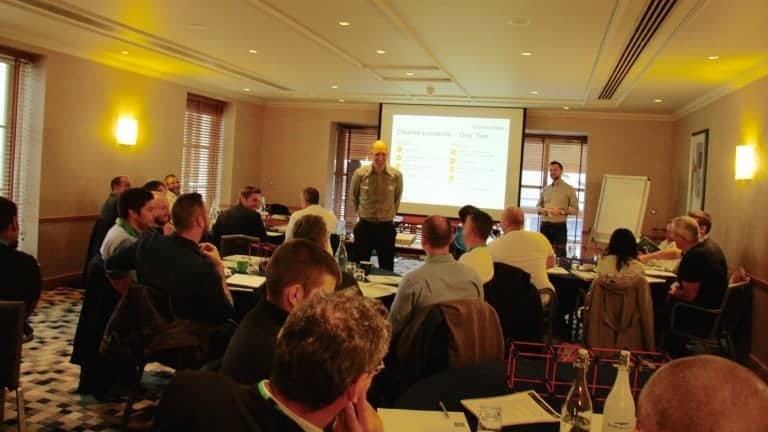
At a packed Leeds hotel, design experts from 48.3 successfully unveiled their latest 2-Day Scaffold Design Appreciation Course – part of their ‘Secrets of Scaffold Design’ series.
48.3 Scaffold Design have 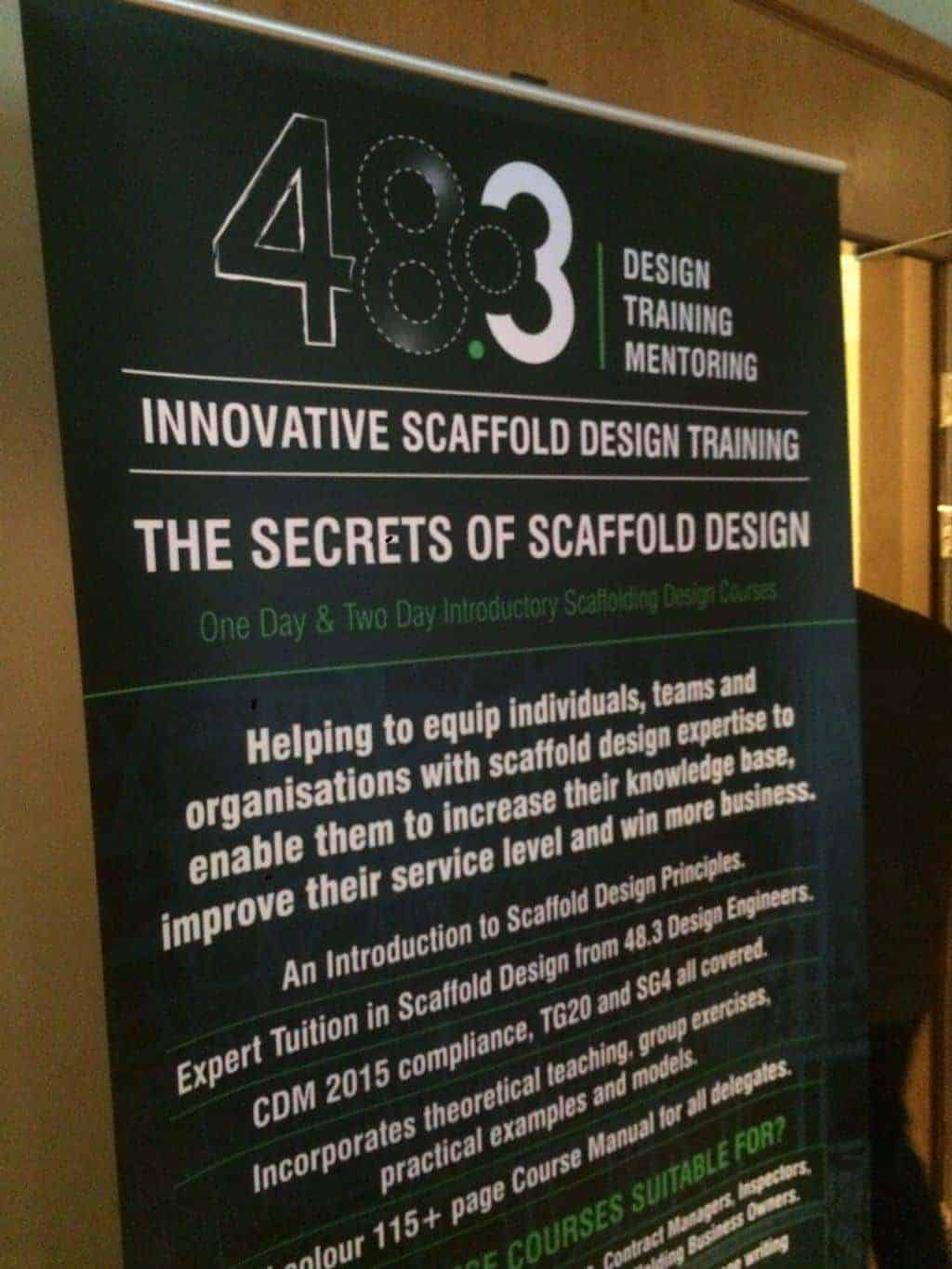 kicked off 2016 with a bang after providing myself and other delegates with a two-day bespoke scaffold design appreciation training course, that provided a comprehensive understanding of the processes involved in producing a scaffold design.
Over the two days, 48.3’s Founder and Managing Director, Ben Beaumont, along with Company Director, Ivik Masek expertly educated myself and 30 other delegates ranging from Advanced Scaffolders, Supervisors and Contracts Managers, CITB Instructors and even other Scaffold Design and Consulting Engineers, all wanting to further expand their knowledge base and improve service for their clients.
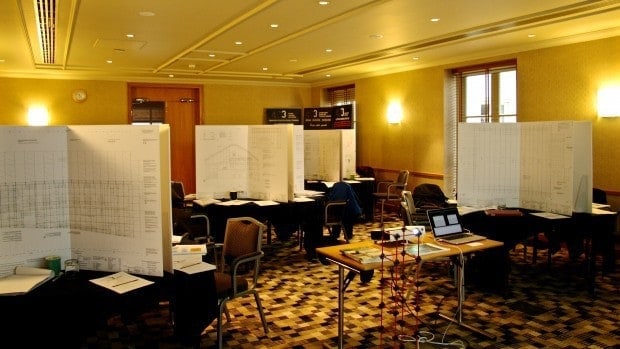
The unique training course that’s only available at 48.3 Training Ltd covered in detail every aspect of the design process. It incorporated theoretical examples and many brilliantly put-together practical demonstrations by the 48.3 team – including model temporary roofs with industrial fans to create ‘wind’, signboards, beam sections with moveable supports, and braced towers. This aided me and the other delegates to visually understand how scaffolds and their components react in different scenarios.
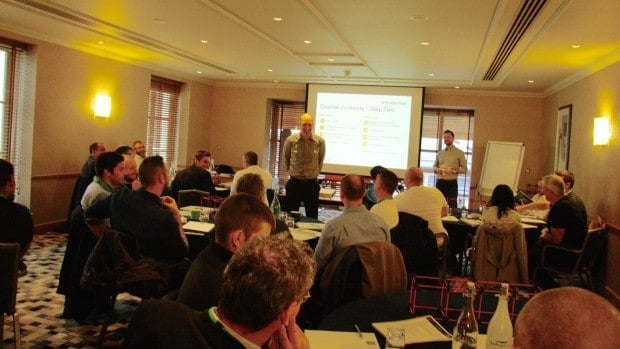

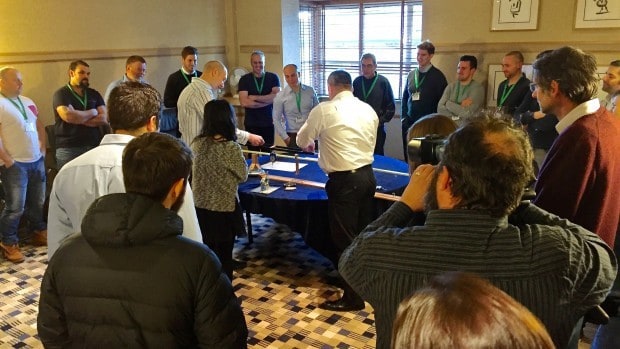

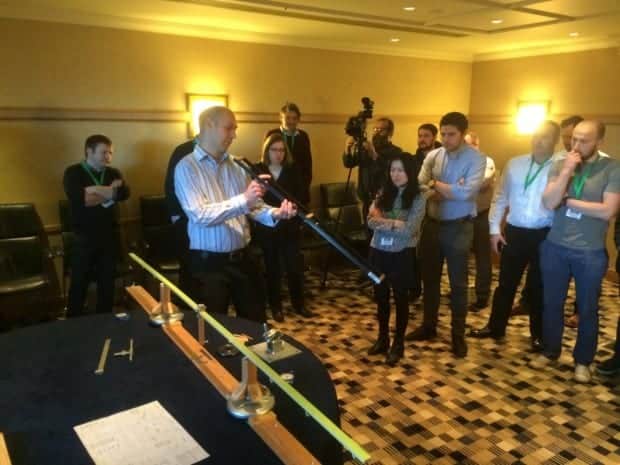
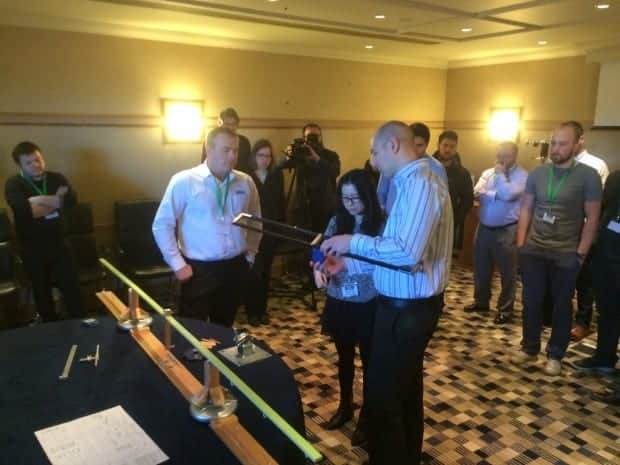

Refreshingly, throughout the course, scaffold design experts Ben and Ivik with 25 years combined industry experience, actively encouraged classroom discussion and debate on various scaffold design issues and erection misconceptions, while openly answering many delegates questions.
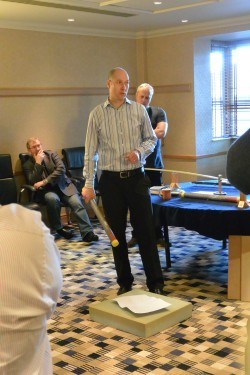
To complement the course delivery, each delegate received a 115 paged course manual, containing a wealth of design knowledge and guidance, plus example 48.3 design drawings, design calculations and design risk assessments, to take home to study and use for future reference.
48.3 Training Ltd is the training division of 48.3, that also includes 48.3 Scaffold Design Ltd, which is one of the UK’s largest most successful organisations in delivering professional scaffold design. 48.3 Training has been running since November 2013, they offer various programmes of training and mentoring from 2-day design appreciation courses, to complete 2-year training and mentoring programmes for scaffolding design engineers through their ‘Design Academy’.
Mark Parkin, Managing Director of Tiger Scaffolding Ltd who also attended the course along with three of his team, said: “Having attended many training courses in the last 28 years, I believe the design appreciation course delivered by 48.3 Training, the knowledge, course detail & practical involvement of the 48.3 team, are second to none. This course is a must for anyone involved in scaffolding & scaffold design.”
Summary
Overall I found the course highly educational. It increased my understanding of the concepts of scaffold design and how scaffold components react with one another under loading. I especially loved the practical demonstrations that further aided my understanding.
I would, without doubt, strongly recommend 48.3’s Scaffold Design Training Course to all our readers within the UK scaffolding industry,…it really is a must!
If you would like further information or to book online, visit www.483training.com
I would like to take this opportunity to thank Ben and the rest of the 48.3’s team for inviting me to experience an exceptionally great course.
Above all, Plettac METRIX scaffolding solutions from TRAD Hire & Sales Ltd.
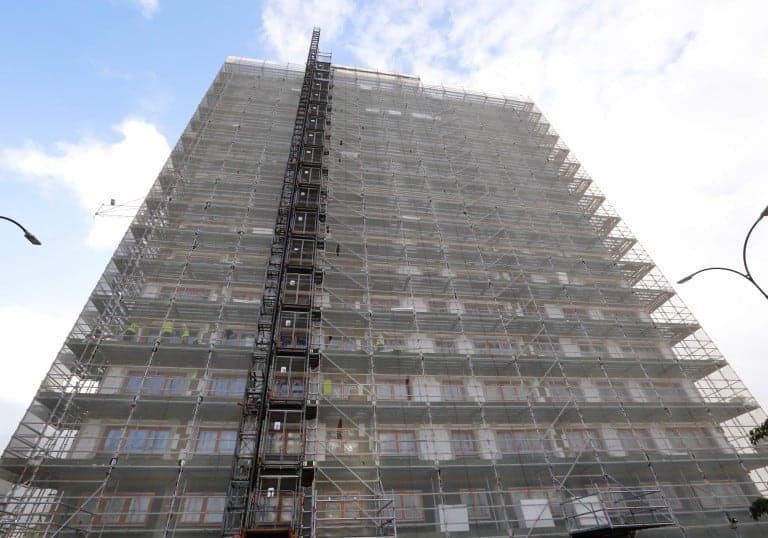
Three imposing 17-storey tower blocks in Salford, Manchester presented very specific construction challenges to Greenwood Scaffolding MD, Brian Kelly.
Each of these blocks has an area of 4,687m, which is comprised by a 109m girth and a height of 43m. They rise above a busy residential area with pedestrian access directly below and, with all properties remaining occupied through the project, easy access was needed from each flat at all times. After 15 years of turning to TRAD Hire & Sales Ltd. for all his scaffolding requirements, Brian once again needed a fast answer from a trusted partner. With Plettac METRIX – exclusive to TRAD Hire & Sales Ltd. and a product of German engineering excellence – Brian found his solution. Brian Kelly says, “Plettac METRIX presents far less risk to pedestrians during the erection process due to the dramatically reduced erection time. Working platforms are completed quickly and safely, with minimum disruption to the general public. Aesthetically, it’s a highly professional scaffold that appears to be made specifically for the project. This comes from Plettac METRIX’s unique divisibility, which allows extra vertical members to be used within the bay length and width, making it endlessly adaptable. This simple divisibility means it’s far quicker to erect than other scaffolding systems – instead of the programmed 12 weeks using traditional tube and fittings, using Plettac METRIX each tower block took just four scaffolders and six labourers less than two weeks. Perforated steel decks allow more light through the structure, meaning better working conditions and less intrusion on residents’ lives.” With the addition of a unique permanent advanced guardrail, and a decking system with built-in lifting handles, wind locks and anti-tilting devices, Plettac METRIX from TRAD Hire & Sales Ltd. results in material and labour savings, reduced assembly times and improved safety. The Plettac METRIX system conforms fully to BS EN 12810 and 12811; it is fully compliant with the NASC’s Code of Practice for Scaffolding Products and has CISRS approval. It is also one more example of TRAD’s insistence on scaffolding solutions that rise above the rest in terms of ease, flexibility and strength. For more information about TRAD Hire & Sale’s products and services, call 0845 899 0845 or visit www.tradhireandsales.co.uk.Pictures: Offshore storm damages scaffolding

Incredible images have emerged of recent offshore storm damage to scaffolding on Shell’s Brent Delta Rig.
Scaffolding has been left seriously damaged and precariously dangling from Shell’s Brent Delta after storm weather battered the platform.
The Delta platform is 300m high – double the height of the London Eye and equal to the height of the Eiffel Tower.
A Shell spokesperson said to Energy Voice: “Shell can confirm that as a result of the recent bad weather scaffolding on the Brent Delta platform has become displaced.
“Following an assessment of the situation, including liaising with DECC, we have concluded that the safest method of recovery will be a controlled drop onto the seabed. Once on the seabed it will be recovered by an ROV that is currently on the platform. The scaffolding is not in the vicinity of any pipelines on the seabed.
“It is anticipated that there will be an appropriate weather window to complete the operation this week.”
The Brent field, which started production in 1976, consists of four large platforms – Alpha, Bravo, Charlie and Delta.
At its peak in 1982, the Brent field was producing 504,000 boepd – enough to power half of the UK’s homes.
The field has since been earmarked for decommissioning.
Brent Delta is the latest in a string of assets affected by harsh storm condition. 
NASC Slash Fees To Attract Smaller Scaffolding Firms In 2016

The NASC are set to attract smaller scaffolding businesses in 2016 after announcing reductions in membership fees for SME’s
The NASC has made a bold move to attract small and medium-sized enterprises (SME) scaffolding firms to the confederation – by reducing the minimum subscription threshold, specifically:
- From 1st January 2016 a lower subscription tier has been created.
- Companies with annual turnover below £1 million will be charged an annual subscription of just £995 + VAT.
- Subscriptions for companies with a turnover between £1 million and £1,376,200 (the previous minimum annual turnover) will increase incrementally from £995 to £1,600 + VAT.
This NASC initiative was announced at the organisation’s Leeds AGM on 27th November 2015 – reflecting the newly sworn-in President Alan Lilley’s desire to attract greater numbers of smaller scaffolding contractors to the NASC.
Furthermore, the confederation is also in the process of fine-tuning a range of benefits for small companies wishing to apply for membership, with details to follow in ScaffMag, news releases on social media and at 2016 NASC events.
MD Robin James said: “The NASC is an inclusive organisation. We are looking to broaden the appeal of membership to smaller companies who are prepared to comply with our code of conduct, our robust auditing procedure, and help us to set the standard for scaffolding here in the UK.
“In reducing the NASC minimum annual subscription rate, we are facilitating the creation of a level playing field for the smaller scaffolding contractor. This will enable NASC to regulate this important sector of the industry – helping to drive up standards.”
NASC President Alan Lilley added: “It is one of my main aims as the new NASC President to alter the false “club” perception of the confederation and to increase the membership – especially within the UK’s elite small and medium sized scaffolding firms. And this starts with us lowering the turnover threshold to £1 million and the annual subscription to below £1,000, effective from 1st January 2016.
“The NASC is also very happy to provide support with membership applications (including meeting the requirements for membership and completing the application form, for example). This will hopefully give every applicant the best chance of passing the application process and getting them on the right path for a successful desktop and site audit.
“We look forward to receiving applications from smaller scaffolding contractors with the same high standards to which our members adhere, and we wish them luck with their membership journey.”
The Secrets of Scaffold Design

48.3 Launch two day introductory Scaffold Design Courses.
ScaffMag has gained exclusive access to the first prestigious 48.3 Scaffold Design Appreciation course of 2016, which is part of the ‘Secrets of Scaffold Design’ series. Due to overwhelming demand the two day course held in Leeds has already sold out.
Next week we will be providing a full exclusive report and live updates about this new exciting and highly desirable course from the industry leading design firm that is 48.3 Scaffold Design.
The two day Scaffold Design Appreciation course will help to equip individuals, teams and organisations with scaffold design expertise to enable them to increase their knowledge base, improve their service level and win more business. Many roles within a scaffolding company (estimating, supervision, project & contract management and surveying etc.) will benefit from understanding the latest technical scaffolding requirements in more detail. The course is specifically aimed at non-technical staff and developed with those people in mind.
The course includes:
- An Introduction to Scaffold Design Principles.
- Expert Tuition in Scaffold Design from 48.3 Design Engineers.
- CDM 2015 compliance, TG20 and SG4 all covered.
- Theoretical teaching, group exercises, practical examples and models.
- Complete 115 page course manual for all delegates.
This course will provide the most significant benefits to:
- Advanced Scaffolders, Supervisors, Contract Managers, Inspectors, Health & Safety Professionals and Scaffolding Business Owners.
- Procurers of Scaffolding and Scaffold Design, anyone writing scaffolding schedules or design briefs.
- Engineers completing Scaffolding Design Checks.
- Temporary Works Coordinators (TWC) and Temporary Works Supervisors (TWS), or anyone who manages scaffolding and access as part of your job role.
- Anyone interested in scaffolding design who wants to know more.

Ben Beaumont, Managing Director of 48.3 Training said: “We are really pleased with how this course has been received so far and the feedback from the last course in 2015 was tremendous. February will be the first time we have delivered the course in London and if demand is anything like it has been for our sold out courses so far, then places will go quickly!”

Places on the 2-Day course cost only £597 per person (exc. VAT), and you can claim part of that cost back if you are registered with the CITB.
Places are strictly limited and available on a first come, first served basis.
Leeds: Thursday 14th – Friday 15th January 2016 – SOLD OUT
London Wednesday 10th – Thursday 11th February 2016 – PLACES AVAILABLE
Leeds Wednesday 9th – Thursday 10th March 2016 – PLACES AVAILABLE
Find out more and book online today at: www.483training.com