UK cement production falls to lowest level since 1950

ADVERTISEMENT

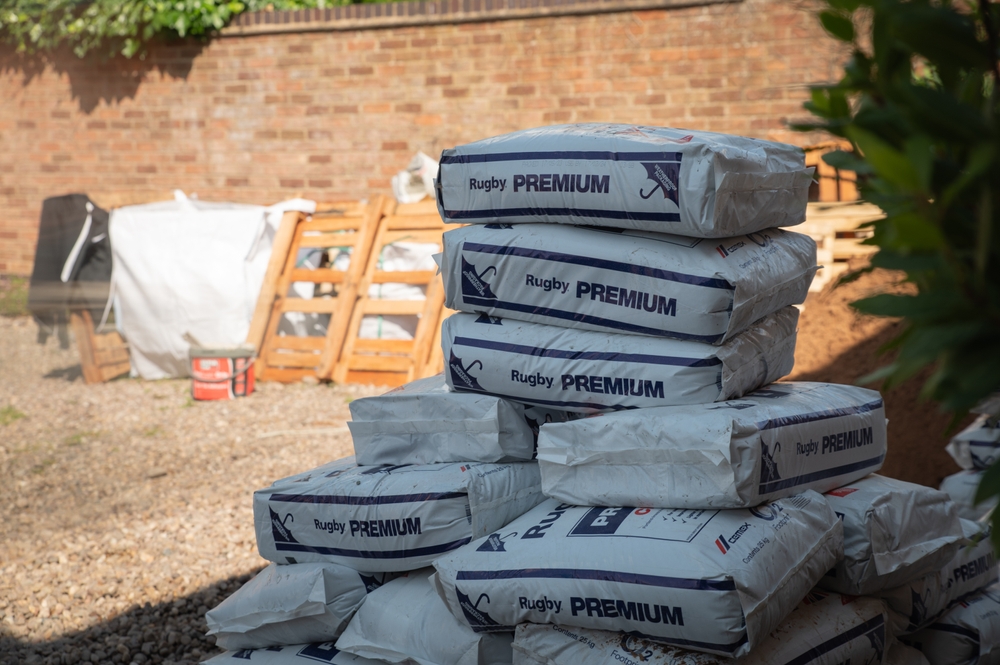
UK cement production has slumped to its lowest level in 75 years, raising concerns over the future of house-building and infrastructure projects.

The Mineral Products Association (MPA) said 7.3 million tonnes were produced in 2024 – roughly half the level of 1990.

At the same time, imports have climbed sharply, now making up almost a third of all sales.

The MPA warned the decline could threaten government construction targets, as cement is essential for foundations and structures.

Major projects highlight the scale of demand. Up to 750,000 tonnes of cement could be needed for Sizewell C, while a hospital typically requires nearly 8,000 tonnes. A traditional four-bedroom family home needs three to five tonnes.

Recent figures also showed ready-mix concrete sales hitting historic lows in the second quarter of 2025, with other materials down compared with the previous year.

Growing reliance on imports

Imports of cement have nearly tripled in 20 years, rising from 12% of UK sales in 2008 to 32% in 2024.

The MPA said this growing reliance increases exposure to volatile global markets and puts domestic jobs at risk.

Around 40% of UK cement is produced in the Peak District, with the rest spread across England, Scotland, Wales and Northern Ireland. The industry supports thousands of skilled jobs.

High costs for UK producers

Manufacturers argue they face some of the highest industrial electricity prices among developed countries, as well as tougher carbon costs than overseas competitors.

Unlike UK plants, many suppliers outside the EU do not pay the same charges for emissions.

The government plans to introduce a Carbon Border Adjustment Mechanism in 2027, aimed at levelling the playing field, but industry leaders say more immediate action is needed – including public procurement policies that favour UK production.

Call for government support

Diana Casey, executive director for cement and lime at the MPA, said:
“Cement is an essential industry, but the sector is increasingly under threat. We’re calling on the government to help put domestic production on a level playing field so that it can compete fairly with imports.

“Cement quite literally underpins the nation’s growth and we can’t deliver new homes, schools, hospitals, transport links or clean energy infrastructure without it. The UK has a choice: to build these vital projects with UK-made cement, or to build them with imports – sending jobs, investment and growth overseas.”

Most UK cement plants are already foreign-owned by firms including Cemex, Heidelberg, Holcim and CRH, raising further questions about the future of domestic output.


ADVERTISEMENT

Popular Categories

Latest posts

Scaffolding sector joins April Fools’ Day with wave of industry jokes

Scaffolding companies and industry figures have taken to social media to mark April Fools’ Day, with a wide range of posts blending humour with...

Founders step away as City Access Scaffolding completes buyout

From Left to Right: Ryan Scott, Mark Skinner, and Ross Archibald

JMAC completes first acquisition with Tees Site Support deal

JMAC Industrial and Access Group Ltd has acquired a majority shareholding in Tees Site Support Ltd, marking the company’s first acquisition as it looks...

Final 20 teams confirmed for ScaffChamp 2026

The final 20 teams competing at ScaffChamp powered by Layher 2026 have been confirmed, with the last place secured after a qualification event in...

£27bn road strategy opens major pipeline for specialist contractors

The government has confirmed Roads Investment Strategy 3 (RIS3), a £27 billion programme covering England's motorway and A-road network through to 2031. A record £8.4...

NASC expands regional leadership as membership rises 40%

The National Access and Scaffolding Confederation (NASC) has announced a series of new regional chair and vice chair appointments as part of a wider...

Layher UK launches ‘Sizzle & Learn’ open morning series for 2026

Layher UK has announced a series of open morning events aimed at giving customers and partners direct access to its latest systems, product developments...

Two taken to hospital after building collapse in Oldham

Two people have been taken to hospital after a building partially collapsed in Oldham town centre. Emergency services were called to King Street at about...

Scafom-rux delivers Manchester’s tallest ground-based scaffold

In the heart of Manchester’s financial district, a major high-rise development is setting new benchmarks for construction scaffolding in the UK. For this complex...

Teen scaffolding labourer dies after fall through shaft on London site

A construction company has been fined after a teenage scaffolding labourer died in a fall from height on a London building site. Renols Lleshi, 19,...

Latest news

Magazine

Spring Issue #29 | Past issues >>

Trending now ⚡︎

Fraud gang jailed for helping candidates cheat CITB safety tests

Three men have been sentenced for their role in...

NASC expands regional leadership as membership rises 40%

The National Access and Scaffolding Confederation (NASC) has announced...

JMAC completes first acquisition with Tees Site Support deal

JMAC Industrial and Access Group Ltd has acquired a...

Teen scaffolding labourer dies after fall through shaft on London site

A construction company has been fined after a teenage...

£27bn road strategy opens major pipeline for specialist contractors

The government has confirmed Roads Investment Strategy 3 (RIS3),...

Related articles

Latest topics

Fraud gang jailed for helping candidates cheat CITB safety tests

Three men have been sentenced for their role in...

Scaffolding sector joins April Fools’ Day with wave of industry jokes

Scaffolding companies and industry figures have taken to social...

Founders step away as City Access Scaffolding completes buyout

From Left to Right: Ryan Scott, Mark Skinner, and Ross Archibald

JMAC completes first acquisition with Tees Site Support deal

JMAC Industrial and Access Group Ltd has acquired a...
ADVERTISEMENTS