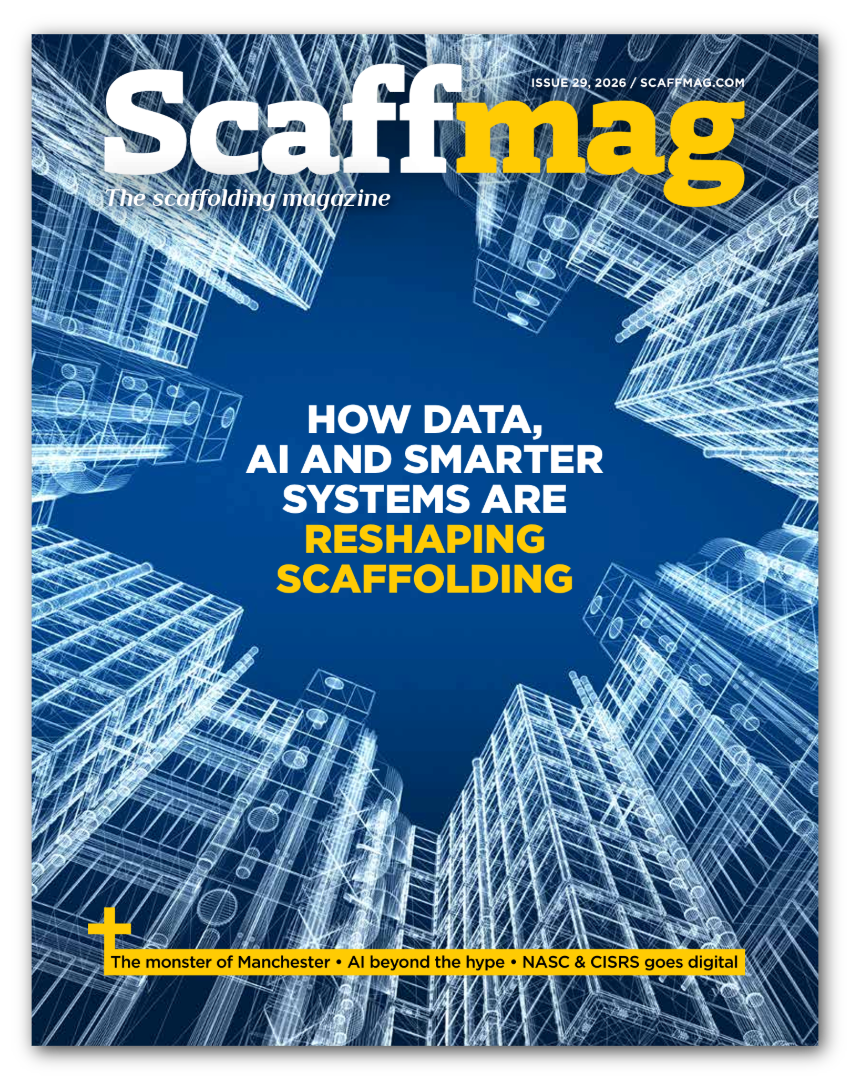
AI can draft a site report in seconds, but it cannot plumb a standard or assume legal accountability.
Scaffold businesses operate in a world built on physical work and responsibility. AI does not work around weather delays, chase missing components, or adapt to the realities of a busy site. It does not sit through tense meetings with Tier 1 contractors or carry the can when a handover is delayed. Those parts of the business still rely on people, judgment, and experience.
Where AI is most useful is somewhere less dramatic but arguably more vital: alleviating the “mental load” of the administrative work that surrounds every scaffold.
What We Mean by “AI”
When we discuss AI (artificial intelligence), we aren’t talking about robots replacing the crew members building the scaffold. The physical intuition, tactile judgment, and safety-critical choices made by a qualified scaffolder cannot be replicated by a machine. AI is here to replace the clipboard, not the worker.
We are describing software tools that assist with drafting text, summarising dense technical guidance, and identifying patterns in spreadsheets. These tools support communication, documentation, and the retrieval of project intelligence. Crucially, AI does not sign off designs, approve changes, or assume liability. Human judgment remains central. Confusion about this distinction often leads to unnecessary concern; the goal is to support existing workflows, not to replace the professionals who run them.
Taming the “Paperwork Mountain”
In the UK, a large-scale project can generate thousands of pages of inspection records over its lifecycle. With weekly inspections required for every structure, the volume of documentation is staggering. For most business owners, this information is “dark data”—it is recorded for compliance, but it is rarely analysed because no human has the time to meticulously review 5,000 inspection sheets.
This is where AI excels. Once digitised, AI can interrogate thousands of project records in seconds, flagging specific keywords—such as “unauthorised modification” or “ground conditions”—that require immediate human intervention. This moves the office from reactive compliance (finding out what went wrong during an audit) to proactive risk management (fixing the issue before handover).
Closing the “Variation Trap”
One of the most persistent profit-leaks in scaffolding is the “Variation Trap.” Margin is lost when on-site modifications are made—perhaps a minor adaptation or strike-and-re-erect requested by a site foreman—but the details are lost between the site and the office.
AI can assist by scanning site correspondence or foreman notes to highlight phrases that suggest a change in scope. By surfacing these discrepancies early, the commercial team can ensure that every hour of labour and every extra component is documented and invoiced before the final account is settled.
Strategic Efficiency: How to Use AI Right Now
You do not need to overhaul your systems to get value today. The most immediate gains sit on the office side of the business and focus on transparency, consistency, and speed.
- Querying Your Data: Intelligent search tools now allow managers to ask natural-language questions of their own project documentation or data. Instead of manually searching through massive PDF folders or complex spreadsheets, a user can ask: “Where did we mention the wind-speed restrictions in the site contract?” or “List all safety meetings from last month that discussed harnesses.” AI translates these simple questions into a deep-data search, surfacing the exact facts in seconds.
- Drafting and Summarising: Instead of starting from a blank page, teams can generate an outline for a site report or a professional email to a difficult client. AI can also summarise complex standards (like TG20:21 updates) or lengthy meeting records, allowing staff to grasp key points without reading every page.
- Preparation for High-Friction Meetings: AI can help prepare for sensitive conversations. By outlining talking points based on project history, it reduces the mental load of high-stakes communication. The conversation remains human; the preparation becomes automated.
Getting Your Team on Board
Successful adoption of AI depends as much on people as on tools. The safest approach starts small and avoids forcing change.
Top-down mandates often create resistance. Allowing optional use lets value demonstrate itself. When staff see that AI helps cut rework, polish reports, or highlight issues in a yard count that warrant a closer look, wider adoption follows naturally.
Most scaffold businesses do not need formal AI training programmes. A short, practical introduction is usually sufficient. That introduction should set boundaries, show a few relevant examples involving both written text and numerical data, and make clear that AI results are drafts—not final calls. A brief team session and an expectation of human review often achieve more than hours of instruction.
Important Caveats: The “Confidence” Warning
AI can sound incredibly confident while being entirely wrong. This is why experienced staff still need to check results carefully, particularly when information affects scope, cost, or safety.
Ultimate responsibility for operational sign-off always sits with the business and its people. AI can support analysis and drafting, but the final call requires human approval and accountability. Furthermore, sensitive or confidential information requires care. Public AI tools should not be used to process proprietary designs, pricing, or customer data without clear safeguards.
How the Industry is Leading the Way
Scaffold businesses and their suppliers are already incorporating AI in practical ways that cut manual effort without replacing expertise.
- Doka, the global formwork and scaffolding supplier, uses AI to assist with yard stock management. Staff photographs returned materials, and AI analyses those images to propose a count. Staff then review and confirm the results. This reduces time spent on manual counting while maintaining human oversight.
- Avontus incorporates AI into its scaffold management app ScaffoldIQ to bridge the gap between complex data and the person who needs an answer quickly on-site. It allows users to ask questions of their own data—such as which scaffolds have the highest number of modifications and who requested them —improving visibility and response time while leaving planning decisions with people.
A Note on How This Article Was Written
In the spirit of the technology discussed here, I used AI to assist with the drafting and editing of this piece. Human judgment determined the structure, the industry examples, and the core conclusions. AI served as a “digital editor,” helping to refine language and organise the flow of ideas. However, the AI did not shape the message or decide which industry pain points were most relevant—those are the result of years spent in the scaffolding sector.
A Measured Takeaway
AI adoption is not urgent, but understanding it is essential. The most meaningful gains today are quiet and operational. Cutting rework, lucid communication, and less time spent on “paperwork mountains” deliver real value without changing how scaffold businesses operate.
Used well, AI does not change what we do. It reduces the work required around our decisions, leaving our people free to focus on judgment, relationships, and the physical reality of the build.
About the Author
Brian Webb is the founder and CEO of Avontus Software, a global leader in scaffolding management and design solutions. Having majored in civil engineering and minored in computer science, Brian has always worked at the intersection of both realms. He began his career with five years of designing scaffold, shoring, and formwork structures as an engineering intern under David H. Glabe, P.E., before moving into software development at Autodesk on the AutoCAD team. Since founding Avontus, he has combined his engineering expertise with cutting-edge technology to help scaffold businesses worldwide improve safety, efficiency, and profitability.