When Aaron King talks about turning points, he does not hesitate.
“It was when my kids had to come and see me in prison,” he says. “Watching them upset, then going back to my cell, not able to do anything about it.”
When he walked out, he left with little more than the clothes he was wearing. No structure. No roadmap. No safety net.
That absence of direction shaped what would follow.
“There’s nothing more valuable than real-world life experience,” he explains. “When you leave prison, you’re left to fend for yourself. There isn’t much extended rehabilitation. That teaches you to look out for yourself, but also to think about others in that same position.”
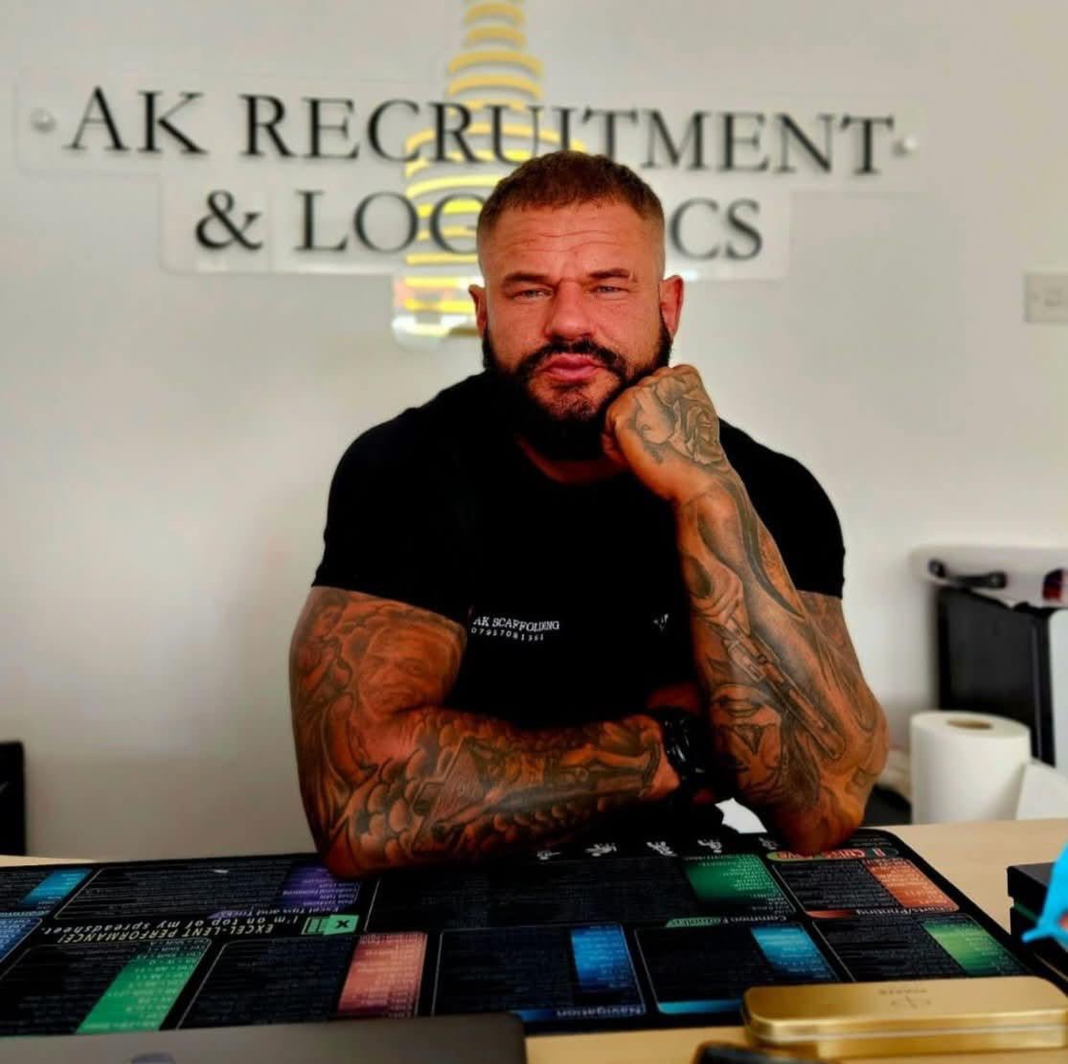
More than 25 years after first entering the scaffolding trade, King now runs AK Scaffolding, a Manchester-based agency that has grown from a single gang of five scaffolders to a workforce that fluctuates between 20 and 100, depending on contract demand. The business currently operates across the north west, with ambitions to expand nationally and overseas.
But AK Scaffolding was not built purely as a commercial venture.
A business built on correction
“When I started AK, I wanted to fix what I saw as the problem with agencies,” King says. “They weren’t looking after scaffolders or clients properly. There wasn’t consistency. There weren’t long-term relationships.”
His model is deliberately lean. With no large overheads, he pays scaffolders strong rates while keeping clients competitive and still protecting margin. “I’m not chasing big profits,” he says. “I focus on quality over quantity. I look after the clients, and they look after me and the lads. That’s why they come back.”
“When you leave prison, you’re left to fend for yourself.”
Unlike many agency owners, King remains on the tools, and he does not always announce it. “Most of the time they don’t even realise they’re working alongside the owner,” he says. “It builds confidence with clients. And it keeps costs down because I earn my own wages.” Every scaffolder working under the AK brand receives company clothing, a small but deliberate move to build identity and loyalty in what can often be a fragmented labour market.
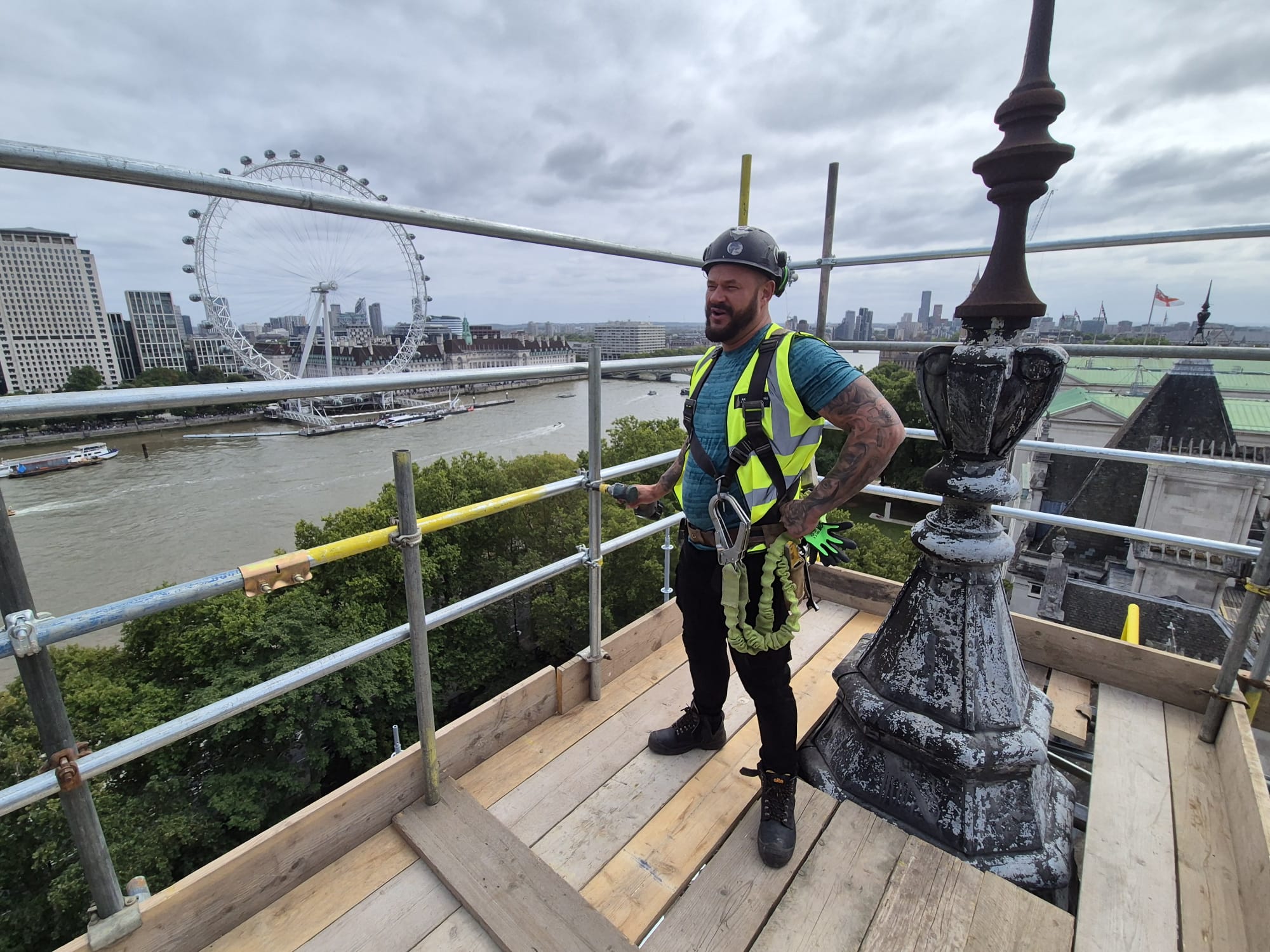
Still, the model comes with its share of volatility. “The hardest times are the lulls in work,” he admits. “When I’ve had to let good lads go. Then the work comes back and there’s no way to get them back. That affects me. A lot of the lads are good friends. The business is at the mercy of the market. You just have to ride the waves.”
Speaking openly about mental health
King’s willingness to speak publicly about mental health has also become part of AK’s identity. After two attempts on his own life, he made a conscious decision to be open.
“Mental health is talked about a lot now, but only recently has there been real focus on men being open about it,” he says. “If speaking publicly gives even one person the confidence to reach out, that’s enough for me.”
He believes scaffolding has work to do. “It’s an industry where many of us struggle. It also has one of the highest suicide rates. There needs to be more focus and less stigma.”
“If speaking publicly gives even one person the confidence to reach out, that’s enough for me.”
Within AK Scaffolding, that translates into practical support. Regular site visits. A charge hand or foreman is always accessible. A group chat is described as a safe space for scaffolders to ask questions or raise concerns without judgment. It is not corporate policy language. It is direct and personal.
Second chances
King has helped 12 ex-offenders into training and employment. Five remain with the business today.
There have been obstacles. “There are companies that won’t work with AK because I employ ex-offenders. That’s their right. PPQs can be strict. Some companies are willing to work with us, but don’t want to publicise it.”
He does not resent that. “All I have to go off is my own background and how far I’ve come,” he says. “They deserve that chance too. What I’ve found is many of the ex-offenders I’ve helped have become some of my best workers. Often the black sheep becomes the goat.”
For King, it is not a branding exercise. It is personal alignment between experience and opportunity.
Representing the UK on the world stage
AK Scaffolding’s entry into ScaffChamp powered by Layher in Lithuania in 2025 was not originally planned. “Our name was put forward by people like Isaac Morrison from Vertex,” King says. “He’s a childhood friend. It wasn’t even on my radar until others pushed it. That made me realise people believed in what we were doing.”
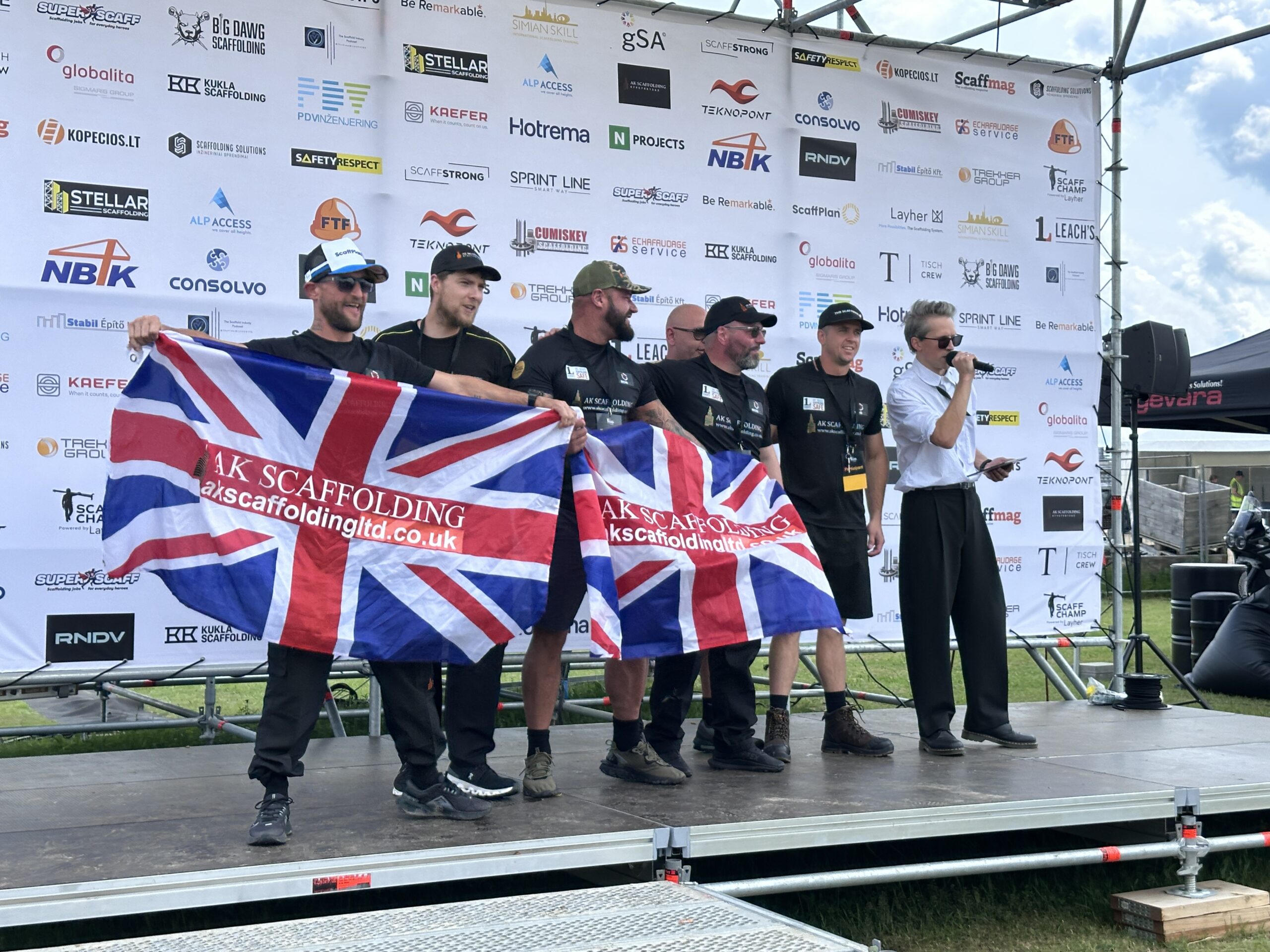
Since then, AK has competed internationally, including at the Scaffold Builders Competition in Las Vegas. The commercial return so far has been indirect. “There’s been no direct financial benefit yet, but doors have opened. It was about reputation and pride. As a small Manchester agency, representing the UK and Europe was a privilege.”
International competition reinforced one belief. “The reputation UK scaffolders have for health and safety is at the pinnacle,” he says. “It can make us slower at times, but I won’t jeopardise standards for speed. We practise until we can compete at that level without lowering our standards.”
His ambition for ScaffChamp 2026 is clear. “To bring more focus onto the competition and the trade, and to end the stigma scaffolders receive. Representing the UK is a huge privilege. I want to do us proud and bring some silverware home.”
Looking forward
Ask King where AK Scaffolding should stand in five years, and the answer is direct. “I want it to be known as the best. The most hardworking. The most reliable. The most sought after.”
The words are simple, but they carry weight when placed against the journey that precedes them. From prison visits with his children to international competition stages, Aaron King’s story is not just about redemption. It is about responsibility. Responsibility to his workforce. To ex-offenders seeking a route back. To raise mental health awareness in a trade that rarely pauses to talk.
AK Scaffolding may still be growing, but its identity is already defined. Not by what came before, but by what comes next.