Feeling the heat: Tips for working in hot weather

ADVERTISEMENT

Alex Minett, Head of Product & Markets at CHAS, shares some tips for working well in hot weather.

While temperatures have been variable in the UK this summer, the UK’s ten warmest years on record have all occurred since 2002 and overall, the world is hotting up; the highest temperature ever recorded on earth was observed in Death Valley on June 9th 2021, where it reached of 54.4°C. With extreme hot spells often arriving with little warning, employers and employees alike must be ready to recognise and manage the risks.

Be educated about sun protection

Alex Minett, Head of Product & Markets at CHAS

The potential for skin damage and skin cancer from unprotected exposure to the sun’s ultraviolet (UV) rays is one of the better understood hot weather hazards, yet according to the Royal Marsden NHS Foundation Trust, skin cancer is rising faster than any other common cancer. It’s therefore essential that outdoor workers understand the risks and know how to stay protected.

All skin types are susceptible to damage, but people with red or fair hair and light coloured eyes and those with many moles are at increased risk.

The good news is that skin cancer is almost entirely preventable and several measures can be taken to stay safe when working in the sun. These include: Keeping t-shirts and tops on, wearing a hat that covers areas vulnerable to sunburn – such as the ears and back of the neck, staying in the shade where possible, using a high factor sunscreen of SPF 15+ and checking skin regularly for unusual spots or moles.

For more see: www.hse.gov.uk/pubns/indg337.pdf

Be alert to heat-related illnesses

As temperatures rise so does the risk of suffering heat-related illnesses, commonly referred to as heat stress. Heat stress can include relatively minor issues like heat cramp and heat rash along with more severe conditions such as heat exhaustion and heatstroke. Treating heat exhaustion quickly can reverse the effects but a blood temperature rise above 39.5°C can turn into heatstroke, which is a medical emergency. Regular training can help workers to recognise and respond to the signs of heat-related illnesses.

Consider control measures

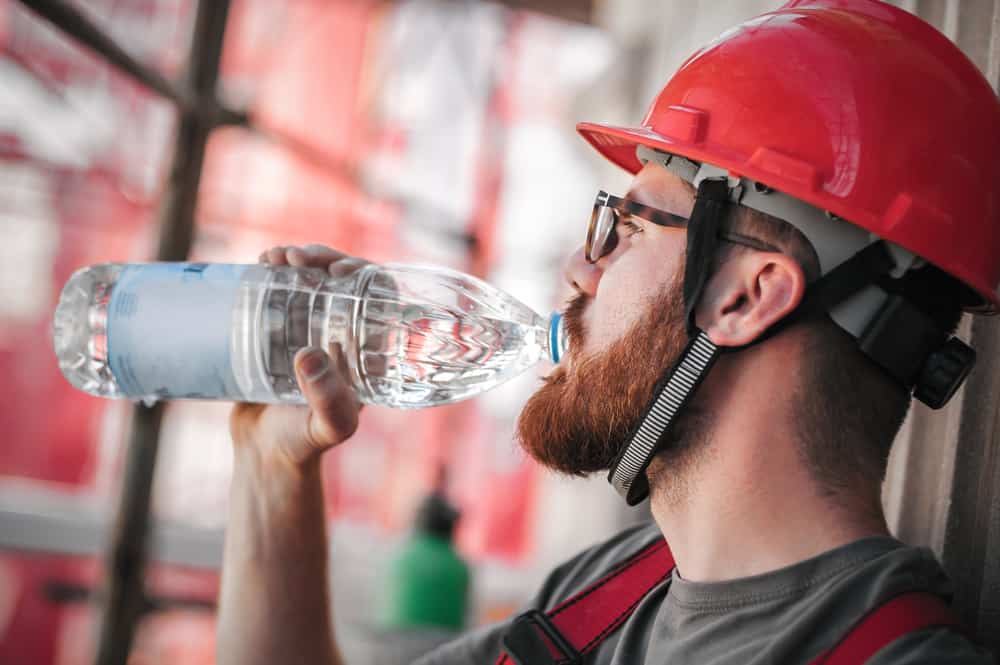
Several control measures can reduce the risks associated with working in the heat. These include scheduling work for cooler times of day and alternating tasks to avoid sustained periods of outdoor work. It’s also a good idea to provide shade where possible and consider window tints for vehicles operating in direct sunlight. Increasing the frequency of breaks during hot spells and providing shaded or air-conditioned rest areas with access to water can also be helpful.

Provide protection

Covering up with long-sleeved cool clothing, wearing hard hat neck shades or legionnaires hats with a flap and brim to protect the ears and neck and using high-factor sunscreen can all help guard against sunburn while breathable safety footwear can ensure workers stay comfortable and protected.

Some workers may appreciate cooling vests that can be ice-cooled like ice packs and cooling bandanas, towels and wraps.

When it comes to sunglasses, look for the European CE mark, which indicates a safe level of protection. Ideally sunglasses should be close fitting and wrap around to prevent solar UVR entering around the edges and don’t forget to make sure they’re compatible with other PPE.

Create a sun protection policy

Sun protection policies are commonplace in countries such as Australia, where they have a large number of sunny days and a high UV index but as temperatures rise in the UK, they are also becoming more popular.

A sun protection policy could include any of the measures set out above as well as providing details of any training schedules and pledging a commitment to review your approach regularly.

The charity skin.org offers a free Sun Safe Workplaces accreditation scheme which involves creating and uploading a sun protection policy as a written document that records why and how the solar UVR risk is to be managed. www.skcin.org/ourWork/sunSafeWorkplaces.htm

To find out more about how CHAS can help ensure high standards of health and safety throughout your supply chain, visit chas.co.uk

Most popular ↑

Two workers killed in Spain after mast climbing platform collapse

Two workers have been killed following the collapse of...

Scottish offshore workers urged to consider scaffolding careers

The Construction Industry Training Board is targeting workers from...

NASC warns members over online conduct in new media policy

The National Access and Scaffolding Confederation said the new...

Robot named Douglas begins work on Tilbury Douglas site

Tilbury Douglas has begun using a humanoid robot to...

Latest news

Feeling the heat: Tips for working in hot weather

ADVERTISEMENT

Alex Minett, Head of Product & Markets at CHAS, shares some tips for working well in hot weather.

While temperatures have been variable in the UK this summer, the UK’s ten warmest years on record have all occurred since 2002 and overall, the world is hotting up; the highest temperature ever recorded on earth was observed in Death Valley on June 9th 2021, where it reached of 54.4°C. With extreme hot spells often arriving with little warning, employers and employees alike must be ready to recognise and manage the risks.

Be educated about sun protection

Alex Minett, Head of Product & Markets at CHAS

The potential for skin damage and skin cancer from unprotected exposure to the sun’s ultraviolet (UV) rays is one of the better understood hot weather hazards, yet according to the Royal Marsden NHS Foundation Trust, skin cancer is rising faster than any other common cancer. It’s therefore essential that outdoor workers understand the risks and know how to stay protected.

All skin types are susceptible to damage, but people with red or fair hair and light coloured eyes and those with many moles are at increased risk.

The good news is that skin cancer is almost entirely preventable and several measures can be taken to stay safe when working in the sun. These include: Keeping t-shirts and tops on, wearing a hat that covers areas vulnerable to sunburn – such as the ears and back of the neck, staying in the shade where possible, using a high factor sunscreen of SPF 15+ and checking skin regularly for unusual spots or moles.

For more see: www.hse.gov.uk/pubns/indg337.pdf

Be alert to heat-related illnesses

As temperatures rise so does the risk of suffering heat-related illnesses, commonly referred to as heat stress. Heat stress can include relatively minor issues like heat cramp and heat rash along with more severe conditions such as heat exhaustion and heatstroke. Treating heat exhaustion quickly can reverse the effects but a blood temperature rise above 39.5°C can turn into heatstroke, which is a medical emergency. Regular training can help workers to recognise and respond to the signs of heat-related illnesses.

Consider control measures

Several control measures can reduce the risks associated with working in the heat. These include scheduling work for cooler times of day and alternating tasks to avoid sustained periods of outdoor work. It’s also a good idea to provide shade where possible and consider window tints for vehicles operating in direct sunlight. Increasing the frequency of breaks during hot spells and providing shaded or air-conditioned rest areas with access to water can also be helpful.

Provide protection

Covering up with long-sleeved cool clothing, wearing hard hat neck shades or legionnaires hats with a flap and brim to protect the ears and neck and using high-factor sunscreen can all help guard against sunburn while breathable safety footwear can ensure workers stay comfortable and protected.

Some workers may appreciate cooling vests that can be ice-cooled like ice packs and cooling bandanas, towels and wraps.

When it comes to sunglasses, look for the European CE mark, which indicates a safe level of protection. Ideally sunglasses should be close fitting and wrap around to prevent solar UVR entering around the edges and don’t forget to make sure they’re compatible with other PPE.

Create a sun protection policy

Sun protection policies are commonplace in countries such as Australia, where they have a large number of sunny days and a high UV index but as temperatures rise in the UK, they are also becoming more popular.

A sun protection policy could include any of the measures set out above as well as providing details of any training schedules and pledging a commitment to review your approach regularly.

The charity skin.org offers a free Sun Safe Workplaces accreditation scheme which involves creating and uploading a sun protection policy as a written document that records why and how the solar UVR risk is to be managed. www.skcin.org/ourWork/sunSafeWorkplaces.htm

To find out more about how CHAS can help ensure high standards of health and safety throughout your supply chain, visit chas.co.uk

Popular Categories

Latest posts

Scaffolding firms urged to review RIDDOR procedures as HSE consults on changes

The Health and Safety Executive has launched a consultation on proposed changes to the Reporting of Injuries, Diseases and Dangerous Occurrences Regulations 2013, known...

Scottish offshore workers urged to consider scaffolding careers

The Construction Industry Training Board is targeting workers from Scotland’s offshore energy sector as part of efforts to widen the construction talent pool and...

NASC warns members over online conduct in new media policy

The National Access and Scaffolding Confederation said the new Social Media and General Media Policy sets expectations for how its members, CISRS centres and...

Two workers killed in Spain after mast climbing platform collapse

Two workers have been killed following the collapse of a twin mast climbing work platform in Benidorm, Spain. The incident happened on Wednesday, 22 April,...

Brogan wins Manchester student accommodation access package

Brogan Group has secured the powered access package for a student accommodation building in Manchester. The access specialist will provide several passenger and goods hoists...

‘Not every scaffolder is ok’: Alan Osborn backs mental health campaign at ScaffChamp

Alan Osborn is set to shave his head at ScaffChamp 2026 as part of a campaign to raise £5,000 for men’s mental health and...

Baton opens early adopter programme for scaffolding contractors

Baton has opened applications for its Early Adopter Programme, giving scaffolding contractors early access to a software platform designed specifically for construction subcontractors. The company...

SCA joins Coriant in move to widen access and industrial services capability

Coriant has announced the acquisition of specialist contractor SCA, in a move that further expands the group’s capabilities in access, temporary containment and industrial...

Robot named Douglas begins work on Tilbury Douglas site

Tilbury Douglas has begun using a humanoid robot to carry out administrative and data-collection tasks on a live construction site. The contractor says the...

HAKI reports sharp UK sales drop as construction starts stall

The Swedish-listed scaffolding and access safety group said UK revenues fell to SEK 52 million (£4.2 million) in the three months to 31 March,...

Spring Issue #29 | Past issues >>

Latest topics

Most popular ⚡︎

Two workers killed in Spain after mast climbing platform collapse

Two workers have been killed following the collapse of...

Scottish offshore workers urged to consider scaffolding careers

The Construction Industry Training Board is targeting workers from...

NASC warns members over online conduct in new media policy

The National Access and Scaffolding Confederation said the new...

Robot named Douglas begins work on Tilbury Douglas site

Tilbury Douglas has begun using a humanoid robot to...

Related articles

ADVERTISEMENTS
More from
Latest articles

TRAD UK launches charity campaign supporting Epilepsy Action

TRAD UK has launched a new fundraising campaign in support of Epilepsy Action, the...

Scaffolding firms urged to review RIDDOR procedures as HSE consults on changes

The Health and Safety Executive has launched a consultation on proposed changes to the...

Scottish offshore workers urged to consider scaffolding careers

The Construction Industry Training Board is targeting workers from Scotland’s offshore energy sector as...

NASC warns members over online conduct in new media policy

The National Access and Scaffolding Confederation said the new Social Media and General Media...

Two workers killed in Spain after mast climbing platform collapse

Two workers have been killed following the collapse of a twin mast climbing work...

Brogan wins Manchester student accommodation access package

Brogan Group has secured the powered access package for a student accommodation building in...