It’s been heartening to see how much effort and commitment has gone into revitalising the construction and scaffolding industries since the first lockdown just over a year ago. Working hard within Covid restrictions, we’ve all been doing our best to make sure that projects keep running, new developments can get started and that we can all work safely and productively to do our bit to get the economy back on track.
But we have been frustrated by some of the things that are out of our control – and one of the biggest examples of this is the price of raw materials increasing at unprecedented levels. In fact, Glynn Burrows, TRAD Group Purchasing Manager, wrote about this earlier in the year. He noted that timber and steel, particularly – the foundation materials for everything we do – had risen significantly in price over the past 12 months, and forecasted that we might start to see some stability by summer 2021. However, we have reservations about this as we are still seeing prices riding high, which means we’re not really expecting prices to stabilise – particularly steel prices – until much later in the year, potentially late autumn.
During the first quarter of this year, we’ve seen that there’s a significant demand from both the UK and the USA, as the construction industry gets back to projects that were stalled, or starts projects that are needed to help recovery. During the latter part of this year, I expect demand to rise as the major countries in Europe get a handle on their vaccination programmes and get their construction sector back up and running fully.
And we shouldn’t forget the industrial sector – I am expecting a spike in this market later in the year. Brick suppliers are gearing up to build new factories, so that they can meet the exceptional demand for bricks. So it’s clear that the demand is there across all areas of construction.
At TRAD Group, we’ve seen significant demand for both hire and sales across the board, but particularly from housebuilders, which shows us that this part of the industry is forging ahead, fuelled by the government’s measures to support homebuyers. It’s hard to see that the housing market will contract during the rest of the year – we expect it to expand.
So what does this mean for pricing?
Our view is that we are hopeful that the price of steel will stabilise by the latter part of 2021 – it is unlikely to come down, but we don’t think it will continue to increase. That means that tube and fittings prices should be less volatile and we can forecast prices with more certainty.
Similarly, we expect the costs for plastics and other raw materials, which have also increased significantly, to steady over the next few months.
The area where we expect continued price increases is timber. There is a huge demand for timber at the moment – prices have increased by 100% in recent weeks alone. All suppliers are budgeting to pay more for timber for the foreseeable future. Those costs, which would often have been absorbed by suppliers before, are now more likely to be passed on to some degree, meaning that contractors may also have to re-think their pricing.
We do expect the costs of shipping to reduce over the coming months – this increased cost on top of the raw materials price increases have not helped the situation – but as a relatively small percentage of the overall procurement costs, we don’t expect this to make a huge difference.
What can contractors do?
We, like others in the industry, are doing what we can to protect our customers and help them maintain their competitiveness and their margins. We know that scaffolding contractors have little or no control over price increases – and because these increases are happening across the board, they are going to find the same price issues wherever they go.
Our advice is to:
Look at current tender prices – it’s something that no business wants to do, but it may be time for contractors to look at their current tender prices. Margins are being squeezed and are likely to remain so and it’s likely that most companies are looking for ways to keep prices competitive whilst also being able to do work profitably.
Consider hiring – for many contractors, we believe that hiring is a better option than buying at the moment. Hire rates are certainly likely to increase, as suppliers still need to invest in their stock, but it remains a more cost-effective way to utilise equipment on projects.
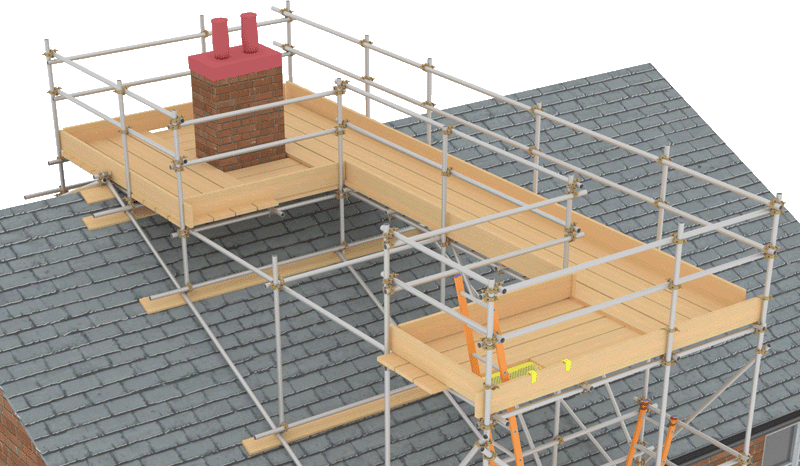
Partially systemise your existing scaffolding – Readylok transoms and extendable transoms can help you reduce labour costs and get more from your existing stock.
Convert to system scaffolding – whether hiring or buying, system scaffolding is a great option. What you spend on the system, you offset with lower labour costs, and this can help contractors to put together lower, more competitive quotes for clients without compromising quality. I’m a great advocate of system scaffolding, along with our own PLETTAC METRIX system available from TRAD UK, you can source alternative systems from other reputable, original manufacturers such as Layher, Haki and Peri as examples.
Consider scrapping unwanted tube – scrap prices for steel are now at an all-time high per tonne and continue to increase. So if contractors have a corner of the yard that’s got odd-sized tube or other steel components that have been collected over the years, you can raise a bit of extra cash by scrapping.
Why not sell? If you’ve got excess equipment, there’s never been a better time to sell. There is a good market for second-hand scaffolding equipment. At TRAD UK, we are always interested in buying second–hand equipment, so if contractors are looking to sell existing scaffolding so they can move to a hire-based model, or just to convert it into cash, we’d be interested to hear from them.
Not all doom and gloom
Our sector is busy – we are seeing a huge demand across all our sectors – from housebuilding to major industrial projects. Many projects that have been in the pipeline simply can’t be cast aside – they are essential to infrastructure and growth.
At the moment, certainly, raw materials pricing is a significant challenge. But I believe that, by working together and supporting our customers, we can come through this period together and build a stronger, more motivated and more collaborative industry that is successful and profitable in the long term.