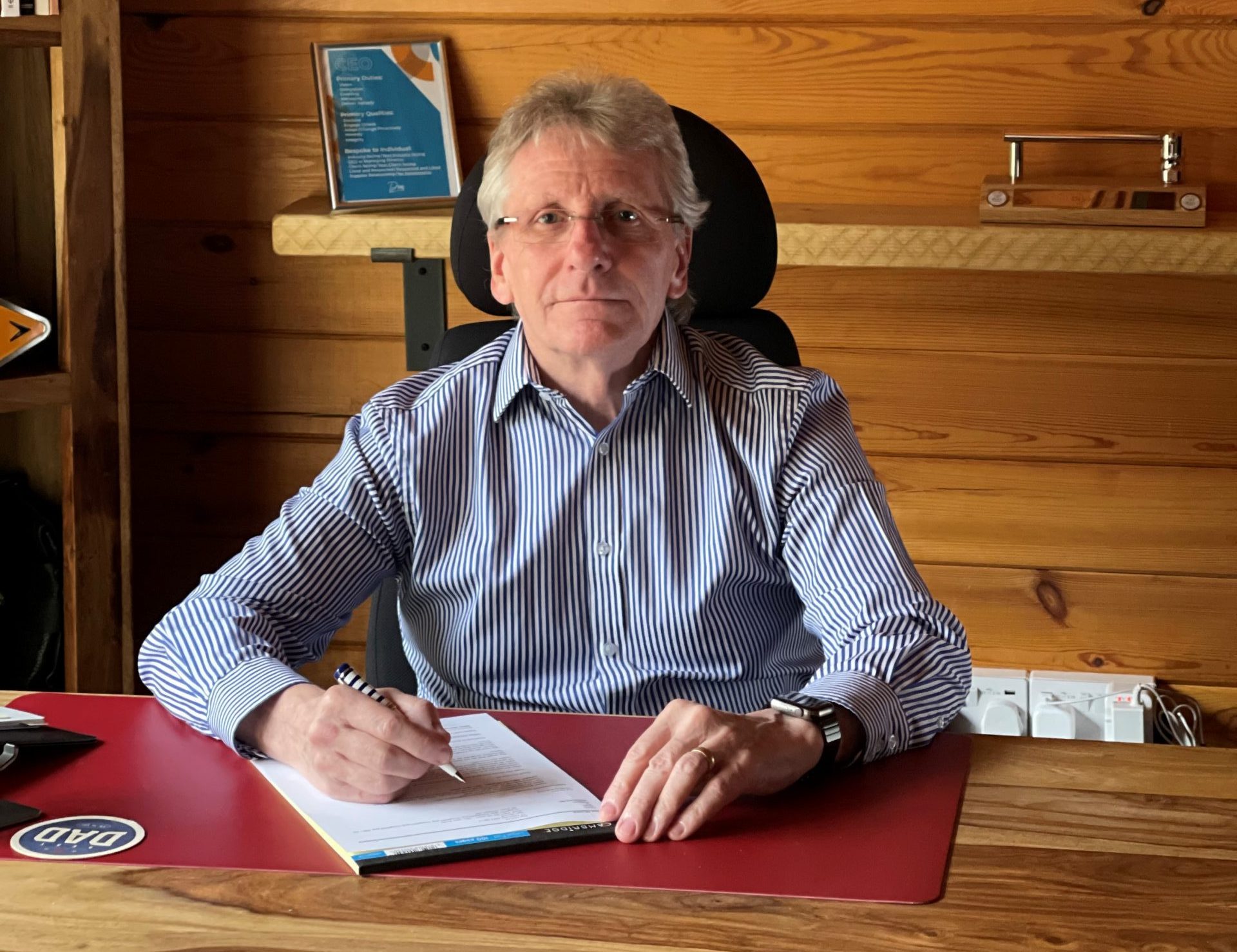
To survive the challenges of this year, I believe we need to be creative and collaborative, says Des Moore, TRAD Group CEO and NASC President (2017-19)
I couldn’t have imagined, this time last year, that I would be writing about an industry that is challenged on every front. We were planning for the potential consequences of Brexit on the business, of course, and we already knew there was an issue with workforce numbers. But the pandemic has thrown a number of new obstacles in our path, which will make for a 2021 that will require all our best efforts to navigate.
Not all doom and gloom
First, it’s important to say that we face these challenges with positivity – there’s no other way to do business. Our enquiries are consistent with past years, although our own orders and those of our customers are definitely coming into the business more slowly. We have noticed that projects are taking longer to complete – partially because of lockdown and COVID-safe working rules affecting speed on site – and partly because there’s a delay in getting materials to site.
This slow down is reflected across the construction industry, so where we deal with sub-contractors, we are seeing orders slowing down as it takes longer to get onto sites There are also restrictions in place on sites to comply with social distancing requirements, thereby limiting available labour on site. But most construction sites are still active, where they were not in the first lockdown in March 2020, and this is great news for the industry in general.
Preparing for a summer spike
As we move out of the current lockdown restrictions, the construction sector is widely expecting to see a spike in activity in May and June, with the exception of the London market, where a large number of projects seem to be stuck in a constant state of inertia. There is some nervousness about this, because expectations are that work will swing into action – but for that to happen, we need the workforce. We were already experiencing difficulties in getting skilled tradespeople for projects, and we were preparing for Brexit to have an impact on that – estimates are that, prior to the pandemic and the Brexit negotiations, 30% of the workforce in the construction industry was made up of EU labour, and that figure rose to around 50% in London and the South East.
So whilst projects might be able to ramp up the work, will the workforce be there to get things done? And are businesses anticipating that need now and starting to do something about it?
Dealing with a toxic environment
I think 2021 brings us a pretty toxic combination of factors that will impact the sector:
- Much higher costs for raw materials
- Increased logistics costs – for shipping and haulage
- Delayed delivery times
- Pressure on recruiting skilled labour and general labourers
- Rising wage costs
- General resourcing issues
For smaller firms, there’s also the potential impact of the VAT Reverse Charge which comes into force on April 1st this year. For those companies who use these funds as additional working capital, there is suddenly going to be a drop in available cash, and this will have a knock-on effect on ordering and delivery.
How we approach these multiple challenges will set us up for the future. Our priority has to be keeping our businesses running effectively. The TRAD Group restructured last year to increase efficiencies and ensure that we have a profitable and sustainable business in the long term. Other businesses may have to narrow their offering in order to survive, or diversify as part of their income stream becomes redundant.
Take the creative route
To survive the challenges of this year, I believe we need to be creative and collaborative. Looking for new ways to do things, working closely with customers, suppliers and even competitors to keep things moving. That means sharing best practice on productivity and making bold commitments that invest in the future of the sector.
I think this is a good time for scaffolding companies to consider hiring equipment rather than buying, for example. Well-managed hire can save money and give smaller firms the flexibility they need to get on with the job. It’s also worth considering using PLETTAC METRIX system scaffolding for example, rather than traditional tube and fitting.
Readers may be thinking: “Well, he would say that, given that’s part of his business offering.” And certainly, there are business opportunities for TRAD. But as a trader, there are many different systems for you to choose from – although I would strongly direct you to a ring system in particular.
System scaffolding offers significant labour savings, because it requires a different mix of skillsets: a lower ratio of skilled workers required in a team, compared with traditional tube and fitting scaffolding. This allows firms to manage costs and take on semi-skilled labour, teamed with advanced scaffolders or Gold Card holders without compromising safety or the quality of scaffolding and service supplied.
What are we doing?
The TRAD Group is looking at several ways to support our customers and the wider industry this year. To begin with, we have committed to at least 10% of our workforce being made up of apprentices, trainees and management scheme placements by the end of 2021. We believe in finding, supporting and developing talent so that people see scaffolding and access as a career, not just a ‘job’. We need to play an active role in building the workforce. By encouraging more people to join the business, and by promoting those people from within, based on their skills, talents and attitude, we can meet the challenges ahead of us and create a dedicated and skilled workforce for the future.
It’s also important that we do everything we can to support our customers – something that’s always important to us, but needs reinforcing when times are tough. We have already made a significant investment in hire stock to enable customers to trade successfully and flexibly during periods of high prices. And, in preparation for demand later in the year, we have also increased our levels of sales stock so that our customers can be confident of getting the equipment they need when they need it.
I firmly believe that by working together, supporting each other and having clear commitments for meeting these challenges that we can get through 2021 positively, minimising the potential damage to our businesses and the wider industry.
This article was first published in the ScaffMag Magazine Issue 12