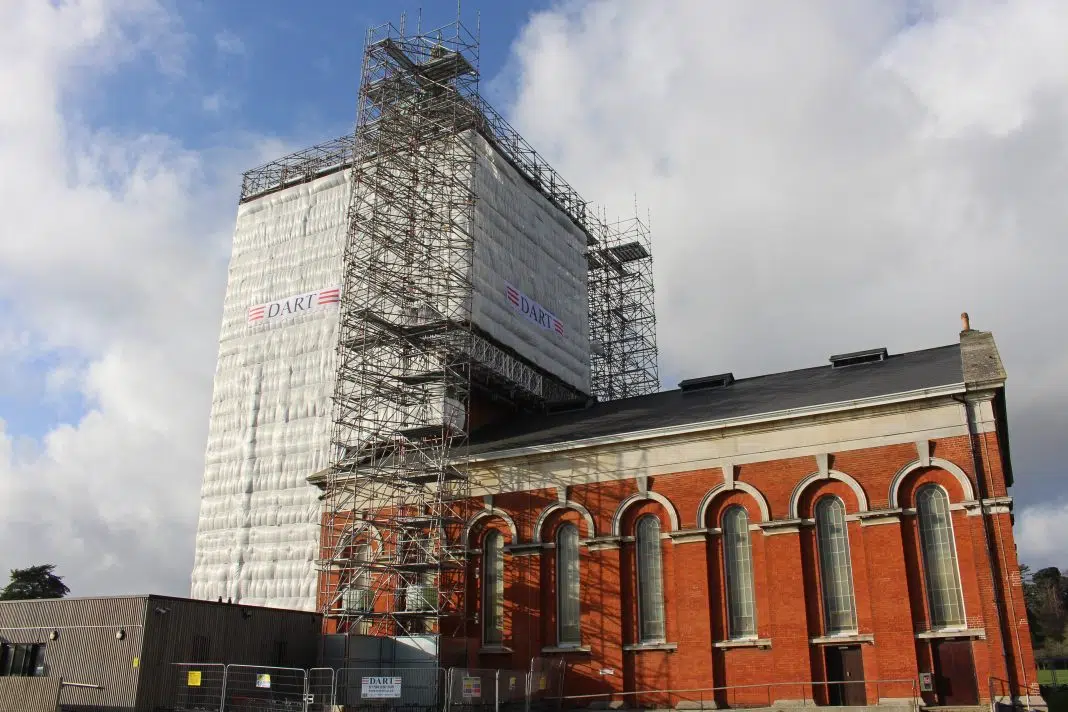
Layher UK has worked in close partnership with Skill Scaffolding on a demanding heritage restoration project at the Abbey in Royal Victoria Country Park, Southampton, delivering a scaffolding solution shaped by early involvement, technical support, and engineered system design.
The Abbey holds a prominent place in Southampton’s history. Opened by Queen Victoria and later associated with Florence Nightingale, it remains one of the city’s most recognisable landmarks. Any restoration work required an access solution capable of supporting significant loads while protecting sensitive historic fabric.
Appointed by DART, Skill Scaffolding selected Layher Allround system scaffolding, working alongside Layher UK from the outset to develop a solution tailored to the building’s scale and geometry. Layher’s early engagement helped ensure the scaffold was not only structurally robust but also practical to install and manage within a constrained heritage environment.
This collaborative approach reflects Layher’s 4×S philosophy, built around Service, Support, Solutions and Supply, which underpinned the project from planning through to delivery.
Engineered solutions, supported on-site
The Abbey’s size and layout required a bespoke scaffold arrangement incorporating long-span bridging, multiple access levels, and high load capacity. Layher Allround’s modular design allowed the structure to be adapted around architectural features while maintaining consistent system performance.
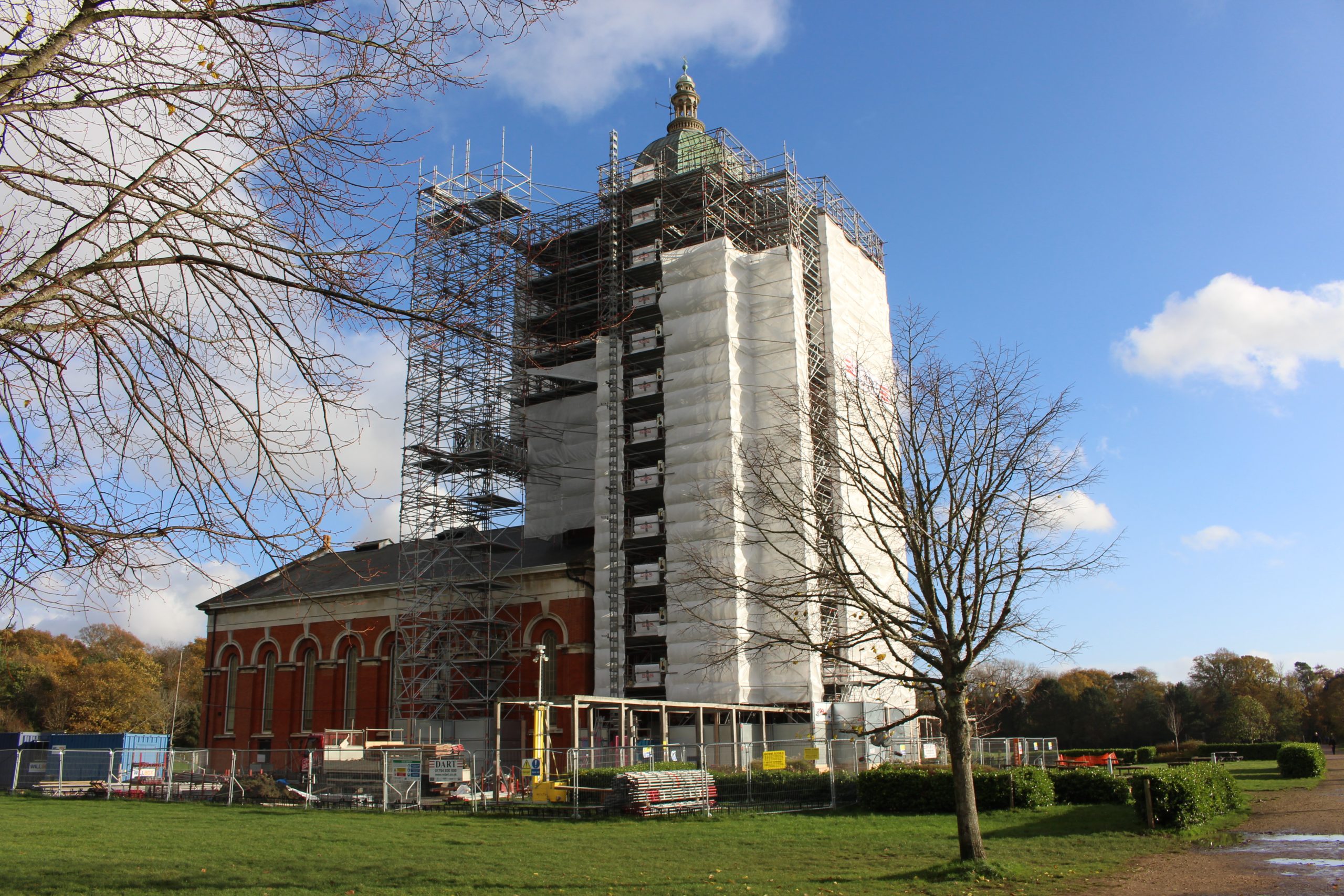
Specialist design solutions were required to manage the scaffold’s height and weight. Crane-assisted lifts were used to position materials at extreme elevations, with Layher Allround components providing the strength and reliability needed during critical phases.
Layher UK’s technical and site teams, including Clive Rowe, worked closely with Skill Scaffolding throughout installation, providing ongoing support as the scaffold took shape.
Sean Pike, Managing Director of Layher UK, said: “We were pleased to support Skill Scaffolding and the project team on this prestigious heritage scheme. The project demonstrates how Layher Allround can be integrated into complex environments, while close collaboration and on-site support ensure the right solution is delivered safely and efficiently.”
One of the most demanding stages coincided with exceptionally high winds, adding further pressure to lifting operations and sequencing. Despite these conditions, the scaffold was installed safely and to programme.
Efficient installation through system thinking
Making full use of Layher Allround’s adaptability, the team adopted a downward installation sequence rather than a conventional upward build. This method improved stability and reduced risk, while helping maintain progress on a complex and exposed site.
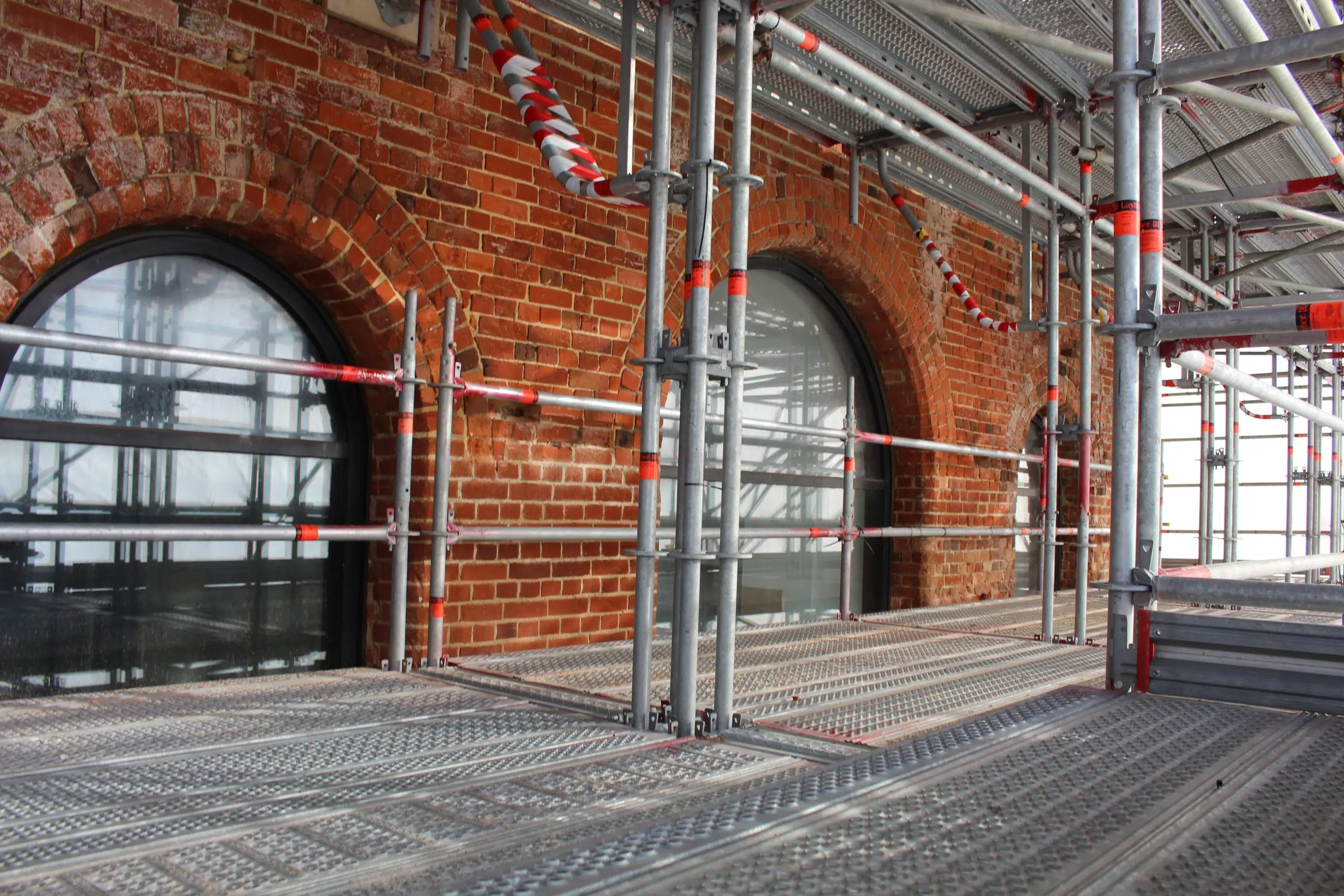
Material handling was supported by the firm’s robotic system, reducing manual handling during labour-intensive phases. Combined with the efficiency of Layher’s system components and reliable material supply, this helped maintain productivity without compromising safety.
Skill Scaffolding says the installation began with scaffold towers and kentledge to support the overall height,before large bridging beams were installed, among the biggest the company has undertaken to date.
Three of Skill’s most experienced gangs were deployed for this phase, working in close coordination as the scaffold took shape.
Respecting the building at every stage
Throughout the project, protecting the Abbey’s historic fabric remained a priority. Layher Allround enabled safe access from floor level to roofline while minimising contact with sensitive surfaces. Scaffold positioning and protection measures were continually reviewed as works progressed.
Skill Scaffolding’s Health and Safety team conducted regular inspections, ensuring the structure remained compliant and secure throughout the restoration.
A shared approach to delivery
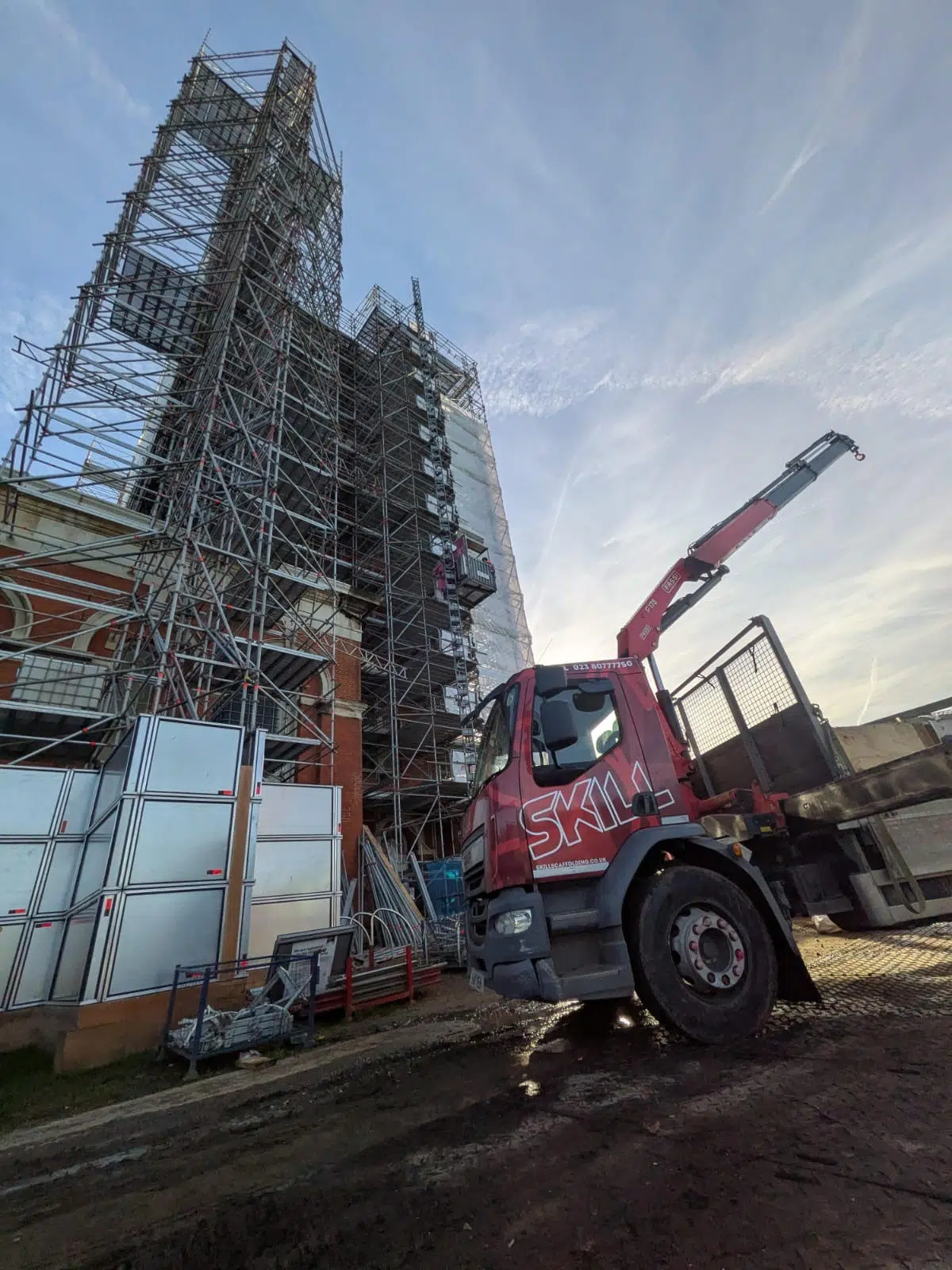
The completed scaffold reflects a shared approach between Layher UK and Skill Scaffolding, combining engineered systems, technical support, reliable supply, and skilled installation. It demonstrates how Layher’s 4×S philosophy translates into practical outcomes on site, particularly on complex heritage projects where there is little margin for error.
The project adds another high-profile heritage scheme to Layher UK’s portfolio and reinforces the role of Layher Allround as a dependable system for demanding restoration environments.