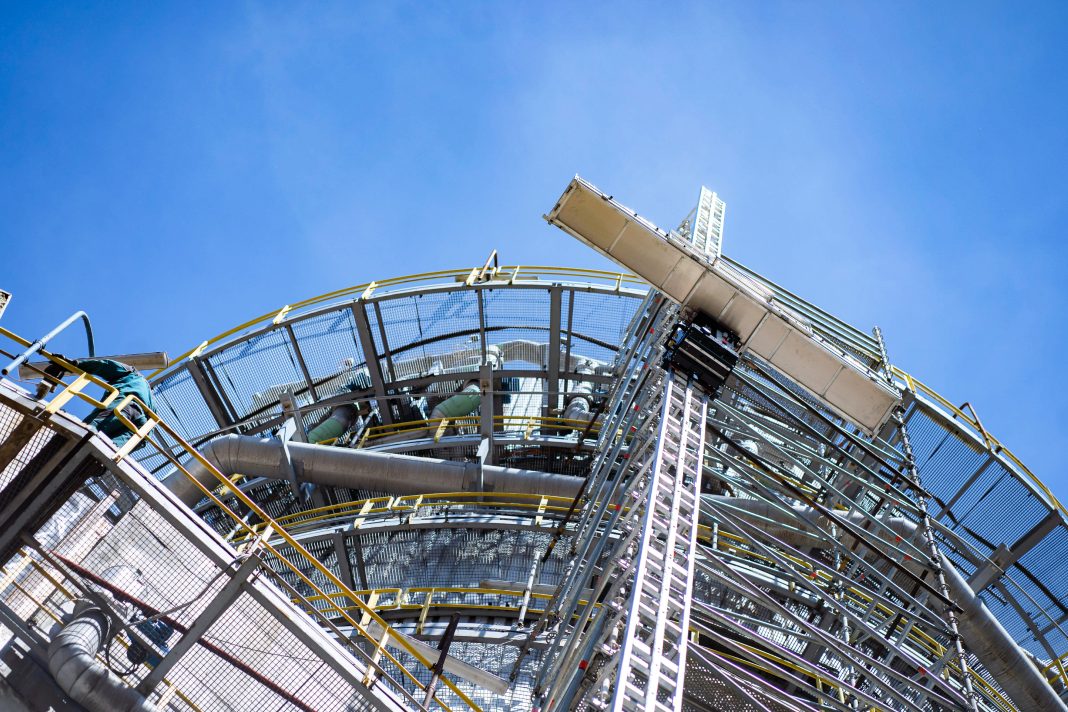
KEWAZO, a robotics company focused on heavy industry, has raised $35m in funding to accelerate the rollout of its lifting robot across global industrial sites.
The Munich and Houston-based firm said the investment is backed by Chevron Technology Ventures, Asahi Kasei, Schooner Capital and several existing investors. The funding will be used to increase deployment capacity and expand into additional workflows.
KEWAZO’s flagship product, LIFTBOT, is designed to automate vertical material movement on site. The system is already in operation at more than 20 industrial locations across Europe and North America, including refineries, petrochemical plants and power facilities.
The company said the technology is being used to replace cranes and manual handling during maintenance and capital projects, with the aim of improving safety, reducing labour intensity and shortening project timelines.
Chief executive Artem Kuchukov said demand is being driven by the need for practical automation that can operate in live industrial environments.
“Clients hear about robotics, but they rarely see robots operating at their plants,” he said. “We deliver immediate value in vertical material movement, and many are now asking us to expand into additional workflows.”
The company is also developing a wider data platform based on its deployments. KEWAZO said its systems collect structured operational data from industrial sites, which will be used to improve transparency and support further automation over time.
Investors said the technology reflects a broader shift towards automation in heavy industry, particularly in energy and materials sectors where safety and efficiency remain key priorities.
Chevron Technology Ventures said the system offers an approach to improving operational performance, while Asahi Kasei said it could help shorten maintenance periods and reduce risk in complex environments.
KEWAZO said it will use the new funding to scale deployments, expand into new use cases and deepen integration with existing customers.
For the scaffolding and access sector, the use of robotics in lifting and logistics points to a gradual shift in how materials are handled on site, particularly on large industrial projects.