
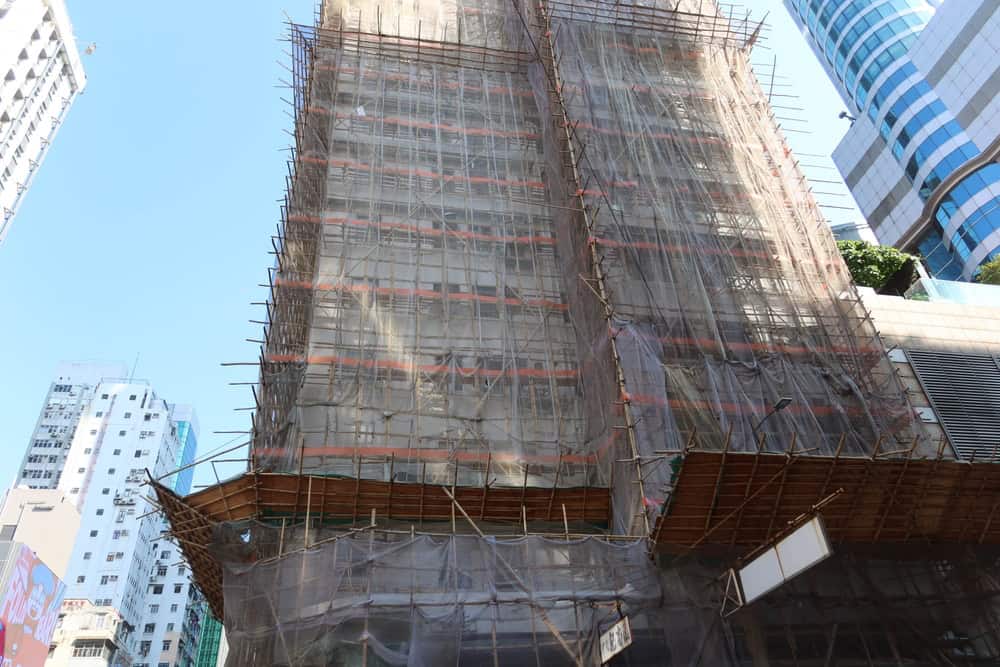
Hong Kong to Phase Out Bamboo Scaffolding Over Safety Concerns

ADVERTISEMENT

Hong Kong is set to scale back its iconic use of bamboo scaffolding as officials take steps to improve safety standards on building sites.

In a policy shift announced this week, the Development Bureau said steel scaffolding would replace bamboo on at least half of all new public construction contracts.

The move follows a string of fatal incidents – with 23 workers killed in bamboo scaffold-related accidents since 2018.

Bamboo scaffolding has long been a hallmark of Hong Kong’s urban landscape, wrapped around skyscrapers and neon shopfronts alike. Lightweight, flexible, and relatively inexpensive, it has been used for everything from small-scale renovations to the construction of major high-rises.

The practice, with roots stretching back centuries across Asia, is unique for its speed and efficiency. Bamboo poles – fastened with nylon straps instead of nuts and bolts – can be quickly erected even in the city’s narrowest streets. Generations of skilled scaffolders have passed down the technique, which is as much a craft as a trade.
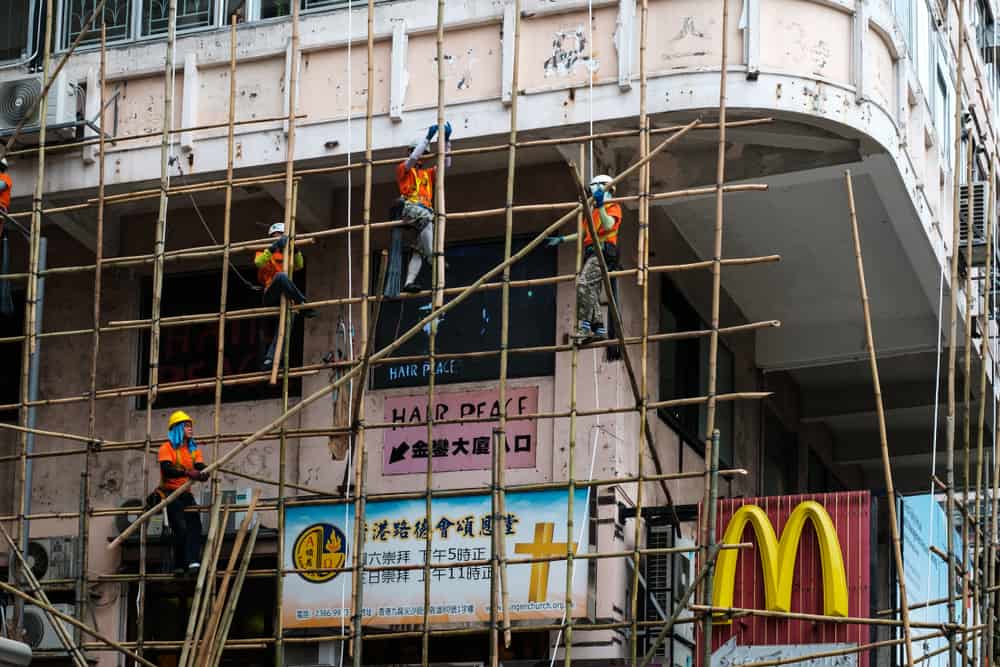
scaffolders erecting bamboo scaffolding in Hong Kong
Scaffolders erecting bamboo scaffolding in Hong Kong / Stock photo

But authorities say the material’s limitations are now too risky to ignore. Bamboo is highly flammable, can deteriorate over time, and varies in strength – making it increasingly unsuitable for modern, high-risk worksites.

“Bamboo has intrinsic flaws that raise serious concerns,” said Terence Lam, a spokesperson for the Development Bureau. “We need to prioritise worker safety.”

Currently, around 80% of scaffolds across the city are still made from bamboo, according to industry estimates. While steel scaffolding is more expensive – often two to three times the cost – it is widely seen as more robust, reliable, and better aligned with international safety standards.

The Association for the Rights of Industrial Accident Victims welcomed the change, calling on private developers to follow the government’s lead.

“Lives are being lost. Even if metal costs more, it pays off in long-term safety,” the group said. “This shift has been a long time coming.”

Some, however, see the move as the end of a cultural era. For many residents, bamboo scaffolds are a visual signature of the city – a striking contrast of tradition against modern glass and steel.

“It’s part of Hong Kong’s identity,” said one veteran scaffolder in Sham Shui Po. “But we can’t keep holding on if it puts people in danger. The world is changing.”

ADVERTISEMENT

Popular Categories

Latest posts

Robot named Douglas begins work on Tilbury Douglas site

Tilbury Douglas has begun using a humanoid robot to carry out administrative and data-collection tasks on a live construction site. The contractor says the...

HAKI reports sharp UK sales drop as construction starts stall

The Swedish-listed scaffolding and access safety group said UK revenues fell to SEK 52 million (£4.2 million) in the three months to 31 March,...

CISRS appoints Kathryn Bowe after delay to quality committee reforms

CISRS has appointed Kathryn Bowe as full-time Chair of its Quality Assurance Committee, months after the organisation was forced to restart recruitment for the...

NASC throws support behind first International Scaffolding and Access Day

NASC has thrown its support behind the first International Scaffolding and Access Day, as the UK industry prepares to join a new annual campaign...

Women completing construction apprenticeships triple since 2018, says CITB

The number of women completing construction apprenticeships has more than tripled since 2018, according to new figures from the Construction Industry Training Board (CITB). CITB...

Pilosio brings UK scaffolding safety model into Italian conference spotlight

Pilosio is set to use its presence at GIC Piacenza, a major construction trade event in northern Italy, this week to push a broader...

CISRS proposes single global scaffolding training standard by 2028

CISRS has set out plans to reform its Overseas Scaffolder Training Scheme, with proposals that would lead to a single global baseline training standard...

Scaffolder died nine months after building site fall, inquest told

A four-day inquest has opened into the death of a scaffolder who died nine months after falling more than three metres while working on...

Scaffolding industry backs all-apprentice team for ScaffChamp 2026

A team of seven apprentices from Scotland and Northern Ireland will compete at ScaffChamp 2026 in Vilnius this summer, after securing full backing from...

NASC chief to take on charity ride in tribute to former president

Clive Dickin, Group CEO of NASC and CISRS, is set to take part in the British Heart Foundation London to Brighton Bike Ride on...

Latest news

Spring Issue #29 | Past issues >>

Latest topics

Most popular ⚡︎

Scaffolder died nine months after building site fall, inquest told

A four-day inquest has opened into the death of...

Pilosio brings UK scaffolding safety model into Italian conference spotlight

Pilosio is set to use its presence at GIC...

CISRS proposes single global scaffolding training standard by 2028

CISRS has set out plans to reform its Overseas...

Women completing construction apprenticeships triple since 2018, says CITB

The number of women completing construction apprenticeships has more...

CISRS appoints Kathryn Bowe after delay to quality committee reforms

CISRS has appointed Kathryn Bowe as full-time Chair of...

Related articles

ADVERTISEMENTS