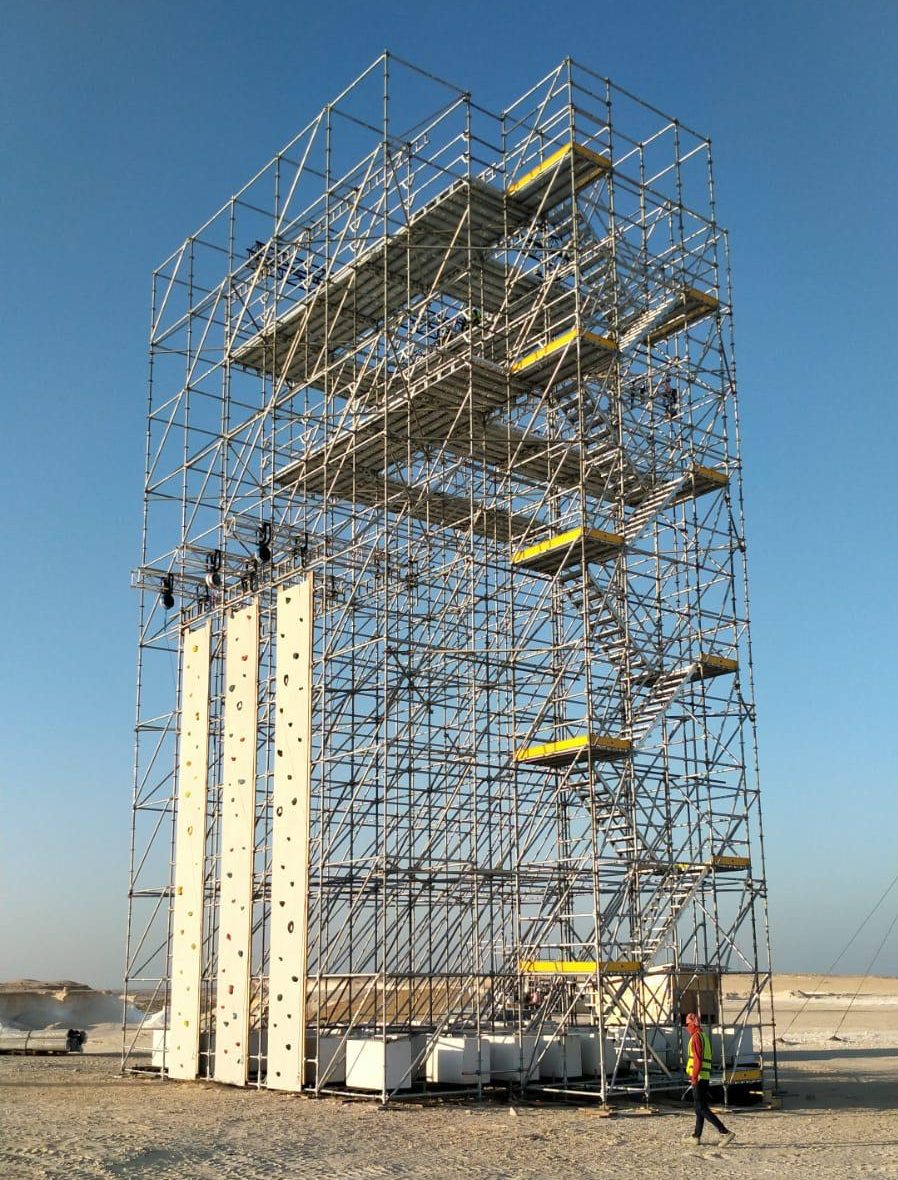
AT-PAC Ringlock has been used to support what the project team described as the longest zipline installation ever constructed in Qatar, spanning approximately 200 metres at a desert events site near Dukhan.
Delivered for Swiss Open Air International as part of the Brouq Desert Festival, the temporary installation required a scaffold solution capable of managing elevated cable tensions and dynamic loads, while also accommodating public access around the base of the structure.
The scale of the zipline set this project apart from typical event installations. A 200-metre span introduced significantly higher forces at the launch point, placing greater demands on stability, load transfer, and overall structural control.
Engineered support for a two-tower configuration
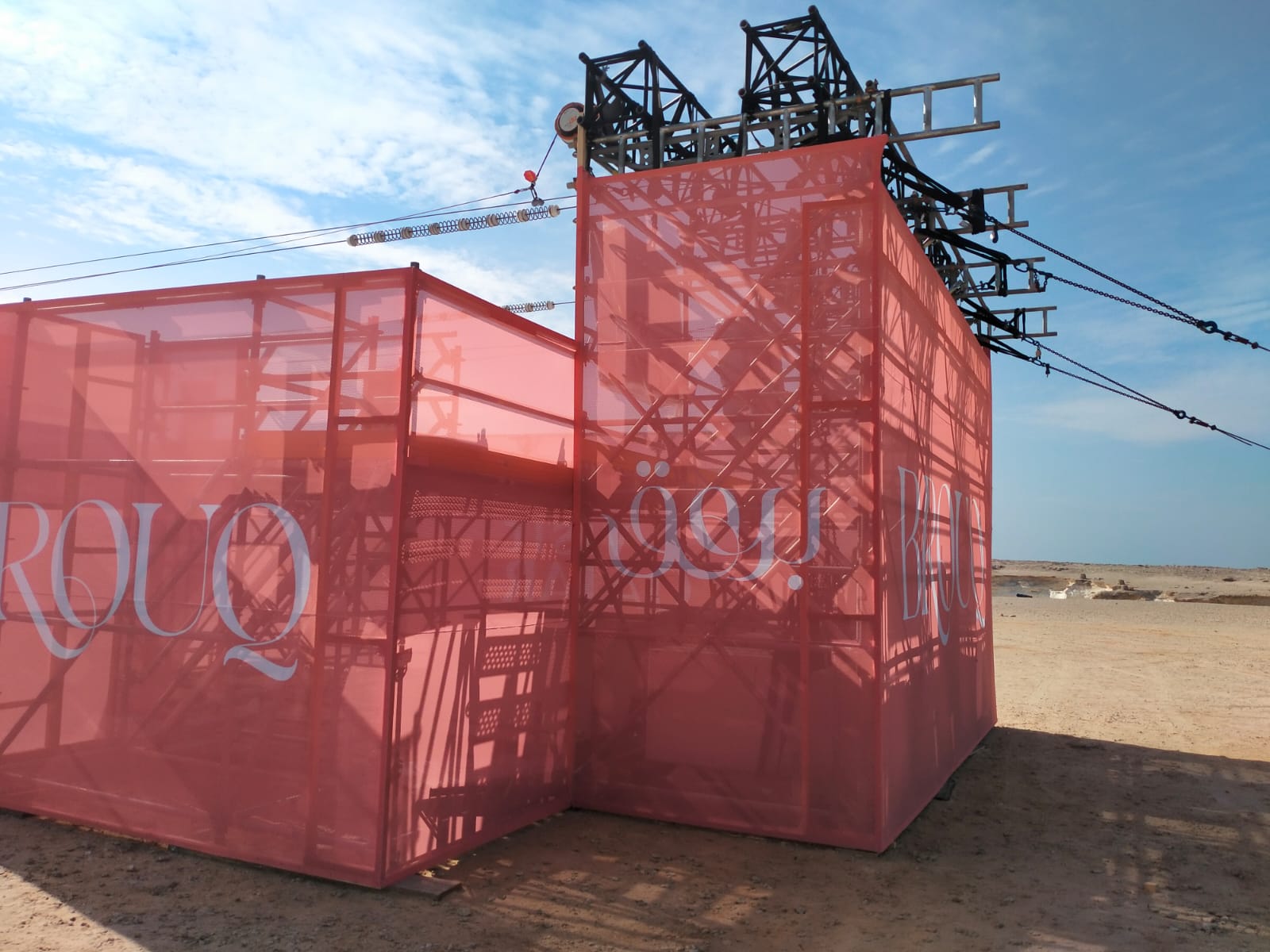
The scaffold formed the primary support for a two-tower zipline arrangement, consisting of a 20-metre-high launch tower and a 5-metre-high landing tower. Each tower had distinct performance requirements, with the launch structure designed to resist the highest cable tensions and associated overturning forces.
AT-PAC Ringlock was selected for its modular flexibility and structural capacity, allowing both towers to be configured efficiently while maintaining a controlled footprint suited to a live event environment. Counterweighting was integrated into the scaffold design to manage applied forces and ensure overall stability throughout operation.
Ringlock’s rosette connections enabled accurate alignment and rapid assembly, supporting the tight installation programme typically associated with large-scale events.
Managing public access and trip risk
In addition to structural performance, public safety around the base of the installation was a key design consideration. High footfall in close proximity to the towers required clear circulation routes and the removal of low-level obstructions wherever possible.
AT-PAC’s Raised Ledger System (RLS) was deployed specifically in public walkway areas around the structure. By elevating ledger connections, the system removed low-level components from pedestrian zones, significantly reducing trip hazards without compromising the integrity of the scaffold.
Trip hazard reduction was the primary driver for the use of RLS on this project, reflecting the additional safety demands of a people-facing events environment.
View this post on Instagram
Installation on a live event site
Installation of the two towers was completed over five days, requiring close coordination between engineering, logistics, and site teams. The scaffold solution incorporated a combination of rental and purchased material, demonstrating the flexibility of system scaffolding in temporary event applications.
At the time of reporting, the structure remains in place, with dismantling scheduled following the conclusion of the event programme.
Adapting system scaffolding for events
Supporting the longest zipline installation in Qatar required Ringlock to perform beyond its conventional role as access scaffolding. The project illustrates how engineered system solutions can be adapted for temporary structures subject to dynamic loading, public interface, and programme-driven installation constraints.
It also highlights how targeted system features, such as raised ledger configurations, can play a decisive role in managing specific safety challenges unique to event environments.