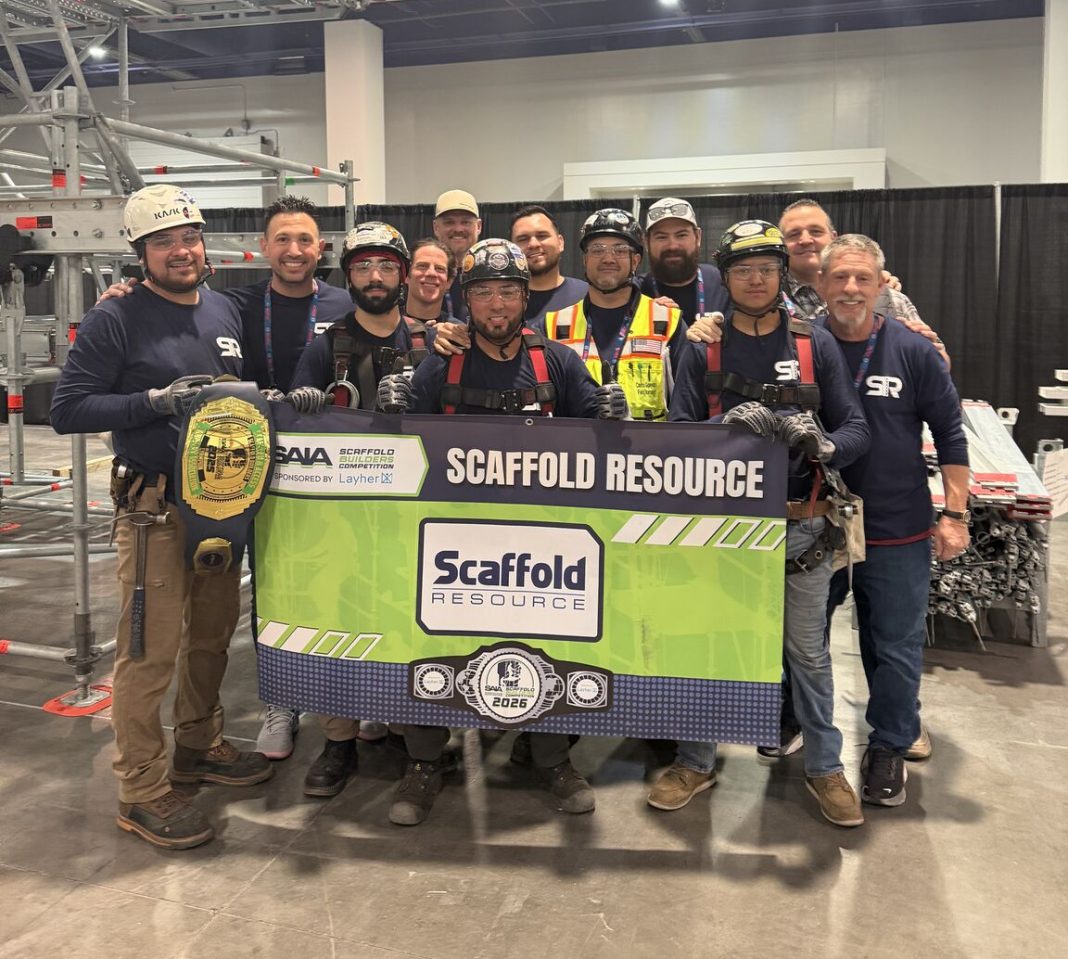
A Maryland-based scaffolding company has successfully defended its championship title at the United States’ most prestigious scaffold building competition, held at the World of Concrete trade show in Las Vegas.
Scaffold Resource, from Lanham, Maryland, completed the timed challenge in one hour, 20 minutes and 55 seconds to claim their second consecutive victory at the Scaffold & Access Industry Association (SAIA) competition on 20 January.
The annual event, under SAIA’s organisation, saw 13 teams from across the United States and the United Kingdom compete in a timed build-and-dismantle challenge, testing their technical skill, safety protocols and teamwork under real-world conditions.
International Competition
Turn Key Scaffold from California finished second with a time of one hour, 34 minutes and 20 seconds, whilst fellow Californian firm Scaffold Solutions claimed third place at one hour, 35 minutes and 40 seconds.
AK Scaffolding from Manchester represented the UK contingent, finishing fourth overall with a time of one hour, 43 minutes and 38 seconds.
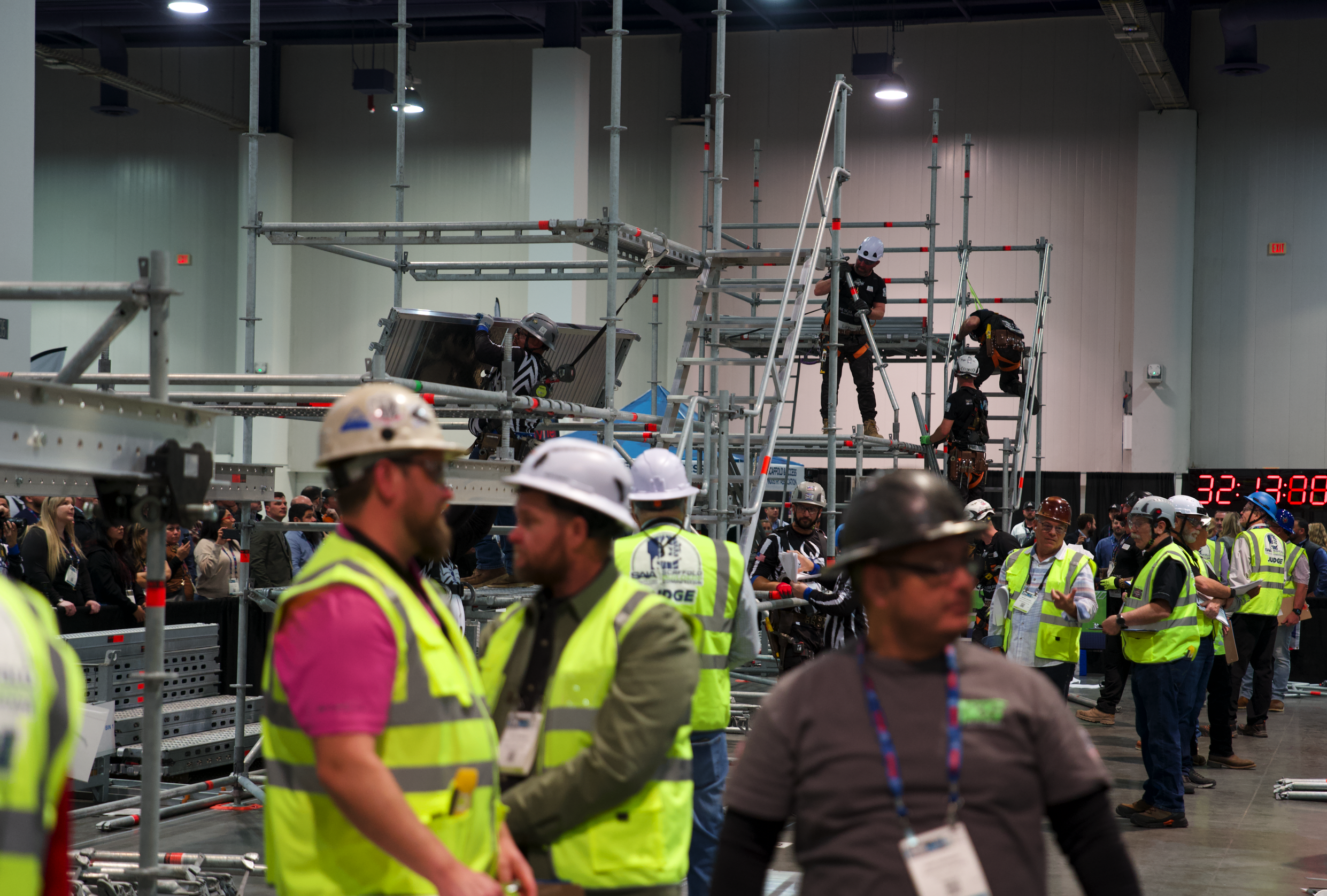
The competition, sponsored by German scaffolding manufacturer Layher, attracted considerable attention from the estimated sixty thousand of construction professionals attending the World of Concrete exhibition.
In a separate public vote, Atlas Sales from Hawaii won the Crowd Favourite Award, securing 234 votes in an online poll—significantly ahead of other competitors.
SAIA President Mike Bredl presented the awards, including the coveted Championship Belt which has become a symbol of excellence within the American scaffolding industry.
Industry Recognition
The competition was judged by a panel of 19 industry experts, including representatives from major scaffolding firms and engineering consultancies across North America.
Beyond the competitive element, SAIA used the event to deliver safety demonstrations, with their Fall Protection Council highlighting the critical importance of rescue planning following falls, a factor often overlooked in workplace safety protocols.
“Fall protection is only half the story—what happens after a fall matters just as much,” organisers emphasised during Wednesday’s educational sessions, which examined suspension trauma risks and anchor testing.