Rose System Scaffolding has completed the scaffolding package for the Prestwich Travel Hub, the first phase of a £100m+ regeneration of Prestwich Village in Greater Manchester, working alongside main contractor VINCI Building.
The scheme, a joint venture between Bury Council and placemaker Muse trading as Prestwich Regeneration LLP, will deliver a new village square, market hall, community hub, flexible retail and leisure spaces, landscaped green areas and around 200 new homes.
Shaped by two rounds of extensive community consultation, the masterplan is designed to cement Prestwich as one of the best places to live and spend time in the North West. The new Travel Hub, improving parking and connectivity at the heart of the village, forms the opening phase of that wider vision.
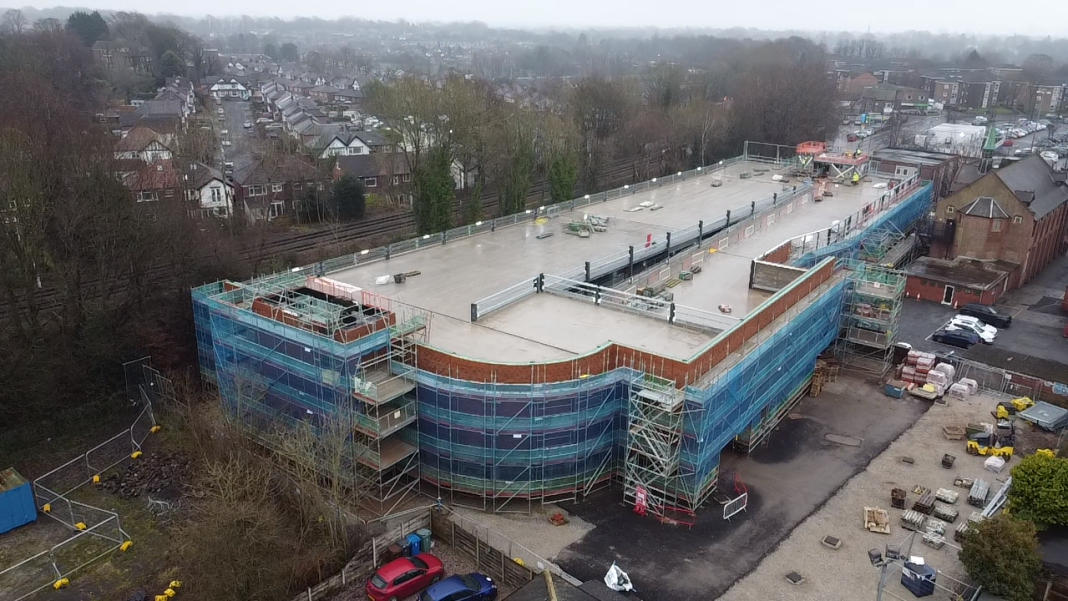
Rose was appointed to deliver access scaffolding and edge protection to the Travel Hub’s steel-framed, brick-finish structure.
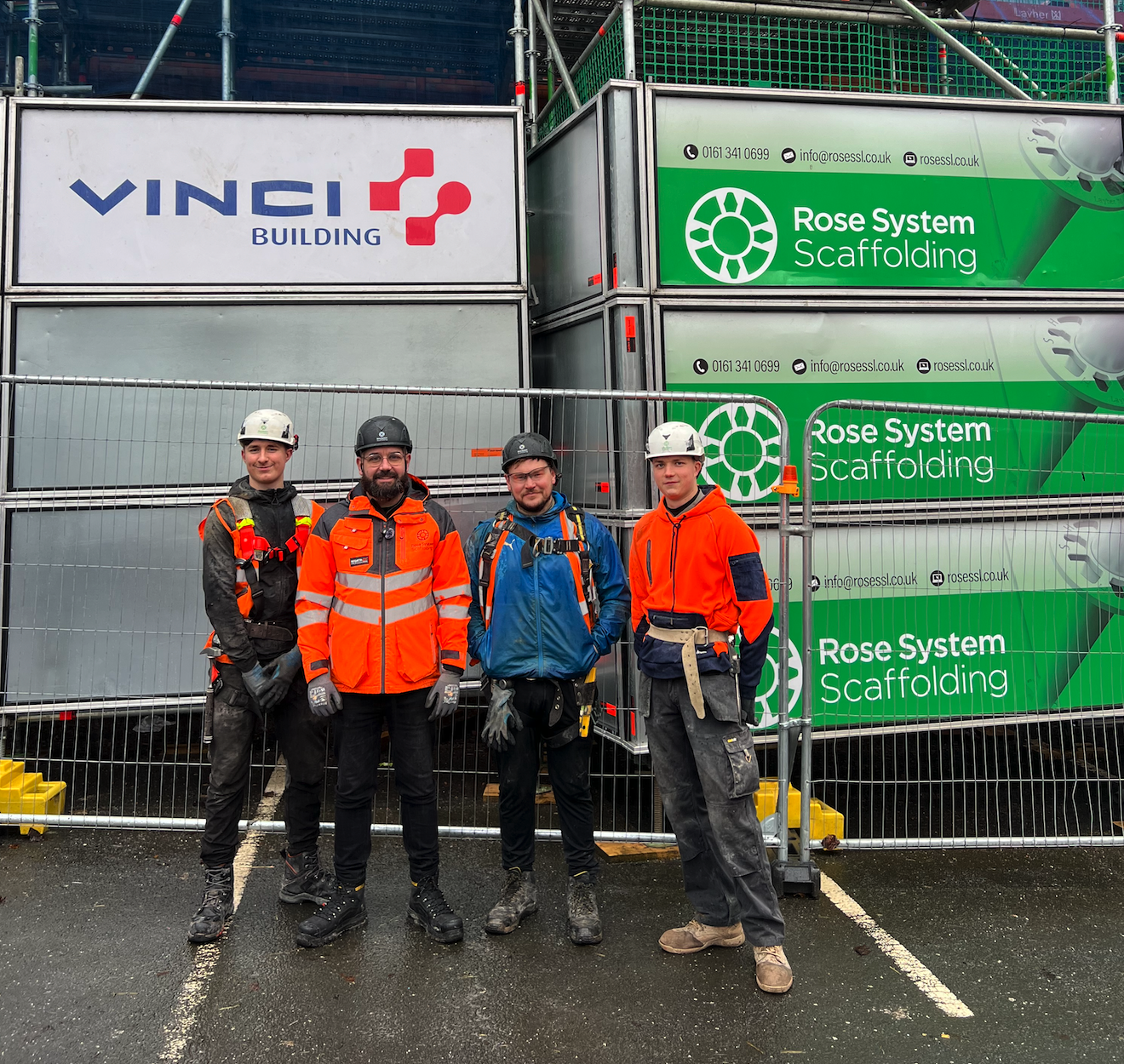
The scaffold runs 150 metres in length and 8 metres in height across the external façade, with works running from September 2025 through to June 2026. The installation was managed on site by Foreman Ash Thorley, with a four-strong team that included two apprentices.
Layher Allround specified throughout
The Layher Allround System was selected for the project. As a dedicated Layher contractor, Rose worked with the system across the full installation, with its adaptability proving important on a build with a number of complex geometric requirements.
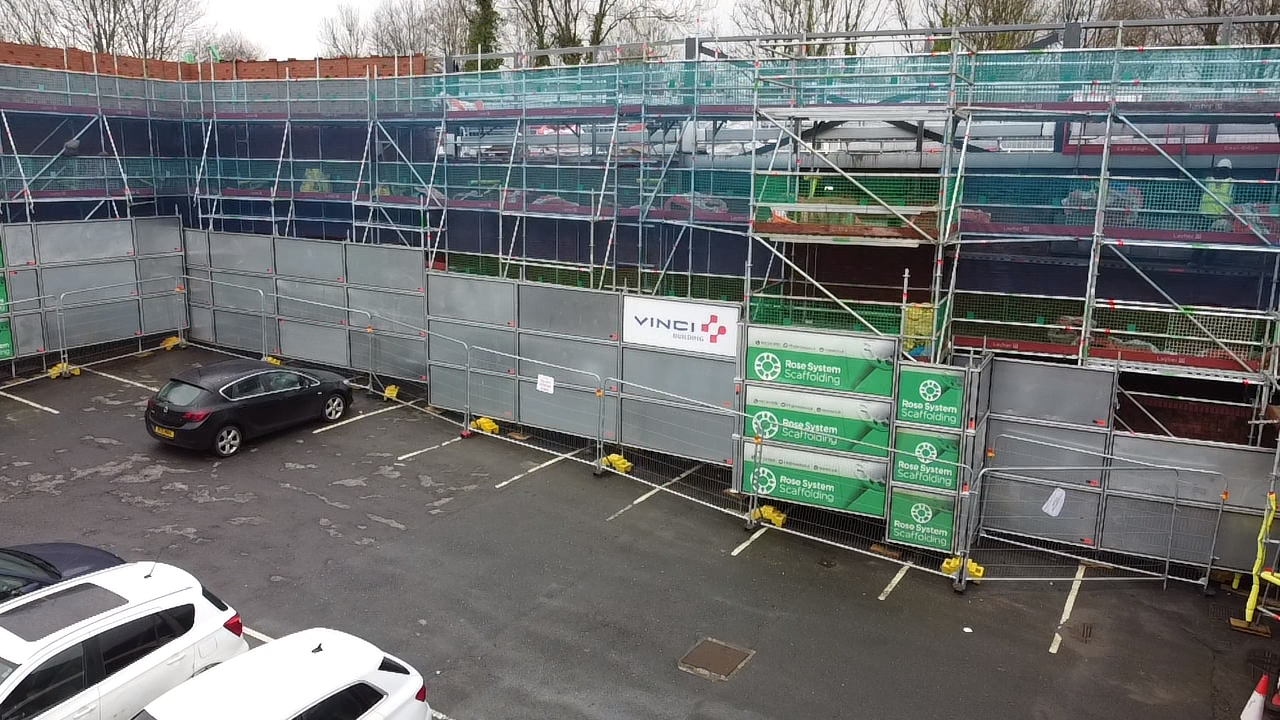
These included a splayed independent scaffold to a curved section of the building, bespoke setting out around an existing boundary wall, and a covered pedestrian walkway to maintain live access to a neighbouring church’s fire escape throughout the works. The site also bordered a live car park, requiring public safety and access to be carefully managed for the full duration.
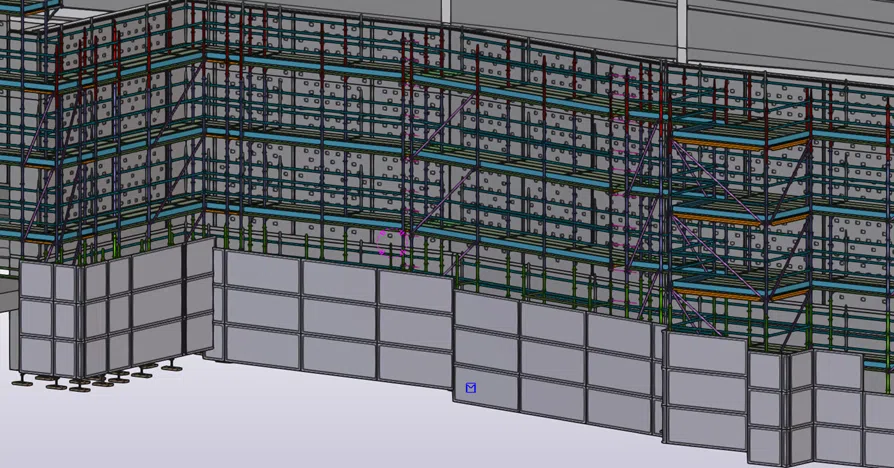
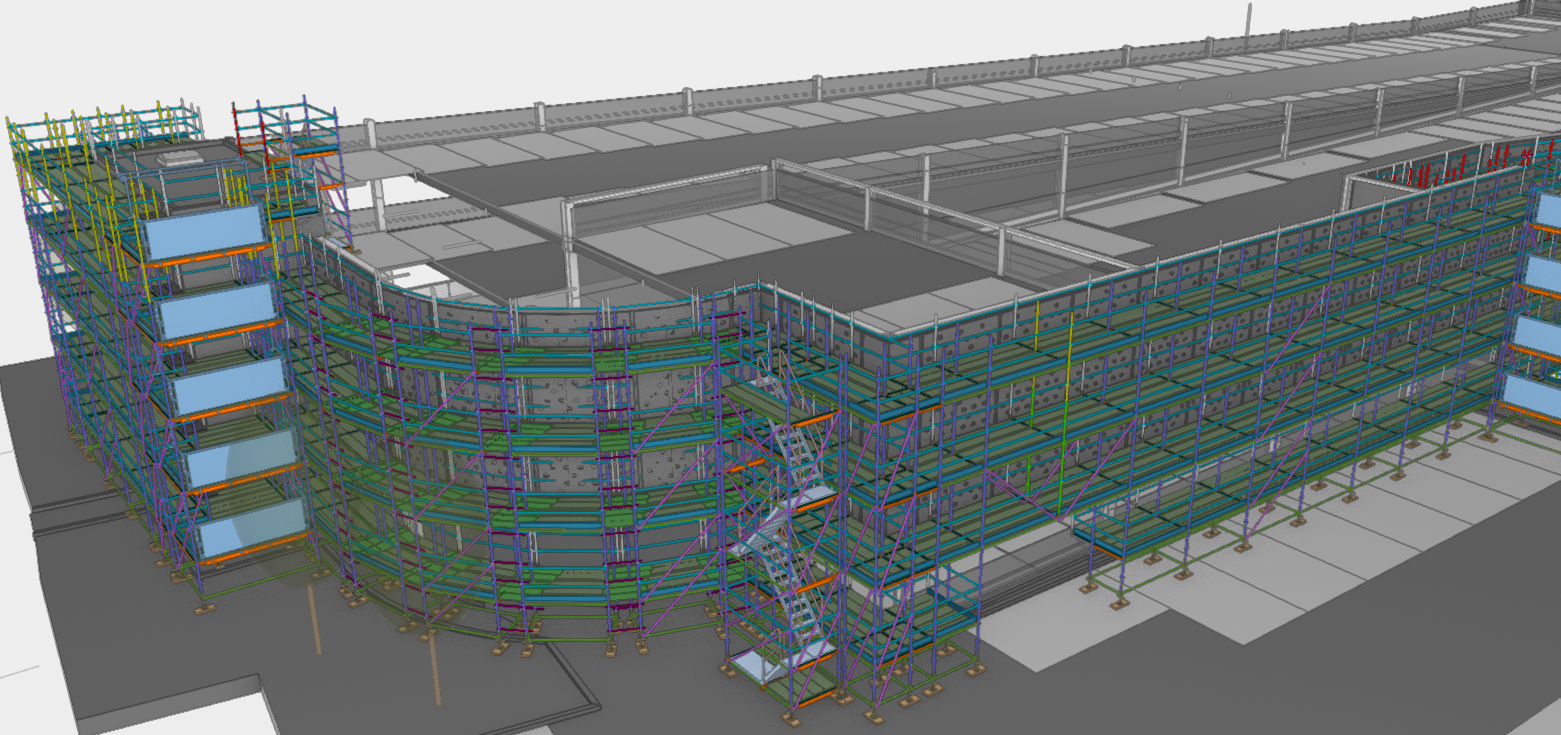
Layher’s renowned multi-directional connector rosette allowed components to be positioned to suit the building’s geometry, enabling Rose to meet the technical requirements of the build while keeping the site safe and accessible. On a project where the building’s form and the constraints of the surrounding environment had to be managed simultaneously, that adaptability was central to delivering the right solution.
Early involvement and collaborative planning
Rose’s in-house technical department, headed by James Harrison, widely recognised as the UK’s first dedicated scaffolding digital technician, prepared initial design concepts using Scaffplan. These were reviewed and agreed with VINCI Building and key stakeholders before the main design was completed by Raptor Scaffold Design, ensuring full alignment across the project team ahead of mobilisation.
BIM modelling was used throughout the planning phase, with accurate 3D setting-out plans developed and shared with VINCI Building and local stakeholders well ahead of works starting on site. The tight boundary conditions, proximity to a live car park, and the need to maintain the church fire escape were all identified and resolved digitally before a single standard went on site, reducing risk and keeping the project on programme.
Protec panels were installed across the car park area for additional public protection. All works were carried out in full compliance with NASC guidance including SG4.
This collaborative approach reflects Layher’s 4×S philosophy, built around Service, Support, Solutions and Supply, which underpinned the project from planning through to delivery.
This article was originally published in Issue 29 of the ScaffMag magazine.