
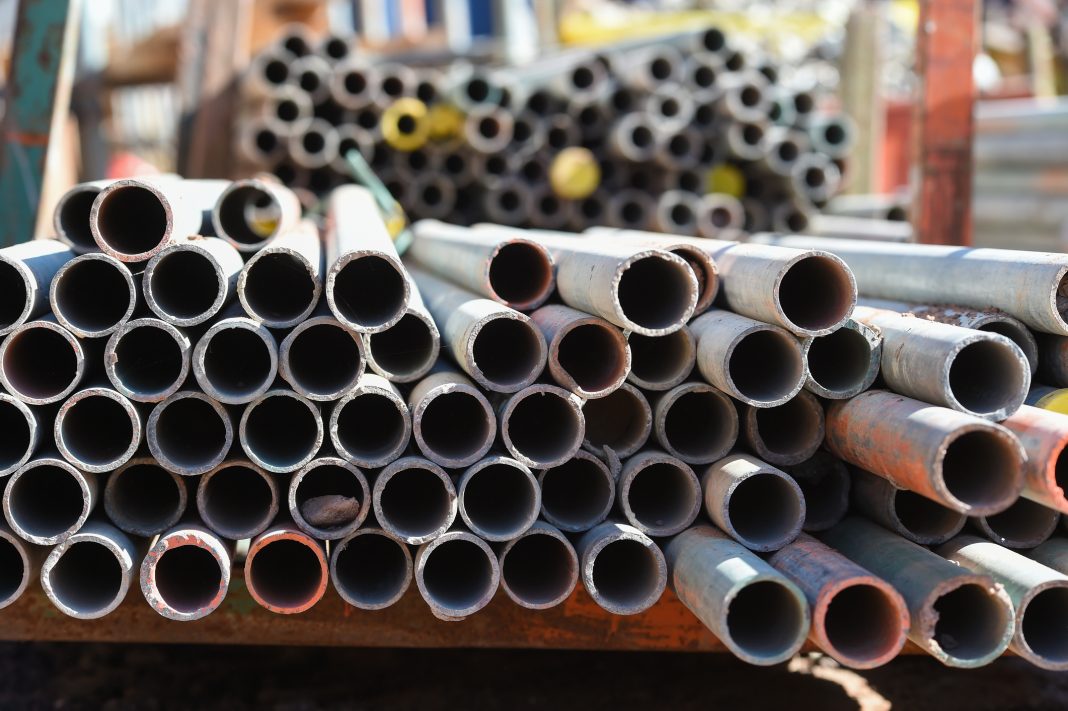
Tube costs rise, but the CBAM outlook eases

In his first monthly column for Scaffmag, Trevor Inns of Tube Industries examines the forces shaping scaffold tube costs and explains why his latest estimate of January’s CBAM impact is lower than he expected in October.

ADVERTISEMENT

Scaffold tube costs up 5% this quarter, and HMRC’s first CBAM numbers point to a far smaller January rise than feared

The TUBEIND Index, which tracks the cost of landing imported scaffold tube in the UK, currently stands at 81, up from 77 in the summer. Higher freight and a weaker pound did the damage.

What the index measures

The TUBEIND Index tracks what it costs to import scaffold tube before any importer or wholesaler adds a margin.

The index is set to 100 at June 2023, so a reading of 81 means tube costs 19% less to land than it did then. We show each driver so you can see what is pushing the number up or down. The series is built monthly from actual shipments and shown here by calendar quarter.

The index since June 2023
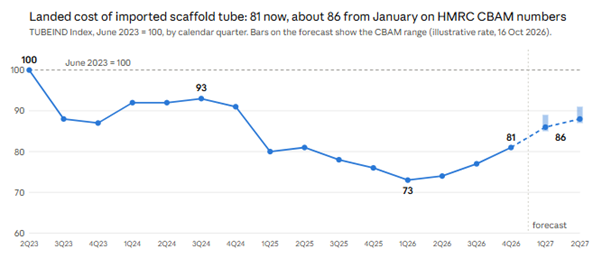
Tube Industries index chart. – Credit: Tube Industries.

Tube has cost less to land than in June 2023 every quarter since, with the 2024 Red Sea crisis the only period that came close. On HMRC’s illustrative CBAM rate it stays below that level through the first half of 2027.

What moved this quarter

The index rose from 77 to 81, about 5%. Almost all of it came from two places. i) ocean shipping rates have been climbing since the summer as importers are pulling stock forward to land it before CBAM starts ii) Sterling has weakened since the spring. For most of 2025 and early 2026 a strong pound was quietly cutting the cost of imported steel. That tailwind has gone and turned into a small headwind.

Steel prices have hardly changed at all as Chinese domestic demand remains weak and mills have had little room to raise prices. That stability is the main reason tube has stayed cheap through 2025 and 2026.
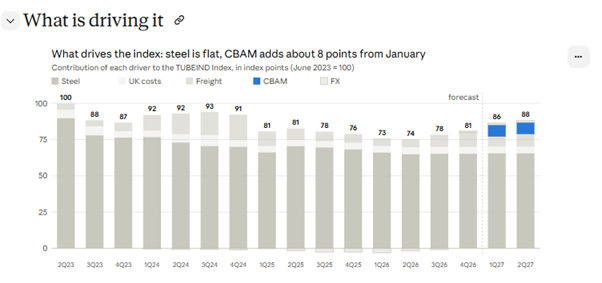
Tube Industries cost-driver chart – Credit: Tube Industries.

What comes next: CBAM

From 1 January 2027 every tonne of steel imported into the UK carries a carbon charge under the Carbon Border Adjustment Mechanism. On 16 October HMRC published draft numbers for that charge. The final rate for ships arriving between January and March will be published before the end of December

That draft rate is lower than most of the market expected. Scaffold tube will be charged roughly an extra 7p per foot. Note: This is the default charge. For importers working with suppliers that have actual emissions data (verified by an approved, independent third party) the charge should be lower.

That lifts the index by about 8 points, from 81 to around 86 in the first quarter, with a range of 85 to 89. Freight easing after the pre-CBAM import rush offsets about 3 of those points. The net effect on landed tube in January is a rise of about 6%.

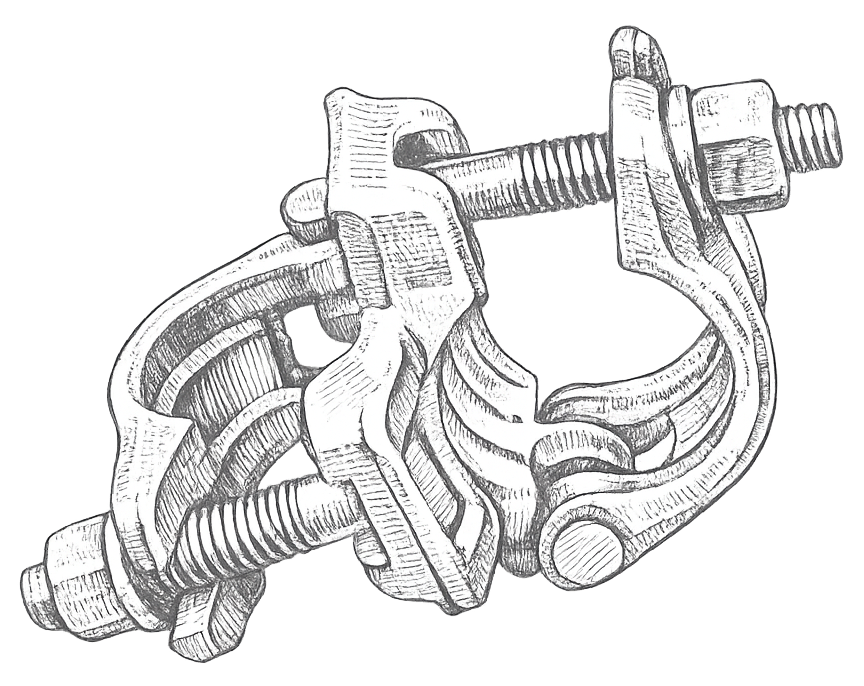
For fittings, they weigh around the same as a foot of 3.2mm tube, so expect a similar 7p increase in your double, swivels and sleeves which may also be slightly offset by an easing of freight prices.
Trevor Inns
Trevor InnsMaterials & Supply Chain Columnist
Trevor Inns is a director of Tube Industries, an NASC member that supplies scaffold tube to UK wholesalers and hire companies. He moved into scaffold steel in 2023 after a long career in banking technology, which included CTO roles at Barclays and leading global payments programmes at HSBC. He writes Scaffmag’s monthly steel and tube price tracker. It covers where tube prices are heading and how CBAM will change what UK buyers pay for imported steel.

Most popular ↑

Government announces paternity pay for self-employed dads

Self-employed fathers and partners are to receive two weeks of support under government plans, with payments currently worth up to £194 a week.

Luton plans £11m scaffolding framework

Luton Council is preparing an estimated £11.04m scaffolding framework and will hold a supplier briefing next week ahead of a planned December tender.

Budget 2026: what it means for scaffolding firms

Fuel duty relief, higher minimum wages and apprenticeship measures feature in Budget 2026, as NASC warns investment promises must translate into construction work.

Scaffold Innovations: GapClamp™

  Since the Work at Height Regulations 2005 came into...

Confessions of an MD

At 21, John Trayfoot blacked out on a roof and fell 8 metres through a skylight into a Brighton timber yard. Now managing director of M R Scaffolding, he starts his company's safety sessions with that story, and with a question: why do experienced people who know the risks still cut corners?

Latest news

Coriant acquires Intech Environmental to expand industrial services

Coriant, the group behind Rainham, Zenith and SCA, has acquired Intech Environmental to expand its industrial cleaning, confined-space rescue and rope access capabilities.
- Advertisement -
More from

Coriant acquires Intech Environmental to expand industrial services

Coriant, the group behind Rainham, Zenith and SCA, has acquired Intech Environmental to expand its industrial cleaning, confined-space rescue and rope access capabilities.

Self-employment reforms could shift proof burden onto contractors

Proposed worker-status changes could put the burden of proving genuine self-employment on contractors. A new assessment puts the economy-wide annual net direct cost at £167.8m.

Scaffolding firms face tighter harassment duties from 30 October

Stronger harassment duties and new union-access rules take effect across Great Britain on 30 October, with implications for firms working on client-controlled sites.

Forty CVs, and one of them is talking to ChatGPT.

Brian Webb examines how hidden instructions in CVs and other documents can influence AI responses, and what scaffold businesses should watch for.
Latest articles