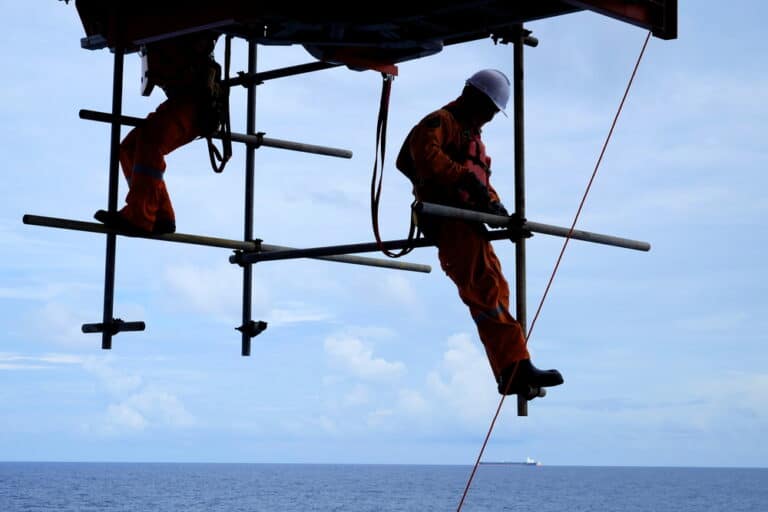
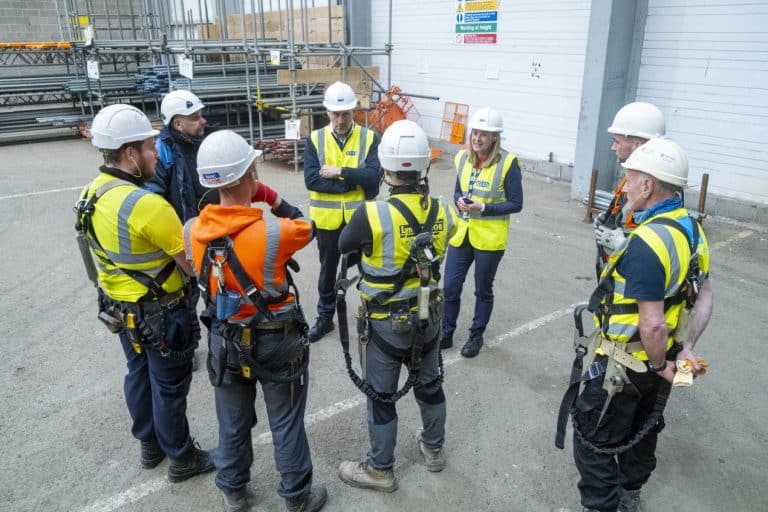
The National Access and Scaffolding Confederation (NASC) has partnered with Superbeam media production to revamp its SG6:22′ Management of Manual Handling in the Scaffolding Industry’ training suite, enhancing safety training for the industry. The updated training package is set to be updated this spring and includes a new pocket-sized A6 SG6 User Guide for scaffolders, featuring a refreshed design and new illustrations, and an innovative training video.NASC H&S Manager, Steve Kearney, shared his excitement about the collaboration with Superbeam, saying, “We are now working with Superbeam media production to produce an updated version [of the training video], focusing on the relevant issues and the required learning needed to keep everyone safe from injury in the scaffolding sector.” Kearney also mentioned that the video is still in its early stages but is confident that it will contribute to safer and better-trained scaffolding operatives.In addition to the updated video, NASC and Superbeam are exploring the potential of using open-world gaming software to create a more immersive and engaging training experience. Kearney said, “We see huge potential to expand our training repertoire through working with Superbeam. We are currently in discussions about using open-world gaming software to reproduce a training environment in which avatars can freely roam.”Superbeam founder Tiernan Dixon, who visited NASC’s office this week to discuss the video production with Kearney and new NASC Marketing Manager Sophie Price, expressed his enthusiasm for the innovative training approach. Dixon stated, “Open-world games can provide immersive experiences that have immense replay value. In a training environment, that ability to replay, and the realism of these types of software become an incredible tool for learning.”Once complete, the updated A6 pocket-sized SG6 User Guide and the new training video, both products of the NASC-Superbeam collaboration, will be available for purchase on the NASC website. This partnership aims to provide scaffolding professionals with state-of-the-art training materials, promoting a safer work environment across the industry.
Former scaffolder turned entrepreneur Isaac Morrison connects the construction community with his new innovative podcast, The View with VERTEX.
Isaac Morrison, a seasoned scaffolding professional with over two decades of experience, has taken his passion for engaging conversations and mentorship to the airwaves by launching The View with VERTEX podcast.
Focusing on the stories of exceptional individuals from various industries, the podcast aims to give listeners insights into the habits and mindsets that drive success and overcoming adversity.
Primarily targeted at the scaffolding industry, the podcast’s emphasis on personal stories ensures a broader appeal, with an eclectic mix of guests such as Ant Jones, a self-proclaimed “beer geek,” and Vicky Welch, the UK’s first female Advanced Scaffolder.
The podcast’s uniqueness lies in its focus on the guest and their story rather than their industry or trade. By providing a studio experience, The View from Vertex promotes cross-trade and cross-industry communication, fostering valuable knowledge exchange between different sectors.
Morrison’s primary goal is to share engaging conversations with listeners, hoping to inspire and drive positive change in both their professional and personal lives.
“I hope that by tuning in, those listening to the show will come away with an insight into what makes successful people succeed, what mistakes and pitfalls to avoid, and how to overcome adversity, potentially leading to positive change in both a professional and personal sense for the listener,” he said.
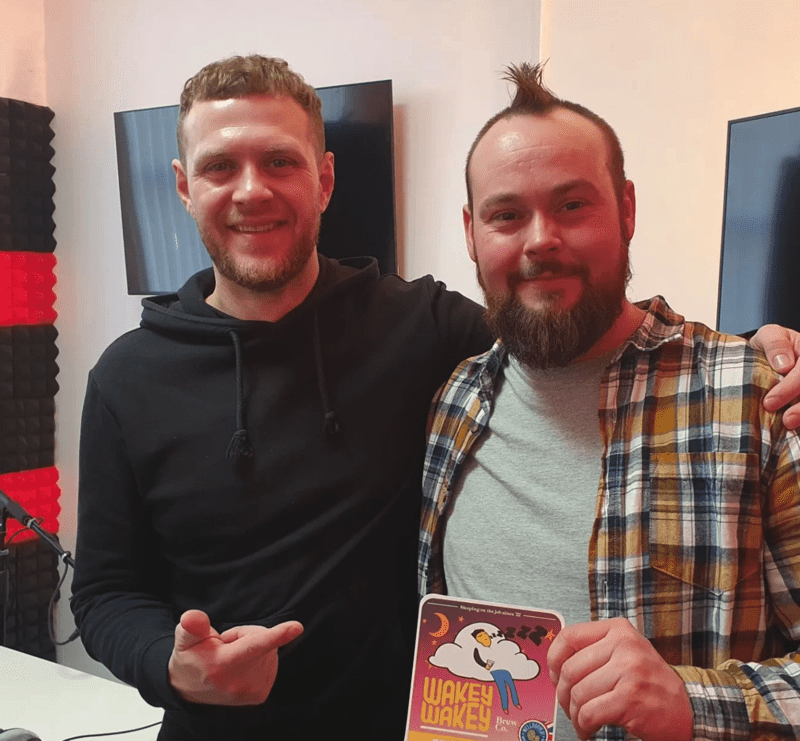
Isaac Morrison with self-proclaimed ‘beer geek’ and scaffolder Ant Jones.
Upcoming episodes will cover various topics, including suicide prevention, mental health and spirituality, and the future of the scaffolding industry.
Guests will include Graham Campbell, a scaffolder who lost his son to suicide; Rose System Scaffolding’s Operations Director, Chris Howson; and Oleg Abramov from Layher Baltic, discussing the Scaffolding World Championships ‘ScaffChamp.’
The View with VERTEX podcast is now available on YouTube and all major podcast platforms. Follow the podcast on social media to stay up-to-date on upcoming guests and special events, and be inspired by the stories and insights of the construction industry’s most innovative minds.
In a surprising turn of events, the Retained EU Law (Revocation and Reform) Bill, which would repeal around 4,000 laws, including the Work at Height Regulations, may be halted. The Guardian newspaper has reported that threats of a cross-party revolt have led to the government delaying the bill. The controversial bill, sponsored by Brexiteer Jacob Rees-Mogg, has completed its committee stage in Parliament and is awaiting further scrutiny in the House of Lords. However, media reports suggest a cross-party revolt has resulted in the government delaying the bill, possibly indefinitely, until after local elections on 4 May.As recently reported, The All-Party Parliamentary Group (APPG) on Working at Height met in March, expressing concern over the possible removal of the 2005 Working at Height Regulations and other health and safety laws.AIF Chair Peter Bennett OBE commented on the recent developments, stating, “If that is the case, it will represent a triumph for common sense and will be gladly welcomed throughout UK industry, amongst employers and workforce alike.”However, Bennett urged the Secretary of State to clarify the government’s intentions without delay.
A recent report has revealed that workers in the scaffolding industry are three times more likely to smoke than those in other sectors, prompting experts to call for increased smoking cessation support.The Office for Health Improvement & Disparities (OHID) reports that over one in five employees in routine manual and service occupations in England smoke, a rate three times higher than other industries. The employee smoking inequality gap has increased by 5% over the past five years, with routine and manual professionals lagging behind national smoking cessation trends.Data insights collected by Vape Club show that smoking prevalence among manual workers makes them 65% more likely to smoke than England’s average smoking rate. To achieve the government’s goal of reducing the number of smokers to 5% of adults in England by 2030, it is crucial to encourage manual workers to adopt smoking cessation methods. Experts say it emphasises the need for HR departments to address the issue and help improve worker health.Last week, the UK government launched a world-first ‘swap to stop’ scheme, providing one in five smokers in England with a free vape starter kit to help them quit. A recent trial by the University of East Anglia (UEA) and the NHS Stop Smoking Service found that a vape starter kit assisted 42% of participants in quitting within a month, with an additional 15% quitting after 12 weeks.Dan Marchant, managing director of Vape Club, stated, "It's vital that everyone has the same access to support and nobody in society is left behind." He urged HR departments in routine and manual sectors to offer greater support for employees to quit smoking, emphasising the potential benefits for both individuals and businesses.
Setting the stage for a new era in scaffolding, AT-PAC and Doka unveiled groundbreaking products and digital solutions at the 2023 CONEXPO CON-AGG Expo in Las Vegas.
The 2023 CONEXPO CON-AGG Expo, North America’s largest construction show, celebrated a significant milestone as construction professionals worldwide gathered in Las Vegas from March 13th to 18th. In collaboration with formwork technology specialist Doka, system scaffolding firm AT-PAC debuted its Ringlock system scaffold, innovative accessories, and Hi-Vis® Scaffold Management Software.
Hi-Vis® Software, a planning and process control tool, aims to streamline scaffold resource management, maximise labour productivity, and enhance product utilisation. The software can adapt to projects of any size, allowing users to deploy application modules individually or as a cohesive scaffold solution. Furthermore, Hi-Vis® includes data analytics and dashboard reporting, granting project managers insight into the scaffolding work process, enhancing construction schedules, and increasing cost predictability while mitigating project risks.AT-PAC’s eye-catching 16-meter Ringlock scaffolding display, designed to be visible across the showground, featured a Ringlock stair access solution for visitors to access the booth and a large ‘selfie’ photo deck to enjoy the view. The display showcased solutions such as large-span bridging, accessories like telescopic bracing, an HD quad shoring arrangement, and a 4.0m cantilever platform supporting a double-sided LED screen.Regarding the design of the display, Shane Carroll, AT-PAC’s North American Technical Manager, said, “We had limited space to design and build the display and couldn’t secure the structure to the ground. With our innovative design approach, we managed to overcome these challenges and showcase an impressive scaffold by utilising counterweights and steel cable for stability. The scaffold crew did a great job to finish the install on time, and most importantly, safely.”The event also featured a press conference where AT-PAC’s CEO, Josh Dundon, discussed the partnership between AT-PAC and Doka, as well as the latest trends and innovations in the scaffold industry. With nearly three decades of experience, AT-PAC has emerged as a leader in the scaffolding industry, catering to various sectors such as oil and gas, mining, power, infrastructure, and commercial construction.
Utilising Layher’s world-renowned Allround System, Southampton-based Skill Scaffolding has successfully provided access to all external elevations of Dolphin Quays in Poole, Dorset.
The project, commissioned by main contractors GPF Lewis, aimed to facilitate investigative, remedial, and recladding works to the building complex’s upper levels, rooftops, and balconies.
The Dolphin Quays project marked Skill Scaffolding’s first foray into system scaffolding, and they chose to invest in the Layher Allround System to tackle the challenging requirements of the site. James Wall, Business Development Manager at Skill Scaffolding, describes the project as “a deep-end dive into system scaffold”, given the building’s undulating elevations, roofs, and practically inaccessible crevices.
Dolphin Quays is a prime waterfront location overlooking Poole Harbour in Dorset. The development boasts 104 high-end apartments and a variety of shops and restaurants at street-level and lower podium levels. However, despite being completed relatively recently in 2004, the lack of existing drawings posed significant engineering challenges from the outset for Skill.
To overcome this issue, the company collaborated closely with Layher UK’s expert design team, conducting multiple site visits to capture all the necessary details for bespoke designs that met the needs of all parties involved.
According to Wall, the Layher Allround System proved to be “capable, adaptable, and flexible” throughout the project. The scaffolding had to accommodate multiple public staircases, various podiums, and heavy public foot traffic around busy shop fronts, quayside cafés, and restaurants. Skill Scaffolding focused on minimising public interface and disruption during the height of summer when the quayside is at its busiest.
The project’s location and varying height podiums presented further challenges, especially regarding material transportation. Skill Scaffolding had to organise on-site kit-specific deliveries and early morning crane lifts, working in collaboration with the local Poole Harbour Master to prevent disruptions.
In conclusion, Skill Scaffolding’s first experience with system scaffold was not only rewarding but also demonstrated the effectiveness and adaptability of the Layher Allround System. The successful completion of the Dolphin Quays project has paved the way for other innovative scaffolding solutions by Skill Scaffolding, Layher UK and the wider construction industry.
Sean Pike, Managing Director of Layher Ltd, UK, said: “After several meetings with the Skill leadership team and a site trial we were delighted and very excited that Skill trusted us and chose our equipment for their business. Working closely from the outset both teams worked in strategic partnership on this tricky first job to ensure it was the success that it is.”
Scaffolders are among the 1,300 offshore workers set to stage a 48-hour strike over pay beginning April 24. Unite Scotland warns that the coordinated walkout will bring dozens of oil and gas platforms to a standstill. The union is involved in separate disputes with several North Sea firms, but workers from different companies will strike simultaneously.Sharon Graham, Unite general secretary, stated: “There’s no question that contractors and operators can easily afford to give a decent pay rise.” Workers participating in the strike include electrical, production, mechanical technicians, deck crew, crane operators, pipefitters, platers, and riggers, as well as scaffolding professionals.Offshore workers employed by Bilfinger UK Limited, Petrofac Facilities Management, Stork Technical Services, Sparrows Offshore Services, and Worley Services UK Limited will be affected. Graham added, “The scale of corporate greed in the offshore sector has to be challenged. 1,350 offshore workers will now take part in an unprecedented tsunami of industrial action over 48 hours with hundreds more set to join them.”Around 700 offshore workers at Bilfinger, over 360 at Stork, 150 at Sparrows Offshore Services, and approximately 100 more at Petrofac and Worley Services will join the walkout. John Boland, Unite industrial officer, noted: “This is not exclusively about pay but also working rotas, holidays, and offshore safety. The workforce has been taken for granted for years, but now their value will be acutely felt when strike action will bring dozens of platforms to a standstill.”Scaffolders and their fellow offshore workers stand united in their fight for better jobs, pay, and working conditions, sending a powerful message to the industry about the importance of fair treatment and recognition.
Around 60 attendees, including trade bodies and industry leaders, came together in Westminster to highlight the importance of preserving the Work at Height Regulations.In a recent All Party Parliamentary Group (APPG) meeting on Working at Height in Westminster, industry leaders, trade bodies, and members of Parliament convened to discuss the potential consequences of the Work at Height Regulations being repealed. As previously reported, The Access Industry Forum (AIF) has been campaigning to save the regulations from being scrapped, as they are under threat due to the Retained EU Law (Revocation and Reform) Bill going through Parliament.Alison Thewlis, MP, Chair of the APPG, welcomed attendees and emphasised the importance of hearing from work-at-height professionals about their challenges and potential opportunities. Peter Bennett OBE, AIF Chair, expressed concern about the potential repeal of legislation and highlighted the importance of the Work at Height Regulations in preventing workplace fatalities and serious injuries caused by falls from height.“The numbers of fatalities are sadly still too high despite working at height being regulated. There have been 683 families that have lost a loved one even in the 17 years that the WAHR have been providing protection. That is enough to fill a Boeing 747-8,” Bennett said.Ruth Wilkinson, Head of Policy at the Institution of Occupational Safety and Health (IOSH), emphasised that the focus should be on reinforcing, strengthening, and supporting the implementation of safety standards rather than deregulation. Stephen Green, HM Inspector of Health and Safety, pointed out that the most common cause of fatalities across all industries remains falls from height.During the Q&A session, participants expressed support for saving the Work at Height Regulations and concern about the potential implications for other valuable regulations. Alison Thewlis encouraged attendees to lobby their MPs, while Peter Bennett OBE emphasised the need to keep making noise until the regulations are saved.Wrapping up the meeting, Thewlis said, “it is clear that the work-at-height regulations are a fundamental part of keeping people safe.”The APPG says it will continue to seek assurances from the Secretary of State regarding the safety of the Work at Height Regulations and explore opportunities for a parliamentary debate on the issue.
A woman was left with severe injuries yesterday after scaffolding collapsed onto a busy shopping street in Hampshire. The incident occurred yesterday (Wednesday, 12 April) at approximately 1:45 pm on West Street, Fareham, amid strong winds that may have contributed to the incident.The woman, who has not yet been identified, was trapped under the fallen scaffolding outside the Halifax bank in the pedestrian precinct. Hampshire Fire and Rescue Service crews worked diligently to free her from the debris, after which she was promptly handed over to paramedics for further care.A spokesperson from Hampshire Constabulary confirmed that the injured woman was transported to a nearby hospital for treatment. The area surrounding the incident was cordoned off while investigations took place.The Health and Safety Executive will conduct a thorough investigation into the cause of the scaffolding collapse. With high winds being a potential factor, this incident highlights the need to ensure the structural stability of scaffolding during adverse weather conditions.In the meantime, authorities are urging residents and shoppers to exercise caution when walking near construction sites, especially during periods of strong winds or inclement weather.
The Construction Industry Training Board (CITB) has unveiled its Business Plan for 2023-24, announcing an investment of over £250 million to support the construction industry across Britain. The plan introduces the Industry Impact Fund, which launches today and invites CITB-registered employers to apply for up to £500,000. The fund encourages innovative solutions addressing skills and training challenges in productivity, equality, diversity, and inclusion.CITB’s plan aims to give employers more say on the most effective solutions for tackling significant skills challenges in the industry by focusing on three core priorities. The three priorities outlined are improving construction’s people pipeline, creating defined training pathways, and delivering an efficient training supply.Tim Balcon, CITB Chief Executive, expressed his enthusiasm for the new Business Plan, stating, “I’m delighted to present our new Business Plan today, which aims to put employers in the driving seat by making the skills system work more efficiently for them. This year we are focusing on three core priorities and have increased investment by nearly £20m to ensure the right initiatives and funding are in place.”Balcon also highlighted the innovative new Industry Impact Fund, noting, “This fund will help employers in multiple ways but ultimately, it will empower them to have a greater say on construction training.”In response to the need for nearly 45,000 additional workers annually until 2027, CITB’s plan includes investing an additional £8.2 million in new initiatives for 2023-24. These initiatives aim to enhance existing products like Go Construct and Onsite Experience hubs and simplify the hiring of apprentices through the New Entrant Employer Support Team. The plan also allocates £63 million for Apprenticeship Attendance and Achievement Grants.To create clearer and more flexible routes into construction, CITB will produce nine qualification and training pathways covering the most in-demand trades. The plan also outlines CITB’s intent to continue researching modern construction methods and developing competence frameworks in accordance with the Building Safety Act.CITB’s commitment to improving training quality and availability is evident in their plan to invest over £100 million in grants and funding schemes, including doubling the short course grant rates. The organization will also expand its network of recognized training providers and invest nearly £30 million in the National Construction College (NCC) to enhance facilities and training quality.With the anticipated upturn in the construction industry in 2024, CITB’s new Business Plan and Industry Impact Fund aim to empower employers and foster innovation in skills and training.






 The display showcased solutions such as large-span bridging, accessories like telescopic bracing, an HD quad shoring arrangement, and a 4.0m cantilever platform supporting a double-sided LED screen.
Regarding the design of the display, Shane Carroll, AT-PAC’s North American Technical Manager, said, “We had limited space to design and build the display and couldn’t secure the structure to the ground. With our innovative design approach, we managed to overcome these challenges and showcase an impressive scaffold by utilising counterweights and steel cable for stability. The scaffold crew did a great job to finish the install on time, and most importantly, safely.”
The event also featured a press conference where AT-PAC’s CEO, Josh Dundon, discussed the partnership between AT-PAC and Doka, as well as the latest trends and innovations in the scaffold industry. With nearly three decades of experience, AT-PAC has emerged as a leader in the scaffolding industry, catering to various sectors such as oil and gas, mining, power, infrastructure, and commercial construction.
The display showcased solutions such as large-span bridging, accessories like telescopic bracing, an HD quad shoring arrangement, and a 4.0m cantilever platform supporting a double-sided LED screen.
Regarding the design of the display, Shane Carroll, AT-PAC’s North American Technical Manager, said, “We had limited space to design and build the display and couldn’t secure the structure to the ground. With our innovative design approach, we managed to overcome these challenges and showcase an impressive scaffold by utilising counterweights and steel cable for stability. The scaffold crew did a great job to finish the install on time, and most importantly, safely.”
The event also featured a press conference where AT-PAC’s CEO, Josh Dundon, discussed the partnership between AT-PAC and Doka, as well as the latest trends and innovations in the scaffold industry. With nearly three decades of experience, AT-PAC has emerged as a leader in the scaffolding industry, catering to various sectors such as oil and gas, mining, power, infrastructure, and commercial construction. 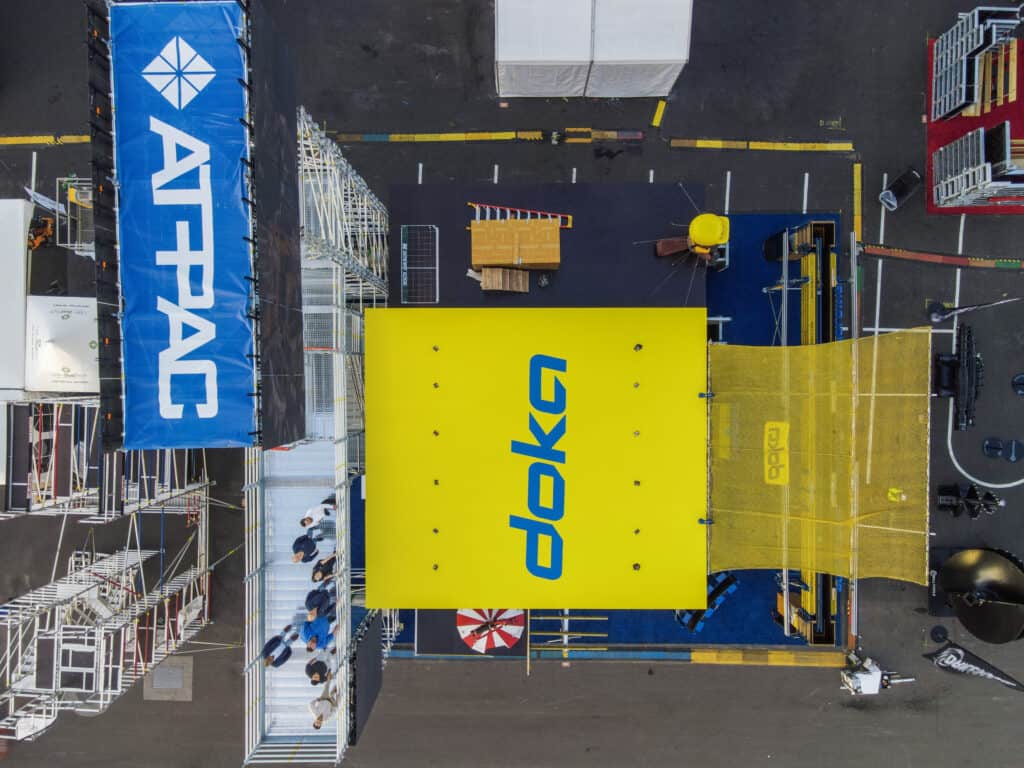 The display showcased solutions such as large-span bridging, accessories like telescopic bracing, an HD quad shoring arrangement, and a 4.0m cantilever platform supporting a double-sided LED screen.
Regarding the design of the display, Shane Carroll, AT-PAC’s North American Technical Manager, said, “We had limited space to design and build the display and couldn’t secure the structure to the ground. With our innovative design approach, we managed to overcome these challenges and showcase an impressive scaffold by utilising counterweights and steel cable for stability. The scaffold crew did a great job to finish the install on time, and most importantly, safely.”
The event also featured a press conference where AT-PAC’s CEO, Josh Dundon, discussed the partnership between AT-PAC and Doka, as well as the latest trends and innovations in the scaffold industry. With nearly three decades of experience, AT-PAC has emerged as a leader in the scaffolding industry, catering to various sectors such as oil and gas, mining, power, infrastructure, and commercial construction.
The display showcased solutions such as large-span bridging, accessories like telescopic bracing, an HD quad shoring arrangement, and a 4.0m cantilever platform supporting a double-sided LED screen.
Regarding the design of the display, Shane Carroll, AT-PAC’s North American Technical Manager, said, “We had limited space to design and build the display and couldn’t secure the structure to the ground. With our innovative design approach, we managed to overcome these challenges and showcase an impressive scaffold by utilising counterweights and steel cable for stability. The scaffold crew did a great job to finish the install on time, and most importantly, safely.”
The event also featured a press conference where AT-PAC’s CEO, Josh Dundon, discussed the partnership between AT-PAC and Doka, as well as the latest trends and innovations in the scaffold industry. With nearly three decades of experience, AT-PAC has emerged as a leader in the scaffolding industry, catering to various sectors such as oil and gas, mining, power, infrastructure, and commercial construction. 
 To overcome this issue, the company collaborated closely with Layher UK’s expert design team, conducting multiple site visits to capture all the necessary details for bespoke designs that met the needs of all parties involved.
According to Wall, the Layher Allround System proved to be “capable, adaptable, and flexible” throughout the project. The scaffolding had to accommodate multiple public staircases, various podiums, and heavy public foot traffic around busy shop fronts, quayside cafés, and restaurants. Skill Scaffolding focused on minimising public interface and disruption during the height of summer when the quayside is at its busiest.
To overcome this issue, the company collaborated closely with Layher UK’s expert design team, conducting multiple site visits to capture all the necessary details for bespoke designs that met the needs of all parties involved.
According to Wall, the Layher Allround System proved to be “capable, adaptable, and flexible” throughout the project. The scaffolding had to accommodate multiple public staircases, various podiums, and heavy public foot traffic around busy shop fronts, quayside cafés, and restaurants. Skill Scaffolding focused on minimising public interface and disruption during the height of summer when the quayside is at its busiest.
 The project’s location and varying height podiums presented further challenges, especially regarding material transportation. Skill Scaffolding had to organise on-site kit-specific deliveries and early morning crane lifts, working in collaboration with the local Poole Harbour Master to prevent disruptions.
In conclusion, Skill Scaffolding’s first experience with system scaffold was not only rewarding but also demonstrated the effectiveness and adaptability of the Layher Allround System. The successful completion of the Dolphin Quays project has paved the way for other innovative scaffolding solutions by Skill Scaffolding, Layher UK and the wider construction industry.
Sean Pike, Managing Director of Layher Ltd, UK, said: “After several meetings with the Skill leadership team and a site trial we were delighted and very excited that Skill trusted us and chose our equipment for their business. Working closely from the outset both teams worked in strategic partnership on this tricky first job to ensure it was the success that it is.”
The project’s location and varying height podiums presented further challenges, especially regarding material transportation. Skill Scaffolding had to organise on-site kit-specific deliveries and early morning crane lifts, working in collaboration with the local Poole Harbour Master to prevent disruptions.
In conclusion, Skill Scaffolding’s first experience with system scaffold was not only rewarding but also demonstrated the effectiveness and adaptability of the Layher Allround System. The successful completion of the Dolphin Quays project has paved the way for other innovative scaffolding solutions by Skill Scaffolding, Layher UK and the wider construction industry.
Sean Pike, Managing Director of Layher Ltd, UK, said: “After several meetings with the Skill leadership team and a site trial we were delighted and very excited that Skill trusted us and chose our equipment for their business. Working closely from the outset both teams worked in strategic partnership on this tricky first job to ensure it was the success that it is.”