60,000 CSCS skills cards set to be banned

More than 60,000 CSCS industry skills cards issued under Industry Accreditation (IA) aka ‘Grandfather Rights’ are set to be banned on 31st December 2024 and cannot be renewed.
CSCS stopped issuing new cards on the strength of an employer recommendation / Grandfather Rights in 2015. However, over 60,000 existing cards have continued to be renewed.
The Construction Leadership Council’s drive for a fully trained and competent workforce includes the end of all CSCS Industry Accreditation cards issued from 1st January 2020.
IA allowed experienced workers to obtain CSCS cards on the strength of an employer recommendation rather than the achievement of a recognised qualification.
Now, as of the end of next year, those industry accreditation (IA) cards will become invalid. It means that all CSCS cards will only be issued if the holder has or is in the process of gaining a recognised qualification.
What each individual cardholder needs to do to get a CSCS card depends on their occupation and what qualifications they may already hold.
New guidance is available on the CSCS website that outlines what CSCS IA cardholders must do before the deadline.
Sean Kearns, Chief Executive at CSCS said: “IA cardholders will not need to attend college as much of the assessment can be delivered remotely.
Many IA cardholders will find it a straightforward process to replace their cards, such as moving across to the Academically or Professionally Qualified Persons cards. In addition, those who no longer attend site or are in non-construction related occupations will not require a card.”
The new guidance and support will help cardholders to either retain their card via the S/NVQ or to easily transition to another CSCS card. We would urge employers, trade associations, awarding organisations and training providers to put plans in place to support these workers ahead of the December 2024 withdrawal.”
Turnover booms at major scaffolding suppliers
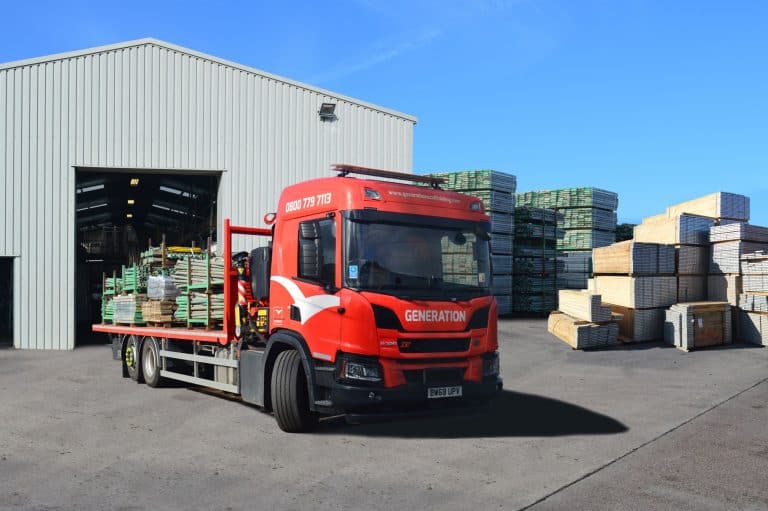
West Midlands-based Scaffolding and building equipment supplier Generation (UK) recently achieved a turnover exceeding £130m according to new documents.
Owned by the Altrad Group, Generation (UK), which trades as Altrad Generation Hire & Sales, is the UK’s largest scaffolding and no-mechanical building equipment supplier. The business provides scaffolding for sale and hire and other construction supplies through its network of branches across both the UK and the Republic of Ireland.
According to its latest financial statements, the company generated £134.4m in turnover for the year ending 31 August 2022, a significant increase over £97.4m the previous year.
In the same period, pre-tax profits increased from £13.3m to £19.4m.
In a statement approved by the board said: “Trading conditions remained strong but competitive in the year ended 31 August 2022, with price increases and product availability affecting the market.
“Post-year-end trading has remained strong, with the performance being in line with expectations.”
The Generation (UK) brand has grown dramatically over the past few years following numerous industry mergers and buyouts, most recently with the acquisition of Actavo Hire & Sales in August 2021 for an estimated £40 million.
225,000 Extra Workers Needed in Construction

Construction workers are still in high demand despite economic uncertainty, according to new data.
New figures in a report from the Construction Industry Training Board (CITB) reveal that in order to meet UK construction demand by 2027, almost 225,000 extra workers will be needed.
If the projected growth is met by 2027, there will be 2.67 million construction workers.
The CITB’s annual Construction Skills Network (CSN) report also shows construction output is set to grow for all nations and regions, however, a recession is expected in 2023 with slow growth returning in 2024 the report says.
The report highlights that construction is expected to remain a sector where there is demand for workers despite the current economic uncertainty. As a result, recruitment, training, development and upskilling remain major priorities for the industry for 2023 and beyond.
CITB is responding by investing in apprenticeships, launching a range of targeted initiatives and working collaboratively with industry, to help the construction sector have a skilled, competent, and inclusive workforce.
“The latest CSN report clearly shows that despite current economic uncertainty, recruiting and developing the workforce remains vital to ensure the industry can contribute to economic growth,” says Tim Balcon, CITB Chief Executive.
“We know the next 18 months won’t be easy, however, I remain inspired by the construction industry’s resilience shown in the pandemic and throughout 2022.
“In short, it makes clear that the need to recruit and retain talent in the sector has never been greater. Whether that’s for building the homes the country needs, constructing energy and transport infrastructure or retrofitting the built environment to help drive down energy bills and meet net-zero targets.
“To bolster the industry’s resilience, CITB will strive to attract and train a diverse range of recruits for the industry, equipping them with modern skills for rewarding construction careers. I look forward to working with and supporting industry and stakeholders in the challenging times ahead and to emerging stronger when the recession ends.”
PERI acquires German formwork firm

In a bid to expand its business, PERI has acquired German formwork specialist Implenia Schalungsbau, the formwork division of Implenia.
Located in Bobenheim-Roxheim, the company provides intelligent and complete formwork construction services for a wide range of projects.
As Peri describes it, the deal “perfectly aligns” with the company’s current product offering, which it describes as “urgently needed capacities,” and it will allow them to invest in both the infrastructure and high-rise segments as it says these are urgently needed in the business.
This acquisition will allow Implenia to “focus on the core portfolio” and advance its asset-light strategy, it says.
Upon closing of the deal, all 46 employees of Implenia Schalungsbau will remain, while the company will become Peri Schalungsbau. No changes to the running of the business is expected.
“The PERI Germany team is happy about the personnel reinforcement and we warmly welcome all new colleagues to PERI. We have already worked very well together in the past and are happy to have them in our team,” says Stefan Schurwonn, Head of Commercial Operations at PERI Germany.
“With this purchase, we are expanding our competences and capacities in special formwork construction and in the areas of “Infrastructure” and ” High Rise”. This is an important step for PERI Germany to further strengthen our market position and achieve our ambitious growth targets for the coming years.”
Bookings open for Build UK Open Doors 2023 event

The booking process for Open Doors 2023 is now open.
Young people and those seeking a career change will have the opportunity to visit construction sites across Great Britain from Monday, 13 March, through Saturday, 18 March, 2023.
There are a variety of career opportunities available within the construction industry, and Open Doors provides a unique insight into the field.
It is anticipated that more than 150 construction sites, offices, factories, and training centers across England, Scotland, and Wales will be open for Open Doors this year. This will showcase hundreds of different occupations.
Visitors can book their place to go behind the hoardings on a range of projects that include hospitals, schools, universities, theatres, libraries, viaducts, and production and training facilities.
It is the vision of Build UK, in collaboration with a number of partners, to deliver Open Doors, which aims to change perceptions about construction and to encourage the next generation to explore the opportunities within the industry. It focuses in particular on the progress made by the industry towards flexible working and helping the UK reach net zero carbon emissions.
Open Doors is a great way to see that construction is for everyone, according to Suzannah Nichol MBE, Chief Executive of Build UK. “You can’t beat going to a construction site and seeing it in action. Check out what’s going on in your neighbourhood, book your visit today, and find out what a career in construction has in store for you,” she said.
As Suzanne Hardy, Mace’s Head of Social Value (Construct), explains: “Finding your first step into the world of work is more important than ever, and Open Doors is the perfect place to see just how many diverse career paths there are in construction, from hands-on building trades to design, architecture, finance, and sales and marketing.
We already have multiple visits planned with schools across our projects, so we know people have a real desire to learn more about the industry, understand the vital role it plays in the economy, and discover the opportunities available to them.”
Slowdown in housing drags on construction output

Construction output in November 2022 showed zero growth, according to official statistics.
In November, the number of new construction projects completed declined by 0.4% as a result of a drop in new housing starts of nearly 5%, according to data provided by The Office for National Statistics (ONS).
This decreased output was also attributable to a wetter-than-average November causing more difficulty in working conditions, which in turn, contributed to the fall in new work. As a result, the overall output the month remained flat in part because of a modest 0.6% increase in repair and maintenance work.
In their monthly survey of businesses in the construction sector conducted by the Office for National Statistics (ONS), it was found that more businesses have been raising concerns about clients delaying or cancelling their work than they had previously.
According to the ONS, construction output rose 0.3% from growth in new work (1.3%) while repair and maintenance decreased (1.2% fall).
Scaffolding contractor announces ambitious plans for 2023
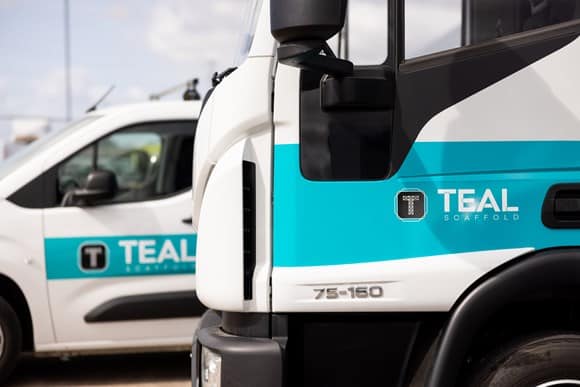
North West scaffolding specialist Teal Scaffold has announced ambitious plans to grow the business in 2023.
The award-winning commercial scaffolding firm is entering its fifth year of successful business having provided vital access solutions across the North West since 2018.
Part of The Sovini Group, Teal Scaffold deliver a scaffolding service to many of the North West’s leading construction and facilities management firms.
Since 2018, Teal Scaffold has delivered a high-quality and reliable service working on large and complex projects. As well as providing a priority reactive works package.
Such projects have meant collaborating with both private and public sector clients; from NHS trusts and registered social housing landlords to Tier 1 contractors.
With several large-scale, highly complex contracts in the pipelines Teal Scaffold are set to take 2023 by storm, the contractor said.
During its fourth year of business, the firm successfully surpassed industry guidelines and awards, including the Investors in People (IIP) award and the highly coveted NASC accreditation to name a few.
The prestigious industry accreditation evidences the award-winning company’s high standards and professionalism.
This year, the working at height professionals will mark their fifth year of success by kickstarting their five-year business plan and acquiring a second hub to facilitate the growth.
The hub is set to provide additional meaningful employment opportunities for the local community and wider region.
Dan McGregor, Head of Operations of Teal Scaffold, adds: “We were established in 2018 to provide an access solution service for our parent company, The Sovini Group. Since then, we have gained experience in the housing sector as well as expanding our service offering and delved into various industries and sectors.
Throughout our journey we’ve been recognised by leading industry bodies for our excellence. We are proud of the fact that for an increasing number of local councils, social landlords and Tier 1 contractors, we are their scaffolding partner of choice. Furthermore, we’ve continued to provide new and unique employment opportunities across the North West”.
Scaffolders strike over bonus dispute

Scaffolders and other trades working on a GSK Pharmaceutical Plant in Scotland have downed tools over their employer’s refusal to pay bonus payments.
Around 40 workers employed by Kaefer Limited began strike action yesterday (Monday 9 January) at the GSK plant in Irvine. They seek a bonus payment of £2.37 an hour, the maximum allowed under the relevant industrial agreement (National Agreement for the Engineering Construction Industry [NAECI]).
Workers include Scaffolders, Electricians, Cable pullers and Labourers. The strike will continue each day up to 23 January. An overtime ban will also be in force, which will last until 2 April. The industrial action will directly impact on the maintenance of the plant, Unite the Union said.
Unite general secretary Sharon Graham said: “GSK, which operates the Irvine plant, is making eye-watering profits. Paying our members the bonus they are seeking is like a drop in the ocean to their overflowing coffers. Yet the contractor Kaefer who we are directly in dispute with onsite refuses to award our members what they are entitled to. The workers will have Unite’s 100% backing in their fight for better jobs, pay and conditions.”
GSK recorded sales of £7.8 billion in the third quarter of 2022, and a total operating profit of £1.2 billion.
Unite industrial officer Paul Bennett added: “The strike action will cause considerable disruption and it will lead to significant delays in maintenance issues affecting GSK’s Irvine plant. The dispute has been contrived entirely by the contractor Kaefer and GSK as the client steadfastly refusing to pay a bonus.”
“Our members don’t want to be in this position but they have been forced to take this action in order to get what they are entitled to under a UK wide bargaining agreement. The action will continue until our members get what they deserve.”
New Suspended Platform for Structures Over Water Launched

UK-based start-up ScaffFloat and Richter, the UK’s largest firm of temporary work designers have partnered to offer a new and innovative access option for bridges, piers and other structures over water.
The innovative ScaffFloat platform which consists of patented plastic floats and standard scaffold components to build pontoons and workboats has been making waves in the industry since it was established back in 2020.
Now after partnering up with temporary work designers Richter the duo has come up with an ingenious way to provide access to many structures over water for inspection, maintenance, build and demolition.
Furthermore, the new access solution will provide its clients with significant cost and time saving compared to traditional scaffolding solutions.
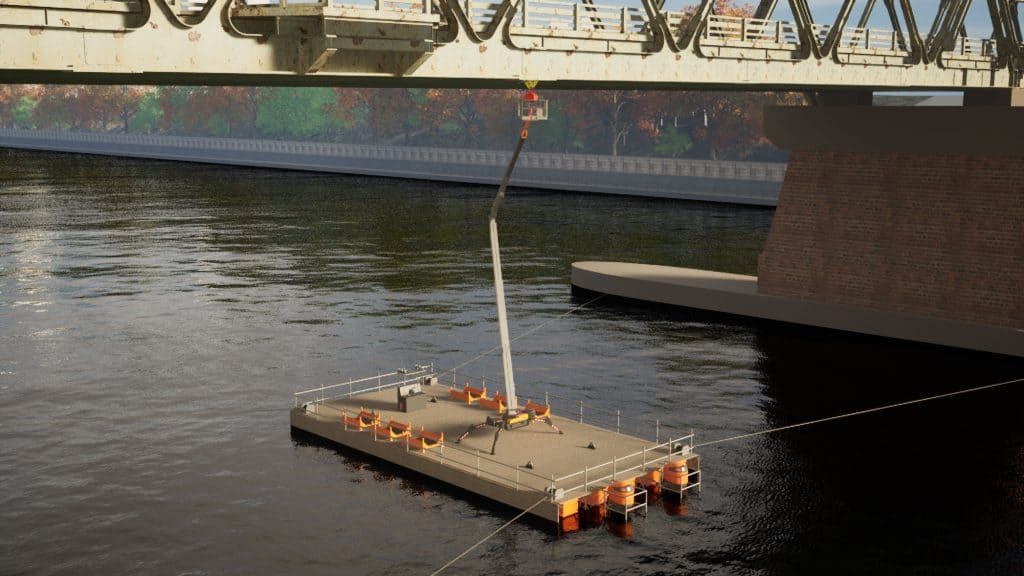
The suspended ScaffFloat platform is built off-site and then lifted in the water. Once afloat, the self-propelled system can make passage along the waterway to the bridge, even if this is miles from the launch site.
Once in place under the bridge, lines or anchors are used to temporarily hold station while a MEWP on deck is used to make the connections to the underside of the bridge.
 A hoisting system is then used to lift the platform up under the bridge together with a payload of equipment, plant, materials, and scaffold. Once in place, bracing can be applied to stop sway and the scaffold can be quickly and safely punched up from the ScaffFloat beams to give access to the top side of the bridge for contractors.
If needed, encapsulation or netting can also be added to capture any paint or debris released during the planned works. When works are complete the platform can then be lowered to the water and re-positioned, or if needed multiple platforms can be placed side by side.
Toby Budd, MD of ScaffFloat said “ScaffFloat has come a long way since it was launched two years ago. The system has really proved itself now and we have completed over 50 projects and provided 5,000 hours of safe floating access to contractors around the UK and abroad. This suspended offering is another big step forward for the system, really exciting.”
He added “We are specialists in floaty things and recognise where our strength lies. This is why we now partner with Richter and 48.3 on a project like this, they do what they are good at: making sure the design meets all industry standards and if necessary they can provide a Cat 3 check, and we do the floaty and hoisting bit on site and make sure it all goes to plan.”
Mark Parkin from 48.3 said “We have been working with the ScaffFloat system for over a year now. We can see a real opportunity for this suspended platform and hope this partnership will be a good fit for our clients. We can offer scaffolders and principal contractors a turnkey service on the access design and temporary works, as well as the design for the ScaffFloat and hoist system. We can also carry out the analysis on the bridge structure and certify the connection points needed.”
ScaffFloat say they are all about partnership working to deliver value. They work with a number of forward-thinking scaffold companies in the UK to deliver projects together, and see this new access offering as no exception.
Toby added “Whilst we could deliver this service on our own, we would prefer to partner with a local scaffold contractor and I would welcome any companies out there that would like to work with us to give me a call, my mobile number is on the website’’
A hoisting system is then used to lift the platform up under the bridge together with a payload of equipment, plant, materials, and scaffold. Once in place, bracing can be applied to stop sway and the scaffold can be quickly and safely punched up from the ScaffFloat beams to give access to the top side of the bridge for contractors.
If needed, encapsulation or netting can also be added to capture any paint or debris released during the planned works. When works are complete the platform can then be lowered to the water and re-positioned, or if needed multiple platforms can be placed side by side.
Toby Budd, MD of ScaffFloat said “ScaffFloat has come a long way since it was launched two years ago. The system has really proved itself now and we have completed over 50 projects and provided 5,000 hours of safe floating access to contractors around the UK and abroad. This suspended offering is another big step forward for the system, really exciting.”
He added “We are specialists in floaty things and recognise where our strength lies. This is why we now partner with Richter and 48.3 on a project like this, they do what they are good at: making sure the design meets all industry standards and if necessary they can provide a Cat 3 check, and we do the floaty and hoisting bit on site and make sure it all goes to plan.”
Mark Parkin from 48.3 said “We have been working with the ScaffFloat system for over a year now. We can see a real opportunity for this suspended platform and hope this partnership will be a good fit for our clients. We can offer scaffolders and principal contractors a turnkey service on the access design and temporary works, as well as the design for the ScaffFloat and hoist system. We can also carry out the analysis on the bridge structure and certify the connection points needed.”
ScaffFloat say they are all about partnership working to deliver value. They work with a number of forward-thinking scaffold companies in the UK to deliver projects together, and see this new access offering as no exception.
Toby added “Whilst we could deliver this service on our own, we would prefer to partner with a local scaffold contractor and I would welcome any companies out there that would like to work with us to give me a call, my mobile number is on the website’’
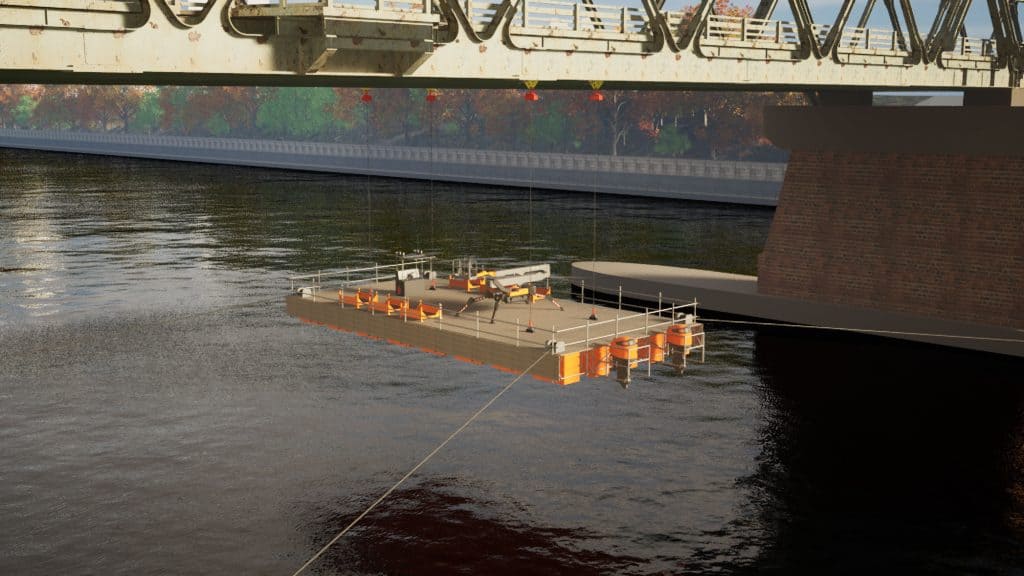 A hoisting system is then used to lift the platform up under the bridge together with a payload of equipment, plant, materials, and scaffold. Once in place, bracing can be applied to stop sway and the scaffold can be quickly and safely punched up from the ScaffFloat beams to give access to the top side of the bridge for contractors.
If needed, encapsulation or netting can also be added to capture any paint or debris released during the planned works. When works are complete the platform can then be lowered to the water and re-positioned, or if needed multiple platforms can be placed side by side.
Toby Budd, MD of ScaffFloat said “ScaffFloat has come a long way since it was launched two years ago. The system has really proved itself now and we have completed over 50 projects and provided 5,000 hours of safe floating access to contractors around the UK and abroad. This suspended offering is another big step forward for the system, really exciting.”
He added “We are specialists in floaty things and recognise where our strength lies. This is why we now partner with Richter and 48.3 on a project like this, they do what they are good at: making sure the design meets all industry standards and if necessary they can provide a Cat 3 check, and we do the floaty and hoisting bit on site and make sure it all goes to plan.”
Mark Parkin from 48.3 said “We have been working with the ScaffFloat system for over a year now. We can see a real opportunity for this suspended platform and hope this partnership will be a good fit for our clients. We can offer scaffolders and principal contractors a turnkey service on the access design and temporary works, as well as the design for the ScaffFloat and hoist system. We can also carry out the analysis on the bridge structure and certify the connection points needed.”
ScaffFloat say they are all about partnership working to deliver value. They work with a number of forward-thinking scaffold companies in the UK to deliver projects together, and see this new access offering as no exception.
Toby added “Whilst we could deliver this service on our own, we would prefer to partner with a local scaffold contractor and I would welcome any companies out there that would like to work with us to give me a call, my mobile number is on the website’’
A hoisting system is then used to lift the platform up under the bridge together with a payload of equipment, plant, materials, and scaffold. Once in place, bracing can be applied to stop sway and the scaffold can be quickly and safely punched up from the ScaffFloat beams to give access to the top side of the bridge for contractors.
If needed, encapsulation or netting can also be added to capture any paint or debris released during the planned works. When works are complete the platform can then be lowered to the water and re-positioned, or if needed multiple platforms can be placed side by side.
Toby Budd, MD of ScaffFloat said “ScaffFloat has come a long way since it was launched two years ago. The system has really proved itself now and we have completed over 50 projects and provided 5,000 hours of safe floating access to contractors around the UK and abroad. This suspended offering is another big step forward for the system, really exciting.”
He added “We are specialists in floaty things and recognise where our strength lies. This is why we now partner with Richter and 48.3 on a project like this, they do what they are good at: making sure the design meets all industry standards and if necessary they can provide a Cat 3 check, and we do the floaty and hoisting bit on site and make sure it all goes to plan.”
Mark Parkin from 48.3 said “We have been working with the ScaffFloat system for over a year now. We can see a real opportunity for this suspended platform and hope this partnership will be a good fit for our clients. We can offer scaffolders and principal contractors a turnkey service on the access design and temporary works, as well as the design for the ScaffFloat and hoist system. We can also carry out the analysis on the bridge structure and certify the connection points needed.”
ScaffFloat say they are all about partnership working to deliver value. They work with a number of forward-thinking scaffold companies in the UK to deliver projects together, and see this new access offering as no exception.
Toby added “Whilst we could deliver this service on our own, we would prefer to partner with a local scaffold contractor and I would welcome any companies out there that would like to work with us to give me a call, my mobile number is on the website’’ New North East scaffolding training centre opens
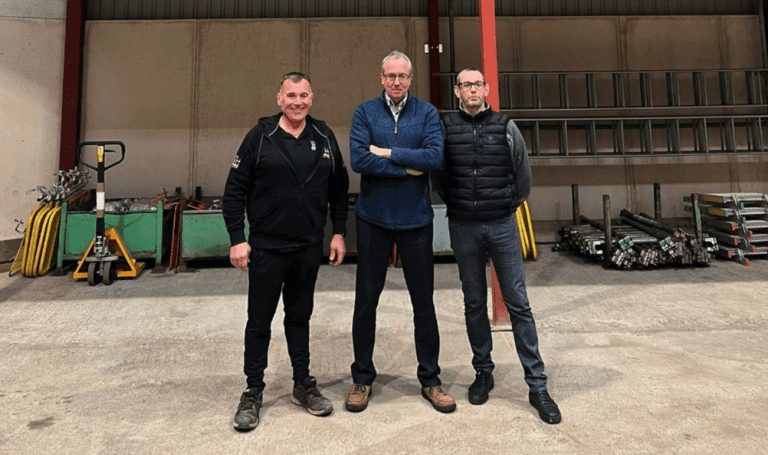
Scaffolders in the North East are set to benefit from a new scaffolding training centre following a brand new partnership between Fulcrum Safety Training and W@H Safety Solutions.
The newly established training centre which is based on Cumberland Road in North Shields has received full backing from CISRS with the award of its accreditation to provide top-class scaffolding training courses.
Training at the centre will be delivered in partnership between the two companies and they both hope to broaden the training requirements for the industry not just in the northeast but nationally.
Both Fulcrum and W@H are set to deliver a range of CISRS scaffolding and other accredited courses. A full list of certified courses can be found on their website.
Dave Abraham from Fulcrum Scaffold Safety & Michael Mitchell from W@H Safety Solutions said: “We are delighted to be recognised as a CISRS Centre, We are aware that in the current climate that a lot of individuals trying to upskill or enter the scaffolding sector have to fund their own training, with this in mind the centre and the core of the business has been designed and created to provide industry-leading training, pitched at an affordable level together with finance options and packages to allow new and existing operatives to further their careers.”
Both companies are looking forward to working in partnership with each other going forward to upskill workers by delivering a range of courses in the excellent facilities we have here at North Shields and Mostyn North Wales.”
For more information about the courses on offer please visit the websites
http://www.wahsafetysolutions.com
http://fulcrumscaffoldsafety.com